
Published: April 16, 2026
By Robert Harrison, Certified Well Inspector
Robert has 20+ years of experience inspecting and testing residential water wells across the western US.
From inspecting residential wells over the past two decades, I can tell you this: most well problems start small and get expensive the longer they are ignored. The guidance below reflects what I have actually seen in real well systems, not just what the manuals say.
Are you ready to protect your water well investment and avoid costly emergency repairs? Seasonal neglect is the #1 cause of preventable well failures—and avoiding it could save you thousands. This comprehensive 2026 guide includes downloadable checklists, cost-saving tips, and even federal funding options to keep your well running year-round.
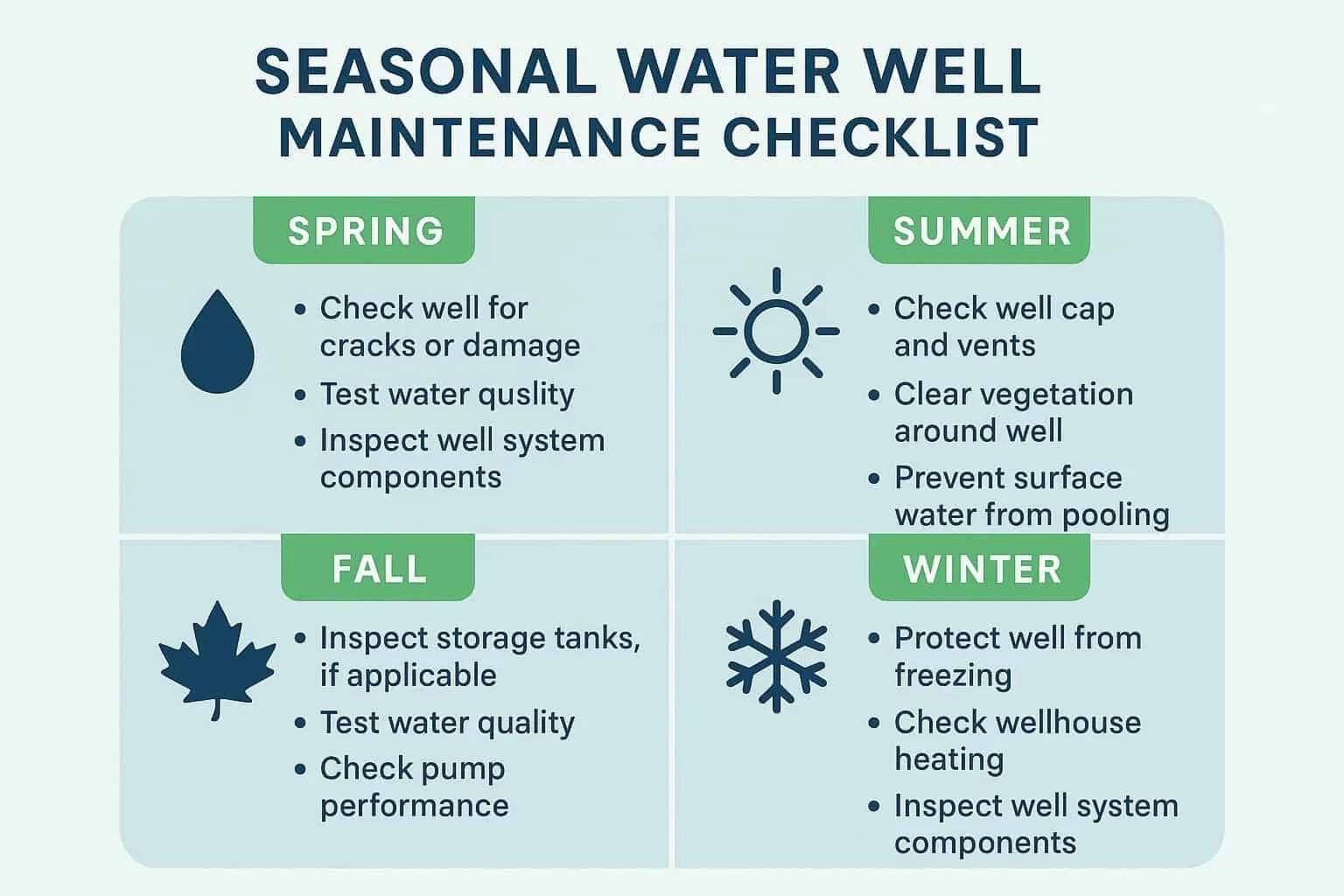
Table of Contents
- Why Seasonal Well Maintenance Saves Money
- Spring Well Maintenance Checklist (Post-Winter Recovery)
- Summer Well Maintenance Checklist (Peak Usage Season)
- Fall Well Maintenance Checklist (Pre-Winter Prep)
- Winter Well Maintenance Checklist (Cold Weather Protection)
- Year-Round Maintenance Tasks
- When to Call a Professional
- Financial Assistance & 2026 Funding Programs
- Complete Seasonal Maintenance Schedule (Printable)
Why Seasonal Well Maintenance Saves Money
Your water well is a major investment—typically costing $5,000 to $15,000 to install—yet it often receives little attention until something goes wrong. Seasonal maintenance is your best defense against costly breakdowns, with neglected wells costing 3-5 times more in repairs than regularly maintained systems.
A 2025 study by the National Ground Water Association found that homeowners who performed seasonal well inspections spent an average of $287 per year on maintenance versus $1,847 per year for those who waited for problems to arise. That’s a 640% savings through preventive care.
Common Seasonal Failure Modes
| Season | Common Problem | Average Repair Cost | Prevention Cost |
|---|---|---|---|
| Spring | Winter damage discovery, contaminated water | $500-$3,000 | $150-$400 |
| Summer | Low water levels, pump overheating | $800-$5,000 | $200-$600 |
| Fall | Frozen pipes, debris blocking vents | $300-$2,500 | $100-$350 |
| Winter | Frozen well heads, pressure system failure | $1,200-$8,000 | $250-$700 |
The ROI of Regular Maintenance
- Preventive maintenance cost: $800-$1,200 annually
- Emergency repair average: $2,400-$6,500 per incident
- Well replacement cost: $8,000-$20,000+
- Extended well lifespan: 25-35 years vs. 15-20 years with neglect
Think of seasonal maintenance like changing the oil in your car—it’s a small cost that prevents catastrophic failure. Your well provides your home’s lifeblood; protecting it should be your top priority.
Spring Well Maintenance Checklist (Post-Winter Recovery)
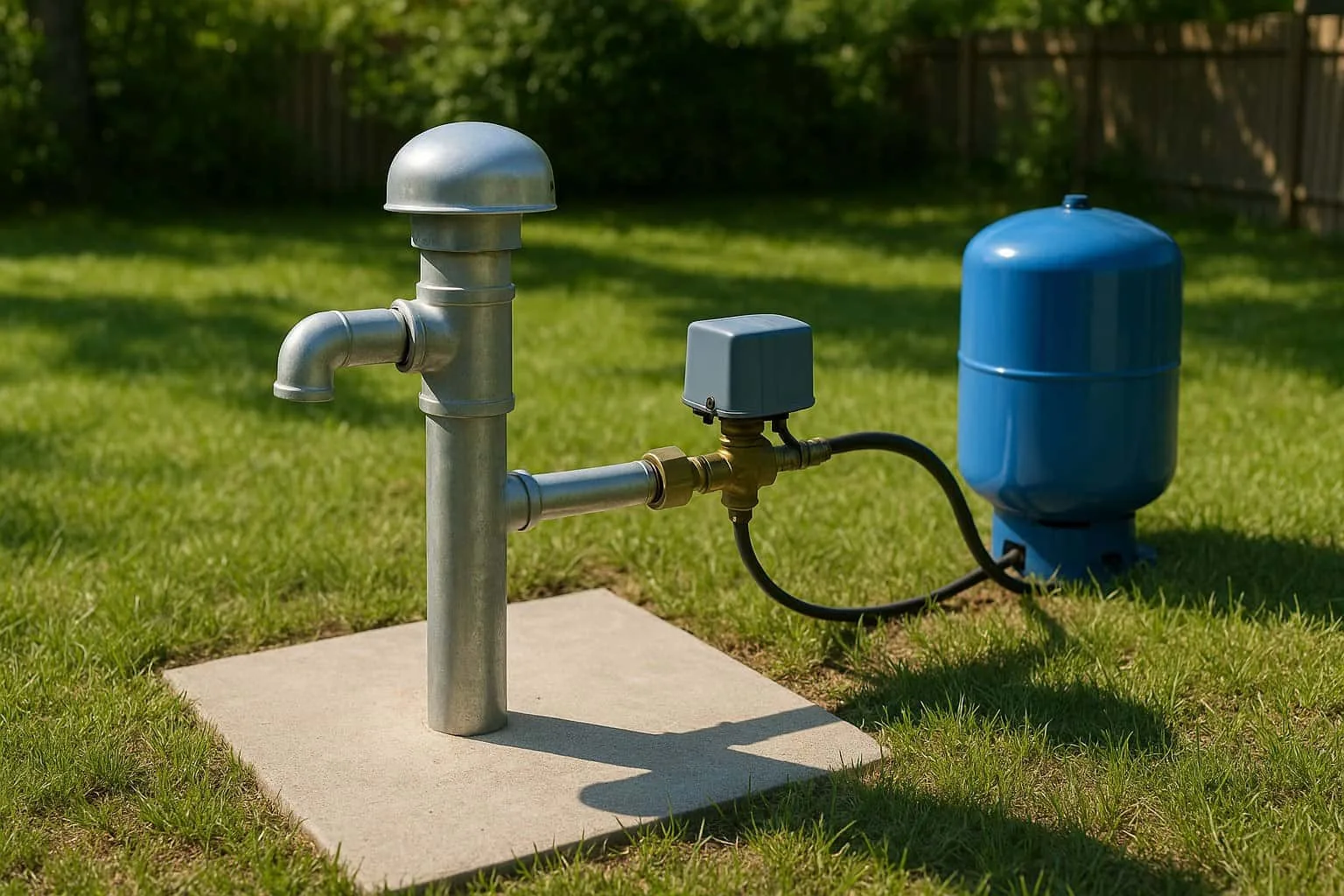
Winter can be brutal on your well system. Freezing temperatures, ice formation, and reduced water usage create conditions for problems that reveal themselves when spring thaw begins. Spring maintenance is essentially damage assessment and system recovery.
Inspect for Winter Damage (Frozen Pipes, Cracked Casing)
Walk around your well head first thing in spring. Look for:
- Cracks in well casing caused by ground shifting during freeze-thaw cycles
- Damaged well caps that may have cracked from ice pressure
- Exposed pipes that weren’t adequately insulated
- Ice dams near the well head that could cause flooding
- Standing water around the well (indicates possible leak or poor drainage)
Critical: If you see any visible cracks or damage, stop using the water immediately and contact a well professional. Contaminated water poses serious health risks.
Test Water Quality After Thaw
Spring runoff can introduce bacteria, nitrates, and other contaminants into your well. Testing is non-negotiable after winter:
Essential Tests:
- Coliform bacteria (includes E. coli) – $15-$50
- Nitrates/nitrites – $20-$40
- pH and hardness – $10-$30
- Any local concerns (arsenic, uranium, etc.) – $30-$100 each
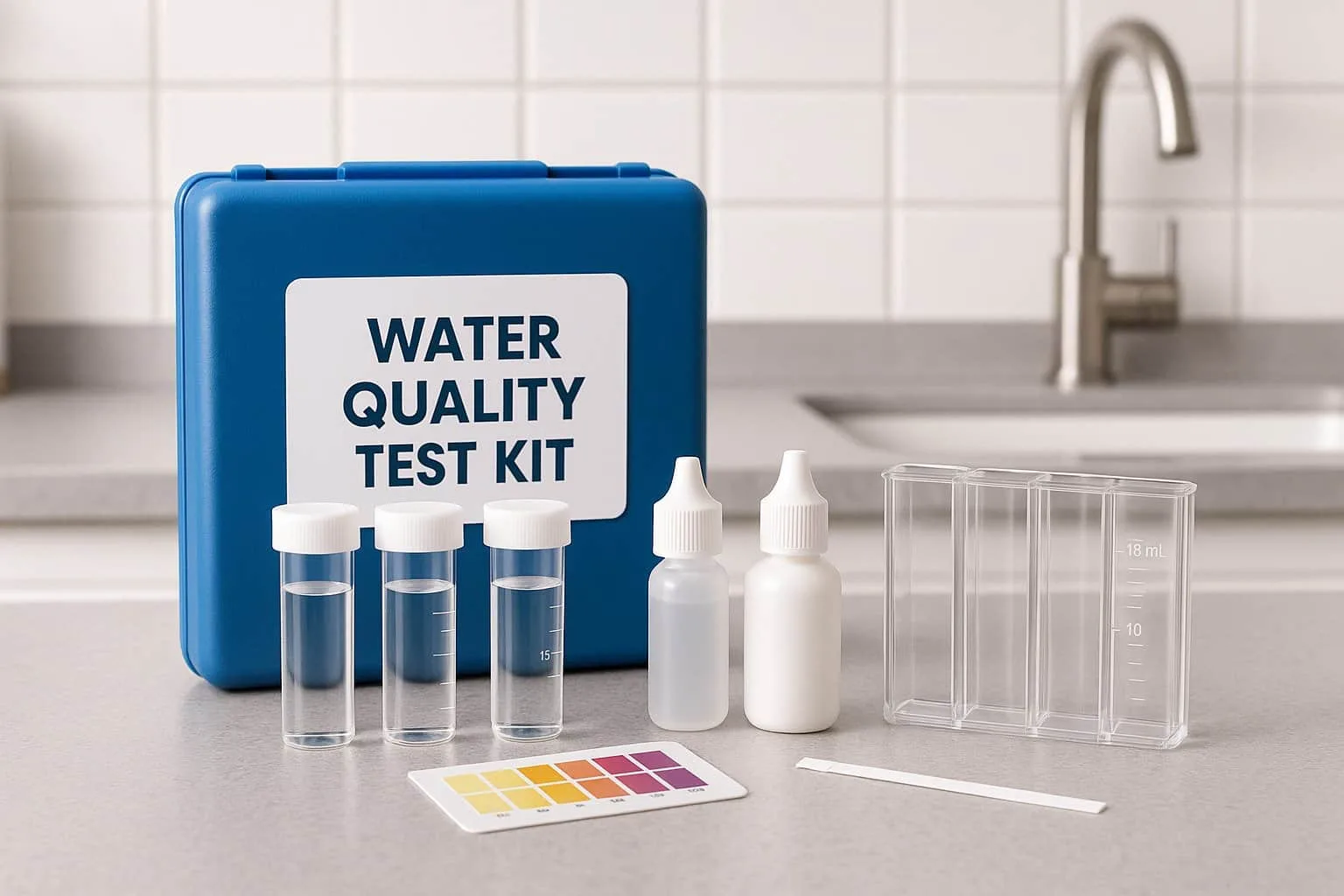
How to Test:
- Use an EPA-certified lab (find one through your state health department)
- Collect sample following lab instructions exactly
- Run water for 5 minutes before collecting
- Use cold water tap only (never hot water)
- Deliver to lab within 24 hours (or follow specific instructions)
Clean Well Cap and Vent
Your well cap is the first line of defense against contamination. Winter debris, ice, and rodent activity can compromise it:
- Remove debris (leaves, twigs, snow accumulation) from around well head
- Clean the cap with mild soap and water
- Inspect the cap for cracks or loose parts
- Check the vent for blockages (rodent nests are common)
- Tighten all components but don’t overtighten plastic parts
- Replace if damaged (new caps cost $50-$150)
Safety Note: Never remove the well cap unless you’re a trained professional. Disturbing the seal can introduce contaminants.
Pressure Tank Air Charge Check
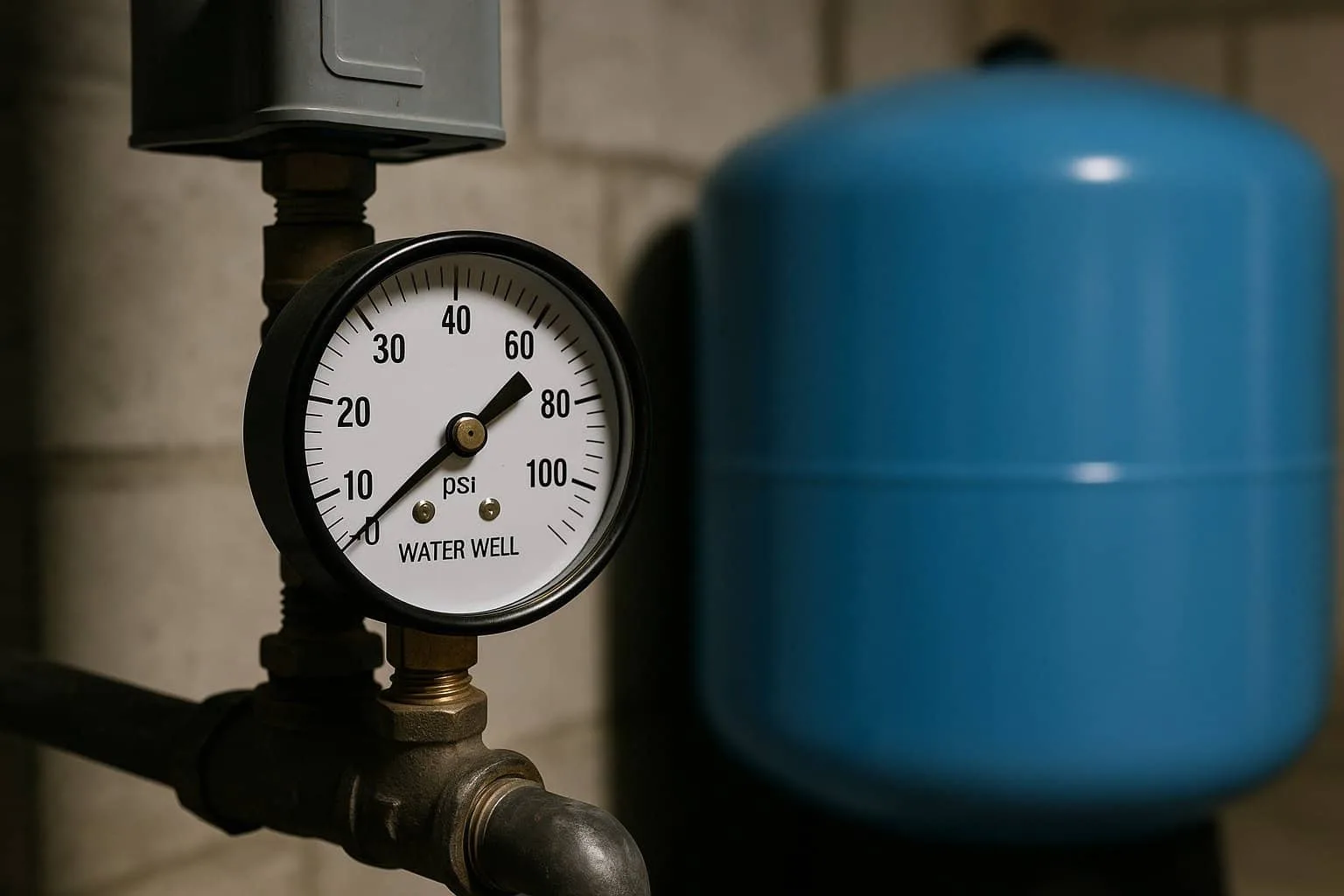
Winter temperature fluctuations can affect pressure tank air charge, causing pump cycling issues:
How to Check:
- Turn off power to well pump at breaker
- Open a faucet to drain water pressure (watch gauge hit 0 psi)
- Close faucet and restore power
- Wait for pump to shut off and note pressure gauge reading
- Measure tank air pressure with tire gauge at Schrader valve
- Air pressure should be 2 psi below pump cut-in pressure (typically 28 psi for 30/50 switch)
Complete Seasonal Maintenance Schedule (Printable)
Spring Checklist (March-May)
- ☐ Inspect well head for winter damage
- ☐ Test water quality (bacteria, nitrates, pH)
- ☐ Clean well cap and vent
- ☐ Flush water system thoroughly
- ☐ Check pressure tank air charge
- ☐ Insulate any exposed pipes discovered
- ☐ Remove debris from well area
- ☐ Schedule annual professional inspection
- ☐ Review and update maintenance records
Summer Checklist (June-August)
- ☐ Monitor water levels daily during heat waves
- ☐ Check for pump overheating signs
- ☐ Test water quality monthly
- ☐ Inspect for algae/bacterial growth
- ☐ Reduce irrigation if well struggling
- ☐ Check pressure gauge regularly
- ☐ Listen for unusual pump noises
- ☐ Verify drainage away from well
- ☐ Track water usage patterns
Fall Checklist (September-November)
- ☐ Insulate all exposed pipes
- ☐ Drain and winterize outdoor spigots
- ☐ Clean well area of leaves/debris
- ☐ Run final comprehensive water test
- ☐ Winterize well equipment
- ☐ Check and service well house heating
- ☐ Clear drainage paths
- ☐ Verify pressure tank condition
- ☐ Prepare emergency contact list
- ☐ Stock emergency water supply
Winter Checklist (December-February)
- ☐ Monitor weather for extreme cold
- ☐ Keep well house heated (if applicable)
- ☐ Run water during extreme cold snaps
- ☐ Clear snow from well head area
- ☐ Check pressure gauge daily
- ☐ Inspect for ice formation
- ☐ Verify emergency water supply available
- ☐ Know emergency thawing procedures
- ☐ Have well contractor contact ready
Summary: Your Well Maintenance Game Plan
Seasonal well maintenance is an investment that pays for itself many times over. Here’s your action plan:
This Month:
- Run a complete water quality test if you haven’t in 6 months
- Inspect your well head for any visible issues
- Check your pressure gauge and note the reading
- Create or update your maintenance log
- Research local well contractors for emergencies
Remember: A well that’s maintained properly lasts 25-35 years. A neglected well lasts 15-20 years and costs 3-5 times more in repairs. The choice is yours.
Your water well is your home’s lifeblood. Treat it right, and it will serve you well for decades.
This article provides general guidance. Always consult a certified well professional for specific issues with your well system. Follow all local codes and regulations for well maintenance and repairs.
Sources
The guidance in this article is informed by the following authoritative sources:
- USGS — Ground Water — U.S. Geological Service data on groundwater levels, well construction, and water quality.
- EPA — WaterSense — EPA guidance on water conservation and water quality standards.
- CDC — Water and Wellness — Centers for Disease Control and Prevention guidance on safe drinking water.
External links open in a new tab. Verify current details with the source before relying on them.