
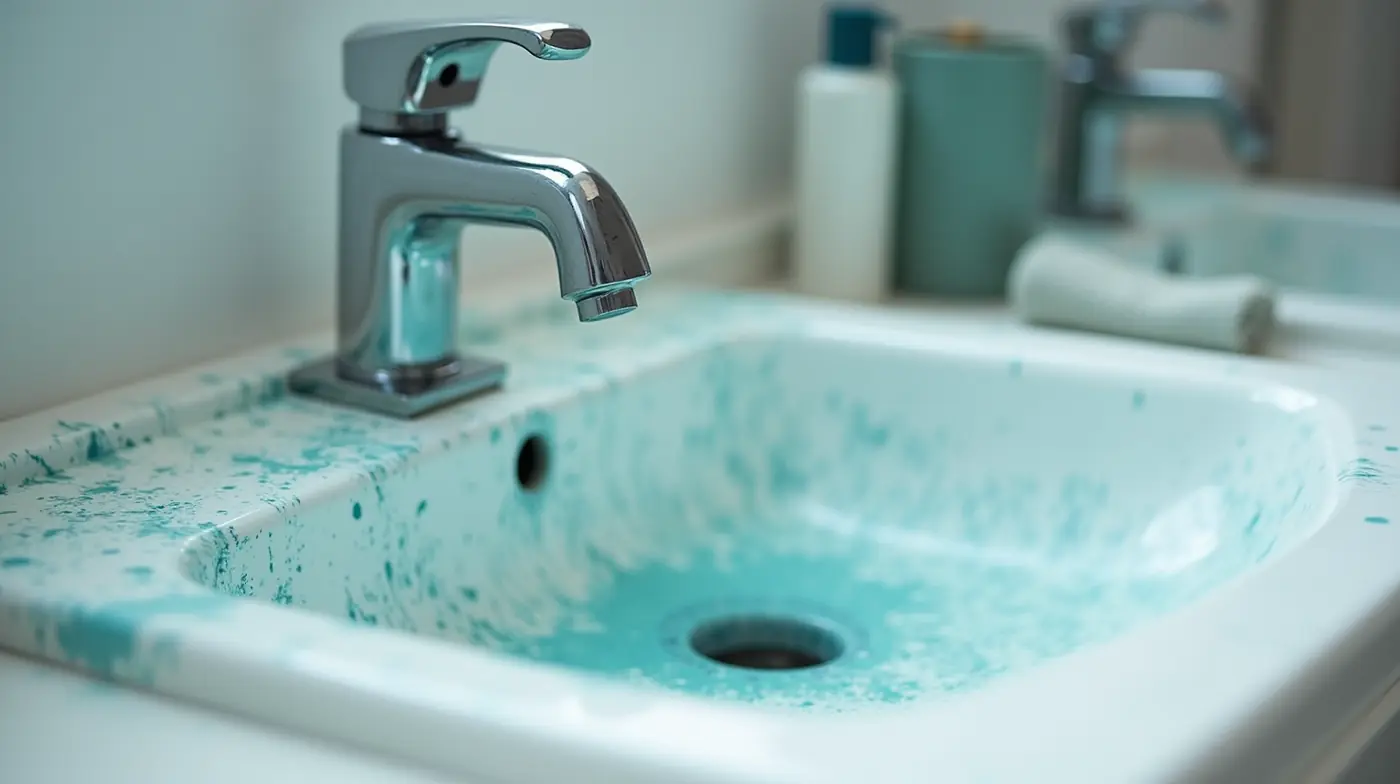
Turn on the tap and find a faint blue-green film building on the faucet, or notice a slight metallic tang in the water that aerating it does not clear — copper in well water is behind it far more often than homeowners realize. Unlike rust, which stains orange, copper announces itself in blues and greens, and unlike many contaminants it has a well-defined safety threshold that most people have never heard of. The good news: copper in well water is almost always fixable, and the fix depends entirely on answering one diagnostic question first — is the copper coming from your aquifer, or from your own plumbing? In this 2026 guide you will learn what copper in well water looks like, what the EPA’s limits actually say, how to pinpoint the source, how to test for it correctly, and which of six removal approaches actually work, with real 2026 cost ranges and a step-by-step plan you can follow.
By Lisa Martinez, Water Quality Specialist
Lisa holds a degree in Environmental Science and specializes in private well water safety and treatment.
Last updated: October 29, 2026
Disclosure: As an Amazon Associate, we earn from qualifying purchases on this page. Product selections are based on independent research and real well water data.
What Copper in Well Water Looks Like
Copper leaves a visual signature that is hard to confuse with anything else, and the pattern of the staining tells you a great deal about where it is coming from. From the lab samples and on-site visits we handle for private wells, the signs to check for first are:
- Blue-green rings and film on fixtures. Rings in the toilet bowl, blue-green haze on sink basins, and a film on tub waterlines that resists normal cleaners. This is dissolved copper oxidizing on contact with air inside the fixture — the classic signature.
- Greenish or blue-tinted water, especially after sitting. Water drawn from a pipe that has been closed for 12–24 hours carries a higher copper load than running water. If the water looks slightly green at first draw but clears within a minute of running, that is a strong plumbing-side clue.
- Metallic or “penny” taste. Many homeowners describe it as tasting like a coin. If taste is your main complaint, our guide on metallic taste in well water walks through the full diagnosis, because iron and lead can produce a similar flavor.
- Greenish discoloration inside the water heater tank. When you replace a tank, green staining on the interior glass is a telltale sign of elevated copper circulating through the house.
- Soap scum that is hard to rinse off. Copper interferes with how soap lathers, so suds can look thinner and leave a film that lingers on skin and dishes.
Pro tip: the 24-hour static test
Close every tap in the house, wait at least 12 hours (overnight is easiest), then open the kitchen cold tap and run it for five minutes. If the green tint or taste clears quickly while running, most of the copper is leaching from your indoor piping. If it persists for several minutes, the aquifer itself is likely contributing, and a lab test becomes the next step.
Safe Copper Levels in Well Water: What the EPA Actually Says
Here is the number most well owners need to know: the EPA’s secondary maximum contaminant level (SMCL) for copper is 1.3 milligrams per liter (mg/L), also written as 1.3 parts per million (ppm). It is a “secondary” standard, meaning it is a non-enforceable guideline focused on taste, staining, and corrosion management rather than an immediate health emergency threshold. The enforceable primary standard under the Lead and Copper Rule is 1.2 mg/L at the tap for public water systems — private wells are not regulated, which is exactly why testing is on you.
| Standard | Copper Limit | What It Means |
|---|---|---|
| EPA Secondary SMCL | 1.3 mg/L (ppm) | Non-enforceable guideline for groundwater quality; above this, taste and staining complaints rise sharply. |
| EPA Primary MCL (Lead & Copper Rule) | 1.2 mg/L (ppm) at the tap | Enforceable for public systems; the 90th percentile of tap samples must stay under this value. |
| WHO guideline value | 2.0 mg/L (ppm) | Health-based guideline from the World Health Organization drinking water quality standards. |
| Taste threshold | ~0.3 mg/L (ppm) | Where most people first notice a metallic flavor — well below any safety limit. |
Source: U.S. EPA, Secondary Drinking Water Regulations, and the Lead and Copper Rule, 40 CFR Part 141.
From a health standpoint, copper is an essential nutrient in trace amounts, and the levels found in most wells are far below concern. Chronic intake consistently above the action levels is the scenario that matters — it has been associated with gastrointestinal distress, and it is specifically cautioned against for people with kidney disease, those on dialysis, and individuals with Wilson’s disease, a genetic condition that impairs copper metabolism. If your lab result comes back above 1.3 ppm, treat it as a fix-this-year item, not a someday item.
The number to remember
Under 0.3 ppm: no one notices. 0.3–1.3 ppm: taste and staining complaints begin. Above 1.3 ppm: you are past the EPA’s guideline and removal or correction is warranted. Most raw well water tests in under 0.05 ppm — which is why source identification matters so much.
Where Is the Copper Coming From? Well vs. Plumbing
This is the single most important diagnostic step in the entire process, and it changes which fix you buy. In the lab work we do for private wells, roughly 8 out of 10 copper complaints turn out to be plumbing-side — copper leaching out of the house’s own copper pipe, fittings, or water heater connections — rather than copper coming up with the water from the ground. Copper in raw groundwater is usually very low because it binds tightly to soil and rock; it is the water sitting in your pipes that picks up the load.
| Clue | Copper From the Well | Copper From Plumbing |
|---|---|---|
| Where it shows up | Every tap, including the outside garden spigot | Indoor taps mainly; outside spigot stays clear |
| 24-hour static test | Green tint persists after 5 minutes of flushing | Green tint clears within a minute or two of flushing |
| Water chemistry | Often paired with low pH, high iron, or high sulfate water | Often paired with acidic (low pH) water inside the home |
| Lab comparison | Copper elevated in the raw well sample itself | Copper jumps sharply between first-draw and post-flush samples |
Warning: acidic water is the usual enabler
Copper pipe is inert at neutral pH but actively dissolves in water below about pH 7.0. If your well water is acidic, it is leaching copper from your plumbing even if the aquifer is clean. Check your pH first — see our guide on acidic well water and pH testing before buying any copper-removal equipment. Raising the pH usually solves the copper problem at the root.
How to Test for Copper in Well Water
Copper strip tests sold for pools are not reliable for drinking-water decisions — they read a coarse range and cross-react with other metals. A certified lab analysis is the only way to get a number you can act on, and the sampling method matters as much as the lab. Here is the procedure we recommend, which separates plumbing contribution from aquifer contribution in a single visit:
- Collect a first-draw (raw) sample. Overnight, close every tap in the house. In the morning, fill a clean 16-ounce wide-mouth bottle directly from the kitchen cold tap without running the water first. Label it “FIRST DRAW.” Copper concentrates in standing water, so this sample carries the highest load.
- Collect a post-flush sample. Run the same cold tap for five minutes, then fill a second identical bottle. Label it “AFTER 5 MIN FLUSH.”
- Collect an outside sample if you have one. Fill a third bottle from the garden spigot after running it for two minutes. If this sample is clean while the indoor samples are not, the source is your plumbing — almost no further investigation needed.
- Send the samples to a certified laboratory. Request a metals panel that includes copper, plus iron, manganese, and lead while the samples are in transit — the combined picture is what tells you which treatment system to buy. Most state health department labs and private labs (EPA Method 200.8 or ICP-MS) report copper at the 0.01 mg/L level, which is the sensitivity you need. A well water test kit with a lab service handles the ordering and shipping, and our complete guide to testing well water covers the full sampling protocol.
- Compare first-draw to post-flush. If first-draw is 0.9 ppm and post-flush is 0.1 ppm, roughly 90% of your copper load is coming from standing water in the pipes — a plumbing-side problem. If both samples read above 1.3 ppm, the aquifer is the contributor and you need a whole-house treatment approach.
For a quick field check while you wait on lab results, a copper test kit with colorimetric reagent tablets gives you an approximate range, and a digital pH meter tells you whether your water is acidic enough to be leaching copper from pipe in the first place. Treat both as screening tools only — the lab number is what drives your treatment decision.
How to Remove Copper From Well Water: 6 Methods Compared
The right removal method is a direct function of where the copper is coming from. If the source is your plumbing, no filter you buy will permanently solve the problem — it will only slow the leaching while you plan the real repair. If the source is the aquifer, a whole-house treatment system is the correct investment. Based on the lab results and system audits we run, here is how the six proven approaches compare for 2026:
| Method | Best When | Typical 2026 Cost | What to Know |
|---|---|---|---|
| 1. Fix the source (replace corroding copper plumbing, or raise pH) | Lab shows plumbing-side contribution; outside spigot is clean | $500–$3,000 (plumbing labor) | The only permanent fix for plumbing-side copper. Replace corroded sections, or treat the acidic water that is doing the leaching. |
| 2. Acid neutralizer | Low pH water is the leaching driver (pH below 7.0) | $1,500–$4,500 installed | Passes water through a limestone or antiscalant bed to raise pH. Stops copper leaching at the root and protects pipes, pumps, and appliances. Reclaimant beds need annual inspection. |
| 3. Water softener (ion exchange) | Hard water with copper under ~1.5 ppm | $1,500–$3,500 installed | Standard salt-based resin swaps dissolved copper ions for sodium. Works well when you already have or need a softener for hardness; sizing guidance is in our well water softener sizing guide. |
| 4. Activated carbon filter | Copper under ~1 ppm, taste or staining is the complaint | $300–$1,500 (whole house or point of use) | Coconut-shell carbon adsorbs a portion of dissolved copper and kills the metallic taste. Media must be changed every 6–12 months; cheap coconut-shell carbon saturates faster than premium grades. |
| 5. Copper-removal resin (chelating / specialty media) | Persistent moderate levels that a softener barely dents | $800–$2,500 | Specialty chelating resins bind copper specifically. Niche product — have a local water professional size it against your lab numbers before buying. |
| 6. Reverse osmosis system (point of use) | You want safe drinking water fast while a whole-house fix is planned | $400–$1,500 | An under-sink RO unit removes roughly 90%+ of dissolved copper at the kitchen tap. Does not treat bathing or appliance water — a stopgap, not a system. |
Cost ranges reflect 2026 installed prices in the western and central US for standard residential systems; labor varies by region and access.
Our default recommendation from the field: diagnose first, treat second. A $60 lab test plus a $40 pH meter will tell you whether your money belongs in a plumbing repair, an acid neutralizer, or a filtration system — and buying a carbon filter for a plumbing-side problem is the single most common copper mistake we see.
Copper vs. Iron vs. Lead: How to Tell the Difference
Three metals cause most of the “my water looks or tastes wrong” calls we take, and homeowners routinely mix them up. The staining color is your fastest diagnostic, and the lab confirms it:
| Contaminant | Staining / Color | Taste | Most Common Source |
|---|---|---|---|
| Copper | Blue-green rings, greenish water | Metallic, “penny” flavor | House copper pipe leached by acidic water |
| Iron | Orange or rust-colored rings, brown water | Metallic, sometimes rusty | Dissolved in the aquifer itself — see our iron in well water guide |
| Lead | No staining at all — it is invisible | None — also invisible | Old solder, lead pipe, or brass fittings — see our lead in well water guide |
Because lead shows no color and no taste, any home testing for copper or iron should include lead in the same lab panel — one sample, one fee, and the three metals that matter most get answered together.
How to Prevent Copper From Building Up
Once your levels are under control, a few habits keep them there. What we recommend to the homeowners we monitor:
- Keep the pH above 7.0. Retest pH annually with a digital meter. If it drifts below 7.0, the leaching is restarting even if your treatment system is still running.
- Watch your softener’s regeneration. An exhausted ion-exchange bed stops removing copper quietly. If your water softener has not regenerated in over two weeks, your copper load will climb.
- Run the first-draw water. Let the cold tap run for 30–60 seconds before filling a kettle or coffee maker, especially after long periods of no use. It is the standing water that carries the load.
- Retest annually, and after any work. Re-run the lab panel 12 months after any plumbing repair or pH treatment installation, then once a year. Copper levels drift as pipes age and chemistry changes.
- Consider a point-of-use carbon filter at the drinking tap. Even with a whole-house system, a small under-sink carbon unit keeps the drinking water’s taste clean and buys margin against the next drift.
FAQ: Copper in Well Water
Is copper in well water dangerous?
At the levels most wells produce, no — copper is an essential trace nutrient, and typical well water reads far below the EPA’s 1.3 mg/L guideline. Chronic intake consistently above that level is the concern, particularly for people with kidney disease, individuals on dialysis, and those with Wilson’s disease. If a lab result comes back above 1.3 ppm, get it addressed promptly rather than waiting for the next annual test.
Why is my well water turning green?
Green or blue-green water is dissolved copper oxidizing in the fixture or pipe. In most homes we inspect, the cause is acidic water leaching copper out of indoor copper pipe — the 24-hour static test and a three-sample lab panel will confirm whether the source is your plumbing or the aquifer.
Will a water softener remove copper from well water?
Yes, a salt-based ion-exchange softener removes dissolved copper, and it is the recommended whole-house method when your water is also hard. Two caveats: it works best below roughly 1.5 ppm of copper, and it only works while the resin has capacity — an exhausted softener stops removing copper with no visible warning.
How much does it cost to remove copper from well water?
For 2026, the realistic ranges are: $300–$1,500 for an activated carbon system, $400–$1,500 for a point-of-use reverse osmosis unit, $800–$2,500 for specialty copper-removal resin, and $1,500–$4,500 installed for an acid neutralizer. If the source is corroding plumbing, the fix is a plumbing job in the $500–$3,000 range — usually cheaper and more permanent than any filter.
Does copper cause a metallic taste in well water?
It is one of the top three causes, alongside iron and lead. Copper taste typically shows up around 0.3 ppm and is often described as a “penny” flavor. Because the three metals taste similar, a combined lab panel is the only way to identify which one — or how much of each — is driving the taste. Our metallic taste guide covers the full diagnosis.
The Bottom Line
Copper in well water is one of the most fixable water quality problems a homeowner can have, and the fix starts with a question, not a product purchase: is the copper coming from the ground, or from your pipes? Run the 24-hour static test, collect first-draw and post-flush samples, and send them to a certified lab with iron, manganese, and lead on the same panel. Under 0.3 ppm, no one will notice it. Between 0.3 and 1.3 ppm, taste and staining are your warning band. Above the EPA’s 1.3 mg/L guideline, you have a fix-this-year item — usually a pH correction or a plumbing repair rather than an expensive filtration system. Get the lab number, match the treatment to the source, and retest in twelve months, and the blue-green film stays a one-time problem.
See Also
- Acidic Well Water 2026 — the most common reason copper leaches from plumbing: how to test pH and correct it at the source.
- Lead in Well Water 2026 — the invisible metal that belongs on the same lab panel as your copper test.
- Well Water Test Kit 2026 — the best kits and lab panels for getting a real copper number, plus what else to test in the same sample.
#Copper #WellWater #PrivateWell #WaterQuality #WaterTesting #CopperRemoval #WellOwner #WaterTreatment #WellMaintenance #Groundwater #BlueGreenStains #WaterSafety #HomeWell #WellInspection #HardWater