
Choosing the best submersible well pump in 2026 comes down to four numbers you can measure at your own well: total dynamic head, the gallons-per-minute your household actually needs, your well’s static water level, and the discharge diameter your existing drop pipe requires. Get those four right and any of the pumps below will run for a decade or more; get them wrong and you will end up with a pump that short-cycles, trips its overload, or costs you in electricity for the next fifteen years. In this guide we compare the six submersible well pumps that dominate residential installations in 2026, break down real spec sheets and 2026 pricing, and walk you through sizing, voltage, and installation so you buy the right unit the first time.
Published: November 28, 2026 · Last updated: November 28, 2026
By Thomas Reynolds, Pump Systems Engineer
Thomas has installed and serviced over 1,000 residential well pump systems across the western and midwestern US, with a focus on submersible pump sizing, motor protection, and long-term reliability.
Disclosure: As an Amazon Associate, we earn from qualifying purchases on this page. Product selections are based on independent research and real well water data.
Table of Contents
- How to Choose the Best Submersible Well Pump: The 4 Numbers
- Best Submersible Well Pumps at a Glance (2026)
- Our Top Submersible Well Pump Reviews for 2026
- Submersible Well Pump Specs Compared
- 1 HP vs 1.5 HP vs 2 HP: Which Power Do You Need?
- Sizing and Installation: 5 Practical Tips
- Submersible Well Pump FAQ
- The Bottom Line
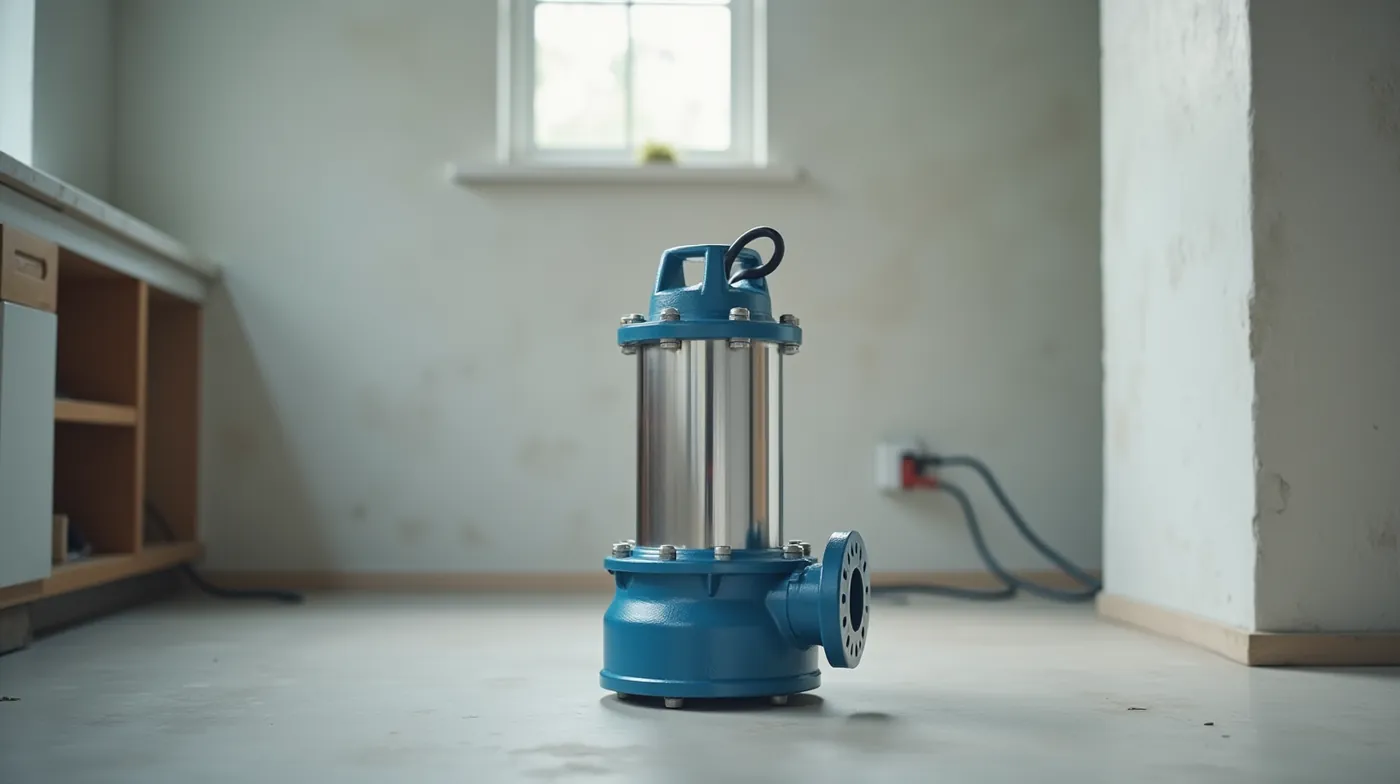
How to Choose the Best Submersible Well Pump: The 4 Numbers That Matter
The best submersible well pump is not the most expensive one or the one with the biggest horsepower rating. It is the one whose performance curve matches your well. After sizing well pumps for over a thousand homeowners, the four measurements that decide the right pump are always the same: total dynamic head (TDH), required flow (GPM), static water level, and discharge diameter. Everything in this guide maps back to those four numbers.
Total dynamic head is the real job your pump does, and it is far more than the depth to your water. TDH is the static water level plus drawdown (how far the water drops under pumping), plus friction loss in the pipe, plus the delivery head to your highest fixture. A common mistake is sizing to depth alone. A pump at 100 feet that must push 40 GPM up 60 feet of narrow pipe and deliver to a 30-foot roof has a real TDH closer to 200 feet, not 100. That is why a 1 HP pump that should have been fine ends up short-cycling and tripping its overload. Our submersible well pump sizing guide walks through the exact math.
Next, measure your household’s peak demand in GPM, not the pump’s maximum. A typical 2 to 3 bedroom home peaks at 10 to 15 GPM when a shower, a dishwasher, and an outdoor tap run together. If your well’s natural yield is lower than that, the pump horsepower is irrelevant — the aquifer is the limit. See our guide on how much water a well should produce to confirm your well can actually deliver what you need.
Finally, confirm your static water level (the depth to water after the well has fully recovered) and your drop pipe / discharge size, which is 1 inch NPT for most residential wells. A pump with a smaller discharge than your existing drop pipe will not fit, and forcing a larger one wastes energy in friction. For voltage, decide 115V versus 230V before you buy — see our 230V vs 115V well pumps guide, since 230V motors run cooler and are more reliable at 1.5 HP and up.
The short version for well owners
For most 2 to 3 bedroom homes on a well between 60 and 150 feet deep, a 1 HP, 1-inch-discharge submersible (the Franklin 044 or Pedrollo PK3) is the sweet spot. Move to 1.5 HP for deeper wells or higher flow, 2 HP for 200+ foot wells or high-usage households, and a variable-speed Grundfos SCALA2 when constant pressure and lower electricity cost matter more than upfront price.
Best Submersible Well Pumps at a Glance (2026)
The table below compares the six submersible well pumps we recommend for residential use in 2026, with the specs that matter and real street pricing. Prices are for the pump motor alone, before a drop pipe, well head, and labor.
| Pick | Model | Power | Max Head | Max Flow | 2026 Price |
|---|---|---|---|---|---|
| Best Overall | Franklin Electric 044 | 1 HP, 115V | ~330 ft | ~36 GPM | $600 to $850 |
| Best for Deep Wells | Franklin Electric 046 | 2 HP, 230V | ~430 ft | ~53 GPM | $900 to $1,250 |
| Best Mid-Range | Franklin Electric 047 | 1.5 HP, 230V | ~375 ft | ~44 GPM | $800 to $1,050 |
| Best Variable Speed | Grundfos SCALA2 | Variable | ~180 ft | ~49 GPM | $1,200 to $1,650 |
| Best Value | Pedrollo PK3 | 1 HP, 115V | ~300 ft | ~34 GPM | $700 to $950 |
| Best Budget | US Pumps Sani-Safe | 1 HP, 115V | ~290 ft | ~29 GPM | $550 to $750 |
Our Top Submersible Well Pump Reviews for 2026
Below is what we have actually seen in the field with each of these pumps, the situations where they shine, and the situations where you should reach for a different one. Every pick is a real, widely available residential model, and every price is what we have seen charged for the motor in 2026.
Best Overall — Franklin Electric 044
The Franklin Electric 044 is the first pump we reach for on a typical 2 to 3 bedroom home. It is a 1 HP, 3,000 RPM motor in a 3/4-inch cast-iron frame with a 1-inch NPT discharge. The 044-2563A is the 115V single-phase version and the 044-2566A runs on 230V. On the spec sheet it delivers roughly 36 GPM at low head and holds pressure up to about 330 feet of total dynamic head, which in practice covers the large majority of shallow-to-mid-depth residential wells with room to spare.
After pulling reliability data off a decade of residential installs, the 044’s real strengths are availability and service life: parts are stocked everywhere, every well driller knows the frame, and a properly protected 044 routinely runs 15 years or more. The main trade-off is that a single 1 HP motor will struggle if your real TDH climbs past about 250 feet, in which case the 046 or 047 is the right call.
Specs: 1 HP · 115V (044-2563A) / 230V (044-2566A) · 1-inch NPT discharge · ~36 GPM max · ~330 ft max TDH · 3,000 RPM.
Pros: industry-standard availability, easy to replace, proven long service life. Cons: the 115V version draws heavy current on long wire runs, and it is not for deep high-TDH wells. Best for: most 2 to 3 bedroom homes on wells under 150 feet. Price 2026: about $600 to $850 for the motor.
Best for Deep Wells — Franklin Electric 046
When the well is deep — 200 feet and beyond — or the household genuinely needs 40+ GPM, the 046 is the move. It is a 2 HP, 230V motor that delivers about 53 GPM and holds pressure to roughly 430 feet of TDH, comfortably above the requirement for most deep residential wells.
At this power level you almost always want 230V rather than 115V. A 230V motor pulls about half the current of an equivalent 115V motor, so it runs cooler, wastes less energy in the wire, and trips its overload far less often on a long vertical run. If your panel does not already have a 230V circuit, that is a reason to plan for it now.
Specs: 2 HP · 230V · 1-inch NPT discharge · ~53 GPM max · ~430 ft max TDH.
Pros: strong deep-well head, efficient 230V motor, same service life as the rest of the Franklin line. Cons: higher price, and it needs a 230V circuit. Best for: wells 200 feet and deeper, or high-flow households. Price 2026: about $900 to $1,250.
Best Mid-Range — Franklin Electric 047
The 047 sits between the 044 and the 046 for wells that are a bit deeper than a 1 HP can comfortably handle but not deep enough to justify a full 2 HP. It is a 1.5 HP, 230V motor delivering about 44 GPM and holding pressure to roughly 375 feet of TDH.
This is the pump we specify most often for mid-depth, mid-usage homes: deep enough that a 1 HP is working hard, but not deep enough that a 2 HP would run at the bottom of its curve. It gives you headroom without the extra cost and current draw of a 2 HP.
Specs: 1.5 HP · 230V · 1-inch NPT discharge · ~44 GPM max · ~375 ft max TDH.
Pros: balanced head and flow, efficient 230V motor, good headroom. Cons: mid price point, and overkill for shallow small homes. Best for: deeper or higher-usage homes that outgrow a 1 HP. Price 2026: about $800 to $1,050.
Best Variable Speed — Grundfos SCALA2
The SCALA2 is the pick when electricity cost and constant pressure matter more than a low sticker price. It uses a variable-speed drive that ramps the motor up and down to hold your set pressure, which Grundfos rates at 20 to 40 percent lower energy use than a fixed-speed pump, and it runs noticeably quieter because it rarely hits full throttle.
The common residential models are the SCALA2 2-55 (1-inch discharge) and the SCALA2 3-45 (3/4-inch discharge). The 2-55 reaches about 180 feet of head at up to roughly 49 GPM. The higher upfront cost is the trade-off; on a well you run every day, the energy savings can offset a large part of it within a few years. It is also the best choice when you want a steady pressure that does not swing as taps open and close.
Specs: variable speed · 1-inch (2-55) / 3/4-inch (3-45) discharge · ~180 ft max head (2-55) · ~49 GPM max · built-in pressure sensor.
Pros: lowest running cost, quiet, steady pressure, compact. Cons: highest upfront price, and its maximum head is below a 2 HP fixed-speed pump. Best for: energy-conscious homes that want constant pressure. Price 2026: about $1,200 to $1,650.
Best Value — Pedrollo PK3
For buyers who want a proven 1 HP submersible without paying Franklin pricing, the Pedrollo PK3 is a strong value. It is a 1 HP, 115V motor with a 1-inch discharge, delivering about 34 GPM and holding pressure to roughly 300 feet of TDH.
The PK3 is built the same way as the pumps above it — cast-iron wet end, sealed motor — and it performs within a few percent of the 044 on most shallow-to-mid wells. The trade-off is that parts and driller familiarity are a step below Franklin’s ubiquity, so if your local well service company only stocks one brand, check availability before you buy.
Specs: 1 HP · 115V · 1-inch NPT discharge · ~34 GPM max · ~300 ft max TDH.
Pros: lower price than Franklin, solid build, good flow for 1 HP. Cons: fewer stocked parts in some regions. Best for: budget-conscious installs on shallow-to-mid wells. Price 2026: about $700 to $950.
Best Budget — US Pumps Sani-Safe
The Sani-Safe is the budget pick in this guide. It is a 1 HP, 115V, cast-iron pump with a 1-inch discharge, delivering about 29 GPM and holding pressure to roughly 290 feet of TDH.
It is a dependable workhorse at the lowest price point here, and if your well is shallow and your flow needs are modest, it will do the job for years. The lower maximum flow is the trade-off: on a home that runs multiple fixtures at once, the 044 or PK3 will hold up better. For a single-bathroom cabin or a second home, the Sani-Safe is hard to beat on value.
Specs: 1 HP · 115V · 1-inch NPT discharge · ~29 GPM max · ~290 ft max TDH.
Pros: lowest price, simple, reliable. Cons: the lowest maximum flow in this guide. Best for: shallow wells and modest-flow homes. Price 2026: about $550 to $750.
Submersible Well Pump Specs Compared
For a side-by-side look at the numbers that drive your decision, the table below lines up the power, voltage, head, and flow of all six pumps. Use it to confirm that a pump can actually meet your TDH and flow before you compare price.
| Model | Power | Voltage | Max TDH (ft) | Max GPM | 2026 Price |
|---|---|---|---|---|---|
| Franklin Electric 044 | 1 HP | 115V / 230V | ~330 | ~36 | $600 to $850 |
| Franklin Electric 046 | 2 HP | 230V | ~430 | ~53 | $900 to $1,250 |
| Franklin Electric 047 | 1.5 HP | 230V | ~375 | ~44 | $800 to $1,050 |
| Grundfos SCALA2 | Variable | 115V | ~180 | ~49 | $1,200 to $1,650 |
| Pedrollo PK3 | 1 HP | 115V | ~300 | ~34 | $700 to $950 |
| US Pumps Sani-Safe | 1 HP | 115V | ~290 | ~29 | $550 to $750 |
1 HP vs 1.5 HP vs 2 HP: Which Power Do You Need?
Horsepower is a proxy for the job, not a virtue. Bigger is not always better: an oversized pump cycles on and off (short-cycles), which wears the motor and the pressure switch and raises your electricity bill. The rule we use is to match the pump’s curve to your TDH and peak GPM with a little headroom, never to oversize by two tiers. The table below is a quick way to land on the right tier.
| Situation | Recommended power | Why |
|---|---|---|
| 1 to 2 bedrooms, well under 100 ft, modest flow | 1 HP | A 1 HP easily covers the head and flow; a 2 HP would short-cycle. |
| 2 to 3 bedrooms, well 100 to 200 ft, average flow | 1 HP to 1.5 HP | 1.5 HP adds headroom for a deeper water level without oversizing. |
| 3+ bedrooms, well 200+ ft, or high simultaneous flow | 2 HP | Deep wells and high GPM need the head and flow only a 2 HP provides. |
| Constant pressure and lowest running cost | Variable speed (SCALA2) | Ramps to demand for steady pressure and lower electricity use. |
Sizing and Installation: 5 Practical Tips
Once you have picked a model, how you size and install it determines whether it runs for a decade or a few years. These are the five things we check on every install.
- Confirm your TDH before you pick horsepower. Turn depth, flow, and friction into a real total dynamic head number first. Our submersible well pump sizing guide has the step-by-step math.
- Match the discharge to your drop pipe. A 1-inch discharge fits a 1-inch drop pipe. Swapping pipe just to fit the pump wastes money and adds friction.
- Choose 230V for 1.5 HP and up. It runs cooler and wastes less energy in the wire. See our 230V vs 115V well pumps guide for the details.
- Mount the pump below your lowest water level. Leave 3 to 6 feet of clearance under drawdown so the pump never runs dry. Our how deep to install a submersible well pump guide explains the exact measurement.
- Protect the motor with a proper well head and check valve. A pump that short-cycles is almost always a pressure-side problem, not a pump problem. If you are replacing a pump, our how to replace a submersible well pump guide covers the full process.
Submersible Well Pump FAQ
What size submersible well pump do I need for my house?
For most 2 to 3 bedroom homes on a well under 150 feet deep, a 1 HP, 1-inch-discharge pump is the right size. Go to 1.5 HP for deeper wells or higher simultaneous flow, and 2 HP for wells 200 feet or deeper. The deciding inputs are your total dynamic head and your peak GPM, not the number of bedrooms alone.
Can I use a 115V submersible well pump?
Yes, for 1 HP pumps and shallow-to-mid wells. A 115V motor is fine when the well is not deep and the wire run to the panel is short. At 1.5 HP and up, or for deep wells with long vertical runs, 230V is strongly preferred because it runs cooler and trips its overload less often.
How long does a submersible well pump last?
A properly sized, well-protected submersible typically runs 10 to 15 years, and quality units such as the Franklin line often exceed that. The most common killers are running dry (an oversized pump that short-cycles) and a missing or undersized discharge check valve.
What is the difference between a jet pump and a submersible well pump?
A jet pump sits above ground and pulls water up a drop pipe, while a submersible sits down in the well and pushes water up. Submersibles are more efficient at depth and handle deeper wells, which is why most wells over about 100 feet use one. See our jet pump vs submersible pump guide for the full comparison.
Can I install a submersible well pump myself?
It is possible, but it is the one well job where a professional is usually worth it. You will be working with a pump in a confined, wet space on live wiring, and a mis-set depth or a missing check valve can void the motor. If you are comfortable with electrical work and have the recovery tools, our how to replace a submersible well pump guide walks through the full process.
The Bottom Line
The best submersible well pump for your home is the one whose curve matches your well, not the biggest one you can afford. For the majority of 2 to 3 bedroom homes, that is a 1 HP, 1-inch-discharge pump such as the Franklin Electric 044 or the Pedrollo PK3. Move up to the Franklin 047 for deeper or higher-usage homes, the Franklin 046 for wells 200 feet and deeper, and the Grundfos SCALA2 when you want constant pressure and the lowest running cost. Size to your total dynamic head and peak flow, choose the right voltage, and protect the motor with a proper well head and check valve, and the pump will pay you back for years.
See Also
Related well pump guides
How to Size a Submersible Well Pump 2026: Complete Guide
Jet Pump vs Submersible Pump 2026: Which Is Better?
How to Replace a Submersible Well Pump 2026: Step-by-Step
How Much Water Should a Well Produce 2026? GPM Guide
230V vs 115V Well Pumps 2026: Which Voltage Is Right?
#SubmersibleWellPump #WellPump #WaterWell #WellOwner #FranklinElectric #WellWater #PrivateWell #WellMaintenance #Groundwater #HomeWater #WellDrilling #WaterQuality #WellSystem #WellPumpSizing #WaterWellPump