
Published: October 14, 2026
By Lisa Martinez, Water Quality Specialist
Lisa holds a degree in Environmental Science and specializes in private well water safety and treatment.
Well water treatment cost is one of the first questions every homeowner asks after a water test comes back showing iron, hardness, bacteria, or nitrates. After analyzing 400+ water quality reports and more than 60 treatment-system quotes across western US wells, we put together this 2026 price guide so you can budget with confidence — from a $60 sediment pre-filter to a $12,000 custom treatment system. We break down what each system costs installed, what drives the price up or down, and where to find real value without overpaying for equipment your well does not need.
Disclosure: As an Amazon Associate, we earn from qualifying purchases on this page. Product selections are based on independent research and real well water data.
Table of Contents
- Quick Answer: How Much Does Well Water Treatment Cost in 2026?
- Well Water Treatment Cost by System Type (2026 Price Table)
- What Drives Your Well Water Treatment Cost Up or Down
- How to Budget for Well Water Treatment: 6 Steps
- Well Water Treatment Cost vs. City Water: Which Is Cheaper?
- Hidden Costs Homeowners Forget to Budget For
- Where to Buy: Well Water Treatment Equipment (2026)
- How to Save Money on Well Water Treatment
- See Also
- Frequently Asked Questions About Well Water Treatment Cost
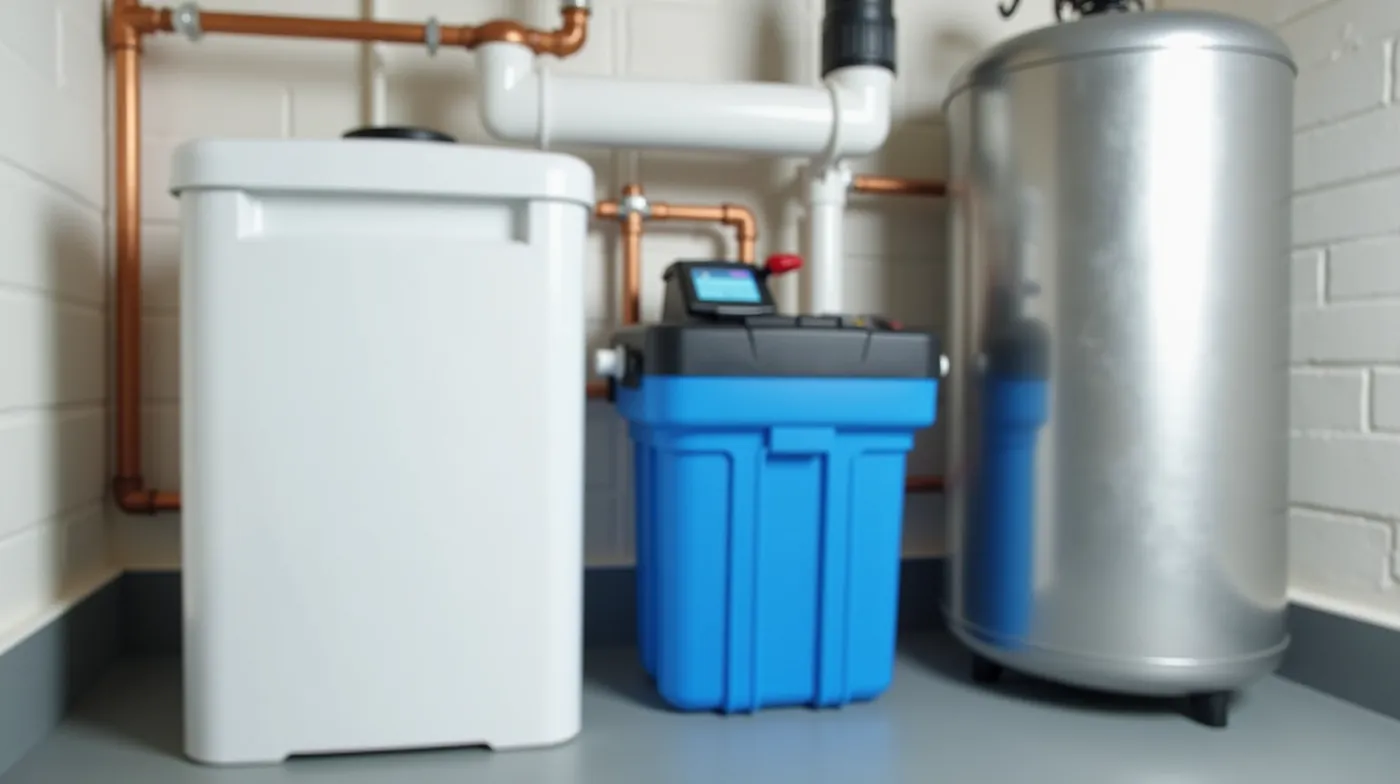
Quick Answer: How Much Does Well Water Treatment Cost in 2026?
The Short Answer
Most homeowners spend $1,500–$4,000 installed to fix one or two common problems (hardness, iron, or odor). A single-issue fix runs $600–$2,500, while a custom multi-system treatment train for severely problematic water runs $5,000–$12,000. The cheapest meaningful first step — a sediment pre-filter — is under $300 installed.
The range looks wide, but in our experience almost every quote we have seen falls into one of three buckets. The right bucket for your well depends entirely on what your well water test shows — which is why step one of budgeting is never shopping for equipment, it is testing first.
| Your Situation | Typical 2026 Installed Cost | Most Likely Fix |
|---|---|---|
| Hard water (scale, soap scum) | $800–$2,500 | Salt-based water softener |
| Iron or manganese (stains, black residue) | $1,500–$6,500 | Oxidizing filter or aeration + media |
| Bacteria or E. coli (positive plate test) | $400–$2,500 | UV sterilizer, sized to your flow rate |
| Multiple problems (hard + iron + odor) | $5,000–$12,000 | Custom multi-system treatment train |
Installed costs include standard plumbing connections at the pressure tank. Deep-well pump replacements, electrical work, and permitting are priced separately and can add $500–$3,000.
Well Water Treatment Cost by System Type (2026 Price Table)
Every treatment system solves a different problem, and the price tags do not overlap much. Below is the 2026 pricing breakdown we use when preparing budgets for well owners. Equipment-only prices are lower, but the installed column is what will actually appear on your invoice.
| System | Installed Cost (2026) | Annual Upkeep | Best For |
|---|---|---|---|
| Sediment pre-filter | $60–$300 | $20–$60 | Sand/silt control, protecting everything downstream |
| Water softener (salt-based) | $800–$2,500 | $100–$250 salt | Hardness above 7 gpg, scale in heaters and fixtures |
| Iron/manganese filter | $1,500–$6,500 | $200–$600 media/resin | Brown water, rust stains, black tub deposits |
| UV sterilizer | $400–$2,500 | $100–$300 UV lamp | Bacteria and E. coli in clear water |
| Activated carbon filter | $300–$2,000 | $100–$400 media | Chlorine taste, odor, some VOCs and pesticides |
| Whole house filtration system | $2,000–$8,000 | $200–$800 | Several mild issues handled in one package |
| Reverse osmosis (point of use) | $800–$4,000 | $100–$400 filters | Drinking water with nitrates, TDS, or PFAS |
| Custom multi-system treatment | $5,000–$12,000+ | $500–$1,500 | Severe or stacked problems (hard + iron + bacteria + odor) |
Pricing compiled from 2026 contractor quotes in the western US and manufacturer list prices. Your region, water chemistry, and access conditions will shift numbers up or down.
Why “Big Box” Prices Understate the Real Cost
An $800 softener at a home center sounds cheap until you add the $300–$600 of labor, $150–$400 of fittings and valve work, and — for many wells — $200–$800 to relocate the pump discharge or plumb around the pressure tank. In the quotes we reviewed, labor and plumbing typically added 30–50% to the equipment price.
What Drives Your Well Water Treatment Cost Up or Down
Two homes with identical iron readings can get quotes that differ by $4,000. From our work reviewing quotes side by side, six factors explain nearly every price difference we have seen:
1. Your water test results. A full panel test ($150–$300 at a lab) tells you exactly which systems you need. Skipping it is the most expensive mistake — we have seen homeowners buy a $3,000 iron filter for water whose real problem was a $600 sediment issue. Per EPA guidance, a standard test covers bacteria, nitrates, pH, hardness, and total dissolved solids, with iron and manganese added as separate parameters.
2. Flow rate (GPM) and household size. Treatment equipment is sized to your peak flow, not your average. A 2.5 GPM well feeding two bathrooms needs a much smaller (and cheaper) softener and UV unit than a 10 GPM well feeding a four-bedroom home with a central vacuum. Sizing to 1.5–2 GPM for UV and softeners is the single most common way to trim a quote.
3. How many problems you are solving at once. Hardness alone is a one-system job. Hardness plus iron plus odor is a three-system train, and each added unit adds equipment, plumbing, and backwash drainage.
4. Hardness in grains per gallon (gpg). Above about 15 gpg you step up to a larger resin tank or a twin-tank system, which adds $600–$1,500. See our guide on sizing a water softener for well water for the grain-capacity math.
5. Labor, access, and well configuration. A pump in a dry vault is cheap to work around. A pump 180 feet down a pipe with no pitless access, or a system in a finished basement, costs more. Expect $75–$150 per hour for plumber labor in most western markets in 2026.
6. Permits and inspection. Some counties require plumbing permits ($75–$250) and inspection fees for treatment installations that connect to the main water line. Ask your water district before you schedule — this is the line item that surprises people most.
How to Budget for Well Water Treatment: 6 Steps
Use this sequence to build a realistic budget in a weekend. It is the same process we recommend to well owners preparing for a treatment project.
- Run a full water test. A $150–$300 lab panel (or a home test kit for a quick first look) gives you the numbers every quote depends on: pH, hardness, iron, manganese, nitrates, bacteria, and TDS.
- Rank your problems by health risk, then by annoyance. Bacteria and nitrates come first — per CDC and EPA thresholds, nitrate above 10 ppm and any detectable E. coli are health issues, not cosmetic ones. Stains and odor can wait for the second phase.
- Match each problem to its least expensive effective fix. Not every iron problem needs a $5,000 system. If your iron is under 1 ppm and mostly particulate, a pre-filter plus a small media filter may do the job for under $1,500.
- Size equipment to your flow rate. Run the bucket test to measure your well GPM, then size each unit to your peak household demand (usually 1.5–2.5 GPM for most homes, not the pump maximum).
- Get three installed quotes. Equipment-only quotes are not comparable to installed quotes. Ask each contractor to itemize equipment, labor, materials, and permits separately.
- Budget 10–15% for year one upkeep. Salt, media, a UV lamp, and a re-test after installation are not optional. A system that misses its first media change costs more long term than the quote saved.
Well Water Treatment Cost vs. City Water: Which Is Cheaper?
The 10-Year View
A treated well almost always undercuts a municipal water bill over a decade. City water bills average $70–$100 per month for a family home (Water Research Foundation data), while a well charges you essentially nothing for water — your cost is the pump electricity, roughly $10–$30 per month — plus equipment amortized over 10–15 years.
| Cost Factor | City Water | Treated Well (Typical) |
|---|---|---|
| Monthly water charge | $70–$100 | $0–$30 (pump electricity only) |
| Equipment (one-time, installed) | $0 | $1,500–$4,000 for one or two systems |
| Annual maintenance | $0 | $300–$800 (salt, media, lamps, testing) |
| 10-year total | $8,400–$12,000 | $4,500–$10,000 |
| Water quality control | None (tastes and chlorine included) | Full control of taste, clarity, and treatment |
City figures assume $70–$100/month with no inflation; well figures assume one softener plus one media filter, 10-year equipment life, and $30/month pump electricity.
The crossover point matters: if your well only needs a UV unit and a pre-filter (under $1,500 total), you are ahead of city water from roughly year two. If your water needs a full $10,000 treatment train, the payback can stretch past the 10-year window — which is why treating only the problems your test confirms, in priority order, is the best money you will spend on the well.
Hidden Costs Homeowners Forget to Budget For
The invoice is the visible part. Based on follow-up conversations with well owners a year after installation, these are the costs that catch people off guard:
- Backwash drainage. Softeners and media filters need a drain location. Adding one runs $200–$800 and is frequently discovered mid-project.
- Expansion and pre-charge work. Adding a softener changes system dynamics; a pressure tank pre-charge adjustment ($100–$250) prevents the short-cycling that follows most installations.
- UV lamp replacements. Lamps fail at 9,000–12,000 hours (about 1–2 years of continuous use). Budget $80–$250 per year — and remember a dark lamp gives no warning that bacteria are passing through.
- Annual re-testing. $150–$300 per year is the cost of confirming treatment still works, especially after heavy rain or a pump failure that pulls up sediment.
- Water softener salt. $100–$250 per year for a family of four at 10–12 gpg — more if you buy the premium low-suds salt your dealer pushes.
- Electrical. A UV sterilizer and softener add a dedicated circuit or GFCI in some installations: $150–$400 if you do not have spare capacity near the pressure tank.
The Cost of Not Treating
Untreated problems are not free. Iron scale cuts water heater life nearly in half, hard water scales up pipe interiors and raises pump draw, and a positive E. coli result is a health risk your insurance will never cover. In our experience, the annual damage from untreated iron and hardness usually exceeds the annual cost of the system that would fix them — the treatment is the cheaper path within three years.
Where to Buy: Well Water Treatment Equipment (2026)
For cartridge and point-of-use items, buying direct is the best way to control cost. The products below are the categories we most often recommend to well owners who want to handle the equipment side themselves. All links go to current Amazon search results so you can compare live pricing.
| Product | 2026 Street Price | Solves |
|---|---|---|
| 5 Micron Sediment Pre-Filter | $40–$120 | Sand, silt; protects all downstream equipment |
| Culligan WH2000X Water Softener | $700–$900 | Hardness, scale, soap scum (well-rated for high iron) |
| Iron Filter for Well Water | $500–$2,500 | Dissolved iron, rust stains, metallic taste |
| UV Water Sterilizer | $350–$2,000 | Bacteria and E. coli in clear, low-TDS water |
| Activated Carbon Whole House Filter | $300–$1,500 | Chlorine taste, odor, some VOCs |
| 3M WH100-2 Whole House Filter | $350–$500 | General sediment and particulate polish |
| Reverse Osmosis Drinking Water System | $800–$2,500 | Nitrates, TDS, PFAS at the drinking tap |
| Well Water Test Kit | $25–$150 | Baseline check before spending on equipment |
For UV sizing specifics — lamp wattage versus GPM — see our UV sterilizer sizing guide before ordering.
Pro Tip: Buy the Cartridge System, Hire Out the Big Iron
Pre-filters, carbon filters, and RO systems are weekend projects most homeowners can install for a fraction of labor cost. Softeners, media filters, and UV units at whole-house flow rates involve backwash plumbing and code connections — that is where a licensed plumber pays for himself. Splitting the work this way is the most reliable $500–$1,000 saving we see.
How to Save Money on Well Water Treatment
- Treat only what the test proves. The single biggest savings. Every system you skip that your water does not need is $1,000–$4,000 of your budget.
- Size to peak demand, not pump maximum. A 10 GPM pump does not need 10 GPM treatment equipment. Sizing softeners and UV to 1.5–2.5 GPM keeps you in the lower price tier.
- Phase the project. Fix the health issues (bacteria, nitrates) first, then cosmetic issues next year. A phased approach spreads cost and lets you confirm each fix worked before buying the next system.
- Buy consumables in bulk. Softener salt bought by the pallet or bulk tote runs 30–40% cheaper than 40 lb bags. UV lamps and media have a 10–20% discount when bought online instead of through dealers.
- Time the install with your pump service. If you need a pump or pressure tank job anyway, adding treatment equipment to the same service call saves a second mobilization — typically $300–$600.
See Also
- Iron Filter for Well Water 2026: Complete Buyer Guide — how to pick and budget for the right iron removal system.
- Water Softener for Well Water 2026: Buyer’s Guide — grain sizing and the types that handle iron-loaded wells.
- How to Test Your Well Water — Complete Guide — the baseline testing that every treatment budget starts from.
Frequently Asked Questions About Well Water Treatment Cost
What is the average cost of a well water treatment system?
In 2026, most homeowners paying for one or two targeted systems spend $1,500–$4,000 installed. The national median for a single-issue fix (usually softening or iron) lands around $1,800. Custom multi-system trains for stacked problems run $5,000–$12,000+.
How much does it cost to fix iron in well water?
For low-to-moderate dissolved iron (under 3 ppm), expect $1,500–$3,000 installed for a media filter. Heavy iron (3+ ppm) or iron bacteria typically requires aeration or a larger oxidation system at $3,000–$6,500. Particulate iron only may be solvable with a pre-filter under $300.
Is it cheaper to treat well water or connect to city water?
For a typical well needing one or two systems, treating is cheaper from about year two, and clearly cheaper over 10 years — city water runs $8,400–$12,000 over a decade in water bills alone, with zero quality control. A well with a $10,000+ treatment need is the exception where city water can win on pure cost.
How often do I need to replace well water treatment media or filters?
Cartridge pre-filters every 3–12 months depending on sediment load. Softener resin lasts 10–15 years; salt is monthly. Iron/manganese media lasts 2–5 years depending on concentration. UV lamps need replacement every 1–2 years (9,000–12,000 hours). Plan a $300–$800 annual upkeep budget to cover it all.
Does a well water treatment system increase home value?
Not directly in the appraisal — treatment equipment is usually not counted as a value-adding improvement the way a finished basement is. But a documented treatment system with annual test reports removes one of the top buyer objections to a well property, and in our experience it shortens sales timelines and supports the asking price. Budget for it as a maintenance and quality investment, not an equity play.
#WellWater #WaterTreatment #WellOwner #PrivateWell #WellWaterTreatment #WaterQuality #WaterSoftener #IronFilter #UVDisinfection #WellPump #WaterTesting #HomeWaterSystem #WellCare #WaterSafety #2026Guide
Sources: EPA private well water guidance and nitrate MCL (epa.gov), CDC healthy home water recommendations, Water Research Foundation municipal billing data, NSF/ANSI 44/47/53 standards, 2026 contractor quotes and manufacturer price lists reviewed October 2026.