
Salty well water — the flat, briny taste that makes a glass of tap water taste like a shallow lagoon — is one of the most common and most misunderstood private-well problems. It is almost always caused by high total dissolved solids (TDS), and in the majority of cases specifically by elevated chloride and sodium from the minerals your aquifer has dissolved as the water traveled underground. The good news is that salty well water is a well-understood, solvable problem, and the fix is usually a single system sized correctly to your TDS reading. In this 2026 guide we cover exactly what salty well water is, the six real causes, what a safe TDS level is according to the EPA and WHO, how to test your water at home and at the lab, how salty water differs from hard water, and the five ways to remove the salt for good — from a $30 TDS meter to a whole-home reverse osmosis system.
By Robert Harrison, Certified Well Inspector
Robert has 20+ years of experience inspecting and testing residential water wells across the western US, with a focus on TDS, salinity, and mineral-content issues that show up in taste and equipment wear long before they show up on a test strip.
Published: October 2026
Disclosure: As an Amazon Associate, we earn from qualifying purchases on this page. Product selections are based on independent research and real well water data.
Table of Contents
- What Is Salty Well Water (and What TDS Actually Measures)
- Why Is My Well Water Salty? The 6 Real Causes
- What Is a Safe TDS Level for Well Water?
- How to Test for Salty Well Water at Home and at the Lab
- Salty Well Water vs. Hard Water vs. High Chloride
- How to Remove Salt From Well Water: 5 Methods, Ranked
- Preventing Salty Well Water From Getting Worse
- Salty Well Water FAQ
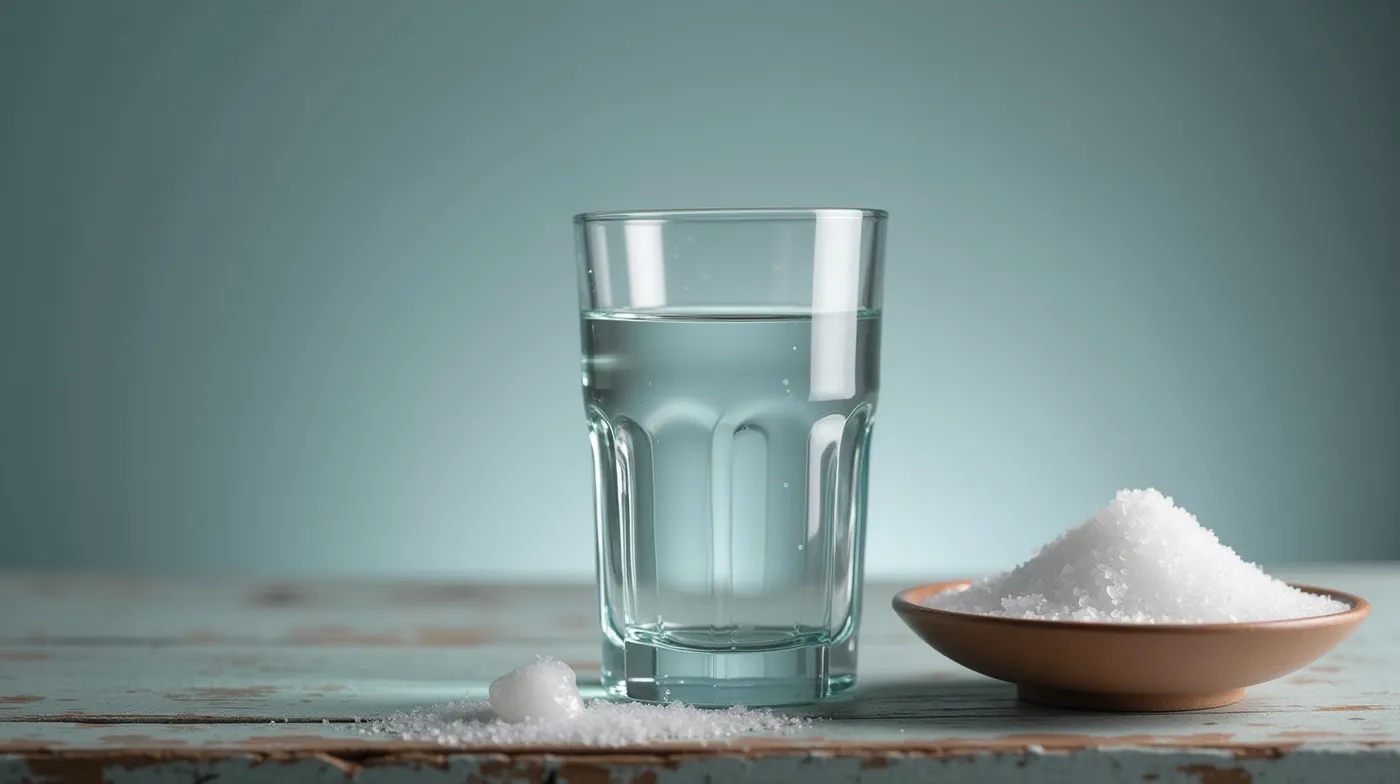
What Is Salty Well Water, and What Does TDS Actually Measure?
Every drop of groundwater carries a load of dissolved material. Total dissolved solids (TDS) is the sum of all of it — the dissolved inorganic salts, minerals, metals, and nitrates that the water picked up as it percolated through soil and rock. It is measured in milligrams per liter (mg/L), which is numerically identical to parts per million (ppm). “Salty” well water is a specific flavor of high TDS: it is the subset where the dominant dissolved solids are salts — mainly chloride paired with sodium, and to a lesser extent sulfate and potassium — rather than the calcium and magnesium that make water “hard.”
The number you are actually after is not TDS, it is the chloride and sodium
TDS is a total, not a diagnosis. A home TDS meter works by electrical conductivity and reports one combined number. Two wells can both read 700 mg/L TDS and taste completely different: one where most of that is calcium and magnesium (hard, flat, soap-scumming) and one where most of it is chloride and sodium (salty, briny). Humans can taste sodium chloride at roughly 50–80 mg/L, so it is the chloride–sodium fraction, not the headline TDS, that tells you whether your water is genuinely salty.
That distinction matters because it decides which treatment works. A high TDS number that is mostly hardness is fixed with a softener; a high TDS number that is mostly salt needs reverse osmosis or a dedicated salt-removal process. This is why, before you buy anything, the single most useful test you can run is a full well water test that breaks TDS down into its individual ions. In our experience talking with well owners who were told their water was “just a little salty,” more than half found a chloride or sodium level that justified a real treatment system once they ran the lab panel rather than relying on taste alone.
Why Is My Well Water Salty? The 6 Real Causes
Understanding which cause applies to your well is what tells you whether the salt is permanent (a property of the aquifer) or something you can stop at the source. The six below account for essentially every salty-well case we have seen.
1. Mineral-rich geology (the most common cause)
Water moving through sedimentary rock, alluvial deposits, and coastal aquifers slowly dissolves halite (rock salt), gypsum, and other soluble minerals. In many western and midwestern regions the confined aquifer is naturally high in chloride and sodium, so every well on that aquifer tastes salty no matter how new or well-built it is. If the neighbors on the same water table also report a salty taste, geology is almost certainly the cause and it is permanent — the well will always need a treatment step.
2. Coastal and brackish aquifers
Wells near coastlines, estuaries, and river deltas commonly draw brackish water — a mixture of fresh groundwater and salt water. Here the chloride and sodium are not just elevated, they can be several times a normal well, and the taste is unmistakably briny. If you live within a few miles of the coast or in a low-lying delta, this is the first thing to check.
3. Irrigation and agricultural return water
Irrigated farmland pushes water (and dissolved fertilizer salts) back into the ground. Return water from field drainage and evapotranspiration concentrates chlorides, and when that percolates toward your well it raises both TDS and the salty taste. This is a leading cause of slowly rising salinity in rural agricultural regions, and it tends to worsen seasonally when irrigation peaks.
4. Road salt, industrial, and mine discharge
Winter deicing salts that runoff from roads, and discharge from industrial or mining operations, can carry high chloride loads into shallow, unconfined aquifers. This is a contamination pathway rather than a natural one, which means it can appear suddenly after a winter or a change in a nearby operation, and it is worth a lab test with a chloride-specific reading to rule in or out.
5. Well depth and which aquifer zone you are drawing from
Deeper, older groundwater has had more time to dissolve mineral content and is frequently higher in TDS than a shallow recharge zone. Two wells on the same property at different depths can pull water from different formations with very different salinity. If you recently had a well deepened or re-screened, a new salty taste can simply mean you are now drawing from a saltier zone.
6. A sudden change in water level or water source
When a well water level drops — after a drought, heavy regional pumping, or a new well nearby — the pump can start pulling from a deeper, saltier formation that it was not reaching before. This is the most common reason a well that tasted fine for years suddenly turns salty. From speaking with well inspectors, the fastest way to confirm this is to test TDS at the well head now versus last year; a jump of several hundred mg/L points directly to a change in the source rather than a problem with your treatment or plumbing.
A sudden salty taste is your earliest warning sign
If your water was not salty a season ago and is now, do not wait for the taste to get worse. A rising TDS trend is often the first indicator of aquifer depletion or a new contamination source, and it is far cheaper to diagnose early with a lab panel than to size a full treatment system after the numbers have climbed for years.
What Is a Safe TDS Level for Well Water?
The EPA does not set an enforceable limit for TDS because it is a secondary (aesthetic) contaminant rather than a direct health toxin. Its recommended Secondary Maximum Contaminant Level (SMCL) for TDS is 500 mg/L, and it separately recommends 250 mg/L for chloride on aesthetic grounds. The World Health Organization uses a 600 mg/L guideline value and a 900 mg/L acceptable maximum. In practice, most people can taste salt well before either of those thresholds, so the numbers below are what will actually tell you whether your water feels fine, merely flat, or genuinely salty.
| TDS Reading | Classification | What You Will Notice | Recommended Action |
|---|---|---|---|
| Below 300 mg/L | Excellent / good | No taste, minimal scale, equipment runs clean | No action needed; re-test annually |
| 300 – 500 mg/L | Acceptable / medium | Slightly flat taste to some; early scale on fixtures | Fine for most homes; watch the yearly trend |
| 500 – 1000 mg/L | High / salty | Noticeable salty or briny taste; scale building on faucets and in the tank | Consider RO or blending; get a chloride/sodium breakdown |
| 1000 – 3000 mg/L | Brackish | Clearly salty; significant scale and corrosion risk | Treatment strongly recommended (reverse osmosis) |
| Above 3000 mg/L | Saline / briny | Very salty; may be at or above usable limits | Whole-home RO or blending required; lab test is mandatory |
Reference: EPA National Secondary Drinking Water Standards (TDS SMCL 500 mg/L; chloride SMCL 250 mg/L) and WHO drinking-water quality guideline values.
The practical takeaway: a TDS of 700 mg/L is not an emergency, but it is a maintenance problem that compounds. Every year of running high-TDS water adds scale to your pressure tank, your pump, and your heating elements, and it slowly wears on anything that touches the water. If a household member is on a sodium-restricted diet, the sodium portion of that number becomes a health question, not just a taste question, and is worth a lab test and a word with a physician.
How to Test for Salty Well Water at Home and at the Lab
Measuring TDS is one of the cheapest and fastest tests in private well water, which makes it the ideal first test when you notice a salty taste. You can get a reliable trend reading for under $30, and a definitive composition breakdown from a state-certified lab.
Method 1: Digital TDS meter or pen (fastest, best for trends)
A pocket digital TDS meter or test pen is the most convenient tool for homeowners because it gives you an immediate number you can log over the seasons. Calibrate it with the standard solution that comes in the kit (commonly a 1413 ppm reference) before a fresh batch of readings — an uncalibrated meter can drift by 10–20%, which is enough to change your treatment decision. A digital TDS meter is plenty for tracking; remember it reports a combined conductivity-based estimate, so it tells you the total, not the chloride/sodium split.
Method 2: Lab panel (the only accurate breakdown)
Before you buy a treatment system, send a sample to a state-certified lab and ask for a full panel that includes TDS by evaporation (the only truly accurate TDS method), plus chloride, sodium, sulfate, calcium, and magnesium individually. That breakdown is the one that tells you whether your high TDS is salt (treat with RO) or hardness (treat with a softener). You can pre-screen at home with a well water test kit, but the certified lab is what your installer or engineer will rely on for sizing.
How to take a good sample
- Run the pump first. Draw water for at least 30 to 60 seconds to flush standing water from the line — a sample pulled straight from a cold tap reads from stagnant plumbing, not the well.
- Collect at the well head (or the first outside spigot) and, if possible, at a kitchen tap, so you can compare the aquifer against your system.
- Use a clean, wide-mouth container and do not let the water sit before testing — TDS is stable, but bacteria tests (if you add them) are time-sensitive.
- Record the date, the tap, and the number. A single reading means little; a trend across seasons tells you whether your source is changing.
Pro tip: compare your TDS to your neighbors
If you live in a rural area, ask one or two neighbors with wells on the same aquifer for a TDS reading. If everyone in the neighborhood reads 800 mg/L, your water is normal for the region and you are simply living on a mineralized aquifer. If you read 800 while they read 250, you may be drawing from a different (saltier) zone or catching a contamination plume — and that difference changes the entire diagnosis.
Salty Well Water vs. Hard Water vs. High Chloride: How to Tell the Difference
Most “salty” complaints are really one of three different problems, and the wrong fix for one makes the others worse. The table below is how we separate them in the field.
| Issue | What Raises It | Taste and Feel | Typical Fix |
|---|---|---|---|
| Salty (high chloride / sodium) | Dissolved NaCl, sodium sulfate, sodium bicarbonate | Salty, briny, flat; can feel slippery | Reverse osmosis, salt-specific ion exchange |
| Hard (high calcium / magnesium) | Calcium carbonate, magnesium sulfate, calcium sulfate | Flat; soap scum, film on skin, scale on heaters | Water softener (ion exchange) |
| High TDS (mixed) | All dissolved solids combined — salts plus minerals | Overall flat, sometimes slightly metallic | Reverse osmosis or blending |
A lab panel gives you the individual ions so you can tell these apart. A taste test alone cannot.
The trap to avoid: a standard water softener removes hardness (calcium and magnesium) by exchanging them for sodium. That is the correct answer for hard water, but for genuinely salty water it does almost nothing to lower your TDS and actually adds sodium to the water. If your water is both hard and salty, the sequence that works is to soften first, then run reverse osmosis on the drinking water line, so the RO membrane is not clogged by the hardness it is meant to reject. For the full breakdown of hardness and scale, see our guide to hard well water.
How to Remove Salt From Well Water: 5 Methods, Ranked
Once you know your TDS and what it is made of, the treatment choice comes down to how high the number is and how much clean water you need. The five methods below, in order of how well they remove true salt, cover everything from a minor nudge to a full whole-home system.
1. Reverse osmosis (best for true salt)
Reverse osmosis pushes water through a semi-permeable membrane under pressure and rejects 75–95% of dissolved salts, making it the only practical home technology for genuinely salty water. A point-of-use unit under the kitchen sink covers drinking and cooking, while a whole-home RO system treats every tap. If your TDS is above 1000 mg/L (brackish), you want a brackish water RO system rated for the load, because a standard freshwater RO membrane will foul and fail. See our guides to best reverse osmosis systems for well water and to brackish water reverse osmosis systems before you buy.
2. Ion exchange (fixes hardness, not salt)
An ion-exchange softener is the right tool when your high TDS is mostly calcium and magnesium rather than sodium chloride. It swaps the hardness ions for sodium and dramatically reduces scale, but it does not reduce total dissolved solids or chloride and raises the sodium content. A ion exchange water softener is a good first step for hard, mildly salty water, but it is not a salt-removal device on its own.
3. Distillation or evaporation
Boiling the water and condensing it removes essentially all dissolved solids, which makes distillation near-perfect for very high TDS. The catch is that it is slow, energy-intensive, and produces a small volume, so it works as a drinking-water supplement rather than a whole-home solution. It is rarely the first choice for a private well.
4. Blending with a lower-TDS source
If you have access to a second, cleaner water source — a municipal line, a shallower well, or a low-TDS cistern — blending the two in the right ratio can bring your combined TDS down to an acceptable level for the cost of a simple mixing valve. This is the cheapest option by a wide margin when a clean second source is available, and it is a common solution in brackish coastal regions.
5. Aeration and precipitation (limited)
Aeration plus precipitation can knock out part of the TDS when the high number comes from carbonate hardness (calcium carbonate), because the carbon dioxide is stripped and the calcium precipitates out. It does not remove true dissolved salts, so it is a niche option and usually a component of a larger system rather than a standalone fix.
| Method | Salt / TDS Removal | Typical Cost | Best For | Main Limitation |
|---|---|---|---|---|
| Reverse osmosis | 75 – 95% | $400 – $5,000 | TDS above 500, brackish, true salt | Produces reject water; must be sized for your flow |
| Ion exchange softener | Low for salt; high for hardness | $300 – $1,200 | Hardness with moderate TDS | Adds sodium; does not lower total TDS |
| Distillation | 90 – 99% | $1,500 – $4,000 | Very high TDS, small volume | Slow, energy-hungry, low output |
| Blending | Proportional (mixes down) | $100 – $2,000 | High TDS with a clean second source | Needs a second low-TDS water source |
| Aeration / precipitation | Low – moderate (carbonate only) | $500 – $2,500 | Carbonate hardness component | Does not remove true dissolved salts |
Costs are 2026 national ranges for a typical single-family home; labor and media pricing vary by region.
Sizing the RO to your TDS
The higher your incoming TDS, the more reject water a membrane throws out and the shorter the membrane life. A system that is a good match for 500 mg/L water will struggle at 2000 mg/L. Get the lab number first, then buy a unit whose rated input TDS is comfortably above your reading — a under sink reverse osmosis system for drinking water is the most cost-effective starting point for most households.
Preventing Salty Well Water From Getting Worse
Treating the symptom does not stop the source. Once you have a system in place, the goal is to keep your TDS from creeping higher, and that is mostly about protecting the aquifer and monitoring it:
- Re-test TDS at least once a year, and again after any drought, heavy regional pumping, or new well nearby. Log the number so you can spot a trend early.
- Keep the well head sealed and capped so surface runoff (road salt, irrigation return, livestock) cannot travel down the casing and into the aquifer.
- Maintain safe setbacks from septic systems, deicing-salt storage, and any industrial or mine discharge — a well located downhill of a chloride source is at permanent risk.
- Address the source when you can. If your neighbors confirm irrigation return is the cause, a community or wellhead-protection discussion can matter more than any filter.
- Flush after major events. After a flood or a contamination event, a proper flush and re-test tell you whether the source has shifted. See our guide to how to flush a well for the correct procedure.
When to call a professional
Hire a well or water-treatment professional when your TDS reads above 1000 mg/L (brackish) and needs a whole-home RO sized to your flow, when the salty taste is clearly worsening over months, when a household member is on a sodium-restricted diet and needs a sodium breakdown, or when a new well comes up saltier than expected. An engineer can also confirm which formation your well is drawing from if the cause is a change in water level.
See Also
- Best Well Water Test Kits for Homeowners 2026 — the right kit to get your TDS and chloride/sodium breakdown at home.
- Hard Well Water 2026: Causes, Testing & How to Fix It — the calcium and magnesium side of the equation that pairs with your TDS number.
- Best Activated Carbon Filter Systems for Well Water 2026 — the companion filtration step that removes taste and odor but not dissolved salt.
Salty Well Water FAQ
Is salty well water safe to drink?
At typical well levels it is usually not an acute health emergency, but it is not nothing. TDS above 500 mg/L is classified as “poor taste” by the EPA secondary standard, and the sodium portion of high-TDS water can be a real concern for anyone on a sodium-restricted diet. Run a lab test to see the actual sodium and chloride levels before deciding, especially if someone in the home has heart or blood-pressure conditions.
Why does my well water suddenly taste salty?
A sudden change almost always points to a change in the source, not a problem with your treatment. The usual culprits are a drop in the water level pulling from a saltier formation, seasonal irrigation return, brackish intrusion near the coast, or road-salt runoff. Test TDS at the well head and at the tap and compare to last year; a jump of several hundred mg/L confirms the source has shifted.
Will a water softener remove salt from my well water?
No. A softener removes hardness (calcium and magnesium) by exchanging them for sodium, so it does not lower your total TDS or your chloride, and it actually increases the sodium. If your water is genuinely salty, a softener alone will not fix the taste — you need reverse osmosis or a salt-specific treatment step.
What TDS level is safe for well water?
The EPA secondary standard is 500 mg/L and the WHO guideline is 600 mg/L (with 900 mg/L as an acceptable maximum). Below 300 mg/L is excellent, 300–500 is acceptable for most homes, and above 500 you will start to notice salt and should consider treatment.
Can I filter salt out of well water at home?
Yes — reverse osmosis is the practical home solution, rejecting 75–95% of dissolved salt. A sediment or carbon filter will not remove dissolved salt no matter how often you change the cartridge, so do not rely on one for a salty-taste problem.
Salty well water is a solvable, and usually affordable, problem once you understand what is actually in the water. Test the TDS at the well head and at the tap, send a lab panel to break the number down into chloride and sodium, and match the treatment to how high the reading really is — a softener for hardness, reverse osmosis for true salt, or blending when you have a clean second source. A stable, low TDS protects your pump, your pressure tank, your heating elements, and the water your family drinks, and it costs a fraction of the scale and corrosion repairs it prevents. If your reading is above 500 mg/L and the taste is clearly salty, do not wait for it to get brinier: get the lab breakdown now, size the correct system, and re-test within a month to confirm the water is holding.
#SaltyWellWater #WellWater #TDS #TotalDissolvedSolids #WaterQuality #PrivateWell #WellOwner #HardWater #ReverseOsmosis #WaterSoftener #WaterTesting #Homeowner #Groundwater #WellWaterTreatment #WaterSafety