
Open the panel in your well house and you will probably find a tangle of fittings, a tank, and two or three filters bolted together in whatever order the last installer happened to use. That order is not random, and getting it wrong is the single most common reason a well water treatment system underperforms: a carbon filter installed before a sediment filter clogs in weeks, a UV lamp placed upstream of the filters is blinded by the very iron and turbidity it is supposed to disinfect, and a softener fed by raw, sandy well water fouls its resin bed before it has a chance to work. The well water filter order — the sequence in which each stage sits in the line — is what determines whether your system delivers clean water for years or needs new cartridges every season. In this 2026 guide, built from the treatment systems we have designed and inspected for private wells across the western US, we lay out the correct order for every major stage (sediment, softener, carbon, specialty media, UV, and point-of-use RO), explain exactly why each stage goes where it does, and show you how to sequence the train around your own lab results.
By Lisa Martinez, Water Quality Specialist
Lisa holds a degree in Environmental Science and specializes in private well water safety and treatment, with a focus on designing treatment trains that match real lab panels to real plumbing.
Disclosure: As an Amazon Associate, we earn from qualifying purchases on this page. Product selections are based on independent research and real well water data.
Published: November 4, 2026
Table of Contents
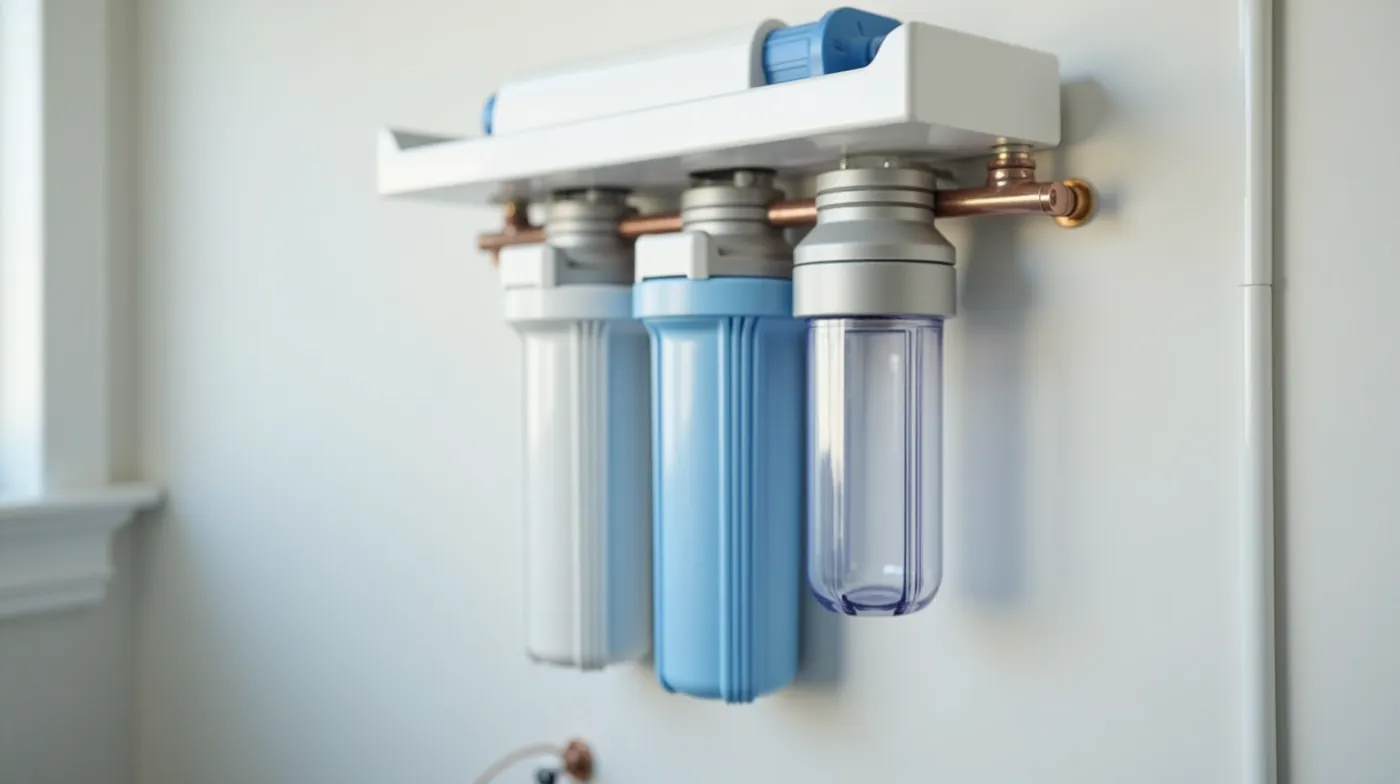
Why the Order of Your Well Water Filters Matters
Every stage in a well water treatment train does one specific job, and each job has a precondition: it needs the water arriving at it to be cleaner than it is coming out of the well. A sediment filter needs only raw water. A softener needs water free of sand so its resin does not foul. A carbon filter needs water free of both sand and scale. A UV lamp needs water that is clear and free of the very contaminants it is designed to kill, because a film of iron or a cloud of silt shields the bacteria from the UV light. Put the stages in the wrong order and you break those preconditions — the downstream stage chokes, fouls, or is simply blinded, and the whole train underperforms even though every individual component is new and working.
This is why, when we review a system that is not working, the first thing we check is not which filter to replace but where each filter sits. In our experience the component is almost never the problem; the sequence is. A $40 carbon block that is installed after a 5-micron sediment prefilter will outlast and outperform a $120 one installed before it, purely because of the order.
Key Takeaway
The well water filter order is: sediment first, then specialty media (iron/manganese) if you need it, then the softener, then carbon, then UV, and point-of-use RO last at the tap. Each stage needs cleaner water than the one before it — get the sequence right and the same hardware performs far better.
The Correct Well Water Filter Order (Step by Step)
Here is the sequence we specify for a whole-house well water system, in the order the water should encounter each stage. Not every home needs every stage — your lab panel decides — but when a stage is in your system, this is where it belongs.
- Whole-house sediment prefilter (first, always). A 25- to 5-micron spin-down or cartridge filter catches the sand, silt, and rust that come out of the well. It goes first because it is the only stage that can handle raw well water, and it is the stage that protects everything downstream. See our inline sediment filter guide for sizing.
- Specialty media filter for iron / manganese (if present). If your panel shows elevated iron or manganese, a green-sand or manganese-media filter goes early, right after the sediment prefilter, so it is not overwhelmed by particulates. We cover selection in our manganese removal filter guide.
- Water softener (after the particulate filters). The softener removes hardness (calcium and magnesium). It goes after the sediment and specialty media so its resin bed is protected from sand and iron. Sizing and selection are in our well water softener guide.
- Carbon filter (GAC or carbon block). The carbon stage removes chlorine, VOCs, pesticides, and taste-and-odor compounds. It sits after the softener so it is not fouled by scale, and after the sediment so the carbon is not clogged by sand. Our carbon filter guide covers GAC versus carbon block.
- UV sterilizer (after all particulate and carbon stages). UV needs clear, filtered water to work — turbidity, iron, and organics shield microbes from the light and foul the sleeve. It goes after the filters that remove those things, typically as the last whole-house stage. Sizing is in our UV sterilizer sizing guide.
- Point-of-use RO or faucet filter (last, at the tap). An under-sink reverse osmosis unit or a faucet filter is the final polishing stage for drinking water, removing what the whole-house train leaves behind (TDS, fluoride, some metals). Selection is in our reverse osmosis guide.
Well Water Treatment Train: Order at a Glance
The table below is the quick reference we work from when sequencing a system. Order is the position the stage should occupy in the line; needs before it is the precondition that determines why it sits there.
| Order | Stage | What It Removes | Why It Sits There | Typical Cost |
|---|---|---|---|---|
| 1 | Sediment prefilter | Sand, silt, rust, particulates | Only stage that handles raw water; protects all downstream | $15–$80 |
| 2 | Iron / manganese media | Dissolved iron, manganese | Early, so particulates do not overwhelm the media | $300–$1,500 |
| 3 | Water softener | Hardness (Ca, Mg) | After particulate filters so the resin is protected | $500–$1,800 |
| 4 | Carbon (GAC / block) | Chlorine, VOCs, pesticides, taste and odor | After softener so it is not fouled by scale | $80–$400 |
| 5 | UV sterilizer | Bacteria, viruses, cysts | Last whole-house stage; needs clear, filtered water | $300–$1,000 |
| 6 | Point-of-use RO / faucet | TDS, fluoride, residual metals | Final polishing at the drinking tap | $200–$1,200 |
5 Filter-Order Mistakes That Ruin a Well Water System
When a treatment train underperforms, it is almost always one of these five sequencing errors. We see them on well houses across the region, and each one is fixable by moving a fitting — not by buying new hardware.
- Carbon before sediment. The most common mistake. A carbon filter fed by raw, sandy well water clogs within weeks, pressure drops, and the owner assumes the carbon is worn out and replaces it — over and over. Move the sediment prefilter upstream and the carbon life multiplies.
- UV before the filters. A UV lamp placed upstream of the sediment and carbon stages is blinded by the very turbidity and iron it is meant to disinfect. The system reads on and the lamp is bright, but the water is not being disinfected. UV must come after the particulate and carbon stages.
- Softener fed by raw well water. A softener with no sediment prefilter in front of it loads its resin bed with sand and iron. The resin fouls, the softening capacity collapses, and the salt usage climbs. A $20 spin-down filter in front of the softener prevents it.
- Specialty media last. An iron or manganese media filter placed at the end of the train, after the softener and carbon, gets overwhelmed by whatever those stages did not remove, plus any particulates that slipped through. It belongs early, right after the sediment prefilter.
- RO as a whole-house stage. Reverse osmosis is a slow, low-flow, point-of-use process that produces a drain line of waste water. Trying to run a whole house off an RO unit, or placing it where it must handle full flow, is a category error. RO belongs at the tap, as the final polish, not in the main line.
Field Note
On the systems we inspect, the single highest-impact, lowest-cost fix is almost always adding a sediment prefilter in front of everything else. If a home has a treatment train but no dedicated first-stage sediment filter, that is the first thing we add — before we spend a dollar on any other stage.
How to Build the Right Train for Your Well
The correct order is the same for everyone, but which stages you actually need depends on your water. Here is the decision sequence we use when designing a train around a lab panel.
- Start with a current lab test. The sequence is driven by what is actually in the water, not by what is in the catalog. Get a panel that covers turbidity, iron, manganese, hardness, TDS, chlorine and VOCs, and bacteria (coliform and E. coli) so you know which stages are justified.
- Always include the sediment prefilter first. Every private well has some particulate load, and the prefilter is the stage that makes the rest of the train work. If budget forces a choice, this is the stage to keep.
- Add a specialty media stage only if the panel shows it. Iron above about 0.3 mg/L or manganese above about 0.05 mg/L justifies a green-sand or manganese-media filter, placed right after the prefilter. Do not buy one just in case — an idle media filter still needs backwashing and maintenance.
- Add the softener if hardness is above about 7 gpg. Below that, a softener is often more cost than benefit; above it, scale in the water heater, fixtures, and appliances makes the softener pay for itself. Size it to your household’s daily usage.
- Add carbon for taste, odor, chlorine, or VOCs. If the water tastes or smells chemical, or the panel shows VOCs or pesticides, a GAC or carbon-block stage after the softener handles it. This is the stage most homes notice the most.
- Add UV if bacteria are present or you want a biological barrier. If the panel shows coliform or E. coli, or you want a disinfection barrier without chemicals, a UV sterilizer after the filters is the cleanest answer. Size it to your flow rate and turbidity.
- Add point-of-use RO only for the tap you drink from. If TDS, fluoride, or residual metals matter for drinking water, an under-sink RO at the kitchen sink is the right tool — and it belongs last, as the final polish.
Pro Tip
Design the train to your panel, not to the store aisle. A home with hard water and a chlorine taste needs sediment, softener, and carbon — and nothing else. Adding a UV or an RO you do not need costs money and maintenance; skipping a stage your water actually requires means the system will never perform.
Where to Buy: Stages for a Well Water Treatment Train
Every stage in the train above is a standard product you can order and install yourself or with a local well tech. The table lists the stages in the correct order, with what each does and a typical 2026 price range. Each product name is linked to a current Amazon selection for convenience.
| Stage (in order) | What It Does | Typical Price |
|---|---|---|
| Whole-house sediment prefilter | First stage; removes sand, silt, rust | $15–$80 |
| Green-sand / manganese filter | Removes dissolved iron and manganese | $300–$1,500 |
| Whole-house water softener | Removes hardness (calcium, magnesium) | $500–$1,800 |
| Whole-house carbon filter | Removes chlorine, VOCs, taste and odor | $80–$400 |
| UV water purifier | Disinfects bacteria, viruses, cysts | $300–$1,000 |
| Under-sink RO system | Final polish at the tap; removes TDS, fluoride | $200–$1,200 |
Prices are typical 2026 retail ranges and vary by capacity, flow rating, and brand. Match each stage’s flow rating to your home’s peak demand, and size the softener and UV to your daily usage and turbidity. Our well water treatment cost guide breaks down what a full train usually costs installed.
Well Water Filter Order: FAQ
Frequently Asked Questions
What is the correct order for well water filters?
Sediment prefilter first, then any iron or manganese media filter, then the water softener, then the carbon filter, then the UV sterilizer, and point-of-use reverse osmosis last at the tap. Each stage needs cleaner water than the one before it.
Should the sediment filter come before or after the softener?
Before. The sediment prefilter is the first stage in the train, in front of the softener. Sand and rust in raw well water foul the softener’s resin, so you always want particulate removal upstream of it.
Where should the UV light go in the sequence?
After all the particulate and carbon stages, as the last whole-house stage. UV needs clear, filtered water — turbidity, iron, and organics shield microbes from the light and foul the sleeve, so UV must come after the filters that remove them.
Do I need every stage in the treatment train?
No. The sediment prefilter is the only universal stage. Everything else — iron or manganese media, softener, carbon, UV, and RO — is added only if your lab panel shows the contaminant it removes. Build the train to your water, not to the catalog.
Can I add stages to an existing system later?
Yes. Most systems are built in stages, and you can insert a new stage at the correct position in the line as your needs change. Just make sure it goes in the right order relative to what is already there — that is usually the whole of the job.
See Also
- Best Inline Sediment Filters for Well Water — the first stage of any treatment train, with sizing for sand, rust, and particulates.
- Well Water Carbon Filter 2026 — GAC versus carbon block, and where the carbon stage sits in the sequence.
- Whole House Water Filter for Wells 2026 — how to choose and size the main-line filter that anchors the train.
Getting the well water filter order right is the difference between a treatment system that performs and one that fights itself. Put the sediment prefilter first, sequence each stage so it receives cleaner water than the last, and add only the stages your lab panel justifies. Do that and the same filters last longer, use less salt, disinfect properly, and deliver water that actually tastes and looks the way you expect — without replacing cartridges on a schedule the wrong order created.
#WellWater #WaterTreatment #FilterOrder #TreatmentTrain #WellSystem #WaterQuality #SedimentFilter #WaterSoftener #CarbonFilter #UVSterilizer #ReverseOsmosis #PrivateWell #WellOwner #HomeWell #WellCare