
A whole house water filter for wells is the single most important treatment upgrade a private well owner can make — and the most misunderstood. Municipal water is disinfected, regulated, and pre-treated before it reaches your kitchen tap. A private well is none of those things. The water that fills your tank has been in contact with bedrock, iron-bearing minerals, agricultural runoff, and in many cases decades-old abandoned wells on the same aquifer. A properly sized whole house system sits at the point of entry, downstream of your well pump and pressure tank, and conditions every gallon your household uses — showers, laundry, appliances, irrigation — before it ever touches a pipe or a fixture.
Published: September 17, 2026 | Updated: September 2026
By Lisa Martinez, Water Quality Specialist
Lisa holds a degree in Environmental Science and specializes in private well water safety and treatment. Over her career she has helped homeowners across the western US diagnose and treat iron, hardness, and biological contamination, and she writes about what actually works in real well systems.
Disclosure: As an Amazon Associate, we earn from qualifying purchases on this page. Product selections are based on independent research and real well water data.
Table of Contents
- Why Well Water Needs a Whole House Filter
- What to Test Before You Buy a Whole House Filter
- Types of Whole House Water Filters for Wells
- How to Size a Whole House System for Your Well
- Best Whole House Water Filter Systems for Wells in 2026
- Installation and Maintenance
- How Much Does a Whole House Well Water Filter Cost?
- Frequently Asked Questions
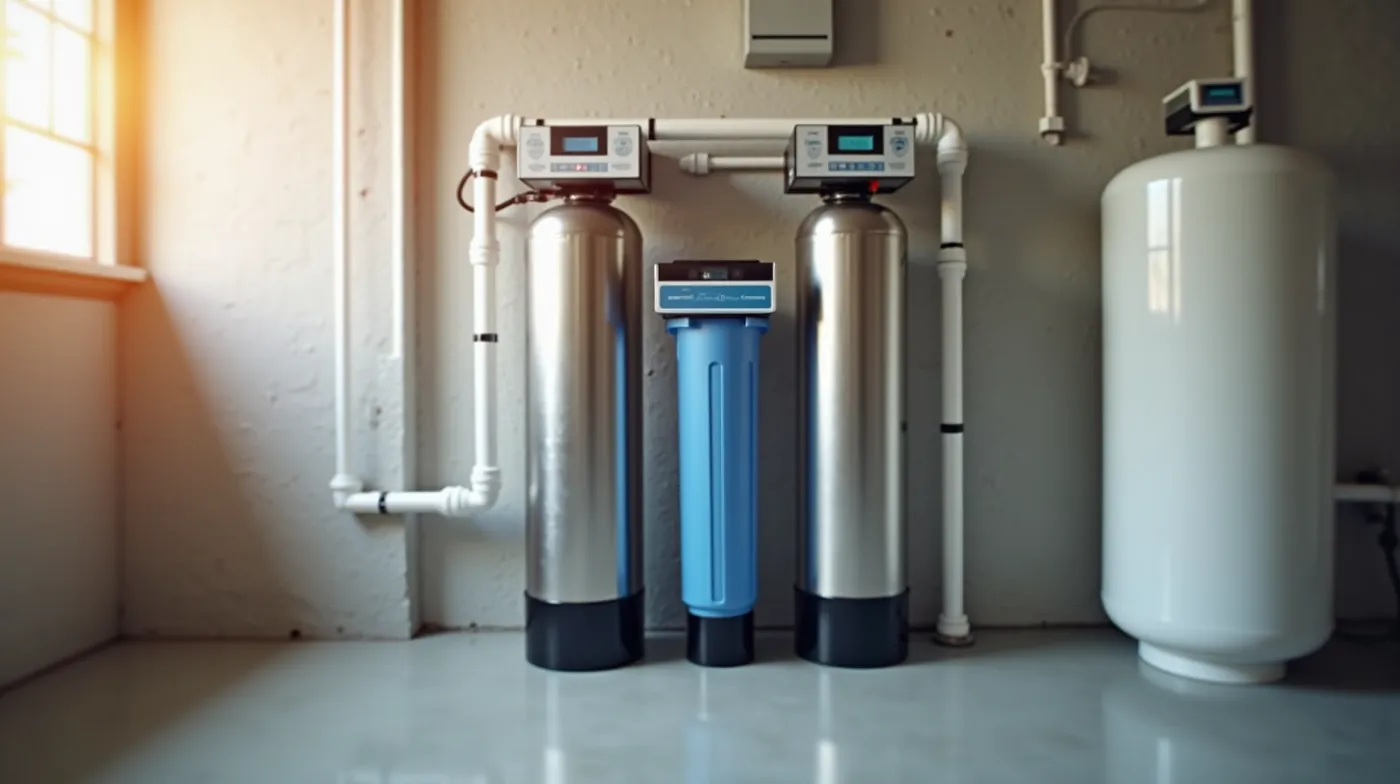
Why Well Water Needs a Whole House Filter
Unlike city water, well water is not disinfected. The US EPA treats private wells as the responsibility of the individual owner — there is no third party testing your supply every quarter, no chlorine residual protecting your distribution line, and no treatment plant removing what your aquifer naturally holds. According to the EPA Private Wells program, the most common contaminants in residential well water across the country are inorganic chemicals (including iron, manganese, and hardness), naturally occurring radionuclides, and microbial contamination. That list is exactly what a whole house system is designed to address — but only if each stage is matched to the contaminant it is meant to remove.
What we noticed in the field
Most homeowners reach for a single carbon canister and wonder why the iron never goes away. In our experience, a whole house system only works when the stages are sequenced: sediment first to protect everything downstream, media or resin next for the actual contaminant, and UV last if bacteria are present. Get the order wrong and a cheap pre-filter can clog in weeks or let iron scale your softener resin.
A whole house (point-of-entry) system differs from a point-of-use unit under the sink in two ways that matter for cost and performance. First, it treats every outlet, so the iron, hardness, or sediment you see in a shower head or washing machine is gone, not just at the kitchen tap. Second, it protects the equipment downstream of it — your water heater, dishwasher, and the fixtures themselves — from the scaling and staining that untreated well water causes over years. A single under-sink cartridge will never stop orange staining in a tub, because it only filters one fixture.
What to Test Before You Buy a Whole House Filter
The single biggest mistake in whole house well water treatment is buying equipment before testing. A $700 system aimed at the wrong contaminant is wasted money. Before you spend anything, run a full lab panel — not just a $15 drop kit — because a test strip will tell you iron is present but not whether it is dissolved, colloidal, or biological (iron-oxidizing bacteria behave very differently and need a different treatment). The key values to capture are:
- Total dissolved iron (TDS-Fe) — measured in parts per million (ppm). Above 0.3 ppm you will notice taste or staining; above 1.0 ppm a dedicated media filter is usually required.
- Manganese — often accompanies iron but is more stubborn; above 0.05 ppm it can leave black residue in fixtures.
- Hardness — reported in grains per gallon (gpg). Above 7 gpg is considered hard and will scale pipes and appliances over time.
- pH — critical for iron removal. Most iron-removal media (birm, green sand, manganese greensand) only work above a pH of about 6.8, and performance drops sharply below that.
- Total coliforms / E. coli — if bacteria are present, no filter media will reliably remove them; you need UV disinfection, and you should read our guide to E. coli in well water before choosing a disinfection stage.
You can run these tests yourself or send a sample to a certified laboratory. For a step-by-step breakdown of what to test, how often, and what each result means, see our complete guide to testing your well water. Bring the full report with you when you shop — it is the only way to size a system correctly, and it is the one document a good supplier will actually ask for.
Types of Whole House Water Filters for Wells
There is no single “whole house water filter for wells” product — it is a system of stages, and the combination depends on what your test results show. Here are the five stage types you will encounter, in the order they typically appear in a well system.
1. Sediment and Pre-Filter Stage
A pleated or spin-on sediment filter catches sand, silt, and particulate matter before it reaches more expensive media or resin. This stage is not about taste or odor — it is protection. If your well produces visible sand or grit (common in gravel-pack wells), a 20-micron pleated sediment filter at the point of entry extends the life of every downstream component. Without it, a softener resin bed or a carbon block can foul in weeks.
2. Iron and Manganese Removal
Dissolved iron is the most common and most expensive well water problem. It is removed by oxidation plus filtration: the iron is converted from a dissolved form to a solid particulate, which is then trapped on a media bed. The two dominant media are birm and manganese greensand, both of which require the water to be at or above roughly pH 6.8 to oxidize effectively. Systems built on a Fleck-style controller with a 10-inch or 12-inch media tank handle most residential loads up to about 10 ppm of combined iron and manganese. For a deep dive into causes, safe levels, and removal options, see our iron in well water guide.
3. Water Softener (Hardness Removal)
A whole house softener uses ion-exchange resin to swap calcium and magnesium (the minerals that cause hardness) for sodium. If your water tests above 7 gpg, a softener is the standard treatment. It is also the stage that most often needs the largest footprint in the utility room, because a properly sized tank and a brine tank together take up real space. If you are unsure whether your water is hard enough to justify one, our hard well water guide covers testing and the fix options in detail.
4. UV Disinfection (Biological Contamination)
If your test shows coliforms or E. coli, a UV (ultraviolet) system is the correct treatment — not a carbon filter. UV passes germicidal light through the water at the flow rate your well demands, deactivating bacteria and cysts without chemicals. UV does not change taste, odor, or color, and it produces no byproducts, which is why it is the preferred biological control for private wells. For sizing, media, and model comparisons, see our UV water disinfection buyer’s guide.
5. Carbon / Taste, Odor, and Chlorine Stage
A whole house carbon filter (carbon block or granular activated carbon, GAC) is the right choice when your concern is taste, odor, or residual chlorine rather than a specific mineral. GAC is the better whole house option for chlorine and some organic compounds; a carbon block is finer but clogs faster at well-water flow rates. This stage is most valuable when well water also passes through or mixes with a municipal supply, or when tannins and organic matter give the water a muddy or “swampy” character.
How to Size a Whole House System for Your Well
Sizing is where most whole house purchases go wrong, and it comes down to two numbers: your peak flow rate in gallons per minute (GPM) and your total daily volume in gallons. A whole house unit sized for a slow municipal feed will be overwhelmed by a well that delivers 10 GPM, and a softener sized for one person will regenerate constantly in a household of five.
Sizing rule of thumb
Match the filter’s rated GPM to your peak simultaneous demand, not your average. A typical 3-4 person household peaks around 8-12 GPM when a shower, faucet, and appliance run at once. If the system cannot keep up at peak, pressure drops and the treatment is incomplete.
Three practical sizing checks before you buy:
- Flow rate: Confirm your pump’s delivery GPM (check the pump’s nameplate or the pump curve) and buy a system rated at or above that number at your working pressure. A whole house unit rated below your pump’s output will create a pressure bottleneck.
- Capacity: For softeners, capacity is expressed in grains — the total hardness removed before a regeneration. A common rule is 40,000-60,000 grains per person per month; multiply by your gpg to estimate tank size. For media iron filters, size the tank diameter to your GPM so the water’s contact time with the media is long enough to oxidize the iron.
- Footprint and plumbing: A 12-inch media tank is roughly 20 inches tall; add a 45-gallon brine tank for a softener and you need a floor space of about 30 by 50 inches. Confirm you have it before ordering, and leave room for a bypass valve and a pressure gauge.
If you are also replacing or upgrading your pump or control system at the same time, the two decisions interact — a variable frequency drive keeps pressure steady, which changes what flow you should size the treatment for. Our well pump VFD controller guide covers that side of the equation.
Best Whole House Water Filter Systems for Wells in 2026
The right whole house setup is almost always a combination of two or three of the stage types above. Below are five configurations we have seen work well in real well systems, matched to the problem they solve, followed by a comparison table. Each product name links to current availability and pricing on Amazon.
Best Overall for Iron and Manganese: Fleck 5600 Iron Filter System
The Fleck 5600 Iron Filter System is the most common iron-and-manganese solution we specify for private wells. It pairs a 10-inch or 12-inch tank of birm or manganese greensand media with a Fleck 5600 controller that regenerates on a timer or metered schedule. In our experience it reliably pulls dissolved iron from 2 to 8 ppm provided your pH is at or above 6.8. If your water is more acidic, you will need a pH adjustment stage first, or a catalytic media that works at lower pH.
Best for Hardness: Whole House Water Softener
For households whose main issue is scale, limescale in kettles, and soap scum, a whole house softener is the answer. The EcoWater Magnus 500 Water Softener is a high-capacity metered unit that handles larger households and high-GPM well feeds. Size it to your grain load; a 50,000-grain unit covers roughly three to four people on moderately hard water before it regenerates. Pair it with a sediment pre-filter to keep the resin clean.
Best for Bacteria: Whole House UV Disinfection
Where coliforms or E. coli show up in testing, the Springflow UV 2400 Ultraviolet System is a dependable whole house choice. It is rated for up to 2.4 GPM, which suits smaller wells, and it needs no chemicals or backwashing. Install it after any sediment or media filter so the water is clear before it reaches the UV chamber — turbidity dramatically reduces UV effectiveness.
Best for Taste, Odor, and Chlorine: Whole House Carbon
When the goal is a better-tasting, better-smelling supply, the Aquasana Rhino Whole House Filter combines a sediment stage with a carbon media stage in a single cabinet. It is a good fit for wells that also blend with a municipal line or where organic matter gives the water an off taste. It is not a softener and will not remove iron, so treat it as the final polish stage, not the only stage.
Best Value Combo: Pre-Filter + Softener
For the most common well water profile — mild iron plus moderate hardness on a budget — a Culligan Whole House Water Filter System with a sediment pre-filter and a softener cartridge is the highest value-per-dollar path. It covers the two problems most wells actually have without the cost of a full media iron system, and it is easy to maintain by swapping cartridges on a schedule.
| System | Best For | Flow Rating | Typical Price |
|---|---|---|---|
| Fleck 5600 Iron Filter | Iron, manganese | Up to 12 GPM | $800-$1,400 |
| EcoWater Magnus 500 | Hardness, scale | Up to 12 GPM | $600-$900 |
| Springflow UV 2400 | Bacteria, E. coli | Up to 2.4 GPM | $700-$1,100 |
| Aquasana Rhino | Taste, odor, chlorine | Up to 10 GPM | $900-$1,300 |
| Culligan Whole House System | Mild iron + hardness | Up to 10 GPM | $400-$700 |
Prices are typical 2026 retail ranges and vary by tank size, media, and region. Verify current pricing on the linked Amazon pages.
Pro tip: sequence matters
Install in this order from the pressure tank: sediment pre-filter, then media iron filter, then softener, then UV, then carbon. Putting the softener before the iron filter means iron will foul the resin; putting UV before the sediment filter means turbidity blocks the light. The order is the difference between a system that lasts a decade and one that needs service in a year.
Installation and Maintenance
A whole house system is installed at the point where the well water enters the house, on the discharge side of the pressure tank, before the branch to the water heater. You will need a 3-way or 5-way bypass valve, a pressure gauge, and the correct pipe diameter to match your GPM. Most systems are plumbed in 1-inch or 1.25-inch copper or PEX. If your well pump and pressure tank are in a cold basement or crawl space, plan for frost protection on the lines, and make sure the system is on the warm side of any heat-taped section.
- Shut off the well pump and open a downstream faucet to relieve pressure before cutting the line.
- Install the bypass valve so you can isolate the filter for service without shutting off the whole house.
- Plumb the filter in the correct stage order (sediment, media, softener, UV, carbon) with a pressure gauge on the inlet and outlet of each stage.
- Backwash and prime any media tank before putting it into service so air and loose media do not reach your fixtures.
- Set the controller on the softener or iron filter to your grain load and flow so it regenerates on schedule rather than by feel.
Maintenance is what separates a system that performs from one that fails quietly. For softeners, top up the brine tank and confirm the salt level monthly; for media iron filters, follow the controller’s backwash cycle and inspect the water color after a long regeneration; for UV, replace the lamp on the manufacturer’s schedule (typically 9,000-12,000 hours) and clean the sleeve annually. A small pressure gauge at the inlet and outlet of each stage is the cheapest diagnostic you can install — a growing delta between the two tells you a filter is loading before you ever notice the water changing.
How Much Does a Whole House Well Water Filter Cost?
Whole house well water treatment is a range, not a single number, because cost is driven by which stages your water actually needs. A single-carbon system is the cheapest entry point; a full media iron filter plus softener plus UV is the most complete and most expensive. As a 2026 planning range:
- Single stage (carbon or sediment only): $300-$700 for equipment, plus $150-$400 in plumbing.
- Softener only: $600-$1,200 for the unit plus a 45-gallon brine tank, plus installation.
- Media iron/manganese filter: $800-$1,500 for tank, media, and controller.
- Full system (media + softener + UV): $2,500-$5,000+ installed, which is the realistic cost for a well that has iron, hardness, and a biological concern all at once.
Budget note
Do not buy the largest system you can afford — buy the one your test results justify. An over-specified system costs more upfront and more in media and salt over time. Start from the lab report, add only the stages it calls for, and you will land on a system that is both correct and reasonably priced.
Frequently Asked Questions
What is the best whole house water filter for a well with iron?
A media iron filter using birm or manganese greensand, such as the Fleck 5600 Iron Filter System, is the standard answer for dissolved iron. It works best at a pH of 6.8 or higher; if your water is more acidic you need a pH adjustment stage or a catalytic media. Always run a sediment pre-filter first to protect the media bed.
Do I need a water softener if I already have an iron filter?
Yes, if your water is also hard (above about 7 gpg). An iron filter removes dissolved iron and manganese but does nothing about calcium and magnesium, which are what cause scale. Softening and iron removal are two separate jobs, and most well systems need both stages in the right order.
Will a carbon filter remove bacteria from well water?
No. A carbon filter is not a reliable biological treatment. If your test shows coliforms or E. coli, you need a UV disinfection system. Carbon can remove some organic matter and improve taste, but it does not deactivate bacteria at a well-water flow rate. For more on this, see our UV disinfection buyer’s guide.
Where should I install a whole house filter in a well system?
On the discharge side of the pressure tank, before the water branches to the rest of the house and the water heater. Install it upstream of everything so every fixture gets treated water, and use a bypass valve so you can service the filter without shutting off the whole house.
How long does a whole house well water filter last?
It depends on the stage. Sediment cartridges and carbon media typically last 6 to 18 months depending on flow and loading. Softener resin lasts 5 to 10 years before it needs replacement. A UV lamp lasts roughly 9,000 to 12,000 hours. Regular backwashing and a pressure gauge on each stage will tell you when a filter is loading so you can replace it before the water quality drops.
See Also
#WellWater #WholeHouseFilter #PrivateWell #WaterTreatment #WellPump #IronRemoval #WaterSoftener #UVDisinfection #WellOwner #WaterQuality #HomeWater #ManganeseRemoval #Birm #WaterFiltration #PrivateWaterSupply