
Choosing the right well water line size is one of the most consequential decisions you will make when installing or re-piping a private well, yet it is the one most homeowners get wrong. Pick a line that is too small and your pump will fight friction on every cycle, your pressure will sag when two fixtures run at once, and your motor will burn out years ahead of schedule. Pick a line that is far too large and you will pay for extra pipe, bigger fittings, and a pump you do not need. The good news: with a little arithmetic and a clear understanding of how water moves through plastic pipe, you can size your well water line correctly the first time.
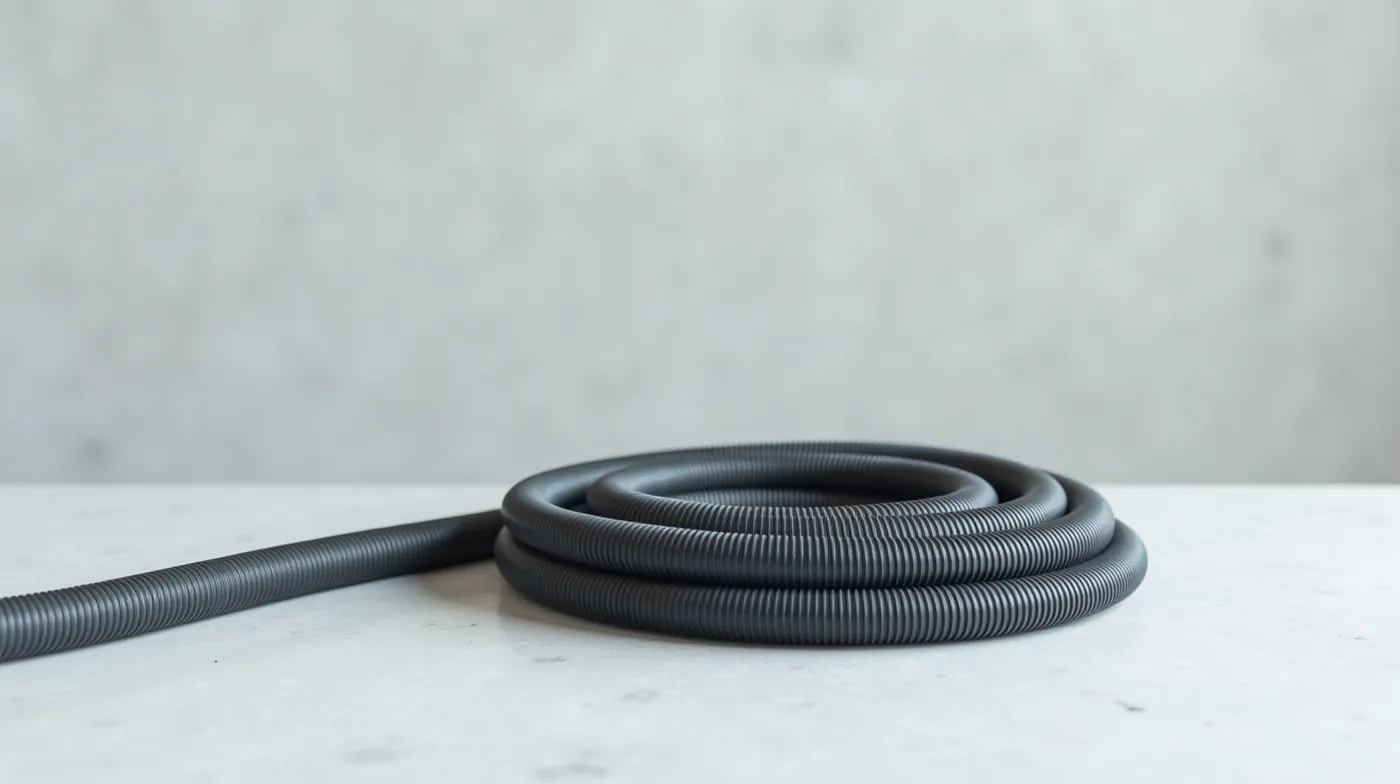
In this guide we walk through the three sizes that cover the vast majority of residential wells, show you a step-by-step method for calculating the right diameter, and break down the real-world consequences of an undersized or oversized supply line. Everything here is drawn from hands-on installs and pump service work, not just manufacturer spec sheets.
By Thomas Reynolds, Pump Systems Engineer
Thomas has installed and serviced over 1,000 well pump systems for homeowners, and specializes in matching pumps, piping, and pressure tanks to a well’s actual yield.
Disclosure: As an Amazon Associate, we earn from qualifying purchases on this page. Product selections are based on independent research and real well water data.
Published: November 5, 2026 | Last updated: November 5, 2026
Table of Contents
- Why Well Water Line Size Matters
- The 3 Common Well Water Line Sizes Compared
- How to Size Your Well Water Line (Step-by-Step)
- PE Pipe vs. PVC Pipe for a Well Water Line
- What Happens If Your Line Is the Wrong Size
- Sizing by Well Type and Depth
- Frequently Asked Questions
Why Well Water Line Size Matters
Your well water line is the pipe that carries water from the pump (or from the well head in a jet pump system) to your pressure tank and into the house. Its diameter controls three things that determine whether your system feels “strong” or sluggish:
- Friction loss. Water rubs against the inside wall of the pipe. The narrower and longer the pipe, and the faster the water moves, the more pressure is lost to that friction. A line that is too small bleeds off pressure before the water ever reaches your shower.
- Flow capacity. Pipe size sets the maximum number of gallons per minute (GPM) the line can move without creating excessive friction. If your household demand exceeds the line’s capacity, pressure drops the moment a second fixture opens.
- Pump stress and cycling. An undersized line forces the pump to work harder and can contribute to short cycling and cavitation. An oversized line can let the tank’s water volume swing, which changes how the pressure switch sees the system.
Field note
In our service work, the single most common “low water pressure” complaint on an otherwise healthy system traced back to a 3/4 inch supply line feeding a house with a long horizontal run and a modern high-flow showerhead. The pump was fine. The pipe was the bottleneck. Sizing the line correctly is the cheapest fix in the entire well system.
The rule of thumb that holds up across most residential installs: match your pipe to your well’s sustainable yield and your peak household demand, then verify the friction loss over your total run length stays under about 10 PSI. The rest of this guide shows exactly how to do that.
The 3 Common Well Water Line Sizes Compared
Nearly every residential well in North America uses one of three supply line sizes. Here is how they compare in practice, based on the friction and flow characteristics of smooth plastic (PE or PVC) pipe:
| Pipe Size | Practical Flow Range | Best For | Watch For |
|---|---|---|---|
| 3/4 inch | Up to ~15 GPM | Shallow jet-pump wells, small cabins, short runs | Friction climbs fast above 15 GPM or beyond ~150 ft |
| 1 inch | ~20-30 GPM | Most residential submersible-pump wells | The default — when unsure, this is the safe pick |
| 1-1/4 inch | ~40-50 GPM | High-yield wells, long runs, irrigation + house | Bigger pipe, fittings, and sometimes a bigger pump |
| 1-1/2 to 2 inch | 60+ GPM | Commercial use, very high-yield wells | Rarely needed for a single home |
Flow figures are practical continuous-flow estimates for smooth plastic pipe; exact numbers vary with pipe material, wall thickness, and run length. Always confirm against your pump’s rating curve.
If you are starting from scratch, 1 inch is the correct default for the majority of homes. It handles a whole-house demand of two showers plus a washing machine without meaningful pressure loss over a typical run, and it matches the standard 1 inch discharge of most residential submersible pumps. You only need to go to 3/4 inch if your well is shallow, your pump is small, and your run is short; you only need 1-1/4 inch if your well yields a lot and you have a long horizontal run or irrigation on the same line.
When you are ready to buy the pipe itself, we have compared the leading options in our guide to the best polyethylene well water pipe, including roll lengths and wall ratings (SDR) that matter for buried lines.
How to Size Your Well Water Line (Step-by-Step)
You do not need a fluid dynamics degree to size a well water line. You need four numbers and a simple friction check. Follow these steps in order:
- Determine your peak household demand in GPM. Add up the fixtures that could realistically run at the same time. A modern showerhead is 2.5 GPM, a kitchen faucet about 1.5-2 GPM, a washing machine fill around 2 GPM, and a toilet refill 1-1.5 GPM. For a typical family home, planning for 15-20 GPM of simultaneous demand is a realistic and safe number.
- Know your well’s sustainable yield. Your pipe cannot move more water than the well can replace. If your well only yields 8 GPM sustainably, a 1-1/4 inch line will not magically create more water — it just reduces friction. If you have not measured yield, start with a bucket test; we walk through the method in our guide to how much water your well actually produces.
- Measure your total run length. Add the vertical depth from the water table (or pump) to the tank, plus the horizontal distance from the well to the house, plus any bends and elevation changes. A 120-foot well with the house 80 feet away is a 200-foot run before you even add fittings.
- Pick the smallest pipe whose friction loss stays acceptable. Use the friction loss table below. A common target is keeping total friction under about 10 PSI, and under 5 PSI if you also have a long vertical lift. Choose the smallest size that meets that target — bigger is not free.
- Confirm it matches your pump. The line should match the pump’s rated discharge. A 1 inch submersible pump pairs with a 1 inch line; a smaller 3/4 inch pump typically uses 3/4 inch line. Mismatching the line to the pump is one of the most common DIY errors.
Friction Loss Reference (PSI per 100 feet of pipe)
The table below shows approximate pressure lost to friction in smooth plastic pipe at common flow rates. Multiply the per-100-ft figure by your run length in hundreds of feet to get total loss.
| Pipe Size | 10 GPM | 15 GPM | 20 GPM | 30 GPM |
|---|---|---|---|---|
| 3/4 inch | ~1.8 | ~4.0 | ~7.5 | excessive |
| 1 inch | ~0.4 | ~0.9 | ~1.8 | ~4.0 |
| 1-1/4 inch | ~0.1 | ~0.3 | ~0.6 | ~1.3 |
Approximate values for smooth PE/PVC pipe. Verify against your pipe manufacturer’s published friction tables for the exact SDR/schedule you buy.
Worked example
Say your well yields 15 GPM, your peak demand is 15 GPM, and your total run is 250 feet. In 1 inch pipe at 15 GPM you lose about 0.9 PSI per 100 ft, so 2.5 x 0.9 = ~2.3 PSI total. Well under the 10 PSI target — 1 inch is correct. In 3/4 inch pipe at the same flow you would lose 4.0 x 2.5 = ~10 PSI, right at the ceiling, with no headroom for a longer run or a wet winter. The 1 inch line is the right call.
PE Pipe vs. PVC Pipe for a Well Water Line
Once you know the diameter, the second decision is material. Two plastics dominate residential well lines: cross-linked polyethylene (PE/LLDPE) and PVC. They are both safe for drinking water, but they behave very differently in the ground.
| Property | PE (Polyethylene) | PVC |
|---|---|---|
| Flexibility | Bends easily, follows the trench | Rigid, needs straight runs |
| Freeze behavior | Expands and rarely cracks | Can crack when frozen |
| Joining | Push-fit / brass fittings, no solvent | Glued joints with solvent cement |
| Rocky soil | Flexes around rocks | Can be abraded or cracked |
| UV exposure | Degrades in sun — bury or shade it | Also degrades; keep covered |
| Best use | In-ground, rocky, freeze-prone runs | Above-ground or easy-access runs |
Both materials are NSF-certified for potable water when bought for the purpose. PE is the default for buried well lines in most of the country; PVC is common where lines are short and above ground.
For the buried line that carries your water, 1 inch PE pipe is the workhorse choice, and you will pair it with PE pipe fittings and unions at the joints. Our dedicated breakdown of the top PE pipe options and SDR wall ratings is in the best polyethylene piping for well water systems guide.
What Happens If Your Line Is the Wrong Size
Most sizing mistakes lean small, and they show up in predictable ways. Here is what you will actually experience in each case:
If your line is too small
- Pressure sags when fixtures run together. One shower is fine; add a toilet flush and the pressure visibly drops.
- The pump runs longer and harder. Higher friction means the pump works against more resistance, increasing amperage draw and wear.
- Short cycling and cavitation can follow. An undersized line can starve the tank of water fast enough to make the pressure switch bounce. If that is your symptom, see our guide to well pump short cycling for the full diagnosis.
- Air locks and gurgling. High velocity can pull air into the line, causing gurgling in upper fixtures.
If your line is too big
- You overpay for pipe, fittings, and possibly a pump. Bigger pipe is not free, and it may tempt you into buying a pump you do not need.
- Slower pressure build-up in the tank. A very large line holds more water, which changes how the pressure switch sees the system and can slightly alter cycling.
- Harder installation. Larger-diameter pipe is stiffer to trench and bend, and needs bigger fittings and clamps.
When in doubt, size up one step
Because friction loss in a pipe that is too small is a permanent, expensive-to-fix limitation (re-piping the whole run), most installers will step up to the next size when a calculation lands near the boundary. The cost of one extra inch of pipe is small; the cost of a low-pressure system for the life of the well is not.
Sizing by Well Type and Depth
The same diameter behaves differently depending on your well type and how deep the water is. Adjust your judgment accordingly:
Shallow wells with jet pumps
A jet pump sits at the surface and pulls water up through a small-diameter suction pipe (often 1 or 1-1/4 inch) with a foot valve at the bottom. Because the pump is doing the lifting at the surface, the house supply line can often be 3/4 or 1 inch. These wells typically serve a single home with modest demand, so 1 inch is usually plenty.
Deep wells with submersible pumps
A submersible pump pushes water up from down the hole, which is more efficient than jet pumping. The discharge is commonly 1 inch, and that 1 inch carries the water to the tank and house. For a deep well (150 feet or more) with a long horizontal run, 1 inch remains the standard; step to 1-1/4 inch only if your well yields heavily and the run is long.
Long horizontal runs and irrigation
If the well is far from the house (200 feet or more) or you are tapping the same line for a garden or livestock, friction over the long run starts to matter. This is where 1-1/4 inch earns its keep — the lower friction keeps pressure usable at the far end. Pair the pipe with well pipe clamps and hangers to keep the run straight and protected.
Freeze-prone climates
Where ground freezes, material matters as much as size. Flexible PE pipe survives freezing far better than rigid PVC, so in cold regions you will usually choose PE regardless of diameter. Size still follows the same friction math.
See Also
- What size wire for a well pump — the electrical companion to this sizing guide
- What size breaker for a well pump — matching the circuit to your pump’s amperage
- How to test your well’s GPM yield — the number that drives your line size
Frequently Asked Questions
What is the most common well water line size?
For a typical residential home with a submersible pump, 1 inch is by far the most common supply line size. It matches the standard pump discharge and handles normal household demand with room to spare.
Can I use 3/4 inch pipe for a deep well?
You can, but it is rarely the right choice. A deep well often means a long vertical run plus a horizontal run, and 3/4 inch pipe loses pressure quickly at the flows a deep-well pump produces. If your run is long or your demand is more than light, use 1 inch.
What pipe material is best for a well water line?
For a buried line, PE (polyethylene) is generally best because it is flexible, resists cracking in rocky soil, and survives freezing far better than PVC. Use PVC for short, above-ground, or easy-access runs. Both are safe for drinking water when rated for it.
How do I find out what size my current well line is?
Open the utility or panel where the supply line enters the house (or look at the pressure tank inlet) and measure the outside diameter of the pipe with a tape. 3/4 inch schedule 40 PVC measures about 1 inch outside, and 1 inch PVC measures about 1.315 inches outside. For PE, measure the outside diameter and match it to the size printed on the pipe. If you can, also check the pump’s nameplate — the discharge size usually matches the line.
Will a bigger pipe increase my water pressure?
Not by itself. A bigger pipe reduces friction loss, so you lose less of the pressure the pump generates. If your pressure is low because of friction, a larger line will help. If your pressure is low because of a weak pump, a tired pressure switch, or a failing tank, a bigger pipe will not fix it. Diagnose the cause first.
#WellWater #WaterWell #WellPump #WellWaterLine #PipeSizing #PEPipe #PVCPipe #WellWaterPressure #PrivateWell #WellMaintenance #WellOwner #WaterLine #DrillWell #WellEquipment #WaterQuality