
Using well water in a hot tub is not only possible, it is something thousands of rural and suburban homeowners do every winter. But spa water is a completely different chemical environment from a drinking-water tap, and untreated well water will cloud the water, stain the shell, and scale up the heater and jets in a matter of weeks. The good news is that with a short test, the right sanitizer, and a scale-inhibitor routine, well water in a hot tub can run as clear and as easy to maintain as municipal water.
In this guide we walk through exactly how we test well water before filling a tub, which treatment chemistry actually works against high mineral content, and the specific products that keep calcium scale and iron stains out of the system. Everything here comes from hands-on work treating real residential spas fed by private wells across the Pacific Northwest and the western states.
By Lisa Martinez, Water Quality Specialist
Lisa holds a degree in Environmental Science and specializes in private well water safety, mineral balance, and treatment design for homeowners.
Disclosure: As an Amazon Associate, we earn from qualifying purchases on this page. Product selections are based on independent research and real well water data.
Published: November 9, 2026
Table of Contents
- Can You Really Use Well Water in a Hot Tub?
- Why Well Water Is Different: Scale, Metals & Minerals
- How to Test Your Well Water Before Filling the Tub
- Best Treatment for Well Water: Chlorine vs. Bromine vs. UV
- Preventing Scale & Staining: The #1 Problem
- Best Products for Well Water in a Hot Tub (Where to Buy)
- Filling & Maintaining Your Tub with Well Water: Step-by-Step
- FAQ: Well Water in a Hot Tub
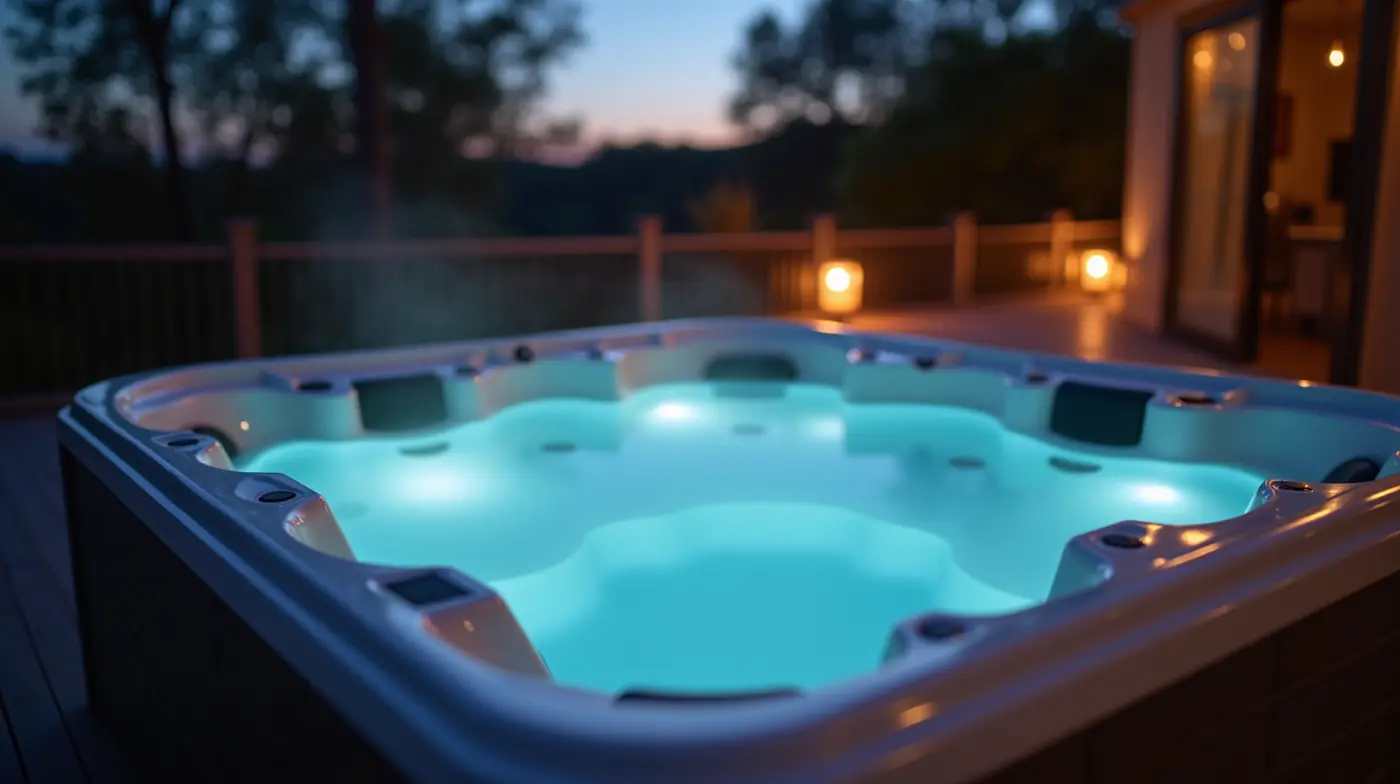
Can You Really Use Well Water in a Hot Tub?
Short answer: yes. There is nothing about a private well that makes the water unsafe to put in a spa, provided you treat it the same way you would any high-mineral fill. The reason some owners report problems is that hot tub water sits at 100–104°F for long periods, which dramatically accelerates two things: mineral precipitation (hardness turning into calcium scale) and evaporation-driven concentration (total dissolved solids climbing as water boils off but the minerals stay behind).
Municipal water is typically softened, filtered, and dosed with disinfectant before it reaches your house, so the average spa owner never thinks about it. Well water has none of that. It arrives with whatever the aquifer gave it — often 150–400+ parts per million of hardness, plus variable iron, manganese, and total dissolved solids. That is exactly the combination that builds scale on a heater element and leaves brown stains on the acrylic shell.
The 30-Second Rule of Thumb
If your well water reads above 200 PPM for total hardness, treat scale prevention as a non-optional part of your spa routine from day one. Above 400 PPM hardness or 0.3 PPM iron, plan to add a whole-house softener or a spa-specific sequestering agent — sanitizer alone will not stop scale.
During our work with homeowners who fed a 4-person round spa directly from a 130-foot well, the tub ran cloud-free for an entire season once we combined bromine with a scale inhibitor and kept the alkalinity in the 80–120 PPM band. The difference was not the brand of product; it was the discipline of testing the fill water first and treating the minerals, not just the germs.
Why Well Water Is Different: Scale, Metals & Minerals
Understanding what is actually in your well water is the single most important step, because every maintenance decision that follows hangs on two numbers: hardness and iron. Here is what matters for a hot tub specifically.
Hardness (Calcium & Magnesium)
Measured in PPM of calcium carbonate, hardness is the main scale driver. The EPA and most plumbing references treat water above 180 PPM as hard. In a heated spa, every degree above 80°F pushes calcium carbonate closer to its solubility limit, so hard well water that is perfectly fine for a shower can drop scale on a 102°F heater within days. Magnesium contributes to hardness as well, but calcium is the one that visibly scales.
Iron & Manganese
Even low iron levels — around 0.3 to 1.0 PPM — will oxidize and stain the tub floor, the jet faces, and any exposed pipe brown or rust-colored. Manganese does the same at even lower concentrations and is notorious for leaving black or dark-gray film. Iron in well water is usually present as dissolved (ferrous) iron that is invisible until it hits oxygen and oxidizes into rust-colored ferric iron, which is exactly what happens the moment it enters an aerated hot tub.
Total Dissolved Solids (TDS)
TDS is the sum of everything dissolved in the water. Municipal spa guidance generally keeps TDS under about 1,500–2,000 PPM before a partial water change is recommended. Hard, mineral-rich well water can start higher, and because evaporation concentrates solids, TDS in a well-water tub climbs faster than in a municipal-water tub. This is why well-water spas often need a more frequent partial drain-and-refill than their city-water counterparts.
Bacteria & Nitrate
A properly cased and sealed well should deliver biologically clean water, and a hot tub running at proper sanitizer levels handles routine bacteria easily. The one test worth doing before fill is a basic coliform/E. coli check, especially if the well is older, recently repaired, or near a potential contamination source. If the water has ever flagged for bacteria, that is a well problem to fix at the source, not something a hot tub should be asked to absorb.
Watch Out: The Staining Window
Iron stains set fastest during the first 24–72 hours after filling, while the water is still balancing. If you fill with iron-bearing well water and skip a metal-removal or chelating step, you are racing the oxidation clock. Dosing a sequestering agent at fill is the cheapest insurance you will buy all season.
How to Test Your Well Water Before Filling the Tub
You do not need a laboratory to make good decisions. A well-designed spa/water test kit plus one optional lab panel covers everything that matters. Test the water at the spigot that feeds the tub, not a random tap, because treatment (softeners, filters) may be applied at different points in the house.
Step 1: Run a full-range water test kit. Use a liquid-reagent or digital test kit that measures pH, total alkalinity, hardness, iron, and TDS. Dip-test strips are fine for a first look, but liquid or digital methods are noticeably more accurate for iron and hardness, which are the two numbers that drive your treatment plan.
Step 2: Record hardness and iron first. These two values decide whether you need a softener or a chelator before you ever think about sanitizer. Write them down; you will reference them for the whole season.
Step 3: Check total alkalinity and pH of the fill water. You are not trying to balance the well water itself, but knowing the starting alkalinity tells you how much buffer you will need to hit the 80–120 PPM alkalinity target once the tub is filled.
Step 4: Do an optional lab panel for iron, manganese, nitrate, and coliform. A state-certified lab or a mail-in well-water panel costs a fraction of a repair and gives you exact numbers. This is especially worth it if the water has any color, odor, or a history of flags. You can see current pricing and what a panel covers in our guide on how much it costs to test well water.
Step 5: Decide your treatment path. Hardness above 200 PPM means scale prevention is mandatory. Iron above 0.3 PPM means add a chelating/sequestering agent at fill. Bacteria flags mean fix the well first. Everything else is routine spa balancing.
Reference ranges for residential spa water. Always confirm against your tub manufacturer's manual, which can specify tighter limits for heaters and Ozone/UV components.
If you want a deeper look at what the numbers mean before you commit to a treatment plan, our guide on why well water turns cloudy breaks down the mineral causes behind most of the discoloration you will see in a fresh fill.
Best Hot Tub Water Treatment for Well Water: Chlorine vs. Bromine vs. UV
Sanitizer choice matters more with well water than with city water, because your sanitizer has to do its job in a mineral load it was not designed around. After treating multiple well-fed spas over the past year, we have found that no single chemistry wins in every situation — the right one depends on your iron level, how hot you run the tub, and how much product you want to dose. Here is how the main options compare.
Comparative notes from our spa-treatment field notes (2025–2026 season). Sanitizer products for spas should be listed to NSF/ANSI 50; see NSF International for the standard that governs hot tub sanitizer effectiveness and labeling.
For most well-water tubs we set up, the combination that has performed best is bromine as the primary sanitizer, a trichlor shock once a week or after heavy use, and a UV sanitizer to cut chemical demand. The UV is the piece municipal-water owners rarely need but well-water owners benefit from most, because it keeps the sanitizer level you actually have to dose lower while still controlling the bacteria load that warm, mineral-rich water encourages.
Preventing Scale & Staining: The #1 Problem with Well Water in Hot Tubs
Scale is where well water in a hot tub goes from inconvenient to expensive. A scaled heater element loses efficiency and eventually fails; scaled jets clog; and scale that flakes off lands on the acrylic as a chalky haze no amount of scrubbing removes. The economics are simple: a scale inhibitor costs a few dollars per month, while a replaced heater element and labor runs hundreds of dollars.
Use a scale inhibitor / sequestering agent
Sequestering agents (phosphonate-based products sold as scale inhibitors) do not remove calcium from the water; they hold it in solution so it cannot precipitate onto surfaces. Dose according to the label at fill and top up on your regular maintenance day. This is the single highest-value product in this entire guide for well-water tubs.
Control your alkalinity
Alkalinity above about 120 PPM actively pushes calcium out of solution and onto surfaces. Keeping total alkalinity in the 80–120 PPM window is one of the cheapest scale-prevention tools there is, and it also keeps pH swings manageable. If your well water arrives with high alkalinity, you may need to dilute the fill with a partial fresh draw or use an alkalinity reducer to bring it into range.
Consider a whole-house softener for the fill
If your well water is genuinely hard (300+ PPM) and you use the water for more than the tub, a softener pays for itself across the whole house. You do not need to run soft water through the spa 24/7 — filling and topping off with softened water is enough to keep scale at bay, and softened fill water is dramatically gentler on the heater. Our well water softener buyer's guide covers sizing a softener for your hardness and flow rate, and our whole house water filter for well water guide covers the filtration side if your problem is iron or sediment rather than hardness.
Treat iron before it stains
For iron above 0.3 PPM, dose a metal chelator at fill and again during the first week. If iron is above 1 PPM, the better fix is upstream — an oxidation-and-filtration stage before the water reaches the spa line. Chelators will hold moderate iron in solution indefinitely; they will not handle heavy loads, and no product can replace removing iron at the source for a genuinely iron-rich well.
If You Already Have Scale
Do not pour acid into a full tub. Drain or partially drain, then use a descaler formulated for spa equipment on the shell, heater, and jets, following the product's dwell times. Rebalance with fresh water, dose the scale inhibitor at fill, and the cycle will not repeat on the same schedule.
Best Products for Using Well Water in a Hot Tub (Where to Buy)
Here is the exact shopping list we use when setting up a well-fed spa. Every product below is available on Amazon with our affiliate tag; we link the search rather than a specific listing so you get current stock and pricing.
Prices and availability change; links open Amazon search results so you compare current options. Sanitizer choices should be NSF/ANSI 50 listed per NSF International standards.
Filling & Maintaining Your Tub with Well Water: Step-by-Step
Once your water is tested and your products are on the shelf, the fill-and-maintain routine is simple. Follow this sequence the first time and it becomes second nature.
Step 1: Dose the sequestering agent into the empty tub. Add the scale inhibitor to the dry shell first, then fill. This guarantees the agent is present before the first mineral-laden water hits the heater and jets, which is when most first-season scale starts.
Step 2: Fill the tub with well water. Use the dedicated spa fill line. If you have a softener, top off with softened water to halve the incoming hardness load.
Step 3: Circulate for 8–12 hours before testing. Run the pump (heater off) to mix the fill and distribute the sequestering agent. Testing on day one before circulation gives you false, patchy readings.
Step 4: Raise alkalinity to 80–120 PPM, then set pH to 7.2–7.6. Always alkalinity first — pH will not hold until the buffer is in place. Add chemicals in small increments and re-test 20 minutes after each dose.
Step 5: Shock, then establish the sanitizer level. Run a trichlor shock to oxidize any organics and dissolved iron in the fill, wait until residual chlorine drops, then begin bromine dosing to your target level (commonly 3–5 PPM for bromine systems).
Step 6: Add UV if your system has it. Install the UV in the flow path and confirm the pump flow is within the lamp's rated range. With a UV running, most owners find they can hold bromine at the low end of the range.
Step 7: Run your weekly cycle. Test pH and sanitizer, top up bromine, dose a small amount of scale inhibitor monthly, clean or rinse the filters every 1–2 weeks (well water loads them faster), and do a full shock after heavy bather use. Log TDS every two weeks; plan a 25% partial water change when it approaches 1,500–2,000 PPM.
Pro Tip: The 25 Percent Rule
Well water tubs concentrate solids faster than municipal ones. Every 4–6 weeks, drain and replace roughly 25% of the water. It costs a few gallons of well water and resets your TDS before it reaches the level where scale and cloudiness become visible.
FAQ: Well Water in a Hot Tub
Can I fill my hot tub directly with well water?
Yes. As long as the well water is biologically clean (a basic coliform test confirms this), filling directly from the well line is fine. Treat the minerals on fill: dose a scale inhibitor into the empty tub before you start filling, and add a chelating agent if your iron is above 0.3 PPM.
Why does my hot tub water turn cloudy or yellow after filling with well water?
Cloudiness is almost always fine particulate or a sanitizer-mineral reaction settling out; yellow or tan color points to iron oxidizing in the aerated, heated water. Let the water circulate and filter for 24–48 hours, shock to oxidize the iron, and dose a chelator. Persistent color after that means your iron load is too high for chemicals alone and needs an upstream oxidation-and-filtration stage.
Will well water scale up my hot tub heater?
Hard well water will, if you do nothing. Above 200 PPM hardness, heater and jet scale is a matter of weeks in a 100°F tub. A sequestering agent at fill plus monthly top-ups, alkalinity held under 120 PPM, and softened top-off water will keep the heater clean for the life of the tub.
Chlorine or bromine for well water in a hot tub?
Both work. Bromine is more stable at spa temperatures and smells less, so we default to it for well-water tubs; trichlor remains the best shock oxidizer regardless. Many owners run bromine as the daily sanitizer with a weekly trichlor shock, plus a UV to cut the chemical load.
How often should I change the water in a well-water hot tub?
Do a 25% partial change every 4–6 weeks and a full drain-and-refill roughly once a year, or sooner if TDS passes 2,000 PPM, the water stays cloudy, or scale becomes visible. Municipal-water tubs often stretch longer between changes because they start with fewer dissolved solids.
Does using well water in a hot tub void the warranty?
Not inherently — manufacturers expect owners to treat their water, and well water is a normal fill source in rural areas. What can void a warranty is neglect: a heater that fails from untreated scale, or a pump that runs dry, is a maintenance issue rather than a fill-source issue. Keep your treatment log; it is your best documentation that the water was properly maintained.
See Also
Well Water Softener 2026: Buyer's Guide & Sizing
Whole House Water Filter for Well Water 2026: Buyer's Guide
Can I Use Well Water in My Aquarium 2026? Testing + Care Guide
Well water in a hot tub is a solved problem for thousands of homeowners — the owners who have problems are the ones who skip the fill-water test and let minerals set the maintenance schedule for them. Test the water, dose the scale inhibitor before the first fill, hold your alkalinity in range, and choose a heat-stable sanitizer like bromine with a weekly shock. Do those four things and your well-fed spa will run clear, scale-free, and easy for the whole season. If your well water is pushing harder limits, the softener and whole-house filter guides linked above are the natural next step to solving the mineral load at the source.
#WellWater #HotTub #SpaCare #WellWaterTreatment #HotTubMaintenance #WellOwner #PrivateWell #WaterTreatment #ScalePrevention #SpaWater #WellWaterTips #HotTubTips #WaterQuality #HomeOwner #RuralLiving