
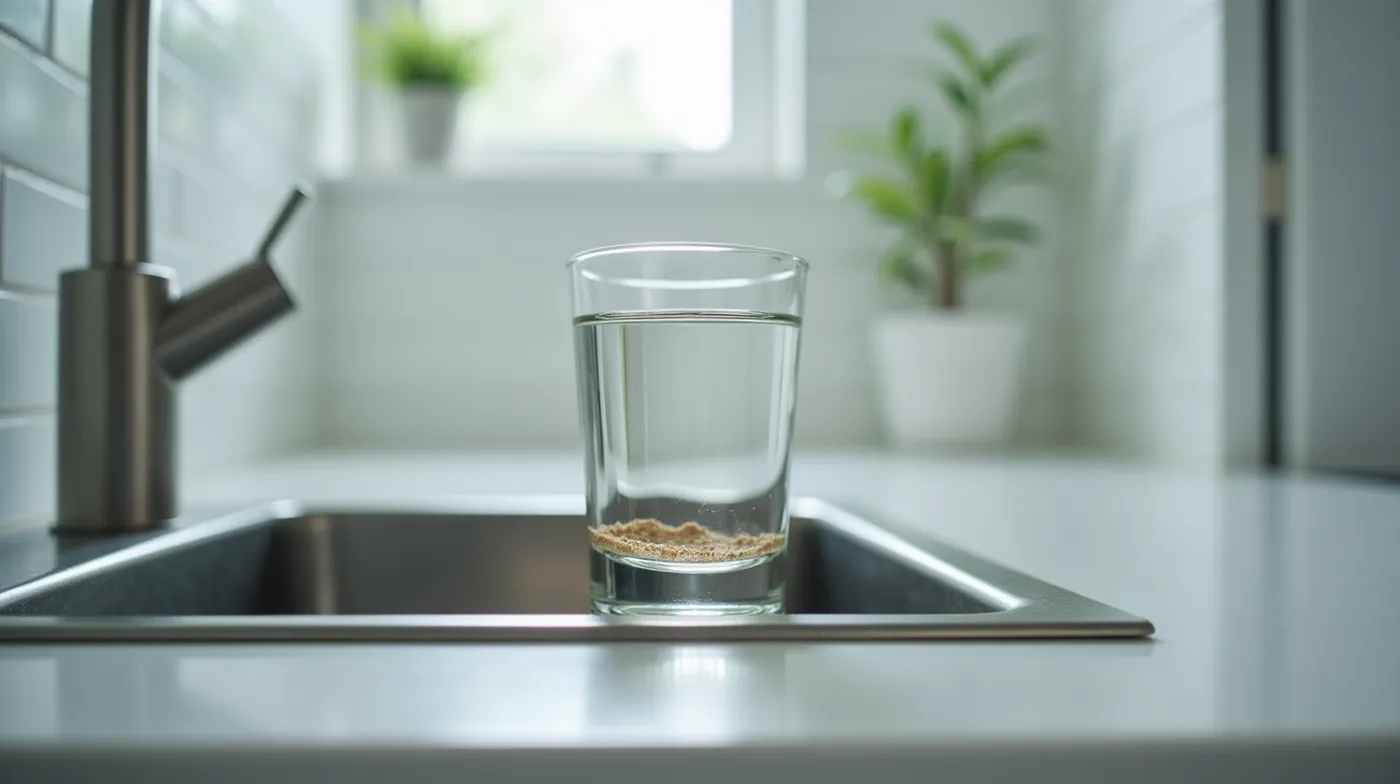
If you have ever lifted a glass of well water and watched a thin ring of sand settle at the bottom, you have seen the single most common complaint in private well ownership: sediment. Across the more than 1,000 well pump systems we have installed and serviced, sediment at the tap is what homeowners call us about more often than pressure loss, and in the large majority of cases it is a fixable condition — a worn screen, a corroded pipe, a missing prefilter — not a doomed aquifer. The catch is that sand, silt, rust flakes, and organic debris each come from a different place in the well system, and each responds to a different fix. This 2026 guide covers what well water sediment actually is, the eight causes behind it, how to measure it at home and with a lab, the six removal methods side by side, and a step-by-step filtration setup that clears the water without overbuilding.
By Thomas Reynolds, Pump Systems Engineer
Thomas has installed and serviced over 1,000 well pump systems for homeowners, with hands-on experience across submersible pumps, pressure tanks, and whole-house filtration in the western US.
Disclosure: As an Amazon Associate, we earn from qualifying purchases on this page. Product selections are based on independent research and real well water data.
Published: November 23, 2026
Table of Contents
- What Is Sediment in Well Water?
- Why Is There Sediment in My Well Water? 8 Causes
- How to Test and Measure Well Water Sediment
- How to Remove Sediment From Well Water: 6 Methods Compared
- Step-by-Step: Building a Sediment Filtration Setup
- Can Sediment in Well Water Make You Sick?
- When to Call a Well Professional
- Where to Buy: Sediment Filters and Test Tools
- Sediment in Well Water FAQ
- The Bottom Line
What Is Sediment in Well Water?
Sediment is any solid particle physically suspended in your water — material you can filter out, sieve out, or watch settle to the bottom of a glass. That is the defining distinction from dissolved minerals. Total dissolved solids (TDS) like calcium, magnesium, and sulfate pass right through every filter on the market and never settle; sediment always leaves something behind. Getting that distinction straight matters, because it determines which fix will work and which will not.
When sediment shows up in well water, it almost always falls into one of four families. Identifying which family you are dealing with is half the diagnosis, because the four families point to four different root causes and four different fixes.
| Type | What It Looks Like | Typical Source | Settling Speed in a Glass |
|---|---|---|---|
| Coarse sand and grit | Visible grains, tan or white, gritty between the fingers | Formation sand through the well screen or a casing breach | Seconds to a minute |
| Fine silt and clay | Milky or gray cloudiness with no visible grains | Disturbed aquifer material, storm infiltration, undeveloped wells | Hours to days, or never fully settles |
| Rust (iron oxide) | Red-brown flakes or specks, yellow staining on fixtures | Corroded steel well pipe, oxidized dissolved iron, rusting tank | A few minutes |
| Organic particles | Dark specks, leaf-mold color, sometimes a muddy taste | Top wash, decaying plant matter, surface infiltration | Minutes to an hour |
Field observations from well inspections across the western US. Settling speeds vary with particle size, concentration, and glass shape.
Coarse particles — real sand grains and anything larger — tell you the well itself is letting formation material in, and our sand in well water guide covers that failure mode in depth, including how to tell screen wear from a casing problem. Rust-colored sediment is almost always oxidized iron; the iron in well water guide walks through the chemistry, the staining, and the removal options. Fine silt that keeps water cloudy for days is a turbidity problem as much as a particle problem, and it is the type most likely to carry and shelter bacteria — which is why the testing section below comes before the filtration section.
Why Is There Sediment in My Well Water? 8 Causes
Every sediment problem traces back to one of eight sources. In our field work the top three — drawdown-related sand, screen wear, and iron corrosion — account for most of what we see, but the full list matters because the fixes are completely different.
- Drawdown pulling formation sand. When the pump runs, the water level in the well drops; that drop is called drawdown. If drawdown reaches the sand line, the current through the formation loosens sand and carries it up with the water. The tell: sediment appears only after the pump has run a while, not in the first glass.
- Worn or failing well screen. Screens corrode over time, and welded-screen wells slowly lose the integrity of their openings. As the screen wears, formation sand that was previously held back starts flowing in, usually in increasing quantity over a matter of months.
- Corroded steel piping (rust sediment). Older wells with galvanized or steel drop pipes shed rust as the pipe corrodes from the inside. The sediment is iron oxide, it stains fixtures, and it keeps coming back no matter how many filters you add until the pipe itself is addressed.
- Pump wear and erosion. A worn impeller, or a pump that runs dry, erodes its own components and the debris ends up in the water. Sand in the well accelerates pump wear, creating a feedback loop that damages the pump and the water quality at the same time.
- Undeveloped or recently drilled well. Drilling churns up the formation, and a well that was not properly developed holds loose material that washes into the well for the first weeks or months. New-well sediment that is clearing steadily is normal; sediment that worsens is not.
- Seasonal water table swings and storms. Rain season and drought shift the water level in the well. When the level drops toward the sand line, sand starts to appear; when recharge returns, it often clears on its own.
- Sand line exposure after yield loss. If the well produces less water than it used to, the drawdown may now reach the formation in a way it did not before. The same pump that ran clean for ten years can start pulling sand the year the water table falls.
- Surface intrusion (top wash). A cracked or missing well cap, failed seal grout, or poor surface sealing lets rainwater and surface debris wash down into the well. The sediment is dark and organic, often shows up after storms, and may carry coliform bacteria with it — which changes the urgency from cosmetic to a health issue.
The pattern tells you where to look
Sediment in the first glass after the tank has filled points at the tank or the pipes. Sediment that builds the longer the pump runs points at drawdown and the screen. Sediment that appears after storms points at the cap, the seal, or the surface. Matching the timing pattern to the cause saves the cost of guessing.
How to Test and Measure Well Water Sediment
Three tools do the testing job, from free to definitive, and most well owners need all three at some point. Start with the glass test to characterize the particles, add a turbidity meter if cloudiness is the issue, and send a lab sample whenever the sediment is rust-colored, organic, or shows up after storms.
| Test Option | What It Measures | Typical Cost | Turnaround | Best For |
|---|---|---|---|---|
| The glass test (free) | Particle type, size, settling speed | Free | Instant | First look at any new sediment |
| Digital turbidity meter | Turbidity in NTU (nephelometric turbidity units) | $25–$90 one-time | Instant | Cloudy water and checking filter performance |
| State-certified lab panel | Iron, manganese, coliforms, nitrates; VOCs on request | $50–$150 per panel | 3–7 days | Rust or organic sediment, annual safety testing |
Turbidity benchmarks per the EPA Surface Water Treatment Rule; private wells commonly target under 1 NTU.
For cloudy water, the number that matters is turbidity, measured in nephelometric turbidity units (NTU). The EPA Surface Water Treatment Rule calls for drinking water under 0.3 NTU for 95 percent of monthly samples, and for private wells the practical working target is under 1 NTU. That 1 NTU mark matters for a second reason: it is also the threshold above which ultraviolet disinfection starts to lose effectiveness, because particles shelter bacteria from the light. A basic digital turbidity meter turns cloudiness from a guess into a number you can log over time; our well water test kits guide covers which lab panels to pair with it.
If you disinfect with UV, turbidity is not optional
UV systems are rated for water under 1 NTU. Sediment-laden water can pass a UV lamp with bacteria still intact, and the lamp will not tell you. A prefilter upstream of the UV unit plus a monthly turbidity reading is the cheapest insurance in the whole system.
How to Remove Sediment From Well Water: 6 Methods Compared
There is no single right answer; the correct setup depends on what you are filtering and where. The table below compares the six methods we install most, and the step-by-step section that follows shows how they stack together in one system.
| Method | Particle Size Captured | Typical Flow | Installed Cost | Maintenance | Best For |
|---|---|---|---|---|---|
| “>Spin-down (magnetic) prefilter | 50–100+ microns: sand, rust flakes | 15–25 GPM, no pressure drop | $80–$200 | Rinsed monthly, no parts to replace | Coarse sand and rust, whole-house first stage |
| “>20-micron cartridge prefilter | Around 20 microns: fine sand, coarse silt | 10–25 GPM | $100–$300 with housing | Cartridge every 3–12 months | Whole-house sediment after a spin-down |
| “>5-micron point-of-use filter | Around 5 microns: fine silt, final clarity | 0.5–2 GPM | $40–$150 | Cartridge every 2–6 months | Kitchen tap, refrigerator, RO feed |
| Pressure tank drain and flush | Does not filter; keeps settled sediment out of the lines | n/a | Time only | Annually, or whenever sand appears in the tank | Every well with recurring coarse sediment |
| Water softener with iron service | Dissolved iron to about 5–6 ppm, not settled particles | 12–25 GPM | $800–$2,500 | Brine and resin care | Rust from dissolved iron, not flakes |
| Reverse osmosis | Dissolved solids and particles down to 0.0001 microns | 0.5–2 GPM | $300–$900 | Membrane every 2–3 years | Drinking water where TDS also needs to come down |
Costs reflect 2026 installed pricing for a typical single-family home; flow ratings per manufacturer specs for standard residential plumbing.
Pro tip: the setup we install most
A spin-down right after the pressure tank, a 20-micron cartridge upstream of the softener, and a 5-micron cartridge at the kitchen tap. Each stage does one job, and that is why the system keeps working for years instead of clogging in a month.
Step-by-Step: Building a Sediment Filtration Setup
Follow the six steps below in order. Each one takes less than an hour, and the whole system is in place for most homes in a single afternoon.
- Characterize the sediment. Fill a clear glass from the kitchen tap, let it sit for an hour, and sort the particles against the four types above. Gritty sand, red-brown rust flakes, permanent cloudiness, or dark organic specks each point to a different fix, and the right fix starts here.
- Check the tank and the first pipe. Turn off the pump, open the tank drain or a low-point valve, and flush. If a lot of sand comes out of the tank, the sediment is already in the lines, and the tank needs to be flushed regularly rather than filtered only at the tap.
- Install a spin-down prefilter at the house. Mount it on the line right after the pressure tank, before anything else. It catches coarse sand and rust flakes without adding pressure drop, and it protects every downstream component, including the check valve and the softener.
- Add a 20-micron cartridge stage. In a standard 10-inch housing, this is the workhorse. It catches the fine sand and coarse silt that the spin-down lets through. If you run a water softener, this stage goes before it — sediment destroys resin far faster than hardness does.
- Put a 5-micron stage where the water is used. At the kitchen tap, or feeding the refrigerator and an RO unit, a small 5-micron cartridge gives glass-clear water and protects the appliances. Never put a 5-micron cartridge on the main line of a sandy well; it will clog within weeks.
- Set a change schedule and log it. Watch the pressure drop across the cartridge: when flow from the main line drops by roughly 10 percent, or at the interval in the table above (3–12 months depending on sand load), replace it. A turbidity meter reading before and after the filter tells you exactly how much load each stage is carrying.
The most expensive mistake we see
A 5-micron cartridge on the main line of a sandy well. It clogs within weeks, and the pressure loss can trip the pump into short cycles, which wastes electricity and shortens pump life. Keep fine filtration at the point of use.
Can Sediment in Well Water Make You Sick?
Short answer: the particles themselves are rarely the hazard — the organisms and metals they carry and shelter are. Sand and silt are chemically inert for the most part, which is why a glass of slightly sandy water is rarely the emergency it feels like. But sediment is also the main hiding place for bacteria in well water. Turbidity above about 1 NTU shields coliform and E. coli from both chlorine and ultraviolet light, and the EPA treatment rules are built around keeping turbidity down precisely because it determines whether disinfection works at all.
That is why the sediment type drives the health response. Coarse sand is mostly a mechanical problem: fix the screen, add the prefilter, keep the water clear. Rust sediment means iron, which is a taste and staining issue at low levels and a treatment issue above 0.3 mg/L, the EPA secondary standard for iron. Dark organic sediment after storms is the one that should trigger a bacteria test the same week, because top wash is the classic pathway for surface coliforms into a well. If you see that pattern, run a coliform test and treat the water as unsafe until the result comes back clean.
When to Call a Well Professional
Filtration manages sediment at the tap; it does not repair the source. Call a well driller or pump contractor when you see any of the following:
- Sediment that keeps getting coarser over months — a failing screen or casing breach gets worse, not better, and the fix is a well job, not a filter.
- Gravel or pea-sized particles at any tap. That is a casing or screen integrity problem, and our gravel in well water guide explains why it should never be ignored.
- Sediment plus a drop in yield — the water table falling toward the sand line changes the math on pump placement and may call for redeveloping the well.
- Storm-related sediment that does not clear after the water table recovers, pointing at a cap, seal, or surface grading problem.
- Rust that keeps recurring after the tank is replaced and the lines are flushed, pointing at the drop pipe itself.
Filters are a maintenance budget; well work is an investment
If a filter change interval has dropped from a year to three months, the well is telling you something. Stop replacing cartridges and start looking upstream: the screen, the casing, the pipe, or the water table.
Where to Buy: Sediment Filters and Test Tools
Everything in this guide is available as a standard residential product. The table lists each component, what it does, and where to get it.
| Product | What It Does | Best For |
|---|---|---|
| “>Spin-down sediment filter | Catches coarse sand and rust flakes before they reach the pipes | First stage in every sediment setup |
| “>10-inch 20-micron sediment cartridge | The whole-house workhorse for fine sand and coarse silt | Upstream of the softener and appliances |
| “>10-inch sediment filter housing | The housing the 20-micron and 5-micron cartridges go in | Replacing a cracked or corroded housing |
| “>10-inch 5-micron sediment cartridge | Final polish for glass-clear water | Kitchen tap and appliance feed |
| “>Digital turbidity meter | NTU readings for cloudy water and UV performance | Monitoring the fix over time |
| “>Well water test kit | Home panels for iron, hardness, coliform, nitrates | Annual safety testing and new-sediment events |
Sediment in Well Water FAQ
Is it safe to drink well water that has a little sediment?
A thin ring of coarse sand in an otherwise clear glass is a mechanical issue, not a health emergency — most owners get a filtered tap within a week. What is not safe to ignore is dark organic sediment after storms or persistent cloudiness, because those patterns are how bacteria enter a well. When in doubt, run a coliform test before treating it as a cosmetic problem.
How much sediment is too much?
There is no federal numeric limit for particles in private well water, but the working benchmarks are turbidity under 1 NTU for clear water and under 0.3 NTU if you disinfect with UV. If a glass settles out a visible ring of sand within minutes, the well itself needs attention regardless of the number.
Will a water softener remove sediment?
No. A softener exchanges calcium and magnesium ions; it does not catch solid particles. Sand and silt passing through a softener foul the resin and shorten its life. Sediment needs to be filtered upstream, which is what the spin-down and cartridge stages in this guide are for. A softener with an iron service does remove dissolved iron, but that is a different thing from rust flakes.
How often should I change a sediment filter cartridge?
It depends entirely on the sand load in your well. A 20-micron prefilter in a moderately sandy well typically lasts 6–12 months; in a very sandy well, 3–4 months. The objective trigger is pressure drop: when flow from the main line falls about 10 percent, change the cartridge regardless of the calendar. A 5-micron point-of-use cartridge sees less load and usually lasts 2–6 months.
Why does my well water only have sediment in the morning or after the pump runs a long time?
That pattern is drawdown. When the tank is full you are drinking water that sat in the tank, where coarser particles settled to the bottom. As the pump runs and drawdown deepens, the well starts pulling formation sand, and the water at the tap gets sandier the longer it runs. If it clears within a day or two of the water table recovering, it is seasonal; if it is permanent, the sand line has moved into the working range of the well and the well needs a look.
The Bottom Line
Sediment in well water is the most common, and usually the most fixable, problem a private well has. The first job is to identify what you are filtering — coarse sand, fine silt, rust, or organic debris — because the four types point to four different sources and four different fixes. The second is to match the fix to the source: screen and casing problems need well work, iron needs iron treatment, and everything else is handled by a staged setup — spin-down after the tank, 20-micron upstream of the softener, 5-micron at the point of use. Log the turbidity, watch the filter change intervals, and when the pattern says the well itself is the problem, call the professional who can fix it at the source. For the specific failure modes behind each particle type, our guides on sand in well water, iron in well water, and well water test kits go deeper than this overview can.
See Also
Related well water guides
Sand in Well Water 2026: Causes, Testing & Removal
Iron in Well Water 2026: Safe Levels, Testing & Removal
Best Well Water Test Kits 2026: How to Choose the Right One
#WellWater #SedimentInWellWater #WellWaterFilter #SedimentFilter #WaterQuality #PrivateWell #WellMaintenance #WellDrilling #WaterTurbidity #HomeWell #WellOwner #WaterTreatment #SandInWater #WellPump #CleanWater