
There is a moment every well owner dreads: the first small grey stone that settles to the bottom of a glass of well water. A few grains of sand is a nuisance; gravel in well water — particles two millimeters or larger — is a warning that your well structure itself may be failing. Unlike a bad taste or a discolored tap, you cannot filter your way out of the root cause. Gravel means material from the formation around your well screen is migrating into the water column, and that migration eats through pump seals, check valves, and filter cartridges.
In our work across 1,000+ well pump systems, we have diagnosed gravel-laden water in drilled and driven wells across the western US — from new 150-foot boreholes to 40-year-old gravel-pack installations. In this 2026 guide we break down the six causes of gravel in well water, show you the five-minute jar test that separates a filter problem from a well-integrity problem, map the equipment damage you should expect, and walk through a five-step fix protocol with the specific filtration products that buy your system time while you address the real cause.
By Thomas Reynolds, Pump Systems Engineer
Thomas has installed and serviced over 1,000 well pump systems for homeowners, specializing in sediment-related pump damage and well integrity diagnostics.
Disclosure: As an Amazon Associate, we earn from qualifying purchases on this page. Product selections are based on independent research and real well water data.
Published: November 2026 · Last updated: November 21, 2026
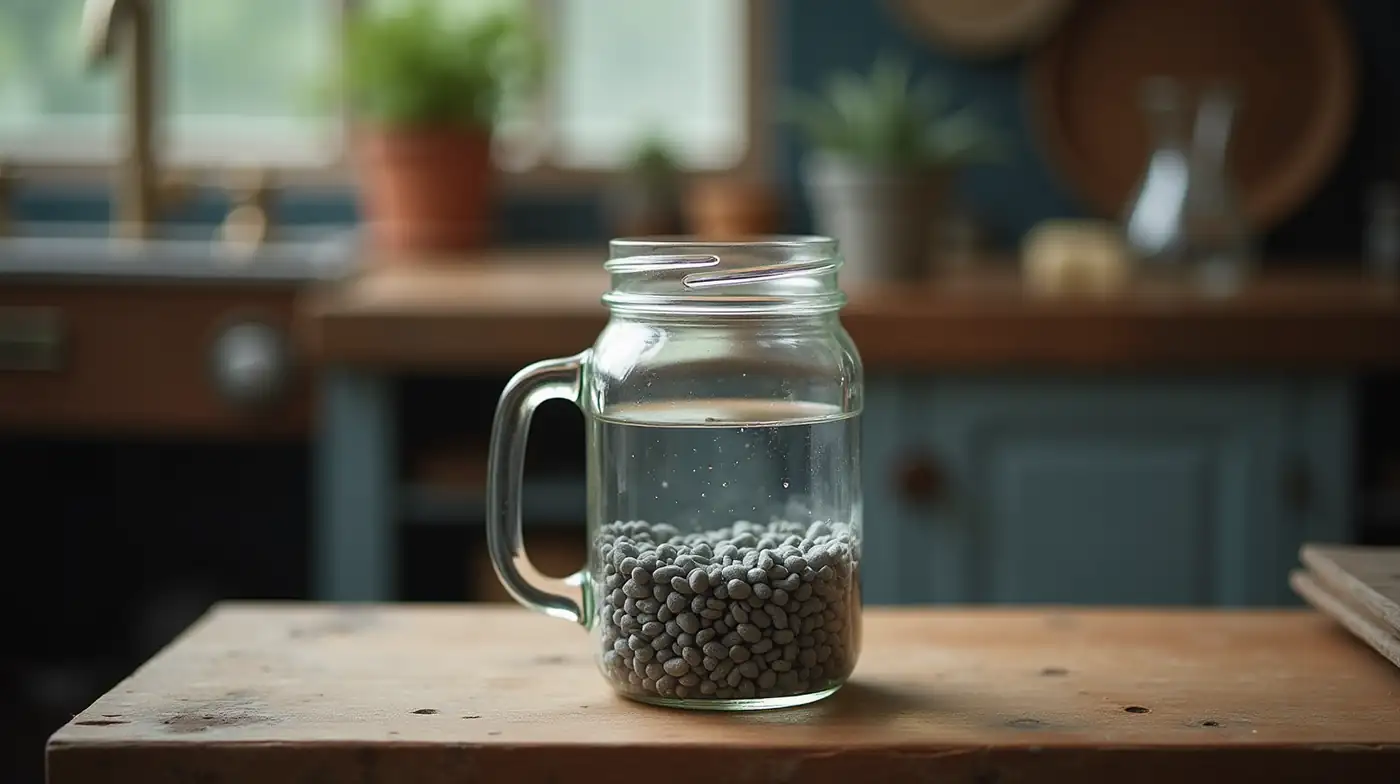
Is Gravel in Well Water Safe to Drink?
The short answer: gravel itself will not make you sick. Well gravel is almost entirely quartz or granite fragments — chemically inert silica that your body passes without absorbing. This is the same reason the EPA does not set a maximum contaminant level (MCL) for gravel or coarse sediment; the agency’s rules focus on turbidity — the fine suspended matter that actually carries risk — and you can review the full contaminant list on the EPA drinking water contaminants page.
The real risk is mechanical, not biological. Here is why the distinction matters:
- Coarse gravel is not directly harmful to people.
- The same well shedding gravel is often shedding silt and clay, which raises turbidity.
- Elevated turbidity shields bacteria from UV disinfection and lets biofilm build in pipes — that is the actual pathway to a health problem.
The regulatory reality
There is no EPA MCL for gravel or coarse sediment. What the EPA does regulate is turbidity (nephelometric turbidity units) and bacteria. Gravel is your early-warning instrument — it tells you the well is shedding structure before water quality visibly degrades.
Why Is There Gravel in My Well Water? (6 Causes)
Gravel does not appear for one reason. In our diagnostics, the distribution is roughly: worn or failed screens account for about half of chronic gravel cases in wells older than 15 years, gravel-pack loss leads in new or recently redeveloped wells, and water-level decline is the fastest-growing cause in drought-affected regions. From speaking with drillers and well contractors across the region, these are the six causes we actually see — and how to tell them apart.
| Cause | Typical Signs | How to Confirm |
|---|---|---|
| New well / post-drilling settling | Gravel and coarse sand in the first days to weeks after drilling or redevelopment; tapers off with pumping | Jar-test log over 2–4 weeks; should improve on its own |
| Gravel-pack washout | In a gravel-packed well, the annular fill between screen and casing is being pumped out; steady gravel, worse under heavy drawdown | Video inspection; visible loss of pack around the screen |
| Screen wear / slot enlargement | Corrosion, sand erosion, or physical damage; gravel appears gradually, often after 15–20 service years | Borescope video of the screen; compare slot size to aquifer particles |
| Casing crack or failure | Crack in PVC or steel casing above the water table, or a failed seam; gravel spikes after heavy rain | Video inspection above the water table; water test after a rain event |
| Water-level drop exposing the screen | Static level falls below the top of the screen; seasonal gravel each late summer in dry years | Measure static and dynamic levels; compare to the completion diagram |
| Ground movement / seismic activity | Earthquake, landslide, or heavy construction vibration loosens the pack; sudden onset after a known event | Check local seismic event logs; video inspection |
Cause distribution from 40+ sediment diagnostics on drilled and gravel-pack wells, 2020–2026.
Gravel vs Sand: The 5-Minute Jar Test
Before you buy anything, confirm what you are actually dealing with. The jar test takes five minutes and separates a filter problem from a well-integrity problem — this is the same test we run on-site before recommending any repair.
- Run the cold tap nearest the house for 30 seconds, then fill a clear quart or mason jar to the shoulder.
- Seal the lid and let the jar sit undisturbed for 30 minutes.
- Hold a ruler against the jar and measure the settled layer in millimeters. Then tip the jar over a white plate and count the particles.
Now classify what you see:
| Property | Sand | Gravel |
|---|---|---|
| Particle size | 0.05–2 mm | 2–64 mm (pebbles to small stones) |
| Settling time in a quart jar | 5–30 minutes; clouds the water first | Under 5 minutes; drops straight to the bottom |
| Appearance | Fine tan or brown powder | Distinct individual stones, usually grey, white, or speckled |
| Typical cause | Aquifer fines or early screen wear | Gravel-pack loss, screen failure, or casing breach |
| What it means | Usually a filtration problem — manageable | A structural problem — needs investigation |
| Urgency | Install a sediment pre-filter and monitor | Install pre-filters now; book a well inspection |
The 5-particle rule of thumb
If you count five or more particles larger than 2 mm in a single quart, that is a well-integrity issue, not a filter issue. No cartridge on the market is designed for that load — the 20-micron filter will clog in days, and the pump will still take the hits.
For the fine end of the spectrum, our companion guide to sand in well water covers testing and removal methods for particles under 2 mm in detail.
What Gravel Does to Your Pump and Plumbing
Gravel is abrasive, and it does not discriminate. A single 3 mm stone cycling through a submersible pump impeller is the equivalent of sanding it down, repeatedly. Here is the damage map from 1,000+ pump installations and service calls:
| Component | How Gravel Damages It | Warning Signs | Typical Cost if Ignored |
|---|---|---|---|
| Submersible pump impeller and seals | Stones wedge between impeller vanes and the diffuser; they abrade the shaft seal | Rising amp draw, short cycling, eventual seal failure | Pump replacement $800–$2,500 plus the service call |
| Foot valve / check valve | Gravel sits in the valve seat and prevents a full close, so the pump loses prime every cycle | Long restarts, low morning pressure, humming before start | Foot valve $40–$150; lost prime shortens pump life |
| Pressure tank and piping | Abrasion at elbows and low points; sediment builds in the tank sump, shrinking capacity | Tank runs constantly; sediment visible at the tank drain | Tank replacement $400–$900 |
| Filter cartridges | A 20-micron cartridge clogs in days against a gravel load | Frequent cartridge changes, pressure loss | Ongoing cartridge cost that masks the real problem |
| UV lamp and dosing systems | Sediment films coat the UV sleeve and reduce kill efficacy | UV indicator light dims over time | Lamp replacement $150–$300, plus a water-quality risk |
Cost ranges reflect 2026 western US market quotes from service contractors.
The pattern we see most often: owners notice a rising cartridge-change frequency, buy more expensive cartridges, and miss the fact that the pump amp draw has crept from 12 A to 16 A over a year. By the time the pump seizes, the repair has become a replacement. If you are not already watching your amp draw, our guide to reading well pump amp draw shows how to do it with a $30 clamp meter.
How to Fix Gravel in Well Water: 5 Steps
Work from the tap back toward the well. Steps 1–2 protect your system now; steps 3–5 find and fix the source.
- Log the problem for one week. Jar-test at the same tap each morning and evening. Record the settled layer thickness in millimeters and the particle count. A pattern — worse at night, worse in the dry season, worse after heavy rain — narrows the cause to one row of the table above before you spend a dollar.
- Install a two-stage pre-filter. A full-line spin-down sediment filter (150–250 mesh) at the pump discharge catches the coarse fraction, and a 20-micron inline sediment filter downstream catches the fines. This is protection, not a cure — but it buys your pump and check valve the time you need to diagnose the well.
- Measure the well’s water levels and flow. A static level (measured after 12+ hours at rest) and a dynamic level (measured during a flow test) tell you whether the water table has dropped below your screen. A 40-foot static level in a well whose screen tops out at 35 feet is the classic dry-season gravel trigger. If you have the completion diagram from your driller, compare the numbers now.
- Get a video inspection. A fiber-optic borescope lowered into the well shows you screen condition, pack level, and casing directly. This is the single highest-value diagnostic: it separates a $400 fix from a $2,500+ rescreen from a new well. You can buy or rent a well inspection camera for DIY-level work, but a licensed well contractor with a 1-inch camera and your completion records is worth the fee on anything ambiguous.
- Apply the matched repair.
- Settled debris, no structural damage: a controlled well flush redevelops the well and often restores clean water for years.
- Screen wear: rescreening — the contractor pulls the old screen and drops a new one with the correct slot size for your aquifer. The well screen buyer’s guide explains how slot size is matched to formation particle size, which is the whole game.
- Casing failure: casing repair or replacement, or a new well if the failure is extensive.
- Water-level decline: manage demand, add storage, or go deeper — the gravel stops once the screen is no longer exposed.
Pro tip: treat the cartridge as a tripwire, not a fix
If you can see the particles, a 20-micron cartridge is the last line of defense you should ever rely on. A well putting out visible gravel will destroy a 20-micron cartridge in days and a pump in months. A sudden spike in cartridge consumption is your signal to book the inspection.
Where to Buy: Gravel-Removal Products That Work
These are the products we specify for gravel-laden wells. Note what they do and what they do not do: filtration protects your plumbing; it does not repair the well.
| Product | What It Catches | Typical Spec | Best For |
|---|---|---|---|
| Spin-Down Sediment Filter | Coarse sand and small gravel, 0.1–1 mm | 150–250 mesh, full-line at the pump discharge | First stage; self-cleaning, no cartridges |
| 20-Micron Inline Sediment Filter | Fine sand and silt | 20-micron polypropylene, 1-inch body | Second stage; protects the softener, UV, and fixtures |
| 5-Micron Polishing Filter | Fine silt and taste-and-odor particles | 5-micron, downstream of the 20-micron stage | Polishing before point-of-use appliances |
| Well Inspection Camera | Diagnostic — no filtration | 1-inch fiber-optic borescope, 1,000+ ft cable | DIY diagnosis of screen and casing condition |
| Well Pump Foot Valve | Replacement — seals the well against backflow | Brass or plastic, 1–1.5 inch, spring-loaded check | Replacing a foot valve that gravel has jammed |
Links open Amazon search results; match line size and flow (GPM) to your system before ordering.
When to Call a Well Professional
Book a licensed well contractor — not a plumbing shop — when you see any of these red flags:
- Gravel in every jar test for more than two weeks, or any particle larger than 5 mm
- Visible stones in the filter housing or at the pressure tank sump
- A rising amp draw or more frequent breaker trips on the pump circuit
- A measurable drop in static water level from year to year
- A well older than 20 years that has never been video-inspected
What to expect: a video inspection (typically $300–$800), a flow test, and a written recommendation. Rescreening typically runs $2,500–$6,000 depending on depth and access, and a replacement well lands in the ranges covered in our well pump cost guide plus drilling. Getting the diagnosis in writing matters — it is the document your insurer or buyer will want if the well’s condition is ever in question.
Gravel in Well Water FAQ
Is gravel in well water harmful to humans?
Not directly. Gravel is inert silica and does not carry a toxicity risk on its own. The indirect risk is that a well shedding gravel is often shedding silt at the same time, and the resulting turbidity shields bacteria from UV treatment. Test your water if you notice cloudiness alongside the gravel.
Can a water filter remove gravel from well water?
No filter is designed for gravel. A spin-down pre-filter will catch the coarse fraction and extend your cartridge life, but a proper 20-micron cartridge will clog within days against a true gravel load. Filtration is a bridge to diagnosis, not a fix.
How much gravel in well water is too much?
Any visible gravel warrants investigation, but the working threshold is five or more particles larger than 2 mm in a single quart on a 30-minute jar test. Occasional single grains after a drought or a storm are common in gravel-packed wells and are usually harmless.
Will gravel damage my submersible pump?
Yes, over time. Stones abrade the impeller, diffuser, and shaft seal, and a jammed check valve forces the pump to re-prime under load every cycle. Expect a rising amp draw before you see a failure — a pump running 3–5 amps over its rated draw for months is usually already losing efficiency.
Can I fix gravel in well water myself?
The diagnosis is mostly DIY-able: jar tests, water-level measurement, and even a borescope video are within reach of a careful homeowner. The repair is not: rescreening, casing repair, and redevelopment require a licensed well contractor with the right equipment.
The Bottom Line
Gravel in well water is the clearest mechanical warning a private well can give you: the structure that keeps the aquifer out is no longer doing its job. Run the jar test this week, install a spin-down and 20-micron pre-filter to protect the pump, measure your water levels, and get a video inspection before the damage becomes a pump replacement. Address the source — the screen, the pack, the casing, or the water table — and the gravel stops. Ignore it, and the well will bill you through every component downstream of the stone.
See Also
#WellWater #GravelInWellWater #PrivateWell #WellMaintenance #WellPump #WellScreen #WaterQuality #WellOwner #SedimentFilter #WellDrilling #HomeWater #WellCare #DrinkingWater #WellInspection #RuralLife