
Walk into a home with a private well and check the toilet tank, and you will often find the answer before anyone says a word: a rust-orange ring below the waterline. Iron in well water is the most common water-quality complaint among well owners in the United States, and it is the one problem that announces itself in color. It stains laundry, turns clear water reddish, leaves a metallic taste on the tongue, and clogs filters faster than any other contaminant. The good news is that it is also one of the most well understood. Where it comes from, how to confirm it with a simple test, what each concentration means, and which removal systems actually hold up over time are all documented, and the right fix is a matter of matching the treatment to the form of iron in your water.
By Thomas Reynolds, Pump Systems Engineer
Thomas has installed and serviced over 1,000 well pump systems for homeowners, with a focus on iron, manganese, and water-treatment troubleshooting.
Published: September 13, 2026
Why Iron in Well Water Is a Problem Worth Solving
Iron in well water is not, at typical concentrations, a health emergency. The EPA classifies it as a secondary contaminant, meaning the concern is mostly aesthetic: the stains, the taste, and the damage to fixtures and equipment. But ignore it long enough and the cost climbs. Iron deposits in the tank of a water heater shorten its life. Rust builds up on the inside of copper and steel piping. It eats through the membranes and media of downstream filters, and it can clog a pressure-tank bladder over time. The metallic taste and the orange film on dishes make an otherwise clear glass of water hard to drink. Most of the time the solution is a single properly sized treatment system, installed once, that runs quietly for years. The failure mode is usually choosing a system that does not match the form of iron present, which is exactly what the testing step below is designed to prevent.
The 2026 standard
The EPA secondary drinking-water standard for total iron is 0.3 mg/L, reviewed and kept in place in the most recent cycle. It is a cosmetic benchmark, not an enforceable health limit, and private wells are not required to meet it at all. In practice, most well owners start looking at treatment when levels pass 0.3 mg/L, because that is where staining and taste become noticeable in daily use.
Where Iron Comes From in Well Water
Iron is one of the most abundant elements in the Earth crust, so it is present in nearly every aquifer. The amount a well pulls up depends on the geology above and around the well, the pH of the water, and the oxygen content. Three source patterns account for almost every case a well inspector sees.
Dissolved iron (ferrous)
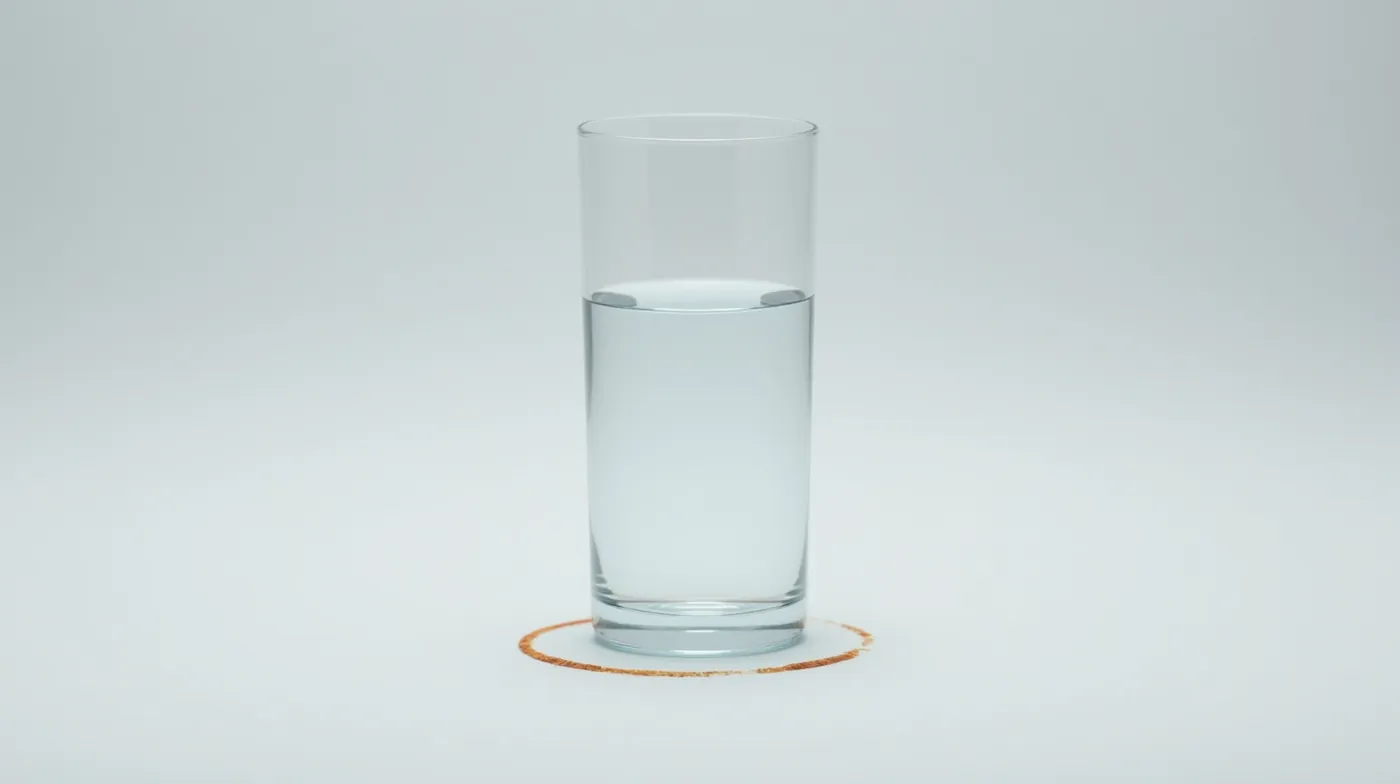
In the saturated zone of a well, iron sits in solution as the two-valued ferrous ion, which is colorless. This is the form that looks perfectly clear coming out of the tap, then turns pink, orange, or brown within minutes of sitting in a glass or the open toilet tank. Every household report of water that looks clean at the tap but stains everything is usually dissolved iron oxidizing on contact with air or with residual chlorine in the system.
Particulate iron (ferric)
When the aquifer itself contains oxygen, or when the water has already been exposed to air in a storage tank or cistern, iron is already in the three-valued ferric form. It comes out of the tap as suspended rust particles, and the water looks reddish or tea-colored right away. Particulate iron is the easier form to remove, because it is already a solid that a filter can catch, and it is also the form that clogs screens and pressure-tank fittings.
Iron-oxidizing bacteria
A living layer of red or black slime in the well, in the pressure tank, or inside the first run of piping means iron bacteria are doing the work of oxidizing the iron for you. The bacteria do not add iron to the water, but they dramatically speed the conversion of dissolved iron into rust, so a well with a modest iron level can suddenly start staining heavily. The treatment is different from ordinary iron: the system has to kill or remove the bacteria, not just filter the metal. If you have not identified the bacteria yet, see the companion guide on iron-oxidizing bacteria for how to confirm and treat them.
How to Identify and Test for Iron in Well Water
You can confirm most of the diagnosis at home in about twenty-four hours, but a laboratory test is the only step that tells you what to buy.
The glass jar test
- Fill a clear glass jar from the tap closest to the house, with the cold water running for about a minute first. Do not add anything to it.
- Set it on a shelf in the open and leave it for 24 hours, away from the sink drain.
- Watch what happens. A pink or orange film on the surface, or a rusty ring near the top, means dissolved iron oxidizing on contact with air. Particles that settle to the bottom as sediment mean the water already carries particulate iron. Water that stays completely clear for the full day points to a low total iron level.
- Check the toilet tank and the pressure tank for a red or black slime layer, which is the signature of iron bacteria rather than a simple iron concentration.
Iron Levels in Well Water and What They Mean
The EPA secondary standard of 0.3 mg/L is the reference point most labs and treatment vendors quote, but the real story is what your fixtures show at each level. The table below maps the concentration ranges we most often see on lab reports to the symptoms homeowners actually notice and the response that makes sense at that level.
| Iron level (mg/L) | What you notice | Recommended response |
|---|---|---|
| Below 0.1 | No staining, no taste. Water looks and tastes clean. | No treatment needed. Recheck at your next routine lab panel. |
| 0.1 to 0.3 | Faint metallic taste. Occasional faint pink tint in standing water or the tank. | Optional point-of-use polishing filter. Start a routine test schedule. |
| 0.3 to 1.0 | Noticeable metallic taste. Orange stains on laundry, dishes, and the toilet tank. Clear water that turns pink in minutes. | Whole-house iron treatment. Oxidation and filtration, or a Birm or green-sand media filter, sized to your flow. |
| 1.0 to 3.0 | Strong metallic taste. Heavy rust staining. Visible rust sediment. Fast clogging of any existing filter. | Robust media system, often with chemical oxidation and a prefilter. Air injection may work if the iron is dissolved and the water is soft. |
| Above 3.0 | Water is visibly rust-colored. Rapid buildup of rust in the tank and piping. Frequent filter or screen clogs. | Full chemical-oxidation system with a prefilter and a media filter. Recheck the well itself for a shifting water source or a collapsed screen. |
Source: EPA secondary drinking-water standards (SDWQ) and typical laboratory panel reporting for private wells, 2026.
Read the form, not just the number
Two wells can both report 0.8 mg/L and need completely different systems. A well with 0.8 mg/L of mostly dissolved iron is a clean, predictable job for a media filter. A well with 0.8 mg/L of particulate iron plus a slime layer in the tank is a bacteria problem first and an iron problem second. The lab number tells you how much; the glass jar test and the tank inspection tell you what kind. Buy for the kind.
If the same test also shows manganese, treat that number first. Manganese is harder to remove than iron, and a system sized for iron alone will pass it straight through, leaving black stains that homeowners keep misreading as a treatment failure. A combined iron-and-manganese media is the standard fix when both are present.
How to Remove Iron From Well Water
Every iron treatment system is a version of the same three steps: oxidize the dissolved iron into a solid, filter the solid out, and backwash the filter regularly. The systems below differ in how they do the oxidizing, how much water they waste on backwashing, and what they cost over a ten-year horizon.
Air injection oxidation
An air injector in the supply line drops the pressure in a small chamber, which pulls in air and forces the dissolved iron to oxidize before a sand or media filter catches it. It works best on soft water with mostly dissolved iron, and it is the cheapest option that handles a whole house. It is also the noisiest, because it runs a small pump or ejector with every cycle, and it stops working when manganese is present in meaningful amounts.
Chemical oxidation with a media filter
A chlorine or potassium permanganate injector dissolves a measured dose into the water, and a downstream media filter (green sand, Birm, or manganese greensand) captures the resulting rust. This is the most reliable configuration for high iron levels and for iron mixed with manganese or sulfur. The trade-off is ongoing chemical cost and the need to manage a dosing system that must be checked once a month.
Media filters (Birm and green sand)
Birm is a manganese-oxide-coated media that oxidizes and removes iron in a single step, with a small amount of aeration. Green sand, the same manganese greensand used for manganese, removes iron and a portion of manganese together. Both are whole-house systems with automatic backwash, and both are the workhorses of residential iron treatment. They do not remove manganese fully on their own, which is why a manganese test matters before you buy.
Reverse osmosis at the tap
An under-sink RO unit removes iron along with the rest of the dissolved solids, which makes it the right tool when the problem is a small number of taps and the water is also high in other minerals. It is not a whole-house answer, because it produces waste water, it is slow, and it clogs quickly with particulate iron. Use it as a finishing stage, not as the primary system.
Activated carbon
Standard activated carbon does not remove iron well, and it is worth saying out loud because it is the filter many well owners reach for first and then blame for the stains that keep coming through. Carbon is the right tool for taste, odor, and organic matter, and it works well as a final polishing stage behind a real iron system. It is not an iron solution on its own.
Treating iron bacteria
If the tank or piping has a slime layer, a one-time hyperchlorination of the well (typically a 5 to 10 percent chlorine solution, dosed to a residual and flushed until the chlorine is gone) kills the bacterial colony. After that, a continuous chlorination stage on the treatment line keeps it from returning. A media filter alone will not fix an iron-bacteria well, because the bacteria regrow in the tank between treatments. If your tank has the slime, that is the first fix, before any equipment purchase.
The one rule that saves the most money
Size the system to your peak flow, not your average. A media filter sized for a 2 gallon-per-minute average will pass iron straight through every time the dishwasher and a shower run together, and the homeowner reads that as a failed system. Ask for the sizing at your household peak flow, and confirm the backwash cycle is automatic and the media is rated for iron and manganese if both are present.
Iron Removal Costs and Maintenance for Well Owners
Installed cost for a whole-house iron system runs from roughly $1,500 for a basic media filter on a straightforward dissolved-iron job to $5,000 or more for a chemical-oxidation system with prefilter, media filter, and a continuous chlorination stage. The number that matters most for a ten-year budget is the backwash water and the media replacement, not the upfront price, because a media filter on a high-iron well can eat through a tank of media in two to three years.
| System | Best for | Installed cost (typical) | Ongoing cost |
|---|---|---|---|
| Air injection + media | Soft water, dissolved iron, low manganese | $1,500 to $3,000 | Backwash water, periodic media refresh |
| Birm / green sand media | Dissolved iron, some manganese, whole house | $2,000 to $4,000 | Backwash water, media every 2 to 3 years |
| Chemical oxidation + media | High iron, iron plus manganese, iron plus sulfur | $3,000 to $5,000 | Chemical supply, media, monthly dosing check |
| RO under-sink | One or two taps, high total dissolved solids | $500 to $1,200 | Membrane every 2 to 3 years, waste water |
Installed cost ranges reflect 2026 regional pricing for a typical 3 to 5 bedroom home with a standard well flow. High-flow or high-mineral wells cost more at the top of each range.
Frequently Asked Questions
Is iron in well water safe to drink?
At the concentrations found in most private wells, yes. Iron is an essential mineral, and the EPA secondary standard of 0.3 mg/L is a cosmetic limit, not a health one. The real concerns are the staining, the taste, and the damage to fixtures and equipment, not a toxicity risk at typical levels. If a lab result comes back far above 3.0 mg/L, the water is still unlikely to be dangerous, but it is a sign the well or the aquifer has changed, and it is worth a full retest and a look at the well screen.
Why does my well water turn orange in the toilet tank?
The orange ring is dissolved iron oxidizing on contact with the air at the water surface in the tank. The water is clear coming out of the tap, but the moment it sits in the open tank it reacts with oxygen and drops a rust film. That is the signature of dissolved iron, and it is the form that a media filter or air-injection system is designed to handle. If the same tank also has a red or black slime layer, add iron bacteria to the list.
How often should I test my well for iron?
Once for a baseline, and add iron to that panel. After that, test annually if your last result was above 0.3 mg/L, every three to five years if it was below, and always after a drought, after new drilling or new agricultural activity nearby, or after any visible change in water color or level. If you have installed treatment, retest the treated water within 90 days of startup and then once a year, to confirm the system is still holding the level below 0.3 mg/L.
Will a water softener remove iron?
A standard salt-based softener removes a small amount of dissolved iron, typically up to about 0.3 mg/L, as a side effect of the ion-exchange cycle. It is not an iron treatment. If your iron is above 0.3 mg/L, a softener alone will not stop the stains, and it will not handle particulate iron at all. A softener is a useful companion to a real iron system, because the iron system works better on softened water, but it is not a substitute.
What is the fastest way to fix iron staining?
For existing rust stains on fixtures, laundry, and the toilet tank, the fix is an acid rinse, not the treatment system. A citric-acid or phosphoric-acid descaler, or a dedicated rust stain remover, dissolves the iron oxide that is already on the surface. The treatment system stops the new stains, but it will not remove the old ones. Clean the tank, the pipes, and the laundry first, then install the system, or the first few weeks after install will look like the system is not working.
The Bottom Line on Iron in Well Water
Iron in well water is the most common and the most fixable of the water-quality problems a well owner faces. The diagnosis is cheap: a glass jar test for the form, and a lab panel for the number. The treatment is a single whole-house system, sized to peak flow, matched to whether the iron is dissolved, particulate, or bacteria-driven, and maintained with a backwash cycle and an annual retest. Get the form right first, and the iron problem is usually a one-time project with a small ongoing cost, not a permanent fight with the color of your water.
See Also
Best Iron Removal Systems for Well Water in 2026
Iron Oxidizing Bacteria in Well Water 2026: Identify and Treat
How to Remove Iron Stains From Well Water (2026 Guide)
Best Manganese Removal Filters for Well Water in 2026
How to Test Your Well Water: Complete Guide 2026
#WellWater #Iron #PrivateWell #WaterQuality #WellTesting #IronRemoval #WellOwner #HomeWell #WaterSafety #DrinkingWater #WellMaintenance #GroundWater #WaterFilter #WellInspection #HealthyWater