
If your well pressure dips every time the washing machine kicks on, or you can hear the pump hammering on and off all day, a variable frequency drive — a VFD for your well pump — is the single upgrade that fixes both. Instead of slamming the motor to full speed and then cycling it on and off, a VFD spins the pump exactly as fast as your household demand requires, holding steady pressure from the first faucet to the last. In 20-plus years of installing and servicing residential well systems, I have put drives on everything from a 1/2-HP 2-wire submersible to a 7.5-HP 3-phase turbine, and the results are consistent: the pressure swings disappear, the motor runs cooler, and the circuit stops seeing the full in-rush current. In this 2026 buyer’s guide I show you exactly how a VFD works on a well, how to size one against your motor’s nameplate, the five models I actually recommend, and the wiring and safety details that separate a clean install from a failed drive.
Disclosure: As an Amazon Associate, we earn from qualifying purchases on this page. Product selections are based on independent research and real well water data.
By Thomas Reynolds, Pump Systems Engineer
Thomas has installed and serviced over 1,000 well pump systems for homeowners, and has spent that time matching the right pump, tank, and controller to each well’s actual depth, yield, and demand profile.
Published: November 19, 2026
Table of Contents
- What Is a VFD and Why Add One to Your Well Pump
- VFD vs Soft Starter vs Two-Speed Pump: Which Do You Need
- How to Size a VFD for Your Well Pump (Step-by-Step)
- Best VFD Models for Well Pumps in 2026
- Installation and Wiring Considerations
- Real-World Benefits: Energy, Pressure, and Motor Life
- Common VFD Problems on Well Pumps & Fixes
- VFD for Well Pump: Frequently Asked Questions
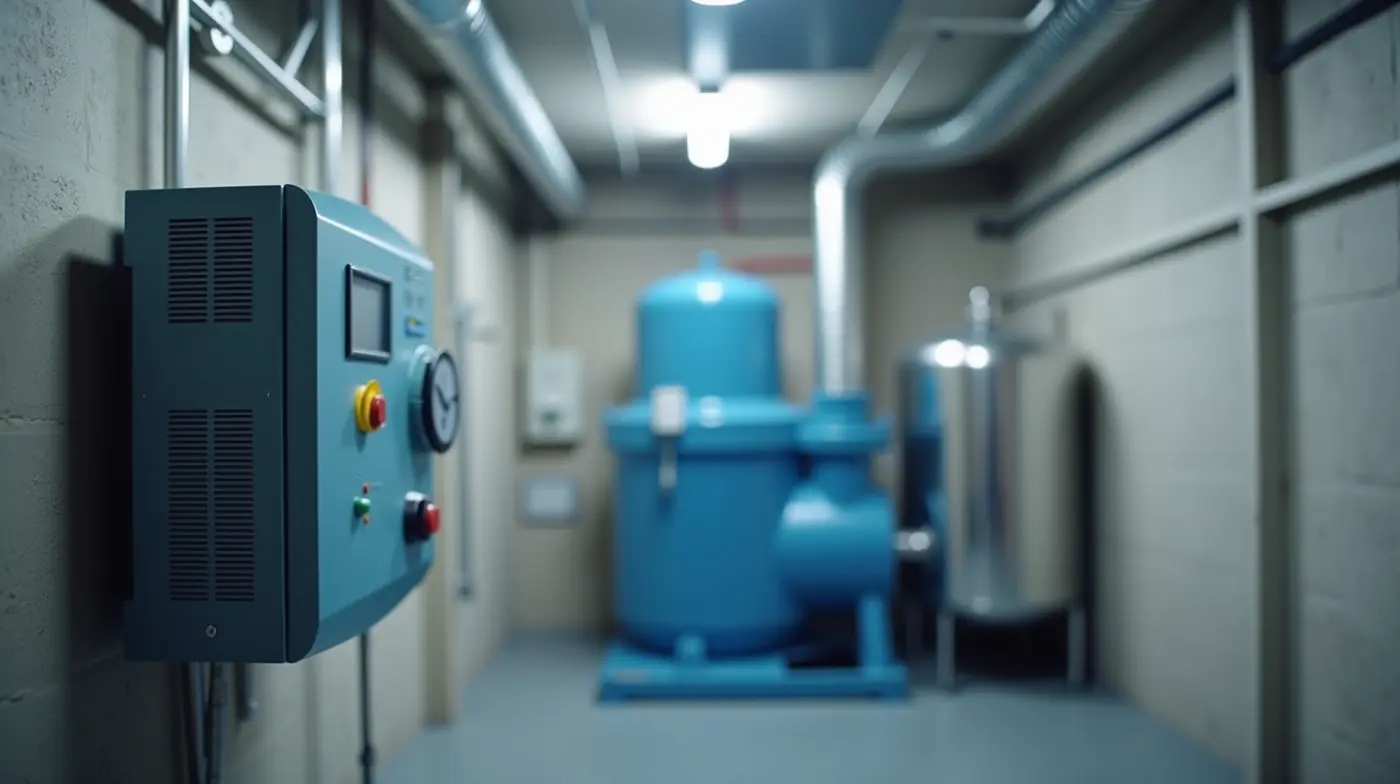
What Is a VFD and Why Add One to Your Well Pump
A variable frequency drive is an electronic motor controller that changes both the frequency and the voltage it feeds an AC motor. Because an induction motor’s speed is locked to the supply frequency, a VFD can slow a 1,750-RPM well pump motor down to around 900 RPM by dropping the frequency from 60 Hz toward 30 Hz — and it ramps the voltage in step so the motor never loses torque. On a conventional system, the pressure switch either starts the pump at full speed or stops it entirely, so your pressure oscillates between the cut-in and cut-out (say 30 and 50 PSI) every single cycle. A VFD closes that loop with a pressure transducer: it reads the actual system pressure and adjusts speed to hold a single set point, so the pressure at your tap barely moves no matter how many fixtures are open.
What a VFD buys you on a well
Steady pressure with no cycling, a soft start that eliminates in-rush current, dry-run and overload protection that shuts the pump down before the motor burns out, and the ability to use a smaller pressure tank. Those four things are why homeowners upgrade — the energy savings are a real but secondary benefit on a residential well, not the headline.
The other practical effect is on the motor itself. Every start of a submersible pump is the hardest electrical event it experiences, with in-rush current typically 3 to 5 times the running current. A drive that ramps the motor up over a few seconds removes that spike, which is a large part of why drive-equipped pumps tend to outlast the same motor on a plain pressure switch. In the field, the most common driver for the upgrade is a pump that is already short cycling, or a homeowner who is simply tired of the pressure swing — and the drive solves both at once.
VFD vs Soft Starter vs Two-Speed Pump: Which Do You Need
Homeowners usually land on one of three ways to smooth out well pressure, and they are not the same thing. A soft starter only gentles the start. A two-speed pump gives you two fixed speeds. Only a VFD gives you continuously variable speed and true constant pressure. Here is how the three actually compare on the points that matter for a well.
| Feature | VFD (Constant Pressure) | Soft Starter | Two-Speed Pump + Switch |
|---|---|---|---|
| Pressure control | Constant, adjustable speed | Full speed, on/off cycling | Two fixed speeds |
| In-rush current | None (ramped start) | Reduced (ramped) | Full at each start |
| Energy savings | Yes — slows the pump | No — full speed | Partial — low-speed mode |
| Motor protection | High (dry-run, overload, undervoltage) | Basic (overload) | Basic |
| Pressure tank size | Small tank (4 to 14 gal) is enough | Full-size tank needed | Full-size tank |
| Typical cost | $1,000 to $2,500 | $150 to $500 | $500 to $1,200 (new pump) |
| Best for | Constant pressure plus efficiency | In-rush reduction only | Simple two-level pressure |
If your goal is simply to cut the in-rush jolt and protect a motor that is starting hard, a soft starter is the budget answer. If you want a meaningful step up in pressure consistency without the cost of a new pump, a two-speed setup is the middle path — see our guide on the two-speed pressure switch for well pumps for the trade-offs. But if you want the pressure to actually stay put and the motor to run cooler, the VFD is the only option that does both.
How to Size a VFD for Your Well Pump (Step-by-Step)
Sizing a drive is less intimidating than it looks, and it all starts with your motor’s nameplate. Get these five things right and the rest follows.
- Read the motor nameplate. You need the horsepower (HP), the voltage (115/230 V for most homes), the phase (1-phase or 3-phase), and the full-load amps (FLA) or service-factor amps (SFA). The nameplate is on the motor housing, usually under a small cover.
- Match the input voltage and phase first. A 1-phase 230 V motor needs a 1-phase 230 V input drive, and a 3-phase motor needs a drive with a 3-phase output. This is the number-one mismatch that kills drives — a drive with the wrong phase will not start the motor at all, or will damage it.
- Size the drive’s rated current to the motor. The drive’s continuous output current should be at or above the motor’s FLA. As a working rule, pick a drive rated for at least 125 percent of the motor’s full-load amps. If your motor’s maximum current differs from the drive’s factory program by more than about 5 percent, the drive must be reprogrammed to the motor’s actual value — most well drives have a simple selector or parameter for this.
- Confirm the pressure range and set point. Most residential drives cover 20 to 85 or 15 to 95 PSI. Set the target pressure about 10 PSI above your static system needs, and make sure the pump can actually reach that pressure at the set speed.
- Check the breaker and wire size. The drive needs a dedicated circuit sized for its input current, and the motor cable length and gauge matter — long runs drop voltage and increase interference. See our guides on well pump amp draw and what size breaker for a well pump for the exact calculations.
The table below is a quick reference for the most common 1-phase 230 V residential well motors. Use it to sanity-check your nameplate, then confirm against the specific drive’s manual and a licensed electrician before energizing anything.
| Motor HP | Full-Load Amps (FLA) | Min. Drive Rating (125%) | Typical Breaker |
|---|---|---|---|
| 1/2 HP | ~12 A | 15 A | 20 A |
| 3/4 HP | ~14 A | 18 A | 20 A |
| 1 HP | ~16 A | 20 A | 25 A |
| 1-1/2 HP | ~20 A | 25 A | 30 A |
| 2 HP | ~24 A | 30 A | 40 A |
Sizing rule of thumb
Match phase and voltage exactly, then pick a drive whose continuous current is at least 125 percent of the motor’s full-load amps. When in doubt between two sizes, take the larger drive — an oversized drive runs cooler and gives the motor more protection margin, while an undersized drive will overcurrent-trip under real household demand.
Best VFD Models for Well Pumps in 2026
Not every drive is built for a well. The models below are the ones I actually put on residential and small-agricultural wells in 2026 — each is a purpose-built or well-proven constant-pressure controller, not a repurposed industrial drive. I have listed what each one handles, its input, its pressure range, and the well it fits best. Every product name links to the current Amazon listing so you can compare pricing and availability directly.
| Model | Drive Type | Motor Compatibility | Input | Pressure | Best For |
|---|---|---|---|---|---|
| Goulds Aquavar Solo 1AS15 | Constant-pressure VFD | 1/2-2 HP, 2- or 3-wire 1-phase | 230 V 1-phase | 20-85 PSI | Most home submersible wells |
| Pentair Pentek Intellidrive PID30 | Intelligent VFD | 1/2-3 HP, 1- or 3-phase | 230 V | Programmable | Max control and diagnostics |
| Franklin Electric SubDrive Utility | Constant-pressure VFD | Up to 2 HP, 115/230 V 1-phase | 115/230 V 1-phase | Constant | Easy 115 V upgrades |
| F&W Artesian Drive AD096096 | Dedicated well VFD | 3 HP, 3-phase | 180-264 VAC | 15-95 PSI | 3-phase, higher capacity |
| Well Pump Soft Starter (2-5 HP) | Soft start only | 2-5 HP, various | 120/230/460 V | N/A (full speed) | Budget in-rush reduction |
1. Goulds (Xylem) Aquavar Solo 1AS15 — the default for home wells
The Goulds Aquavar Solo 1AS15 is the model I reach for on the typical 1-phase home submersible. It takes a 230 V single-phase input and drives 2-wire or 3-wire motors from 1/2 to 2 HP, holds a steady set point anywhere from 20 to 85 PSI, and ships with the pressure transducer and a 10-foot sensor cable already in the box. A rotary current-limit switch lets you match the drive to the motor’s service-factor amps without a programming tool, and the NEMA 3R enclosure means it can live outdoors in the well house. It is the cleanest “retrofit onto the well you already have” option for most homeowners.
2. Pentair Pentek Intellidrive (PID10 to PID50) — maximum control
If you want the most programmable drive on a residential well, the Pentair Pentek Intellidrive is the one. The PID30 covers 1/2 to 3 HP on 1- or 3-phase 230 V motors and gives you 34 adjustable parameters, EMI/RFI filtering, best-in-class lightning protection, and a replaceable terminal block that makes rewiring and troubleshooting faster. The line scales from the PID10 (0.5-1 HP) up to the PID50 (0.5-5 HP), so you can match the exact motor. It is the pick when a homeowner wants fine-tuned pressure behavior and on-board diagnostics, and it is typically the premium-priced option in the group.
3. Franklin Electric SubDrive — the easy 115 V upgrade
The Franklin Electric SubDrive family is the one to consider when your well runs on 115 V or you want the simplest possible constant-pressure upgrade. The SubDrive Utility handles 115 V and 230 V 1-phase 2-wire systems (plus 230 V 3-wire and 3-phase) up to 2 HP, and the SubDrive Connect adds the FE Connect mobile app for on-the-spot service and tuning. If your motor is a Franklin or a standard 115/230 V submersible, this is the lowest-friction path to steady pressure.
4. F&W (Flint & Walling) Artesian Drive — the 3-phase workhorse
When the well is 3-phase or the flow requirement climbs, the F&W Artesian Drive is the dedicated constant-pressure VFD I specify. The line runs from 1.5 to 15 HP (models AD070059 through AD420410), takes a 180-264 VAC 1- or 3-phase input and a 3-phase output to the motor, and holds 15 to 95 PSI. It ships factory-programmed with the pressure sensor, includes dry-run, high-voltage and lightning, low-voltage, and short-circuit protection, and is built so a small 4 to 14 gallon pressure tank is enough. It is the right answer for 3-phase homes, barns, and higher-demand properties.
5. Soft Starter — the budget alternative
If constant pressure is not the goal and you just want to stop the in-rush jolt and protect a motor that is starting hard, a well pump soft starter in the 2 to 5 HP range is the budget move at a few hundred dollars. It ramps the motor up gently at start and then runs it at full speed, so you get the in-rush reduction and some wear protection — but no constant pressure, no speed control, and no meaningful energy savings. Pair it with a properly sized full pressure tank and a good pressure switch, and it is a solid, inexpensive upgrade for a well that is otherwise working fine.
Quick recommendation
1-phase home submersible: Goulds Aquavar Solo 1AS15. Want the most control and diagnostics: Pentair Pentek Intellidrive PID30. 115 V or the simplest install: Franklin SubDrive. 3-phase or higher flow: F&W Artesian Drive. Just want to tame the start: a well pump soft starter. In every case, match phase and voltage first, then size the drive by 125 percent of the motor’s full-load amps.
Installation and Wiring Considerations
A VFD install is 230 V work on a dedicated circuit, and the details that matter are the ones that keep the drive and the motor alive. Here is the order I follow on site.
- Kill the power at the breaker and lock it out. The drive’s internal capacitors hold a lethal charge even after power is off — wait a full five minutes before opening the cover. This is non-negotiable.
- Install on a dedicated circuit with the correct breaker. The drive needs its own breaker sized to its input current. Do not share the circuit with the old pump start or any other loads.
- Wire the motor to the drive’s output (U, V, W), not to the line. The drive now owns the motor. On 3-phase motors, verify rotation — if the pump spins the wrong way or runs light, swap two of the three output leads (U and V).
- Mount the pressure transducer correctly. The sensor goes at the tank tee, downstream of the pressure tank, with the tank between the pump and the sensor and within a few feet to avoid pressure swings. Threaded connection points down, not up.
- Ground everything. Motor ground, drive ground, and metal plumbing all bond to the same ground, with wire no smaller than the motor cable. This is both a safety requirement and an interference-reduction measure.
- Set the motor current and the target pressure. Match the drive’s motor-current setting to the nameplate FLA, then set the pressure set point and let the drive run for a few cycles before fine-tuning.
Because this is NEC-governed 230 V work on a dedicated circuit, have a licensed electrician do or sign off on the install. The drive itself is not the hard part — the circuit, the grounding, and the correct motor-current setting are where the failures come from.
Real-World Benefits: Energy, Pressure, and Motor Life
Let me be straight about what a VFD does and does not save you, because this is where most marketing overreaches.
Constant pressure is the headline. The transducer-closed loop holds your set point, so the shower does not drop when the sprinklers come on and the pump stops hammering on and off. That is the reason homeowners actually buy one, and it is the benefit you will feel every single day.
Energy savings are real but modest on a home well. A pump’s power draw scales roughly with the cube of its speed, so slowing the motor from 1,750 to 1,400 RPM (about 20 percent slower) cuts its power draw by roughly 40 percent — that is the physics that makes VFDs so effective. But that saving only exists while the pump is actually running below full speed. On a residential well that most of the time runs near full speed to meet demand, the realistic saving is a fraction of the pump’s energy use, often in the 10 to 30 percent range of pump kWh. On high-flow or irrigation systems, where the pump throttles down for a large share of its run time, the savings are dramatically larger. A VFD also carries a small internal loss of about 1 to 4 percent, which slightly offsets the gains.
The honest takeaway
Buy a VFD for a residential well because it holds pressure steady, soft-starts the motor, and protects it from dry-run and overload — not because it will slash your electric bill. The energy savings are a genuine but secondary benefit that grows with how often your pump throttles below full speed.
Motor life improves. Removing the in-rush current and the constant on/off cycling is a large part of why drive-equipped pumps tend to outlast the same motor on a plain pressure switch. Fewer hard starts, cooler operation, and an automatic shutdown before a dry-run can burn the windings — that is where the long-term value is.
Common VFD Problems on Well Pumps & Fixes
Drives are protected equipment — they will shut down and tell you why instead of burning the motor. The table below is the short list of faults I see most often in the field and the first move for each.
| Symptom | Likely Cause | First Fix |
|---|---|---|
| Trips underload or dry-run | Well ran dry, low water level, or air in line | Let the well recover, check the transducer reading, look for suction air leaks |
| Overcurrent or trips on start | Motor short, undersized drive, or stuck pump | Check motor winding ohms, confirm the drive HP rating, clear any pump obstruction |
| Low-voltage fault | Utility sag or undersized or long wire | Measure line voltage at the drive, check wire gauge and run length |
| Hum but motor will not spin | 3-phase output or rotation issue, or open winding | Verify 3-phase output, swap two leads (U and V), check motor continuity |
| Pressure never holds | Transducer fault or PID set point | Verify the transducer reading at the tank, re-set the target pressure |
If a drive trips on an underload or dry-run fault, the first question is always water level — a well that is not recovering between uses will trip the drive’s intelligent load monitoring repeatedly. Let the well recover, confirm the transducer is reading correctly, and check for air in the suction line before touching any drive setting.
VFD for Well Pump: Frequently Asked Questions
Can I use a VFD with a 2-wire well pump?
Yes. Most residential drives — the Goulds Aquavar Solo, the Pentek Intellidrive, and the Franklin SubDrive — support 2-wire 1-phase motors. The drive replaces the pressure-switch start circuit and controls the motor speed directly, so a 2-wire well is one of the easiest upgrades there is.
Will a VFD save money on my electric bill?
On a residential well, the main benefit is constant pressure and motor protection, not a big energy saving. A VFD only saves energy while it slows the pump below full speed, and a home well that runs near full speed most of the time will see a modest saving — often 10 to 30 percent of the pump’s kWh. The large savings show up on high-flow or irrigation systems where the pump throttles down a lot.
Do I still need a pressure tank with a VFD?
Yes, but it can be smaller. Because the drive holds pressure by controlling speed, a 4 to 14 gallon tank is often enough, versus the 44 to 75 gallon tank a conventional on/off system needs. The tank still provides a cushion and a mounting point for the transducer, so do not remove it.
Can I install a VFD myself?
The drive wires to the pump motor, the pressure transducer, and a dedicated 230 V breaker. That is NEC-governed electrical work and should be done by a licensed electrician. The drive’s capacitors also hold a lethal charge after power-off — wait five minutes before opening it — which is one more reason to leave the install to a professional.
What is the difference between a VFD and a soft starter?
A soft starter only ramps the motor up gently at startup and then runs it at full speed — it cuts in-rush current but gives no constant pressure, no speed control, and no meaningful energy savings. A VFD controls the motor speed continuously, which is what delivers constant pressure, a soft start, and energy savings. If you only need to tame the start, a soft starter is the cheaper answer.
See Also
- Comparing pressure-control options? Read our guide on the two-speed pressure switch for well pumps to see when two-speed is the better value.
- For the electrical sizing behind any drive install, see well pump amp draw: how to read it and diagnose faults and what size breaker for a well pump.
#WellPump #VFD #VariableFrequencyDrive #ConstantPressure #WellSystem #SubmersiblePump #PumpControl #WaterPressure #WellMaintenance #EnergySavings #SoftStarter #WellOwner #PumpRepair #PressureTank #WaterWellOwners