
Greenhouse growers on private wells ask the same question every spring: does well water for greenhouse use actually keep plants healthy, or will dissolved minerals quietly wreck a season of crops? The honest answer is that well water for greenhouse irrigation works beautifully for most growers — provided it is tested, and the water chemistry is matched to the irrigation method. The risk is specific: a greenhouse concentrates water-quality problems that an outdoor garden shrugs off. Soil volumes are small, rain does not leach the beds, emitters clog faster under high mineral load, and sensitive crops such as tomatoes, peppers, and seedlings show chloride and sodium damage within weeks, not seasons. After inspecting hundreds of residential well systems that also feed irrigation lines, what we see most often is not a water quality crisis — it is untested water feeding pressure-compensating drip emitters that die by midsummer. This 2026 guide covers the exact parameters that matter for greenhouse use, the safe levels backed by agronomic water-quality research, how to test your well, which irrigation methods tolerate hard water, and the treatment options — from a hundred-dollar prefilter to ion exchange and reverse osmosis — that make well water safe for your greenhouse year-round.
Disclosure: As an Amazon Associate, we earn from qualifying purchases on this page. Product selections are based on independent research and real well water data.
By Thomas Reynolds, Pump Systems Engineer
Thomas has installed and serviced over 1,000 well pump systems for homeowners. He specializes in pump sizing, pressure systems, and water delivery for irrigation, greenhouse, and livestock applications.
Published: November 2026
Table of Contents
- Can Greenhouses Use Well Water?
- Why Greenhouse Plants Are More Sensitive Than Outdoor Gardens
- Key Water Parameters for Greenhouse Irrigation: Safe Levels in 2026
- How to Test Well Water for Greenhouse Use
- Irrigation Method Matters: Drip vs. Sprinkler vs. Flood
- When Treatment Is Needed: Softening, Filtration and RO
- Common Greenhouse Water Problems and How to Fix Them
- Where to Buy: Testing and Treatment Gear for Your Well
- Well Water for Greenhouse: FAQ
- Bottom Line
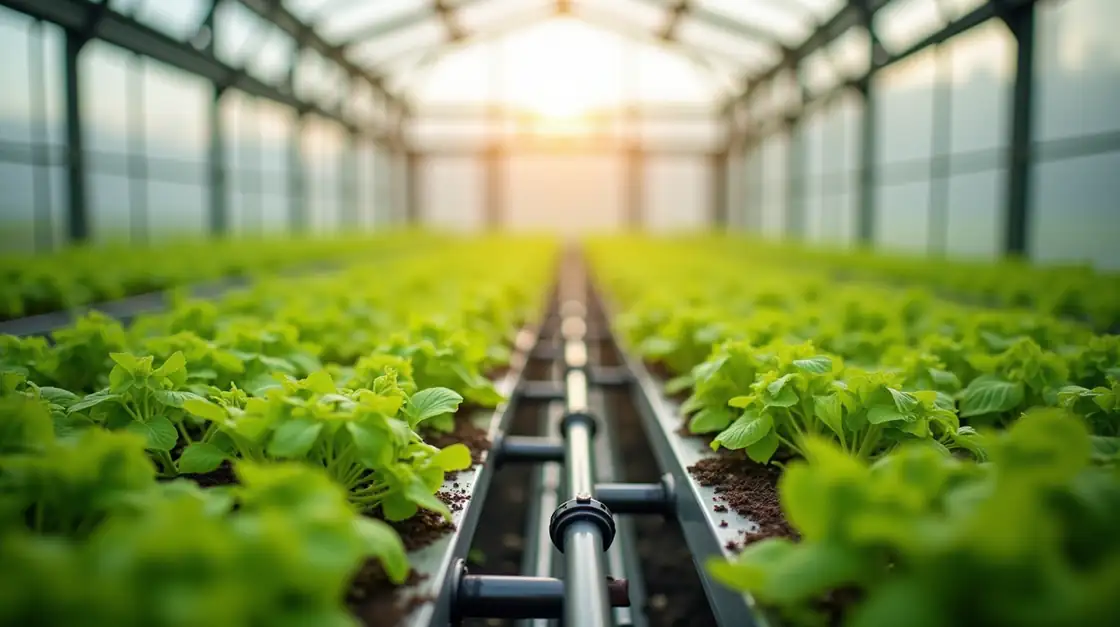
Can Greenhouses Use Well Water?
Yes — and many do. Well water is a legitimate, cost-effective irrigation source for glass, poly, and high-tunnel greenhouses across the country. The water is already there, it is filtered by the ground, and it is generally free of the pesticides, herbicides, and runoff that municipal and surface sources carry. In our field work, the greenhouses that thrive on well water share one trait: the owner tested the water before wiring the first drip line, and sized treatment to the actual numbers instead of guessing.
Quick answer
Well water is safe for greenhouse irrigation when electrical conductivity (EC) is under 0.8 mS/cm, iron is under 0.3 mg/L for drip systems, and the water tests negative for coliform bacteria. Above those thresholds, add a sediment prefilter at minimum; above EC 1.5 or iron 1.0 mg/L, treat the water with filtration, softening, or reverse osmosis before it reaches the plants.
The failure mode is not one big event. It is a slow one: salts accumulate in the small soil volumes, emitters clog over a season, and by July the drip lines are dead and the plants are showing leaf-tip burn. Every one of those symptoms is preventable with a test and the right treatment, and that is the point of the rest of this guide.
Why Greenhouse Plants Are More Sensitive Than Outdoor Gardens
If you already irrigate a garden or lawn from the same well, it is natural to assume the greenhouse can drink the same water without changes. It cannot, for four structural reasons that have nothing to do with the crop you choose:
- Small soil volumes concentrate salts. A field or even a garden bed dilutes applied minerals over a large, leachable volume. A raised bed, pot, or soil block holds a few liters. The same dissolved-salt load that an acre of soil shrugs off will build to phytotoxic levels in a greenhouse bed within a few irrigation cycles, because nothing below the roots is there to flush it away.
- No rainfall resets the system. Outdoor beds get leached by every good rain. A closed or partially closed greenhouse relies entirely on your irrigation to move water through the root zone — and any mineral in the water stays in the system forever unless you deliberately leach it out.
- Pressurized drip emitters are the weakest link. The tiny orifices in pressure-compensating emitters are exactly the size that scale, iron oxide, and biofilm plug. A lawn sprinkler head tolerates water that will kill a drip system within one season.
- Warm, humid conditions accelerate biofilm. Bacteria that sit quietly in a cold garden line multiply fast in warm greenhouse lines, forming the slimy biofilm that both clogs emitters and contaminates produce washed with the same water.
None of this means your water is bad. It means the greenhouse is a stricter customer than the lawn, and it deserves its own numbers before you commit it to the well.
Key Water Parameters for Greenhouse Irrigation: Safe Levels in 2026
Seven parameters drive virtually every well-water problem in a greenhouse. The table below consolidates the thresholds agronomists and extension services use for greenhouse and drip irrigation, with the practical range where you start monitoring and the range where treatment is warranted.
| Parameter | Safe for greenhouse | Caution / treat | Why it matters in a greenhouse |
|---|---|---|---|
| Electrical conductivity (EC) | Under 0.8 mS/cm | 0.8–1.5 mS/cm: leach regularly; above 1.5: treat or blend | EC is the total-dissolved-salt score. In small greenhouse soil volumes, salts that would dilute across a field accumulate in the bed and burn roots. |
| pH | 5.5–6.8 | Below 5.0 or above 7.5: buffer or treat | pH controls nutrient availability. Outside this window, phosphorus and micronutrients lock out of the root zone even when the fertilizer is present. |
| Sodium absorption ratio (SAR) | Under 3 | 3–5: monitor; above 5: treat or blend | Sodium displaces calcium in the soil matrix and breaks soil structure — beds waterlog, infiltration drops, and the root zone compacts over time. See our sodium in well water guide for how to interpret lab sodium numbers. |
| Chloride (mg/L) | Under 70 mg/L | 70–150: caution on seedlings and fruiting crops; above 150: treat | Tomatoes and peppers are the classic chloride-sensitive crops. Leaf-tip and leaf-margin burn appears within weeks, not seasons. |
| Hardness (Ca + Mg, mg/L) | Under 200 mg/L | 200–400: prefilter and monitor; above 400: soften | Scale builds on emitters and inside drip lines. Over one season, clogged emitters are the single most common reason greenhouse drip systems fail on hard water. |
| Iron (mg/L) | Under 0.3 mg/L for drip | 0.3–1.0: aerate and filter; above 1.0: iron filter required | Dissolved iron oxidizes as it sits in the lines and plugs pressure-compensating emitters. It also stains pots, trays, and greenhouse floors. Our iron in well water guide covers the filtration options in detail. |
| Coliform bacteria | 0 CFU / 100 mL | Any positive: shock-treat the well | Bacteria form biofilm in warm drip lines that clogs emitters and contaminates produce washed with the same water. A positive coliform is a red flag for the whole supply, not just the greenhouse. |
Thresholds reflect common extension-service and FAO irrigation-water-quality guidance for greenhouse and drip irrigation. Your local extension office can confirm crop-specific limits for what you grow.
How to Test Well Water for Greenhouse Use
Testing is the only way to know which of the seven parameters above actually threaten your system. Do it before the first planting of the season, and repeat it annually — aquifer chemistry drifts with drought, nearby well activity, and seasonal water-table changes. Here is the sequence we recommend:
- Run a full lab panel before the growing season. A 50-parameter well water test covers hardness, chloride, sodium, sulfate, iron, manganese, total dissolved solids, and the heavy metals. Order a well water test kit or send a sample to your state extension lab or a certified environmental lab. Cost is typically $100–$300, and it is the single best investment a greenhouse grower on a well can make.
- Add a bacteria panel. The standard drinking-water coliform/E. coli test applies to irrigation water just as much, because of the biofilm and produce-contact issues. Our well water bacteria test guide walks through kit selection and sampling technique.
- Buy a handheld EC/TDS meter for daily checks. The lab panel tells you the baseline; the meter tells you if it is drifting. A handheld EC/TDS meter costs under $50 and takes a 10-second reading at the greenhouse tap. Check monthly through the season, and log the numbers — a slow climb is your early warning that salts or source conditions are changing.
- Check pH with the same or a separate meter. Most EC meters include a pH function; confirm it is in the 5.5–6.8 band. If your water sits above 7.5, note it now, because it will interact with any fertigation plan you run.
- Re-test after any major event. Flooding, a nearby new well, construction, or any well work (pump replacement, shock treatment) can change the chemistry. Re-test within a month of any of those.
Pro tip
Test at the greenhouse tap, not at the well head. Any treatment between the two — a whole-house softener, a sediment filter on the irrigation branch — changes what the plants actually see. The number that matters is the one at the point of use.
Irrigation Method Matters: Drip vs. Sprinkler vs. Flood
The same gallon of well water can be fine for one method and destructive for another, so match the method to the water you actually have:
| Method | Water tolerance | Where it fits in a greenhouse |
|---|---|---|
| Drip / micro-sprays | Lowest — needs the cleanest water (low EC, low iron, no sediment, no bacteria) | Beds, benches, and hanging baskets. Highest efficiency; highest clogging risk. Pre-filtration is mandatory on well water. |
| Sprinklers / overhead | Moderate — larger orifices tolerate more sediment and moderate hardness | Hardier field crops in a greenhouse. Watch for leaf-tip burn from chloride on sensitive crops and for scale on the heads. |
| Flood / border / open channels | Highest — no small orifices to clog | Low-tech setups and hardy crops. Wastes the most water and leaves salts on the soil surface where evaporation concentrates them. |
In practice, most greenhouse growers on wells run drip for the sensitive production and accept the filtration cost it forces. If your greenhouse also runs hydroponic or NFT systems, the limits get stricter still — our well water for hydroponics guide covers those thresholds separately. And for the garden beds and lawn fed from the same well, the broader well water irrigation guide for gardens and lawns applies the same parameters at outdoor scale.
When Treatment Is Needed: Softening, Filtration and RO
Treatment should be matched to the number that is out of range — not installed as a blanket precaution. Over-treating wastes money and water; under-treating kills emitters. The table below maps the five most common greenhouse water problems to the treatment that fixes them, with what to expect from each.
| Problem (by test result) | Treatment | What to expect | Typical product |
|---|---|---|---|
| Hardness above 200 mg/L, low sodium | Ion-exchange water softener | Removes calcium and magnesium that form scale. Size by daily irrigation gallons; regenerate with salt. Note: softening swaps in sodium, so it is the wrong fix if your SAR is already high. | 46,000-grain water softener |
| Iron above 0.3 mg/L | Green sand (manganese green sand) iron filter | Oxidizes and filters out dissolved iron; handles roughly up to 5 mg/L with adequate aeration. Backwash weekly. The standard fix for clogged greenhouse drip lines on iron water. | Green sand iron filter |
| High EC / TDS feeding seedlings, hydroponics, or misting | Reverse osmosis (RO) system | Removes 85–98% of dissolved minerals. Run RO on the sensitive line only and blend with raw water if the volume is high — pure RO water is aggressive and can strip nutrients from soil. | 75 GPD RO system |
| Sediment, sand, or particulate | 5-micron sediment prefilter on the irrigation branch | The cheapest line of defense. Protects emitters, the iron filter, and any RO membrane upstream of it. Replace the element quarterly during the season. | 5-micron sediment prefilter |
| Biofilm / bacteria in the lines | Periodic shock chlorination and line flush | A 50 ppm chlorine hold for 24 hours followed by a full flush clears most line biofilm. If the source tests positive, treat the well itself before treating the lines — the lines will re-seed from the well. | See our well disinfection guide |
Warning
Do not put a softener on high-sodium water. If your SAR is already above 3, ion exchange swaps calcium for more sodium and makes the soil-structure problem worse. In that case the fix is RO, blending with a lower-sodium source, or leaching — not a softener.
Common Greenhouse Water Problems and How to Fix Them
From the service calls and grower reports we track, five symptoms dominate. Matching the symptom to its cause is usually a two-step process: identify what is clogging or burning, then confirm it with the matching lab number.
- Emitters dying one row at a time (mid-season). Classic scale or iron oxide. Pull one dead emitter and look: white crust is hardness, rust-colored is iron. Add the matching filter — a green sand iron filter for rust, a softener for scale — and replace the dead emitters.
- Leaf-tip burn on tomatoes or peppers, no pest present. Chloride or soluble-salt burn. Test EC and chloride at the greenhouse tap; above the table limits, treat or blend and flush the beds with a few cycles of cleaner water.
- Brown or yellow water on first draw each morning. Iron oxidizing in the line overnight, or rust from old piping. An aeration pad plus iron filter clears it; if the water is also rusty at the tap, the iron in well water guide has the full treatment decision tree.
- Slimy buildup inside lines and emitters. Biofilm. Shock-chlorinate the line, flush, and confirm the source tests negative for coliform — otherwise the lines re-seed within weeks.
- Soil in beds getting harder and slower-draining year over year. Sodium-driven structure breakdown. Check SAR; if it is above 3, stop softening that water, switch to RO or blended water for the beds, and consider gypsum applications to restore soil calcium.
Where to Buy: Testing and Treatment Gear for Your Well
Everything in this guide is available from the major hardware and online retailers. The table lists the specific products we recommend for a well-fed greenhouse, what each one is for, and the spec that matters when comparing models.
| Product | What it is for | Spec that matters |
|---|---|---|
| Handheld EC/TDS meter | Daily 10-second checks of EC, TDS, and pH at the greenhouse tap | Range to at least 50 mS/cm; auto-calibrating; probe that survives daily handling |
| Well water test kit | Annual baseline panel — hardness, chloride, sodium, iron, TDS, metals | 50+ parameters including heavy metals and bacteria indicator; lab-backed if you prefer sending the sample out |
| 46,000-grain water softener | Hardness above 200 mg/L with low sodium — scale prevention for drip lines | Resin capacity sized to your daily irrigation gallons; fits standard 1–1.5 in. lines |
| Green sand iron filter | Iron above 0.3 mg/L — the standard fix for clogged greenhouse emitters | 20-in. tank; handles up to ~5 mg/L with aeration; manual or automatic backwash |
| 75 GPD RO system | Seedlings, hydroponic lines, and misting where TDS must be near zero | 5-stage; 85–90% TDS removal; pair with a sediment prefilter to protect the membrane |
| Drip irrigation kit | Baseline greenhouse drip setup once the water is clean | 5/8-in. mainline; pressure-compensating emitters for even flow across beds |
Product names and links are for identification; equivalent models from other brands work if the specs match. Prices and availability change — confirm at checkout.
Well Water for Greenhouse: FAQ
Can I use untreated well water in a greenhouse drip system?
Sometimes. If your water tests under 0.8 mS/cm EC, under 0.3 mg/L iron, and free of sediment and bacteria, untreated water is fine for drip. Above those numbers, a sediment prefilter is the bare minimum, and most mineral-heavy well water will plug pressure-compensating emitters within a season without treatment.
What EC level is too high for greenhouse crops?
Under 0.8 mS/cm is the general safe line for drip irrigation. Between 0.8 and 1.5 mS/cm you can still grow, but you must leach the beds regularly to keep salts from accumulating. Above 1.5 mS/cm, treat the water or blend it with a lower-EC source before it reaches sensitive production.
Does softened water hurt greenhouse plants?
Not for most crops at irrigation volumes, but it depends on what you are softening. A softener removes calcium and magnesium and puts sodium in their place. If your raw water already has a high SAR, softening makes the sodium problem worse — use RO or blending instead. If your problem is pure hardness with low sodium, softened water is a perfectly workable irrigation source.
How often should I test my well water for greenhouse use?
Run a full lab panel once a year, ideally before the growing season, plus a handheld EC and pH check at the greenhouse tap monthly during the season. Re-test everything after any major event — flooding, a new well drilled nearby, or well work such as a pump replacement or shock treatment.
My emitters clog every few months. What is the most likely cause?
On mineral-heavy well water, it is scale (high hardness) or iron oxide, with biofilm a close third. Pull one dead emitter and inspect it: white crust points to hardness, rust-colored deposits to iron, and a slimy film to biofilm. Start with a sediment prefilter on the line, then add the matching treatment — softener, iron filter, or shock chlorination — and re-test to confirm the number is actually moving.
Bottom Line
Well water for greenhouse use is one of the best irrigation sources available to a homesteader or small commercial grower — when it is treated as a measured system instead of an assumption. Test a full panel before the season, hold the water to the parameter limits in this guide, match the irrigation method to what the water can actually carry, and add treatment only for the numbers that are out of range. Do that once, re-test every year, and your well becomes a low-cost, low-maintenance water source that will feed the greenhouse for decades without killing a single emitter.
See Also
#WellWater #Greenhouse #GreenhouseGardening #Hydroponics #Irrigation #DripIrrigation #WellWaterQuality #WaterTesting #WaterTreatment #Homestead #VegetableGardening #PrivateWell #SmallFarm #GreenhouseGrowing #GrowingFood