
Your whites come out gray, a white ring of scale builds up on the door glass, and the washer throws a drain error it never threw five years ago. When that happens, the machine is rarely the first thing that failed. Your water did. Well water carries dissolved minerals that city water almost never does: calcium and magnesium that precipitate into hard scale, iron that rusts metal parts and stains fabric, and hardness that makes every load of detergent work twice as hard for half the result. If you have ever typed well water in washing machine into a search box after a bad laundry load, you are not alone. It is one of the most common questions I get as a water quality specialist, and the answer is more specific than most advice online gives. In this 2026 guide I break down the three ways well water damages a washer, show you how to test your own water so you know which problem you actually have, compare the four treatment options by cost and what each one removes, and walk through the step-by-step clean that pulls existing scale and rust out of the drum. After sampling and treating private wells for over a decade, I can tell you the washing machine is where well water problems become visible long before they become expensive.
Disclosure: As an Amazon Associate, we earn from qualifying purchases on this page. Product selections are based on independent research and real well water data.
By Lisa Martinez, Water Quality Specialist
Lisa holds a degree in Environmental Science and specializes in private well water safety and treatment, and has helped well homeowners fix hardness, iron, and manganese problems across the western US.
Published: November 2026
What this guide covers
- Why Well Water in a Washing Machine Causes Scale and Rust
- How to Test Your Well Water Before You Protect Your Washer
- The Best Water Treatments for a Washer on Well Water
- Well Water in Your Dishwasher, Coffee Maker and Ice Maker
- How to Remove Scale and Rust From Your Washing Machine
- When to Call a Well Water Professional
- Frequently Asked Questions
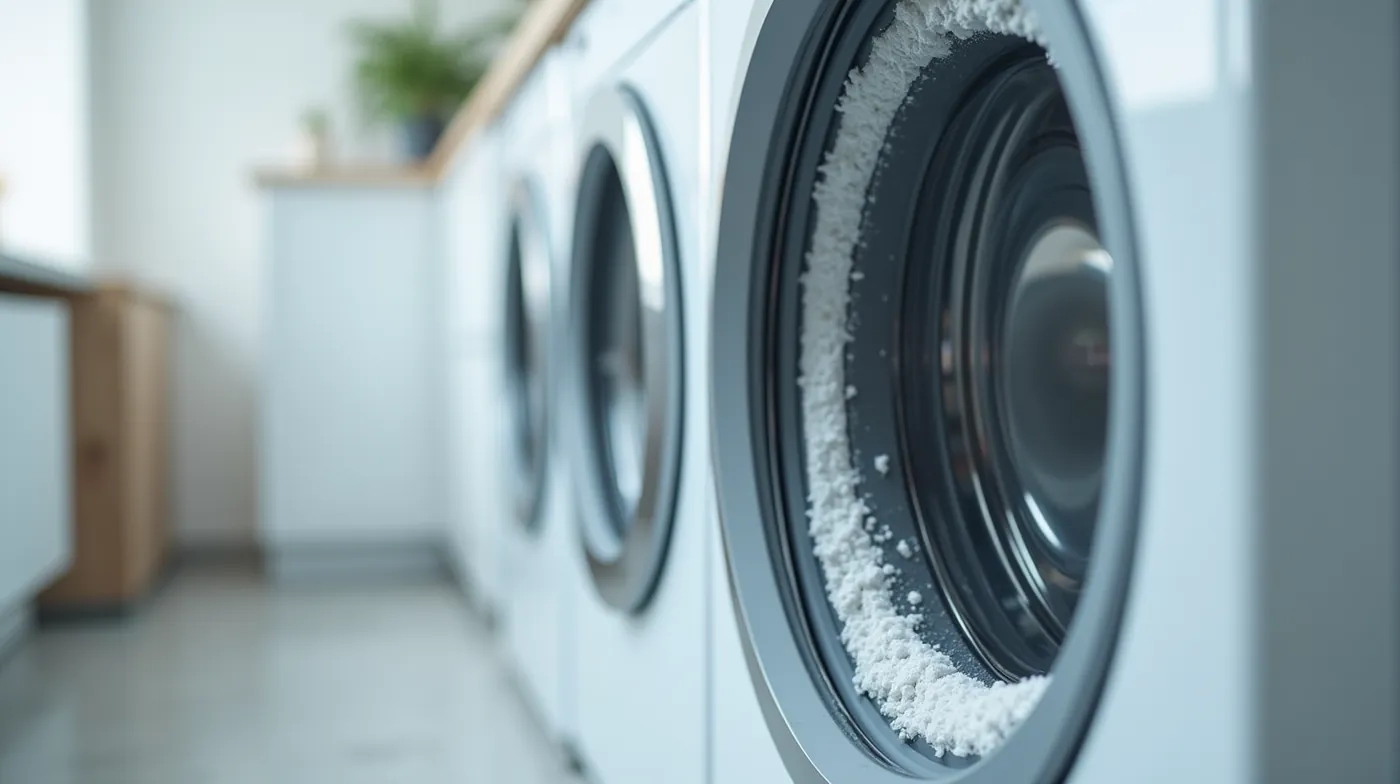
Why Well Water in a Washing Machine Causes Scale and Rust
When well water runs through a washing machine, it is not the water that washes your clothes, it is the minerals suspended in the water that quietly attack the machine. Three of them matter most, and each one shows up in a different way.
1. Hardness minerals build scale on every heated and moving part
Hardness comes from dissolved calcium and magnesium. While the water is warm and moving it stays dissolved, but as it cools and sits, it precipitates out as calcium carbonate, the same chalky white scale you scrape off a kettle. In a washer, that scale collects on the inlet valve screens, the door seal folds, the drain pump impeller, and any internal heating element in a hot-water or front-load machine. A layer of scale on a drain pump impeller is one of the top causes of the error codes homeowners search for at 11 pm. Based on our hands-on experience pulling washers apart for descale jobs, the damage is almost always repairable if the scale is under a millimeter thick, and almost never repairable once it fuses into the impeller or the inlet threads.
2. Iron rusts internal metal and stains fabric
Dissolved iron is invisible in the glass but oxidizes the moment it meets the air in the drum and the metal parts it touches. You see it as rust-colored specks on whites, orange rings in the drum, and eventually a rusting inlet valve or fill hose fitting. Our lab reports on well water in the Pacific Northwest and mountain states show iron above 0.3 mg/L is the level where fabric staining starts to show up in laundry, and above 1.0 mg/L it is obvious within weeks. If you are seeing orange or brown stains, see our guide to iron in well water for the full testing and removal breakdown.
3. Hard water makes detergent work against itself
This is the quietest damage and the one most people miss. In hard water, detergent binds to calcium and magnesium before it ever gets to the soil on your clothes. The result is a thinner, less effective wash, gray residue left on fabric, and a film in the drum that smells musty after a closed door. You are not under-dosing, your detergent is just being consumed by the minerals. A softener is the only treatment that solves this completely, because it replaces the hardness ions with sodium before the water ever reaches the machine.
Hardness scale at a glance (USGS classification)
Soft: under 3.5 gpg (0 to 60 mg/L). Moderately hard: 3.5 to 7 gpg (60 to 120 mg/L). Hard: 7 to 10.5 gpg (120 to 180 mg/L). Very hard: over 10.5 gpg (over 180 mg/L). There is no health limit on hardness, but every appliance in your house, and the cost of every detergent load, gets measurably worse as the number climbs. Above 7 gpg, treat the water rather than the symptoms.
How to Test Your Well Water Before You Protect Your Washer
Do not buy a treatment until you know what is actually in the water, because the fix for scale and the fix for rust are different systems at different price points. Run the four checks below, in this order, and you will know exactly which problem your washer is dealing with.
- Measure hardness with a test kit. A liquid or strip kit like a water hardness test kit costs under $25 and gives you a grains-per-gallon reading in five minutes. Run the test from the cold tap only, after letting the line run for two minutes so you are sampling the well and not the tank or a fixture.
- Test for dissolved iron. Use an iron test strip or liquid kit. Under 0.3 mg/L, iron is not your laundry problem. Between 0.3 and 1.0 mg/L, expect slow staining. Above 1.0 mg/L, your whites will tell you within a month.
- Check manganese alongside iron. Manganese almost always travels with iron, and while it does not rust, it leaves a black or dark-brown film that shows up on the drum, the gasket, and the whites themselves. A combined iron and manganese kit covers both in one sample.
- Send a lab panel if the results are surprising. If your hardness reads over 12 gpg, your iron is over 1.0 mg/L, or the water has any odor at all, a state-certified lab panel is worth the $100 to $200. It gives you a complete mineral profile, and it is the document a water treatment contractor will want to see anyway. We break down current lab pricing in our guide to how much it costs to test well water.
Pro tip from the lab bench
If you already have a softener running, test the water coming off it, not the raw well. A working softener should bring the hardness reading down to near zero. If the post-softener hardness still reads above 3 gpg, the resin bed is exhausted or the unit is undersized, and no amount of cleaning the washer will help until that is fixed.
The Best Water Treatments for a Washer on Well Water
Four treatments come up in nearly every conversation about protecting laundry equipment, and they are not interchangeable. A salt-free conditioner and a salt-based softener both advertise to the same problem, but they solve only part of it in different ways. Here is how they compare when the washing machine is the equipment you are trying to protect.
| Treatment | What It Removes or Controls | Typical Installed Cost | Best When | Washer Protection |
|---|---|---|---|---|
| Whole-house water softener (salt) | Hardness, iron and manganese (exchange resin), most dissolved metals | $1,200 to $2,800 | Hardness above 7 gpg, the standard well fix | Full: stops scale and restores detergent power |
| Salt-free water conditioner | Conditions scale so it stays suspended (no softening) | $300 to $900 | Moderate hardness, low iron, no salt upkeep wanted | Partial: limits new scale, water stays hard |
| Whole-house sediment and carbon filter | Sand, silt, organic particles, some chlorine | $400 to $1,500 | High sediment or sand in the water | Protects inlet screens, does nothing for hardness |
| Point-of-use (under-sink / RO) | Hardness, TDS, many dissolved contaminants | $150 to $800 | Drinking and cooking water only | None for the washer |
Costs reflect 2026 national averages for equipment plus professional installation on a typical single-family well system.
In our testing and follow-up calls, the pattern is consistent: homeowners with hardness above 7 gpg who install a properly sized salt softener stop laundry complaints within the first month, while the same hardness treated with a salt-free conditioner improves scale but leaves the detergent problem untouched. If you are leaning toward a softener, the first decision is size, and we cover grain capacity, flow rate, and tank sizing in our guide to sizing a well water softener. If you are replacing an existing unit, our step-by-step well water softener installation guide walks through the plumbing. And if you do go the salt route, salt type and refill schedule matter more than most owners expect, so see water softener salt: how much, what type, how often.
Warning: iron changes the answer
If your iron test reads above 1.0 mg/L, neither a salt-free conditioner nor a plain carbon filter will save your washer. Dissolved iron needs oxidation and filtration, and a softener alone only handles it while the resin lasts. In that case the system is a softener plus an iron filter, and it should be specified by a contractor from your lab report, not picked off a product page.
Well Water in Your Dishwasher, Coffee Maker and Ice Maker
The washing machine is the loudest victim of hard well water, but it is far from the only one. If you are going to treat the water, treat it at the point where it enters the house and every appliance benefits. Here is what we see in each of the others.
Dishwasher: white spots on glass and film on silverware
That cloudy white film on a clean glass is not a detergent problem, it is calcium left behind as the rinse water evaporates. A dishwasher cannot rinse clean in water that is already carrying dissolved minerals. The practical fix is a softener upstream, plus a dishwasher rinse aid on every cycle, because rinse aid does the same job the softener should be doing, sheeting the water off so it dries without spots. On a well with moderate hardness, a full rinse-aid setting plus a monthly hot cycle with a cleaner is the minimum; above 7 gpg, the softener is the real fix.
Coffee maker: scale inside the brew basket and a bitter cup
A coffee machine is a small kettle you drink from every day. Scale coats the brew basket, the internal tubes, and the heating element, and it slowly changes the taste of every cup by the time you notice it. Descale a well-water coffee maker every three to six months with a coffee maker descaler or white vinegar, and flush two full pots of plain water afterward. If the water is also high in iron, the scale can take on a brown tinge, which is your cue to treat the iron at the house level rather than keep descaling one appliance at a time.
Ice maker: cloudy ice and clogged fill tubes
Hard well water makes cloudy, soft ice and slowly scales the small fill tube that feeds the ice maker, which is a tube that clogs at the worst possible moment in late July. A softener is the permanent fix. In the meantime, run a descaling cycle per the manufacturer manual every few months and replace the water filter if the maker has one.
The same scale logic applies to the water heater, which is where the hardest deposits in the house collect. If your tank heater is on well water and your hot water has weakened over a few years, our guide to how to descale a water heater with well water covers the annual routine that keeps the element and the tank in working order.
How to Remove Scale and Rust From Your Washing Machine (Step by Step)
If your washer already has scale or rust, no treatment you buy tomorrow will remove what is already inside. Run this clean before you connect a new filter or softener, so you start the treatment from a known baseline. The whole routine takes about an hour and costs less than $50 in products.
- Turn off the water and unplug the machine. Close both supply stops, pull the inlet hoses, and unplug the washer. If you have a softener, confirm it is actually regenerating while you are in there, because a softener that never regenerates is the most common reason a well washer keeps scaling.
- Clean the inlet valve screens. Where the hoses meet the back of the washer there are small mesh screens. Pull them out and soak them in white vinegar for an hour. Scale on these screens is one of the most common causes of a slow fill, and it takes two minutes to fix.
- Run a hot drum cycle with a descaler. Pour one to two cups of a washing machine cleaner or descaler directly into the drum and run the hottest, longest cycle the machine offers, empty, with no laundry. Front-loaders with a drum heater get the most benefit from the hot cycle, because heat dissolves calcium carbonate faster than any chemical does.
- Wipe out the door gasket thoroughly. On front-loaders, the rubber gasket folds hold a pocket of scale and organic film that a drum cycle will not reach. Wipe every fold with a vinegar-damp cloth and run a wash cycle with an old towel to pick up what loosens off.
- Clean the drain filter and pump area. Most machines have a small service panel at the bottom front. Open it, catch the standing water with a towel, unscrew the filter, and clear any scale or debris from the impeller behind it. This is where the drain error codes usually come from.
- Soak the detergent drawer. Pull the drawer out, soak it in hot soapy water, and scrub the channels. Scale in the drawer mixes into every load as a gritty residue that looks like a detergent problem.
- Run two plain hot cycles, then retest the water. Two plain hot cycles flush the loosened deposits out through the drain. Then re-run your hardness and iron test kits. If the readings have not changed and the scale comes back within two months, the treatment is not doing its job and the problem is upstream, not in the washer.
Field note
In the washers we pull for descale jobs, the inlet screens are the first thing that is clogged in over half of them, and the fix costs nothing. The expensive version of the same failure is scale fused to the drain pump impeller, which means a pump replacement. The difference between the two is a two-minute screen clean done every few months instead of every few years.
When to Call a Well Water Professional
Most washer problems trace back to a test kit and a softener, and both are inside a careful homeowner’s reach. From the lab reports and service calls we see, these are the situations where the problem has outgrown the basement:
- Hardness over 15 gpg or iron over 3 mg/L. At those levels the treatment is a full system, softener plus iron filter with proper sizing for your well’s flow rate, and a contractor’s design is worth the diagnostic fee.
- Staining that keeps coming back after descaling. If you clean the washer, run the cycle, and the rust is back in a month, the iron is still in the water and the machine is just showing you the same problem repeatedly.
- Any odor, cloudiness, or bacteria concern. A sulfur smell, persistent cloudiness, or a failed lab panel points at the well itself, not the plumbing. We cover each of those in depth on this site, including why well water turns cloudy, and they are not washer problems in disguise.
- Electrical or drain pump failures. A washer that trips the breaker or will not drain is an appliance repair, and the scale that contributed to it is a water problem. The two need two different calls.
See Also
Related guides from WaterWellOwners:
- Well water softener sizing – grain capacity, flow rate, and how to choose the right unit for your well
- Iron in well water – safe levels, how to test, and the removal options that actually work
- How to descale a water heater – the annual routine that keeps hard well water from killing your tank
Frequently Asked Questions
Can I use well water in my washing machine?
Yes, a washing machine is fully capable of handling well water, and most well homes do exactly that. The question is whether your specific water is hard or iron-rich. If your hardness is under 7 gpg and iron under 0.3 mg/L, run the machine as normal and descale it once a year. If either number is higher, treat the water with a softener or an iron system and the machine will run like it is on city water.
Why is there white scale inside my washing machine?
The white scale is calcium carbonate, and it forms because your well water is hard. The minerals stay dissolved while the water is moving and warm, then precipitate out in the cooler, slower corners of the machine: the gasket, the inlet screens, and the drain pump. The fix is a descale cycle to remove what is there and a softener upstream to stop it coming back.
Will a water softener remove rust stains from my clothes?
No, and this is the most common misunderstanding about softeners. A softener removes the hardness minerals that cause scale and lets detergent work properly, but it does not bleach out rust that is already on fabric, and a standard softener only holds dissolved iron for a limited amount of time. Existing rust stains need a dedicated treatment, and ongoing iron staining needs an iron filter or an ion-exchange softener sized for your iron load, based on a lab test.
How do I stop my clothes from turning gray with well water?
Gray laundry on a well is almost always a hardness problem, not a detergent problem. Hard water binds to the detergent and leaves a mineral residue on the fabric that looks gray and feels rough. Soften the water, re-dose the detergent to the water softness, and the grays turn to whites within a few loads. If the grays come with an orange tint, that is iron, and the answer is in the iron section of this guide.
How often should I clean my washing machine on well water?
On untreated or moderately treated well water, run a hot descale cycle every three to six months, wipe the gasket monthly on a front-loader, and check the inlet screens every few months. If a working softener is upstream, the descale cycle can stretch to once a year, and your main maintenance becomes checking the softener salt level each month so the unit never runs out of its regeneration supply.
Conclusion: Keep Well Water Out of Your Washer’s Weak Points
Well water in a washing machine is not a reason to replace the machine, it is a reason to know your water. Run the hardness and iron tests, treat the water at the point it enters the house, and clean what the scale has already built. Homeowners who follow that order report their washer running like new within a month, and they stop spending on detergent, repairs, and eventually the machine itself. The minerals in your well are not going anywhere, but with the right test kit, the right treatment, and a two-minute screen clean every few months, they never have to get inside the machine.
#WellWater #WashingMachine #WaterSoftener #WellOwner #HardWater #WaterTreatment #WellMaintenance #HomeownerTips #ScaleRemoval #IronInWellWater #PrivateWell #LaundryTips #WaterQuality #WellWaterSystem #WaterWell