
If your dishes, glasses, and shower doors come out of the rinse cycle covered in a chalky white film that vinegar and re-washing never seem to remove, the problem is almost always your well water, not your detergent or your dishwasher. That film is mineral scale, primarily calcium and magnesium, left behind as the water evaporates. In this guide, we explain exactly what is depositing the white film, how to confirm it is hard-water scale rather than something else, and the three treatment paths that actually clear it and keep it from coming back: an ion-exchange water softener, a salt-free water conditioner, and a proper descaling routine for the scale that is already there.
Disclosure: As an Amazon Associate, we earn from qualifying purchases on this page. Product selections are based on independent research and real well water data.
What the White Film on Dishes and Glass Actually Is
The white film you are seeing is not soap residue, detergent scum, or mold. It is scale: the solid mineral deposit left behind when hard water evaporates or is heated. Hard water carries dissolved calcium and magnesium ions, and when that water dries on a surface, the water is gone but the minerals stay, forming a thin, chalky, often slightly rough layer of calcium carbonate and calcium magnesium compounds. On glass and ceramic dishes the film looks milky-white and can be wiped off while wet but returns after the next wash. On metal faucets and showerheads it builds into a harder, more persistent crust. On a dishwasher it coats the inside of the tub, the rack wheels, and the spray arms, eventually reducing water flow and heat distribution.
The key detail that separates scale from every other cause of a white film is its behavior. Scale is a mineral, so it reacts to acid. A quick test with white vinegar will dissolve it almost completely within a minute or two, whereas soap scum, detergent film, or a water-treatment byproduct will not. That single observation is the fastest way to confirm what you are dealing with, and it is the first thing I walk a homeowner through on a service call.
It is also worth knowing that the film is not a safety problem in the way a bacterial contamination is. Calcium and magnesium scale is not toxic, and a little of it on a glass will not make you ill. It is an aesthetic and a maintenance problem: it dulls glass, clogs fixtures, reduces the efficiency of your dishwasher and water heater, and shortens the life of any appliance that uses the water. That makes it one of the most common and most easily fixed complaints in private well water, which is why it is worth diagnosing correctly rather than masking with more detergent.
Key takeaway
A white film that dissolves in vinegar and returns after every wash is hard-water mineral scale, not dirt or detergent. It is caused by calcium and magnesium in the water, and it is fixed at the source with a water softener or salt-free conditioner, not by changing how you wash.
How to Confirm It Is Hard Water Scale (Not Something Else)
Before you buy a softener, confirm the film is actually scale. A handful of other things can produce a white or cloudy film, and treating the wrong one wastes money. Here are the quick checks I use to separate scale from look-alikes:
The vinegar test (fastest, most reliable)
Soak a small amount of the film in a jar of plain white distilled vinegar for 2-5 minutes. If the film dissolves or visibly thins, it is calcium-based scale. If it stays put, it is not scale, and you should look at detergent, water treatment byproducts, or (in the case of a cloudy glass) suspended particles rather than hardness. This test takes five minutes and avoids the most common misdiagnosis I see, which is a homeowner buying a softener for a problem that was actually a detergent issue or a salt-free conditioner that was not doing its job.
The glass-of-water test
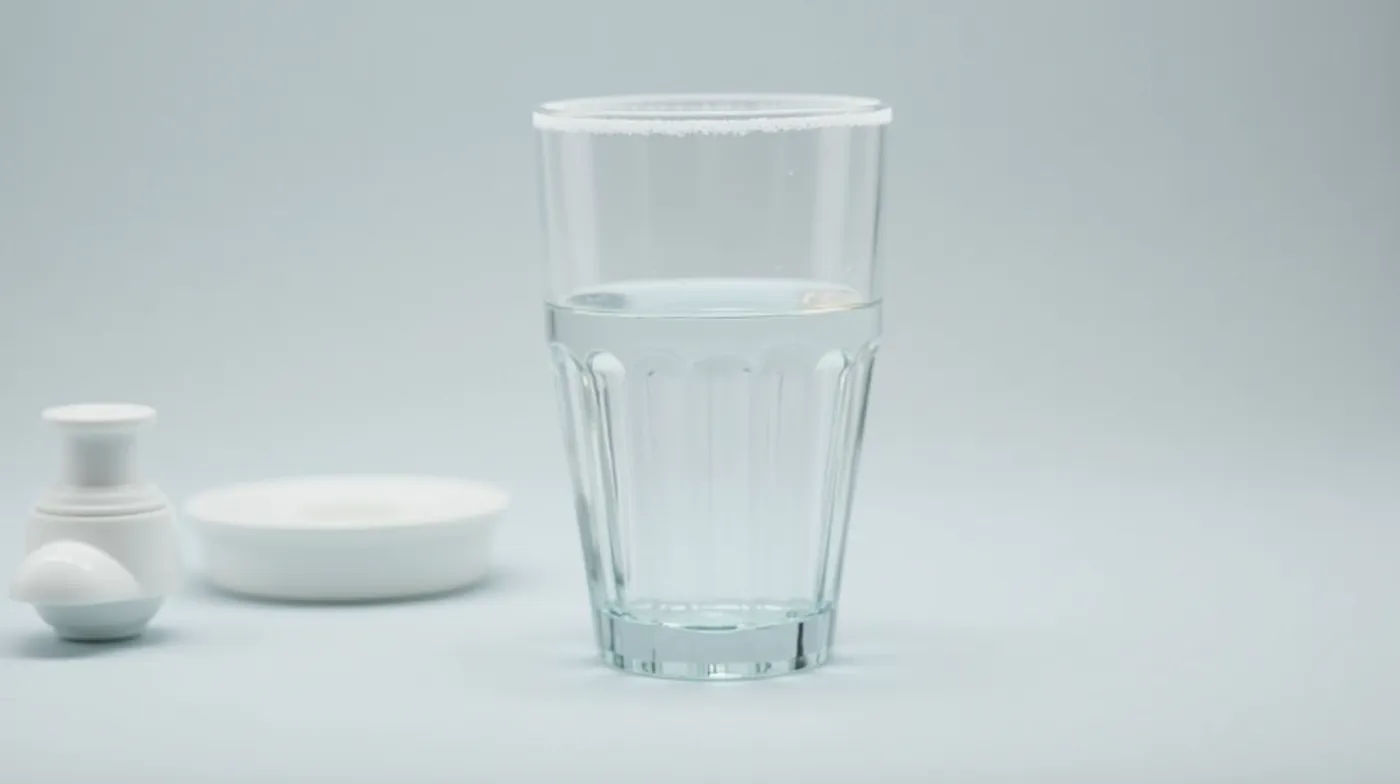
Fill a clear drinking glass with a full glass of cold well water and let it sit uncovered for 24 hours. If a ring of white deposits forms at the water line and on the bottom, the water is hard and is depositing scale as it evaporates. The heavier the ring, the harder the water. This is a useful baseline before and after you install any treatment, because it lets you see the change with your own eyes.
Read your hardness number
For a precise answer, test your water for total hardness in grains per gallon (gpg). You can do this with a well water hardness test kit (drop test or titration kit) or by ordering a lab panel. The standard classification is:
- 0-3.5 gpg: Soft. White film is unlikely to be scale. Look elsewhere.
- 3.5-7 gpg: Moderately hard. Film will appear on glass and fixtures over time.
- 7-10.5 gpg: Hard. Persistent film on dishes, glasses, and shower doors.
- 10.5+ gpg: Very hard. Heavy, fast-building scale; a softener is strongly recommended.
Many private wells in the western and midwestern US test in the 10-20 gpg range, which is well above the threshold where scale becomes a constant nuisance. If your number is above 7 gpg and the vinegar test is positive, you have confirmed the diagnosis and can move to treatment with confidence.
Why Well Water Causes More Scale Than City Water
Municipal water is treated to a target hardness, and many cities add antiscalant chemicals or pre-soften the supply, so the average city home sees far less scale than a well home. A private well, by contrast, delivers water straight from the aquifer with whatever minerals the surrounding geology has dissolved into it. Limestone, chalk, and dolomite formations leach calcium and magnesium into the groundwater, and the deeper and slower the aquifer, the more mineral loading the water typically carries. That is why a well that has no other obvious problems (clear, odorless, no bacteria) can still produce a constant film on every dish in the house.
Two things make well-water scale worse than it might appear. First, the hardness is constant, so every single wash cycle deposits a little more. Second, scale builds on the hot surfaces in your home first, because heat accelerates the precipitation of calcium carbonate. That is why your water heater tank, your dishwasher (which uses hot water), and your showerhead are where the film is thickest, even though the cold water at the tap is the same water. Understanding this is important for the cleaning section below, because it tells you where to focus your descaling effort.
Treatment: Softener vs. Salt-Free Conditioner vs. Descaler
There are three ways to stop the white film, and they do different things. A water softener removes the hardness minerals entirely. A salt-free conditioner does not remove the minerals but changes their form so they are less likely to deposit as film. A descaler removes the scale that is already built up. Most well owners need a combination: a softener or conditioner to prevent new film, plus a one-time descaling of the fixtures and appliances that already have it. Here is how the three options compare for the specific goal of stopping a white film on dishes and glass.
| Option | How It Works | Film on Dishes | Ongoing Cost | Best For |
|---|---|---|---|---|
| Salt-based water softener | Ion exchange removes calcium/magnesium | Eliminates it completely | Salt ($10-20/bag, monthly) | Very hard water (10+ gpg) |
| Salt-free water conditioner | Template-assisted crystallization (TAC) | Reduces new film; does not remove existing | Low (no salt, periodic media) | Moderate hardness, no salt desired |
| Vinegar / limescale descaler | Acid dissolves existing scale | Removes existing; does not prevent | Minimal (vinegar or citric acid) | Cleaning already-built scale |
A softener is the only option that stops the film at the source for very hard water. A salt-free conditioner is a reasonable middle ground where the hardness is moderate and salt is not wanted. A descaler handles the scale that is already present and should be used in combination with either of the two above.
Choosing based on your hardness number
If your test came back above 10 gpg, a salt-based softener is the most reliable way to end the white film, because it physically removes the minerals that cause it. Size the softener to your household’s daily water use and your hardness so it regenerates efficiently; see our water softener buyer’s guide and sizing for the grain-capacity math and a comparison of the top-rated units for 2026. If your hardness is in the 5-10 gpg range and you would rather not manage salt, a salt-free conditioner will reduce the new film noticeably, though it will not clear the scale that is already there. For any home, the one-time descaling step in the next section is worth doing to reset the fixtures and appliances that have already accumulated years of deposit.
How to Remove the Scale That Is Already on Your Dishes and Fixtures
Installing a softener or conditioner stops new film, but it does not dissolve the scale that is already baked onto your glasses, faucet aerators, showerheads, and dishwasher. That existing deposit needs an acid descaling pass. Here is the routine I use, in order of surface:
- Glasses and ceramic dishes. Fill the sink or a basin with warm water and a generous cup of white distilled vinegar (or two tablespoons of citric acid per gallon for a faster reaction). Submerge the glassware for 30-60 minutes, then scrub with a non-abrasive sponge and rinse. For heavy film, make a paste of baking soda and water and apply it after the vinegar soak for a final buff. Avoid steel wool on glass and fine ceramics, as it will scratch and make the glass look worse even after the film is gone.
- Faucet aerators and showerheads. These are the first to clog, because the small screens concentrate the scale. Remove the aerator or the showerhead face and soak the whole part in undiluted white vinegar overnight. The scale will loosen and flake off. Rinse, reassemble, and run the water for a minute to clear any remaining particles. If the aerator screen is heavily pitted with scale, replace the screen rather than trying to clear it by hand.
- Dishwasher interior. Run an empty cycle with a cup of white vinegar in a heat-safe bowl on the top rack to dissolve film on the tub walls and spray arms. For the dishwasher’s heating element and the underside of the tub, a dedicated dishwasher cleaner/descaler on a monthly cycle keeps the film from building back up. Check the manual for your model’s recommended descaling interval, because scale on the heating element reduces efficiency and can eventually cause it to fail.
- Shower doors and glass enclosures. Apply a 50/50 white vinegar and water solution to the glass, let it sit for 10 minutes, then scrub with a squeegee or a non-abrasive cloth. For a streak-free finish, follow with a quick rinse and a squeegee pass. A monthly vinegar spray keeps the film from hardening into the stubborn crust that requires heavy scrubbing to remove.
- Water heater tank (advanced, do once a year). Heavy scale inside a well-water tank reduces heating efficiency and shortens tank life. Draining and flushing the tank with a vinegar or citric-acid solution annually (following the manufacturer’s instructions and taking care to keep the anode rod in place) removes the bottom-of-tank sediment and scale. If you are not comfortable doing this yourself, a plumber or a water-treatment technician can perform the flush as part of a routine well system service.
Caution: never mix vinegar with bleach or ammonia
Acid (vinegar, citric acid) and chlorine bleach or ammonia react to produce harmful gases and neutralize each other. Use one or the other for a given cleaning task, rinse between products, and ventilate the area. For scale, acid is the correct choice; bleach will not dissolve it and mixing the two is a genuine safety hazard.
Frequently Asked Questions
Is the white film on my dishes dangerous to drink from?
No. The film is calcium and magnesium mineral scale, which is not toxic. Drinking from a glass with a light film of scale is not a health risk, though it is not pleasant and it is a sign your water is hard enough that you should treat it. If you want to be extra cautious while you set up treatment, let a glass of water sit and pour off any settled mineral, or simply rinse the glass before use. The scale becomes a real concern only in that it reduces appliance efficiency and, over years, can clog fixtures and reduce water flow.
Why does the film only appear after I got a new well, or only in certain seasons?
Hardness in a well can shift over time as the aquifer level changes or as the well draws from a slightly different depth of the formation. A new well may tap a more mineralized layer than an older supply, and seasonal changes in water level can bring in water from a different part of the aquifer with a different mineral profile. If your film appeared after drilling or after a dry spell, retest your hardness to confirm the number, because the treatment you choose (softener size, or whether a salt-free unit is sufficient) depends on the current gpg reading, not the one from when the well was first tested.
Will a water softener stop the film on my glasses completely?
Yes, a properly sized and maintained salt-based softener will stop the white film on glasses and dishes entirely, because it removes the calcium and magnesium before the water reaches your fixtures. The result is usually visible within one or two dishwasher cycles: the film stops forming, and the glass dries clear. The two most common reasons a softener “does not fix the film” are that the unit is undersized for the household’s usage and hardness (so it regenerates too often and runs out of capacity), or that the salt level in the brine tank is low and the resin is not being properly regenerated. If you have a softener and still see film, check the salt level and the sizing first before assuming the unit is broken.
Can I just use more detergent or a rinse aid to fix the film?
Adding more detergent does not remove mineral scale, and a rinse aid only helps the water sheet off the glass, not the minerals left behind. A rinse aid is a helpful companion to a softener (it reduces spotting on already-softened water), but on its own it will not solve a hard-water film problem. The fix has to address the minerals in the water, which is what a softener, a salt-free conditioner, or a descaling routine does. Treat the water, and the detergent and rinse aid will do their normal job; do not try to mask a hardness problem with more cleaning products.
How often should I descale my fixtures once I have a softener?
Once a softener is in place and working, new scale should stop forming, so your descaling frequency drops dramatically. You will still want to do a light annual maintenance pass: a quick vinegar soak for the faucet aerators and showerhead, and a monthly dishwasher descaling cycle, just to keep any residual buildup in check. The heavy descaling routine in the section above is a one-time reset for the scale that built up before treatment, not a recurring chore. After that, the softener does the ongoing work and you simply maintain it with salt and the occasional rinse.
See Also
Related guides on water well ownership:
- Water Softener for Well Water 2026: Buyer’s Guide & Sizing — grain-capacity calculations, top-rated units, and how to pick the right softener for your hardness and household.
- Well Water Hardness Guide 2026: How to Test, Treat, and Prevent Scale Damage — the full hardness testing and treatment framework behind the white film problem.
- Best Electronic Scale Inhibitors and Descaling Devices for Well Water Systems in 2026 — a comparison of the salt-free and electronic options if you want to avoid managing salt.
Conclusion: The White Film Is a Symptom, and the Fix Is the Water
The chalky white film on your dishes, glasses, and shower doors is one of the clearest and most solvable signs of a hard well. It is mineral scale, it dissolves in vinegar, and it is caused by calcium and magnesium in the water that your city-supplied neighbors never have to think about. The right response is to confirm the diagnosis with a hardness test, treat the water at the source with a softener (for very hard water) or a salt-free conditioner (for moderate hardness), and do a one-time acid descaling of the fixtures and appliances that have already collected years of deposit. Do all three, and the film stops, the glass dries clear, and your dishwasher, water heater, and faucets last longer. The white film is not a reason to change your detergent or your glassware; it is a sign to treat the water, and once the water is treated, the film simply stops coming back.
If you want to start with the diagnosis, order a hardness test kit this week, run the vinegar confirmation, and then size your treatment to the number you get. For the full softener sizing math and product comparison, see our water softener buyer’s guide, and for the broader hardness framework, see our well water hardness guide.
#WellWater #WhiteFilm #HardWater #WaterScale #Dishes #Glassware #WaterSoftener #WellMaintenance #HomeownerGuide #Descaling #WaterTreatment #Limescale #CleanWater #WellWaterTesting #RuralLiving