
If you are shopping for a replacement or an upgrade and your water is in the top 25 feet of the ground, the phrase Goulds shallow well pump probably showed up in your search — and for good reason. Goulds (now Goulds Water Technology, a Xylem brand) has been building pumps since 1847, and its JS+ shallow well jet pump line is the surface pump most installers in the western US reach for when a well is shallow enough to pump from above ground. This buyer’s guide covers every model in the 2026 Goulds shallow well pump lineup — the J5S, J5SH, J7S, J10S and J15S — and walks through exactly how to match horsepower, flow and lift to your well, your house and your budget.
We pulled the current Xylem spec sheets for all five JS+ models and compared them against what installers actually spec on real properties. The short version: most single-family homes land on the J10S (1 HP), the J15S is the right call for high-demand households with irrigation on the well supply, and the half-horsepower J5S only makes sense when your well is very close to the surface and your household is small. Everything below is structured so you can make the decision in an afternoon, not a week of back-and-forth with suppliers.
By Thomas Reynolds, Pump Systems Engineer
Thomas has installed and serviced over 1,000 well pump systems for homeowners, covering everything from shallow jet pump conversions to deep submersible replacements.
Published: September 15, 2026
Table of Contents
- Why a Shallow Well Pump Is Different From a Submersible
- The 2026 Goulds Shallow Well Pump Lineup at a Glance
- How to Choose the Right Goulds Shallow Well Pump Size
- Goulds Shallow Well Pump vs. Deep Well and Other Options
- What the Installation Looks Like: Components and Requirements
- Common Goulds Shallow Well Pump Problems and Fixes
- Frequently Asked Questions
- Conclusion: Which Goulds Shallow Well Pump Should You Buy
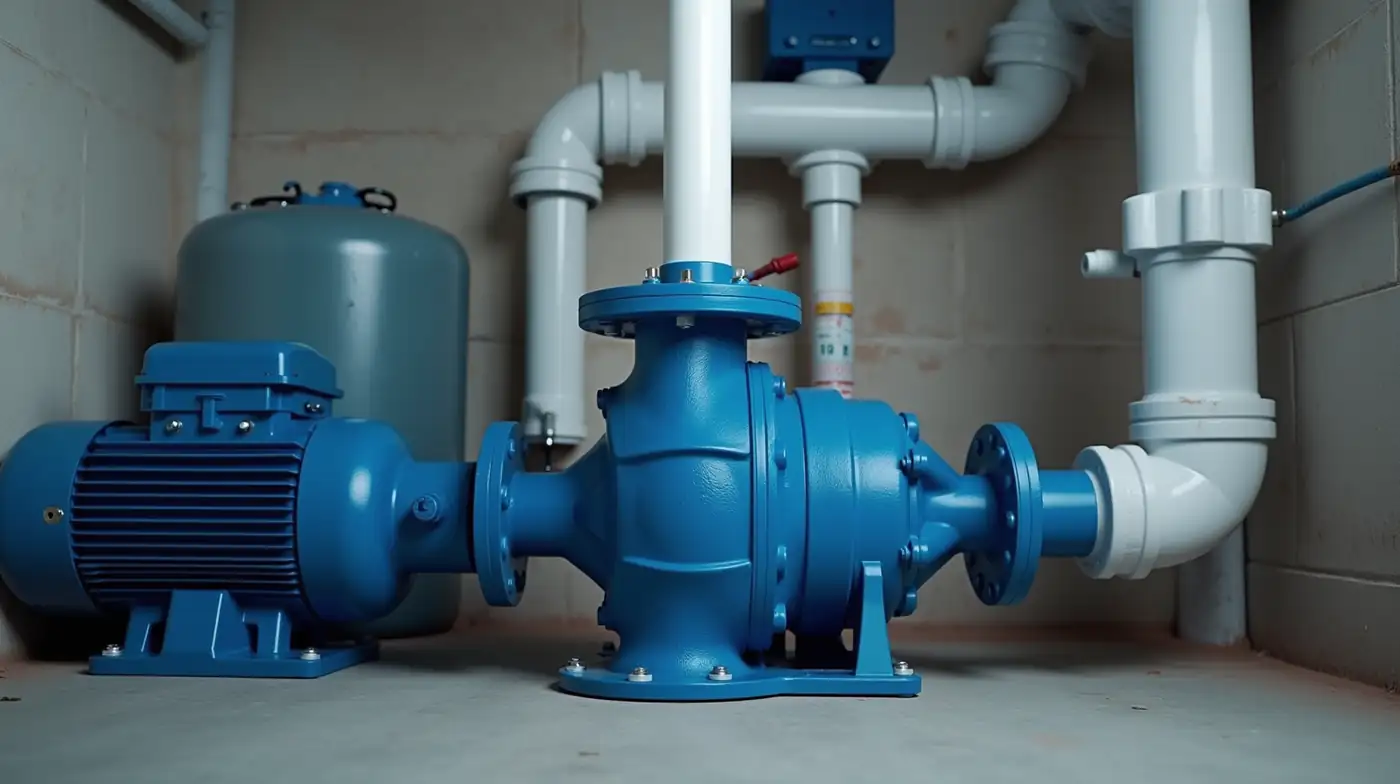
Why a Shallow Well Pump Is Different From a Submersible
Before you compare models, it pays to understand why a Goulds shallow well pump works at all — because the physics that make it possible also set its hard limit. A surface pump cannot pull water up; it pushes air out of the suction line and lets atmospheric pressure do the lifting. At sea level, atmospheric pressure can push a column of water up a theoretical maximum of about 34 feet. Real-world losses — friction in the riser pipe, the jet assembly, the foot valve — eat into that budget, so the industry rule is a 25-foot total lift limit for single-pipe shallow well jet pumps.
That 25 feet is measured from the static water level (the water level when the well is fully rested, not while you are pumping) up to the top of the pump. If your static level sits 15 feet down and your pump sits 6 feet above the wellhead, you are using 21 feet of the budget and you are inside the limit. If your static level is 28 feet down, no shallow well jet pump — Goulds or any other brand — will ever prime for you, and you need a deep well twin-pipe jet or a submersible instead.
Here is what makes the JS+ line specifically well suited to shallow wells:
- Integral jet assembly. The nozzle and venturi are built into the pump casing, so there is no separate shallow well adapter to install, leak or maintain.
- Re-priming ability. After the initial prime, the JS+ pumps can re-prime themselves if air gets into the line; pumping resumes once water covers the foot valve again.
- Protected mechanical seal. A diaphragm design keeps water in the casing at all times so the seal cannot run dry.
- Back pull-out service. You can disassemble the entire pump for impeller or seal work without cutting a single pipe — a major labor saver versus reaching into a well to service a submersible.
Do not skip the water level check
The most expensive mistake we see with shallow well pump purchases is buying a jet pump for a well whose drawdown level is actually below 25 feet. Measure the static level with a weighted line or an electric water level probe, and if you have a well log, check the recorded drawdown. If drawdown ever crosses 25 feet, budget for a deep well or submersible system instead — a shallow pump will cycle, lose prime and burn its motor trying to lift water it cannot reach.
The other reason owners choose a Goulds shallow well pump over a submersible is cost. A complete single-pipe shallow well system — pump, foot valve, 30-gallon pressure tank, switch and a few feet of riser — is the cheapest permanent well water setup you can buy, and it stays serviceable from the utility room for the life of the well. Where the water is shallow enough, that is a hard trade to beat.
The 2026 Goulds Shallow Well Pump Lineup at a Glance
For 2026, Goulds sells five JS+ shallow well jet pump models, all in the same compact cast-iron package. They share the same connections (1¼” NPT suction, 1″ NPT discharge), the same AS4 pressure switch preset at 30-50 PSI, and the same 115/230V single-phase, 60 Hz, 3500 RPM capacitor-start motor with built-in overload and automatic reset. They differ in horsepower, flow capacity and maximum suction lift — and that is where your choice comes down.
Per the current Xylem technical brochure, here is how the five models compare:
| Model | Horsepower | Max GPM (20 PSI) | Max Suction Lift | Weight | Best For |
|---|---|---|---|---|---|
| J5S | ½ HP | ~17.5 | 8.5 ft | 43 lbs | Small homes, very shallow water, cottages |
| J5SH | ½ HP (high-lift) | ~11.5 | 8.5 ft | 43 lbs | Shallow water at high discharge pressure |
| J7S | ¾ HP | ~21.3 | 9.5 ft | 47 lbs | 1-2 bedroom homes, light irrigation |
| J10S | 1 HP | ~24.8 | 10 ft | 50 lbs | Most 3-4 bedroom homes (the default choice) |
| J15S | 1½ HP | ~26.6 | 10.5 ft | 60 lbs | Large homes, simultaneous high demand, well irrigation |
GPM values are rated flows at 20 PSI discharge per Xylem/Goulds performance charts; actual flow drops as discharge pressure rises (see sizing math below). Suction lift ratings are maximums per Xylem spec sheet.
What we noticed from the spec sheets
Notice how little the flow jumps from 1 HP to 1½ HP at low pressure (24.8 vs 26.6 GPM). The J15S buys you pressure, not much extra flow — which means it earns its premium in wells with more friction loss or households that draw water from several fixtures at once. If your only need is a little more GPM, a 1 HP pump with a bigger pressure tank usually wins on cost and energy use.
How to Choose the Right Goulds Shallow Well Pump Size
Choosing the right Goulds shallow well pump size comes down to three numbers: your total lift, your required flow, and the pressure you need at the farthest faucet. Do the math in this order and the model picks itself.
Step 1: Confirm you are inside the 25-foot lift limit
Measure from the static water level to the top of the pump. Anything over 25 feet is a hard stop for a single-pipe shallow well pump — no model in the JS+ series will work. Between 15 and 25 feet you are in the normal operating band; under 15 feet you have plenty of margin for drawdown on dry summers.
Step 2: Calculate your required flow
Add up the simultaneous demand you actually need. A common sizing baseline for single-family homes:
- One full-flow shower or tub: 10-15 GPM
- One kitchen or bath faucet: 2-4 GPM
- One washing machine: 4-5 GPM
- One dishwasher: 2-3 GPM
- Garbage disposal running: 1-2 GPM
If two fixtures running at once is your realistic maximum, you need roughly 15-20 GPM. Add irrigation only if the well pump supplies it directly and you run it while the house is using water — a 1″ drip or soaker line adds 10-15 GPM and usually pushes you to the J15S.
Step 3: Calculate your required pressure at the pump
Your faucets need a minimum pressure — call it 20-30 PSI at the fixture — and everything between the pump and that fixture eats head. Budget for:
- Static lift: 1 PSI per foot of water column (a 15-foot lift costs 15 PSI at zero flow)
- Friction in the suction line: typically 1-3 PSI for a 1″ riser of normal length
- Friction in the discharge pipe to the tank and house: 1-5 PSI depending on run length and pipe size
- Your desired pressure at the farthest fixture: 20-30 PSI
Example: a home with 15 feet of lift, 2 PSI of suction friction, 3 PSI of discharge friction and a 25 PSI fixture target needs the pump to deliver about 45 PSI at the rated flow. Now read the Xylem performance charts for each model at 45 PSI — the J5S and J5SH fall off steeply there, the J10S still produces a healthy flow, and the J15S holds its flow the longest. That comparison, not the horsepower number, is the real sizing decision.
Step 4: Pick the model
- Water level above 15 feet, 1-2 bedroom home or cottage, modest demand: J5S or J5SH. The J5SH is the one to choose if your lift is near the top of the range or you want higher fixture pressure, since it trades flow for pressure.
- Typical 3-4 bedroom home, water level in the 10-20 foot range: J10S. This is the default we spec for most western US shallow wells, and it is the model most installers stock.
- Large home, simultaneous fixture use, or well-supplied irrigation: J15S. The extra motor margin keeps the pump from short-cycling under peak demand, which protects the motor and the well from over-pumping.
Pro tip: size the pressure tank, not just the pump
A 30-gallon tank paired with a J10S is the standard shallow well setup, but if your well yields less than about 8 GPM, step up to 50 or 75 gallons. The bigger the tank relative to the well’s yield, the less often the pump cycles — and cycling is what wears out shallow well pumps. See our step-by-step guide on how to precharge a well pressure tank to get the air bladder set right from day one.
Goulds Shallow Well Pump vs. Deep Well and Other Options
Most of the time the choice is not really between brands — it is between a shallow well single-pipe jet pump (what the Goulds JS+ series is), a deep well twin-pipe jet pump, and a submersible pump. Here is how they stack up for a homeowner, based on what we have installed and serviced:
| System Type | Max Lift | Typical Installed Cost | Service Difficulty | Best When |
|---|---|---|---|---|
| Shallow well single-pipe (Goulds JS+) | 25 ft | Lowest — $1,500-$3,000 installed | Easiest — back pull-out, above ground | Water level stays above 25 ft, budget matters |
| Deep well twin-pipe jet | ~90 ft (practical) | Mid — $2,500-$5,000 installed | Moderate — two pipes in the well, jet assembly serviceable | Existing 2-pipe well, water 25-90 ft down |
| Submersible | 400+ ft | Highest — $3,500-$8,000 installed | Hardest — pump must be pulled from the well | Deep wells, highest reliability, quietest operation |
Installed cost ranges are 2026 western-US averages including tank, controls, piping and labor; your quote will vary with well depth, site access and local labor rates.
Two practical notes from the field. First, if your well was drilled with twin 2″ and 1″ (or 1½”) casing, you may already have a deep well system installed — replacing a failed deep well jet with a shallow unit only works if the water level is genuinely above 25 feet. Second, if you are buying a new home on a well and the water level is 30-50 feet down, a submersible is usually the better long-term investment despite the higher upfront cost: it pumps against the column of water rather than pulling it, which means higher efficiency, quieter operation and no suction line to freeze in winter. We break the pump-type decision down further in How to Choose Between Submersible & Jet Pumps.
Why installers still spec Goulds shallow well pumps
When we talk with installers about why the JS+ series keeps its share of the shallow well market against newer brands, the answers are consistent: parts availability, the re-priming behavior of the jet assembly, and the back pull-out design that keeps a 43-60 pound pump serviceable by one person without cutting piping. In a niche where the pump is doing a physics-limited job, reliability of serviceability tends to beat spec-sheet flow numbers.
What the Installation Looks Like: Components and Requirements
A complete Goulds shallow well pump system is six components, and most of them are the same whether you run a J5S or a J15S:
- The JS+ pump unit — pump with integral jet, motor, AS4 pressure switch (30-50 PSI preset) and plastic tubing, all in one cast-iron package.
- Foot valve and screen — sits at the bottom of the riser pipe, keeps water in the well line between cycles and keeps sediment out of the pump. Choose a foot valve sized for your well diameter; a clogged screen is one of the top causes of lost prime.
- Riser (suction) pipe — typically 1″ PVC or steel, running from the foot valve up through the wellhead into the pump. Every joint must be sealed; even a hairline leak at a coupling will bleed the prime.
- Pressure tank — 30-75 gallon bladder tank. The precharge pressure must match the pressure switch cutoff (typically 40 PSI for a 30-50 switch, so 38-40 PSI in the air bladder). See our well pressure tank precharge guide for the exact procedure.
- Pressure gauge and check valve — the gauge shows you the system is doing its job, and the check valve between the pump discharge and the tank prevents water from draining back into the well when the pump stops.
- Discharge piping to the house — typically 1″ or 1¼” from the tank to the house main.
The JS+ itself is rated for continuous operation within the motor manufacturer’s working limits, handles water up to 140°F, and is UL 778 listed for water use. The impeller and diffuser are FDA-compliant glass-filled engineered composite, and the whole unit carries NSF/ANSI 61 and 372 certification for drinking water — the first jet pumps in the industry to earn NSF listing, which matters if your local health district requires certified wetted materials.
Electrical side: the pump is 115/230V single-phase with a built-in motor overload that auto-resets. Most residential shallow well installations run on a 15 or 20 amp dedicated circuit; if your breaker trips the moment the pump starts, check our guide to well pump tripping the breaker before you assume the motor is bad — a stuck switch or a leaking check valve is far more common.
Priming the pump: the step that decides everything
A shallow well jet pump only works if the entire suction line is full of water. The initial prime sequence:
- Fill the riser pipe at the wellhead through a priming hole or by hand-pumping the pump’s priming port.
- Fill the pump casing through the priming plug on top of the motor.
- Verify the foot valve is seated and the line holds water with the pump off — if the water level in the riser drops within a minute, you have a leak or a failed foot valve, and no amount of priming will fix it.
- Run the pump; it should build pressure and start delivering water within seconds of prime.
Once primed, the JS+ series re-primes on its own if air gets in, but repeated loss of prime is a symptom, not a malfunction — chase the leak in the suction line first.
Common Goulds Shallow Well Pump Problems and Fixes
After a decade of servicing these pumps, the failure patterns are surprisingly consistent. In order of how often we see them:
1. Pump won’t prime, or loses prime repeatedly
Always a leak in the suction line — a loose riser coupling, a cracked wellhead seal, or a foot valve that no longer seals. Check every fitting from the foot valve to the pump, and verify the line holds water with the pump off. The JS+ re-primes once the line is full, so a pump that primes, runs for a few minutes, then stops is almost always this.
2. Short cycling (on and off every few seconds)
The pump starts, builds pressure, shuts off, and restarts within seconds. The usual causes: a failed bladder in the pressure tank (the tank is waterlogged, so there is no cushion), an air leak in the suction line letting air into the tank, or a pressure switch set with too narrow a cut-in/cut-out spread. Our well pump short cycling guide walks through the diagnosis in order.
3. Motor runs but no water comes out
Check in this order: foot valve screen clogged with sand; air in the line after a freeze; impeller damaged by debris (the JS+ back pull-out design makes this a 30-minute fix, not a pump replacement); or the well simply running dry. If you can hear air being pulled in, the prime has been lost.
4. Humming or high-pitched noise from the motor
Usually a worn motor bearing or, more commonly, cavitation from the pump working against a clogged suction line. Cavitation sounds like gravel in the pump and it is damaging the impeller and the mechanical seal — fix the suction restriction before it becomes a rebuild.
5. Breaker trips on start-up
Start with the cheap checks: a stuck pressure switch, a seized impeller (try turning the shaft by hand), and a leaking check valve causing the motor to start against back pressure. A genuinely dead motor on a 1-2 year-old pump is rare; a motor on a 15-year-old pump that just now died is usually the end of the pump’s life, and it is worth asking what a replacement full system costs versus a rebuild. For lifespan context, see How Long Do Well Pumps Last in 2026?
Winterize before the first hard freeze
A shallow well pump is exposed: the pump sits in a utility room, but the suction line runs through the ground. In the western US, a buried riser that freezes solid can crack the pipe and flood the well with sand and debris. If the pump house is unheated, add heat tape to the exposed riser section or run a heat lamp over the wellhead in the coldest weeks. A $40 winterization fix saves a $400 well cleaning.
Frequently Asked Questions About Goulds Shallow Well Pumps
How deep can a Goulds shallow well pump pull water from?
The hard limit is 25 feet from the static water level to the top of the pump — this is a physics limit shared by all single-pipe shallow well jet pumps, not a Goulds-specific number. The JS+ models’ individual max suction lift ratings (8.5 to 10.5 feet) reflect their rated operating points at the rated discharge pressures; the practical system limit is the 25-foot rule. If your static level is deeper than 25 feet, you need a deep well twin-pipe jet pump or a submersible.
What size Goulds shallow well pump do I need for a 3-bedroom home?
In most cases, the 1 HP J10S. It delivers about 25 GPM at 20 PSI discharge, which comfortably covers two simultaneous fixtures plus a dishwasher or washing machine. Step up to the 1½ HP J15S only if you are drawing from multiple fixtures at once regularly or irrigating directly off the well supply. Step down to the ¾ HP J7S if your lift is near 25 feet and your household demand is light.
Is a Goulds shallow well pump a good brand?
Yes. Goulds has built pumps since 1847 (now Goulds Water Technology under Xylem), the JS+ series is NSF/ANSI 61 and 372 certified for drinking water, UL 778 listed, and carries the kind of parts availability and dealer support that keeps it a standard choice for residential installers. The back pull-out design means most repairs do not require cutting pipes, which is the main reason it holds up against cheaper imports over a 10-15 year service life.
Can I run a Goulds shallow well pump for irrigation?
Yes, with two conditions. The well must yield more water than your house and irrigation draw at the same time — most residential wells yield 5-15 GPM, so a light drip or soaker system on the J10S or J15S is usually fine. And the pump must be sized for the combined demand, since irrigation is a sustained draw that will short-cycle an undersized setup. If you are running a full in-ground sprinkler system off the well, get a well yield test first.
How much does a Goulds shallow well pump cost in 2026?
The pump unit itself runs roughly $400-$700 depending on model and supplier (J5S at the low end, J15S at the high end). A complete installed system — pump, 30-50 gallon pressure tank, foot valve, switch, piping and labor — typically lands between $1,500 and $3,000 in 2026 for a shallow well. If a quote is far above that, ask what is being replaced beyond the pump itself.
Conclusion: Which Goulds Shallow Well Pump Should You Buy
For most homeowners shopping a Goulds shallow well pump in 2026, the decision tree is simple. Confirm your static water level is above 25 feet — if not, no shallow well pump will work and this entire article is a detour worth taking before you buy. Then match the model to your demand: the J10S is the right default for a typical 3-4 bedroom home, the J15S is for high simultaneous demand or well-supplied irrigation, and the J5S/J7S are for small homes and light duty where every dollar and every amp counts. Price the whole system, not just the pump — the pressure tank, foot valve and switch are where cheap systems quietly fail.
And whatever model you choose, do the three things that decide whether it lasts ten years or three: measure the water level properly, verify the suction line holds prime, and precharge the pressure tank to the switch cutoff. Every other problem on this list traces back to one of those three.
See Also
Goulds Well Pump Review & Buying Guide 2026 — our full review of Goulds well pumps, installation and maintenance across the whole lineup
Well Pump Curve 2026: How to Read It and Size the Right Pump — learn to decode pump performance charts before you buy any pump
Well Point Pump 2026: Right Fit for Shallow Private Wells — the compact alternative to a full jet pump for very shallow, low-demand wells
#GouldsShallowWellPump #WellPump #ShallowWell #JetPump #WellWater #WaterWell #PumpSizing #WellPumpBuyingGuide #WellHomeowner #PressureTank #WaterWellPump #WellMaintenance #PrivateWell #WellDrilling #PumpInstallation