
Published: October 2026 · Last updated for the 2026 season
By Thomas Reynolds, Pump Systems Engineer
Thomas has installed and serviced over 1,000 well pump systems for homeowners across the US. He has pulled both jet and submersible pumps from real wells and knows exactly where each one wins and where it quietly fails.
Disclosure: As an Amazon Associate, we earn from qualifying purchases on this page. Product selections are based on independent research and real well water data.
Choosing between a submersible well pump and a jet pump is the single biggest decision a well owner makes after drilling, because it locks in your water pressure, your noise level, and your repair costs for the next decade or more. Get it wrong and you will spend thousands on a pump that was never going to keep up with your well depth or your household demand. Get it right and the system runs quietly, reliably, and at a fraction of what you fear it will cost.
After installing and servicing hundreds of these pumps over the past two decades, I can tell you that the answer is almost always it depends on your well depth. A shallow well under 25 feet rarely benefits from a submersible unit. A deep well past 100 feet will run dry or burn out a jet pump before the first summer is over. Below is the exact head-to-head comparison, with 2026 installed pricing, so you can match the right pump type to your specific well instead of guessing from a supply-house sales pitch.
Table of Contents
- Submersible Well Pump vs Jet Pump: The Core Difference
- Quick Comparison: Submersible vs Jet Pump at a Glance
- Which Well Depth Does Each Pump Type Handle?
- Cost: What Each Pump Type Really Costs in 2026
- Noise, Lifespan, and Reliability
- How to Choose: Submersible or Jet Pump for Your Well
- Common Mistakes Homeowners Make
- Submersible vs Jet Pump: Frequently Asked Questions
- The Bottom Line: Which Pump Should You Buy?
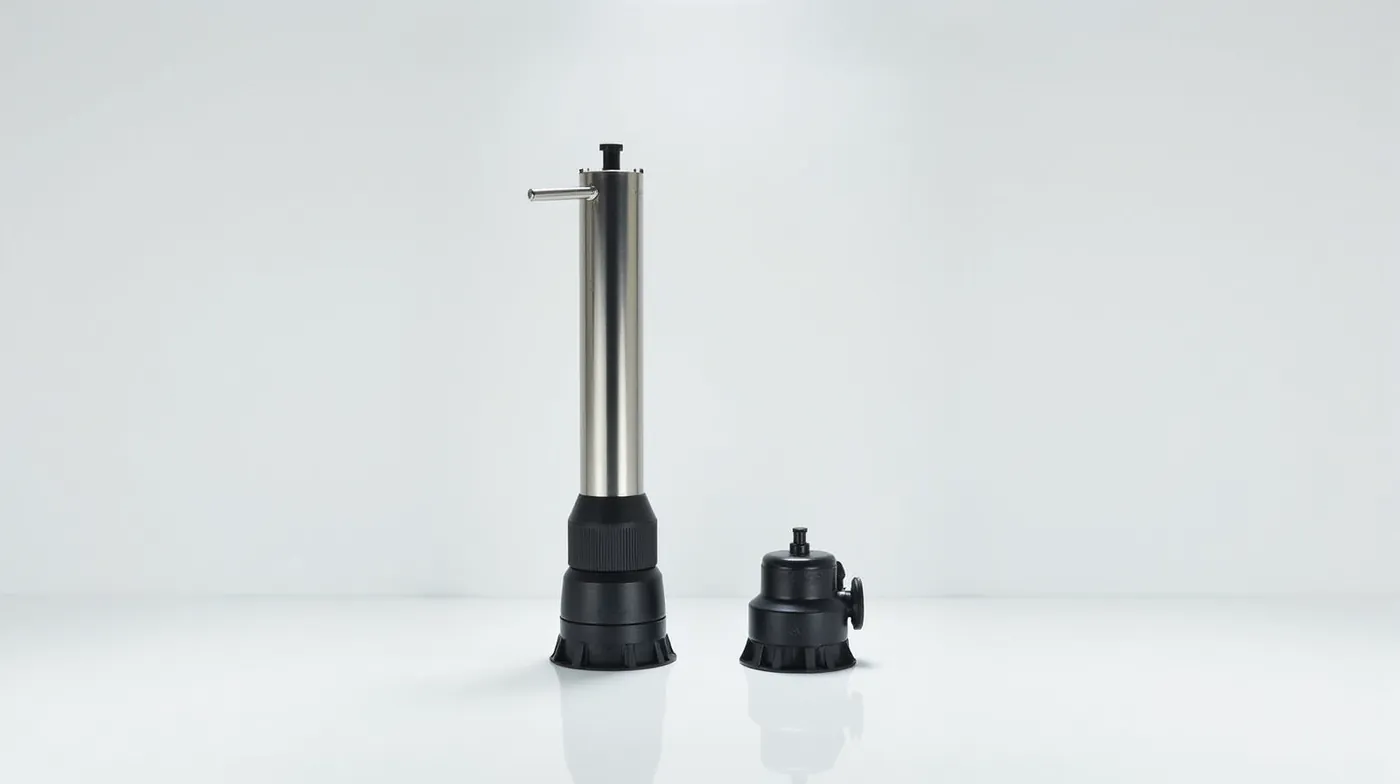
Submersible Well Pump vs Jet Pump: The Core Difference
The difference comes down to where the pump sits and how it moves water. A jet pump lives up in your well house or basement, outside the well, and it pulls water up from the surface. It relies on a suction pipe and an ejector (jet) assembly at the bottom of the well to create a vacuum and lift the water column. A submersible well pump, by contrast, is lowered down into the well itself and pushes water up from below.
That single difference — pull from above versus push from below — is why the two behave so differently. A jet pump is fighting gravity the entire way up the riser pipe, which is why its effective lift is capped at roughly 25 feet of suction before the physics of the vacuum start to fail. A submersible pump sits near the water, so it only has to push water up the pipe from a position close to the source. It never has to “suck” water the long way up, which is why it can serve wells that are 300, 400, or even 500 feet deep.
The one-sentence rule we use on every install
Shallow well under 25 feet → a jet pump is the right, economical choice. Deep well past 25 feet → you need a submersible pump, full stop. The well depth measured from ground level to the static water level is the number that decides everything else.
What a jet pump actually does
A jet pump uses a venturi-style ejector to create a low-pressure zone that pulls water up a suction line. Single-suction (shallow) jet pumps pull water from wells where the water table is close to the surface, typically 25 feet or less. Two-stage (deep-well) jet pumps add an ejector inside the well and a second set of nozzles to extend the effective lift to about 100 feet — but they are still limited, they run louder, and they are more complex to prime and repair.
What a submersible pump actually does
A submersible pump is a sealed, oil-filled or oil-less unit lowered on a drop pipe into the well, usually set a few feet above the static water level. It has multiple impeller stages stacked in a housing, and each stage adds a little more pressure, so a four- to six-stage pump can easily generate 150 psi of head. Because it pushes rather than pulls, it is far more efficient at depth and far quieter, since the noisy motor is 50 to 300 feet underground instead of in your kitchen.
Quick Comparison: Submersible vs Jet Pump at a Glance
Here is the head-to-head we use when walking a well owner through the decision. The numbers reflect typical 2026 installed costs and the real-world limits we see in the field.
| Factor | Jet Pump | Submersible Well Pump |
|---|---|---|
| Max practical well depth | ~25 ft (shallow) / ~100 ft (two-stage deep-well) | 300 ft or more, limited by motor rating |
| Where it is installed | Well house or basement (at or above ground) | Down in the well, near the water |
| Noise at the house | Loud — motor runs at ground level | Very quiet — motor is underground |
| Installed cost (2026) | $500–$1,500 (shallow) | $1,500–$5,000+ (pump + labor) |
| Flow / pressure head | Modest; pressure drops as depth rises | High, stable head even at depth |
| Repair / replacement access | Easy — pump is at hand height | Pump must be pulled from the well |
| Typical lifespan | 5–10 years | 8–15 years |
| Best for | Shallow wells, budgets, rentals, seasonal cabins | Deep wells, full-time homes, high-demand use |
Cost ranges reflect typical 2026 installed prices in the US and vary by region, well diameter, and whether a pressure tank or controller is part of the job.
Which Well Depth Does Each Pump Type Handle?
Before you spend a dollar on a pump, you need two numbers from your well: the static water level (where the water sits when the pump is off) and the drawdown level (where it drops when the pump is running). The depth that matters for pump selection is measured from your pressure tank down to the water level.
Here is how the decision breaks down by depth, based on the wells we have worked on:
- 0–25 feet (shallow well): A single-suction jet pump is the clear winner. It is cheaper to buy, cheaper to install, easier to repair, and delivers more than enough pressure for a small house or a property with low demand. There is no real advantage to a submersible at this depth — you would be paying more for a pump you do not need.
- 25–100 feet (moderate well): This is the gray zone. A two-stage (deep-well) jet pump can work, but it runs louder, needs an ejector assembly down the hole, and its output drops noticeably as the depth climbs. Most well owners we advise in this range go with a submersible pump for the quiet, stable pressure and longer service life, especially if the house has two or more bathrooms.
- 100 feet and deeper (deep well): A jet pump is simply not going to keep up. The suction physics and the long column of water mean a jet unit will short-cycle, overheat, or run dry. A submersible pump is the only realistic option past 100 feet, and it is the standard for the majority of US private wells.
Why the 25-foot line matters so much
A suction pump cannot lift water more than about 34 feet even in a perfect vacuum, and in the real world — with friction in the pipe, a worn seal, or a hot day — the practical ceiling is about 25 feet. Push past that and you are not getting a little less flow, you are getting a pump that is working against physics and failing on a schedule.
If you are not sure of your well depth, you can measure it yourself with a well water level measuring device (often called a well depth or static level probe) before you buy anything. A $30–$60 tool beats a $3,000 pump that was never going to work.
Cost: What Each Pump Type Really Costs in 2026
The sticker price of the pump is only part of the picture. Because a submersible pump has to be lowered into the well on a drop pipe, and a jet pump sits at hand height, the installed costs diverge quickly. Here is what we typically see homeowners pay in 2026, including labor and the matching pressure tank or controller:
| Component | Jet Pump (shallow) | Submersible Pump |
|---|---|---|
| Pump unit | $300–$800 | $600–$2,500 |
| Pressure tank | $150–$400 (20–30 gal) | $300–$900 (44–80 gal) |
| Pressure switch / controller | $40–$90 | $40–$250 (switch or VFD) |
| Drop pipe / fittings | $50–$150 | $150–$600 (length dependent) |
| Labor / installation | $300–$700 | $500–$1,500 (pump pull + set) |
| Typical total installed | $500–$1,500 | $1,500–$5,000+ |
Ranges are typical 2026 US installed costs. A variable-frequency-drive (VFD) controller on a submersible pump adds $200–$400 but smooths out short-cycling and protects the motor.
Where the money actually goes
For a deep well, the single biggest cost driver is the length of the drop pipe and the labor to pull and reset the pump. Do not be surprised if a submersible install for a 200-foot well lands near the top of that range. For a shallow well, the jet pump is the economical choice by a wide margin — there is no long drop pipe and the labor is a half-day job at most.
Noise, Lifespan, and Reliability
Noise. A jet pump motor runs in your well house or basement, and it is not quiet. If that is in a space you use — a mudroom, a basement you hear through the floors — the pump cycling on and off all day will bother you. A submersible pump is 50 to 300 feet underground, so the only thing you hear at the house is a faint hum in the pressure tank. For a full-time family home, the submersible is almost always the quieter choice.
Lifespan. Jet pumps, being exposed to the elements and sitting in a damp well house, typically last 5 to 10 years. Submersible pumps are sealed and oil-lubricated (or oil-less) and run in a stable underwater environment, so a quality unit commonly lasts 8 to 15 years. The trade-off: when a submersible pump does fail, you have to pull it out of the well to service it, which is a more expensive repair visit than swapping a jet pump that is sitting at hand height.
Reliability and short-cycling. A poorly matched jet pump in a moderate-depth well is the #1 cause of the short-cycling, breaker-tripping, and pressure-drop problems we get called out for. A correctly sized submersible pump with a properly precharged well pressure tank runs long, calm cycles and stays within its design envelope.
How to Choose: Submersible or Jet Pump for Your Well
Follow these five steps in order and the decision makes itself. This is the exact sequence we use when a well owner asks us which pump to buy.
- Measure your well depth. Find the static water level and the depth from your pressure tank to the water. This single number sets the ceiling for a jet pump. If it is over 25 feet, a shallow jet pump is out; over 100 feet, any jet pump is out.
- Estimate your peak flow demand. Add up the fixtures that could run at once (two showers, a dishwasher, an irrigation line). Most homes need 10–15 GPM. A submersible pump gives you a clean head curve to size against; a jet pump loses flow as depth increases.
- Set your pressure band. Most homes run a 30/50 or 40/60 psi cut-in/cut-out. A submersible pump holds that band easily at depth; a jet pump at the edge of its lift may struggle to reach 50 psi at the top fixture.
- Decide on budget and access. If you want the lowest installed cost and the well is shallow, buy a jet pump. If you want the quiet, deep-well-capable, longest-life option, budget for a submersible.
- Match the pressure tank. Whatever pump you choose, size the tank to your demand. An undersized tank makes any pump short-cycle. See our guide on how to size a well pressure tank.
Once you know the type, the specific model selection is where the pump curves come in. We have separate deep-dive guides on the best jet pumps for well systems in 2026 and on the best submersible well pumps for private wells, and a full walkthrough on how to size a well pump against its head curve. Start with your depth, then narrow down to a model with our sizing guide.
If you are going with a jet pump (shallow well)
For a well under 25 feet, a quality 1/2 HP to 3/4 HP single-suction jet pump is the sweet spot. A popular, well-reviewed option for typical shallow residential wells is the shallow well jet pump 1/2 HP class of unit — cast-iron, 115-volt, with a built-in or external pressure tank. Keep your eyes open for one with a corrosion-resistant impeller if your water is aggressive.
If you are going with a submersible pump (deep well)
For a well deeper than 100 feet, a 3/4 HP to 1 HP, 4- to 6-stage submersible is the standard. A well-regarded, widely installed class is the 5 inch submersible well pump 3/4 HP unit, which fits standard 6-inch wells and delivers a clean head curve. Pair it with a properly precharged tank and a pressure switch (or a VFD for the smoothest operation) and it will run for years without drama.
The value play: when a “deep-well” jet pump is not actually a good deal
Two-stage (deep-well) jet pumps that claim 100-foot lift cost almost as much as a submersible pump to buy, add an ejector assembly down the hole, run louder, and lose a lot of flow at the top of their range. In our experience, if your well is anywhere near 100 feet, the submersible is the better value even before you count the noise and the shorter life.
Common Mistakes Homeowners Make
Most of the pump problems we get called out for trace back to one of these five choices made at purchase time. Avoiding them saves you money and a lot of frustration.
- Buying a submersible pump for a shallow well. You are paying for a long drop pipe, an expensive install, and a pump that is overkill. If your well is under 25 feet, a jet pump is the right tool and you should not be spending the submersible money.
- Trusting a “deep-well jet pump” to serve a deep well. The two-stage jet pump that claims 100-foot lift is the most common misbuy. It loses flow fast, runs loud, and is rarely a good value once you add the ejector assembly.
- Ignoring the pressure tank size. A great pump with an undersized tank will short-cycle and trip the breaker no matter which type you chose. Size the tank to your peak demand.
- Not knowing your actual well depth. People guess from old records or a drilling ticket that never measured drawdown. A cheap water-level probe tells you the truth before you buy.
- Matching the pump to the well, not the house. A 15-year-old high-flow fixture stack will choke a pump that looked fine on paper. Size against your real peak demand, not the fixture count on the plan.
Submersible vs Jet Pump: Frequently Asked Questions
Can a jet pump work in a 100-foot well?
A two-stage (deep-well) jet pump can technically reach about 100 feet of lift, but it is working at the very edge of its range. Expect reduced flow, higher noise, and a shorter life than a submersible pump. For a well at 100 feet or deeper, a submersible pump is the more reliable and usually better-value choice.
Which pump is cheaper to install, a jet pump or a submersible pump?
A jet pump is almost always cheaper to install, typically $500–$1,500 all in for a shallow well, because the pump sits at hand height and there is no long drop pipe. A submersible pump runs $1,500–$5,000+ installed, driven by the drop pipe length and the labor to pull and set the pump down the well.
Is a submersible pump worth the extra cost for a shallow well?
Usually no. For a well under 25 feet, a jet pump gives you the same service life you need at a fraction of the cost, with easier access if it ever needs repair. The submersible pump is the better buy when your well is deep, your home is full-time, or noise in the well house is a real concern.
Why is my well pump running all the time?
Constant running usually means the pump is short-cycling or fighting a demand it cannot meet. Common causes are a leaking check valve, an undersized or air-locked pressure tank, a leak in the lines, or a pump that is simply too small for your well depth. Test your tank precharge first — it is the cheapest fix and the most common one.
How do I know what size pump I need?
Start with your well depth (from the tank to the water level) and your peak flow demand (how many fixtures could run at once, typically 10–15 GPM for a home). Then match a pump whose head curve delivers that flow at your total dynamic head. Our step-by-step on how to size a well pump walks through the math with real curves.
The Bottom Line: Which Pump Should You Buy?
The submersible vs jet pump decision comes down to one number: your well depth. Under 25 feet, a jet pump is the economical, easy-to-maintain choice and there is no reason to pay for a submersible. At 100 feet or deeper, a submersible pump is the only reliable option and the better long-term value. In the 25–100 foot gray zone, lean submersible for the quiet, stable pressure and longer life — unless your budget or the property (a seasonal cabin, a rental) makes the jet pump the sensible call.
Whichever type you choose, the pump is only as good as the system around it. Size the pump to your depth and peak demand, pair it with a properly precharged pressure tank, and verify your actual well depth before you buy. Do those three things and your well will run quietly and reliably for the life of the pump. Skip them and no amount of brand-name hardware will save you.
Takeaway: shallow well → jet pump. Deep well → submersible. Measure first, size second, and never buy a pump before you know your real well depth.
See Also
- Best Jet Pumps for Well Systems in 2026 — the full buyer’s guide to choosing the right jet pump model for a shallow well.
- Best Submersible Well Pumps for Private Wells in 2026 — deep-well model comparisons and head-curve breakdowns.
- How to Size a Well Pump (Complete 2026 Guide) — the step-by-step math for matching any pump to your well depth and flow demand.
#WellPump #SubmersiblePump #JetPump #WellWater #PrivateWell #WellDrilling #WaterPressure #WellMaintenance #HomeownerGuide #SubmersibleVsJet #WellSystem #WaterWell #WellPumpBuyingGuide #2026Guide #PumpSizing