
When your well pump dies, the question that matters most is the well pump replacement cost — and in 2026, homeowners pay anywhere from $700 for a basic jet pump swap to $6,000 for a deep-well submersible with electrical work bundled in. After two decades of inspecting residential wells, I have watched too many owners get blindsided by quotes that miss the pitless adapter, the 240-volt circuit, or the pressure tank that quietly needs a new pre-charge. This guide breaks down exactly what a well pump replacement costs in 2026: pump prices by horsepower, real labor rates, the hidden fees that turn a $1,500 job into a $2,800 one, and how to tell when repair is the smarter move. By the end you will know what a fair price looks like for your specific well — and the exact parts to buy if you are going DIY.
By Robert Harrison, Certified Well Inspector
Robert has 20+ years of experience inspecting and testing residential water wells across the western US. He has sized, tested, and troubleshot thousands of residential well systems and specializes in helping homeowners avoid costly pump and well mistakes.
Disclosure: As an Amazon Associate, we earn from qualifying purchases on this page. Product selections are based on independent research and real well water data.
Table of Contents
- What Does It Cost to Replace a Well Pump in 2026?
- Submersible Pump Prices by Horsepower (2026)
- Jet Pump vs Submersible Replacement: What Changes the Price
- 7 Hidden Costs Most Well Pump Quotes Miss
- DIY vs Professional Installation: The Honest Breakdown
- When Repair Is Cheaper Than Replacement
- How to Make Your New Pump Last 15+ Years
- Frequently Asked Questions
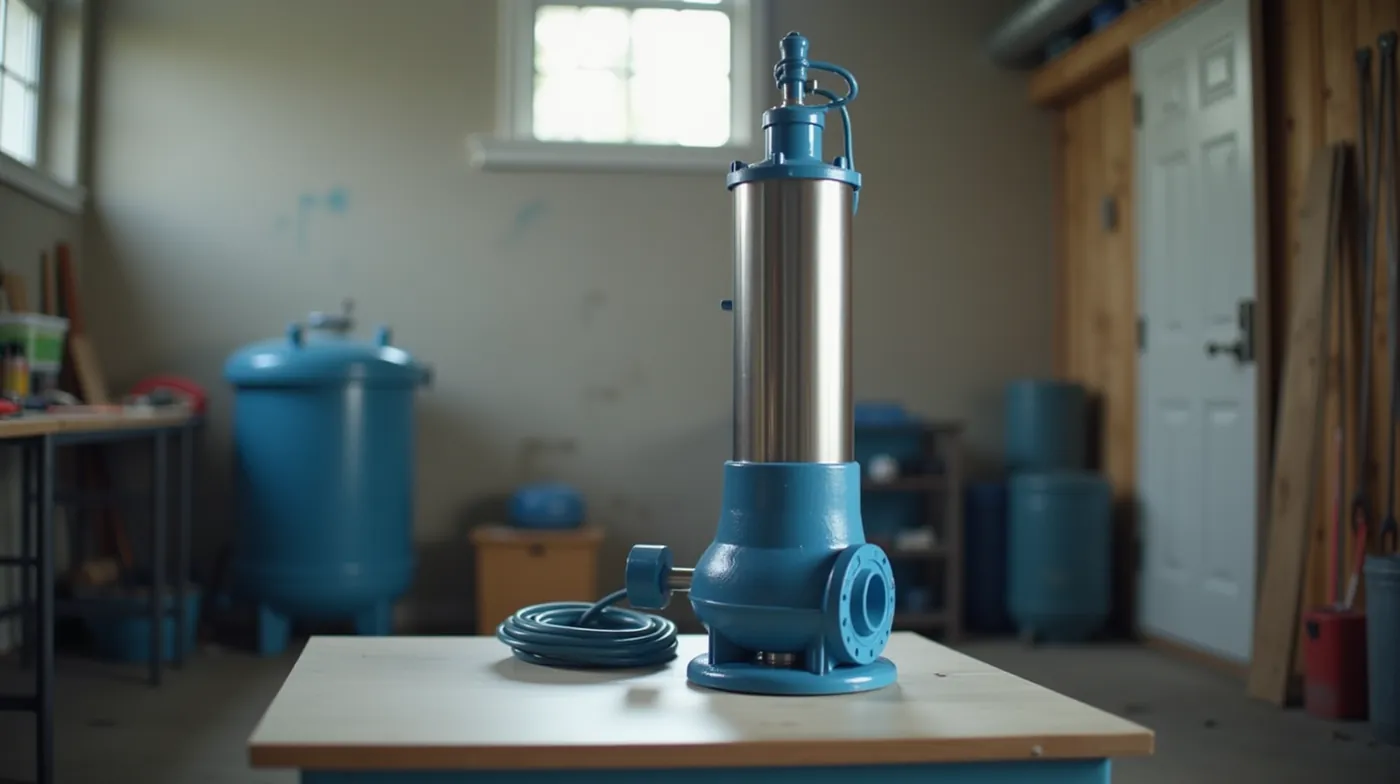
What Does It Cost to Replace a Well Pump in 2026?
The headline number: a typical residential well pump replacement in 2026 runs $1,200 to $2,500 all-in for a standard 1 HP submersible with a working pitless adapter. That range covers the pump itself, standard labor, and the small components (pressure switch, check valve) that most installers replace on the same trip. Everything outside that band — deep wells, variable-speed pumps, 240-volt electrical work, failed pitless adapters — is what makes one quote $900 and another $4,000 for what looks like the same job.
From the hundreds of replacement quotes I have reviewed in the field, the single biggest price driver is well depth, followed by pump type (submersible vs jet) and electrical readiness. A shallow jet pump system is a one-person afternoon job; a 300-foot submersible in a house with no 240-volt service is a two-trade, half-week job. Here is the 2026 cost table I use when I walk a homeowner through the budget:
| System Type | Parts Only | Parts + Pro Labor | Typical 2026 Total |
|---|---|---|---|
| Shallow-well jet pump (water < 25 ft) | $250–$800 | $600–$1,600 | $700–$1,600 |
| Submersible, 1/2–1 HP (wells to ~150 ft) | $400–$1,100 | $1,100–$2,500 | $1,200–$2,500 |
| Submersible, 1.5–2 HP (wells 150–300 ft) | $900–$2,500 | $1,800–$4,500 | $2,000–$4,500 |
| Variable-speed / smart pump system | $1,800–$4,000 | $3,200–$6,500 | $3,500–$6,500 |
Based on 2026 manufacturer list prices (Welltec, Grundfos, Pedrollo) and typical regional contractor rates. Labor rates vary by region — mountain and northern climates run 20–40% higher than national averages.
The number to budget
Most homeowners with a standard 1 HP submersible, a healthy pitless adapter, and an existing 240-volt circuit should budget $1,200–$2,500. If a quote lands above $3,000 for a well under 200 feet, ask for a line-item breakdown — something is being replaced that does not need replacing, or the well is drawing deeper than the owner believes.
Submersible Pump Prices by Horsepower (2026)
The pump itself is only part of the well pump replacement cost — usually 30–45% of the total for a pro-installed submersible — but it is the part you control. In 2026, a quality residential submersible pump costs between $300 for a 1/2 HP unit and $2,500 for a 2 HP unit, with the 3/4 HP and 1 HP classes covering the vast majority of US homes.
Here is how 2026 pricing lines up by horsepower, based on manufacturer spec sheets and the models I see on inspection benches most often:
| Horsepower | 2026 Price Range | Practical Well Depth | Best Fit |
|---|---|---|---|
| 1/3 HP | $250–$450 | Under 100 ft, high water table | Cabins, single users |
| 1/2 HP | $300–$550 | Under 125 ft | 1-bath homes, light demand |
| 3/4 HP | $400–$800 | Up to ~175 ft | Most 2-bath homes |
| 1 HP | $500–$1,100 | Up to ~225 ft | The most common residential size |
| 1.5 HP | $900–$1,800 | Up to ~300 ft | Larger homes, deeper wells |
| 2 HP | $1,200–$2,500 | 300 ft and deeper | High-demand households, irrigation |
Prices are for 240-volt cast-iron or stainless submersibles in 2026. 115-volt units cost roughly 10–15% more per horsepower class and are limited to the lower power tiers.
If you are buying the pump yourself before the installer arrives, these are the models that appear most often in my replacement recommendations. The Welltec 3/4 HP 115V submersible pump is the workhorse of shallow-to-mid depth wells under 175 feet, and the Welltec 1 HP 240V pump handles the majority of standard residential wells. For deeper draws where head maintenance matters, the Grundfos SQE 3-45 holds flow better at the end of its curve than most budget units, and the Pedrollo PKm 3-42 is the value pick that still carries a real 5-year warranty. Before you order, confirm the pump’s curve delivers your required GPM at your calculated total dynamic head — the wrong curve is the most expensive way to save $100 on a pump.
Jet Pump vs Submersible Replacement: What Changes the Price
The biggest fork in the road for well pump replacement cost is whether your system uses a shallow-well jet pump (water table under 25 feet) or a submersible pump (everything deeper). The two are priced on completely different curves, and a quote that assumes one type of job when you have the other can be off by $1,500.
| Factor | Shallow Jet Pump | Submersible Pump |
|---|---|---|
| Typical pump price (2026) | $250–$800 | $300–$2,500 |
| Labor complexity | Low — above-ground swap | Moderate to high — retrieval from well |
| Typical pro labor time | 1–3 hours | 3–8 hours |
| Extra parts likely needed | Foot valve, suction pipe, priming | Cable, pitless adapter, check valve |
| Most common 2026 all-in cost | $700–$1,600 | $1,200–$4,500 |
Jet pump systems are the DIY-friendlier of the two because everything happens above ground. A failed Rule 2550-style jet pump is a straightforward bolt-and-prime job for an experienced homeowner, and even pro labor for the class runs $300–$800. Submersible replacements, by contrast, involve pulling the old pump from the well with a retrieval tool, measuring cable length, and in many cases replacing the pitless adapter at the same time — which is why submersible quotes cluster higher. If you are not sure which type you have, check the well head: a submersible system has a single pipe entering the casing with a small valve on top, while a jet pump system has a pump unit sitting in the basement or pump house. Our submersible vs jet pump guide covers the full decision for both buying new and replacing old.
7 Hidden Costs Most Well Pump Quotes Miss
When a well pump replacement quote suddenly climbs from $1,500 to $2,800, it is almost never the pump. In my inspections, these are the line items that appear mid-job on 80% of the expensive quotes I see:
- Pitless adapter replacement ($150–$600). The pitless adapter seals the pipe where it enters the well casing, and decades of freezing, corrosion, and vibration weaken it. Many installers replace it on every submersible swap as a precaution — it is the right call, but it is a $150–$600 item that rarely appears in a first quote. See our pitless well adapter guide for sizing and replacement costs.
- Submersible pump cable ($300–$800). Cable is sold by the foot at roughly $1.50–$3.00 per foot for 115/240-volt well cable. A 200-foot well needs 200 feet of cable, which alone is a $400–$600 line. Inspectors should check the old cable for cracked insulation — if you are spending the labor to pull the pump, new cable is cheap insurance. You can buy submersible well pump cable by the foot and cut it to your measured depth.
- Electrical work ($300–$1,500). If your new pump is 240-volt and the house has no 240-volt circuit in the basement, you are adding an electrician visit: $300–$800 for a simple breaker and wiring run, $500–$1,500 if the panel needs an upgrade. This is the most common source of “why is my quote so different?” calls I get.
- Pressure switch and tank pre-charge ($100–$350). A new pump on a tired 30–50 PSI pressure switch or a pressure tank with no air cushion will short-cycle from day one. Most good installers replace the switch on any pump swap; a tank that needs re-charging is a $50–$100 fix, a tank with a rotten bladder is a $250–$450 one.
- Check valve or foot valve ($40–$150). Failing check valves let the prime (and the pressure tank’s air) bleed back into the well between cycles. Replacing one at pump-swap time is the cheapest water hammer and short-cycling fix you will ever buy.
- Well flushing and old pump disposal ($100–$300). Pulling a pump that has been down 15 years often kicks up sediment, and most installers bill a flushing hour. Disposal of the old unit, including any hazardous labeling, is commonly a $50–$100 flat fee.
- Standby pump (optional, $500–$1,500). Not required, but for homes with no other water source, a small standby pump with a changeover valve is the only true backup against another pump death. It is the one “hidden cost” I actually recommend asking about.
How to get an honest quote
Ask every installer for a line-item quote that separates pump, cable, pitless adapter, electrical, and disposal. A single lump-sum number hides where the money is going — and makes it easy to pad. Two quotes for the same well should be within 15% of each other; if they are not, ask both installers to show you the well log or depth measurement that justifies the difference.
DIY vs Professional Installation: The Honest Breakdown
Here is the math I give homeowners: professional labor for a standard submersible swap runs $600–$1,500 depending on region and access. If you have done mechanical work before, own a pipe wrench, a 240-volt service is already in place, and the well has a pitless adapter (not a pit adapter you can reach), a DIY replacement saves the labor line and is a weekend project — but not for a first-timer on a 300-foot well.
For a DIY submersible replacement, the sequence that keeps the job under control is:
- Record everything first. Measure cable length to the pump, photograph the pressure switch settings, and write down the old pump’s model, HP, and voltage. This is your sizing spec for the replacement.
- Buy the right pump before cutting power. Match HP to the old unit (or upsize per our well pump sizing guide if the old one was undersized), and confirm 240V if the house circuit is 240V.
- Kill power at the breaker and tag it. Submersible cables carry 240 volts in a wet environment. No exceptions.
- Assemble a retrieval loop (two rope loops through the pump’s lifting lugs, or a dedicated pump puller) and pull the old pump straight up. Keep the cable in the pipe — it is your depth gauge.
- Measure and cut the new cable so the pump hangs 12–18 inches above the well bottom, and tie a support loop at the casing.
- Prime and seal. On a jet pump, prime the volute and foot valve; on a submersible, fill the pump body and check the check valve before lowering.
- Lower the new pump slowly until the support loop takes the load, then connect the pipe with Teflon (no thread sealant on the pump threads — it clogs the intake).
- Pressure-test and cycle-test for 30 minutes: verify cut-in/cut-out (30/50 or 40/60 PSI), watch the amperage against the pump’s nameplate, and confirm the tank’s pre-charge is set 2 PSI below cut-in.
Where DIY stops being sensible: if the pitless adapter is leaking (you need a specialized tool and a clean casing), if the well is over 250 feet deep (retrieval gets genuinely dangerous), if any electrical work is needed (licensed work in most states), or if the old pump was stuck in the casing. In those cases the $600–$1,500 labor line is buying you a working system and a dry basement. The EPA’s private well pump guidance is a good baseline for what is and is not safe to do without a contractor.
When Repair Is Cheaper Than Replacement
Before you budget a full well pump replacement, run the repair math. A submersible motor rewinding runs $300–$600 if the windings failed but the shaft and seal are sound; a pressure switch is $60–$150; a failed check valve is $40–$150. The rule I use on every inspection: if the repair costs more than 50% of a new pump, replace it.
Three factors decide the answer:
- Age and runtime. Residential submersibles are built for 20,000–30,000 hours — roughly 10–15 years of typical household use. A pump failing at year 3 that still has 15 years of life left is a repair candidate; a pump failing at year 12 is not.
- Failure mode. Intermittent problems (noise, occasional failure to start, tripping under load) usually signal windings or the capacitor — repairable. A burnt smell, leaking motor housing, or a seized shaft means the core is done.
- What else is on the pump. If the seal, shaft, and impeller are all worn, the “cheap” rewind is really a rebuild that approaches new-pump price. Ask the repair shop for an all-in number before committing.
One more angle: a repair buys you 2–4 years at best, while a new pump with a 5-year warranty resets the clock. For a home you plan to live in, the new-pump route almost always wins on total cost over the next five years — which is why most of the repair quotes I see in the field end as replacement orders by the next day.
How to Make Your New Pump Last 15+ Years
The most expensive well pump replacement is the one you repeat every six years. Pumps that hit 15+ years share the same maintenance habits, and every one of them is cheap compared to another retrieval job:
- Size it right the first time. An undersized pump runs constantly and dies young; an oversized one short-cycles and burns out. Run the numbers in our how to size a well pump guide before ordering.
- Check the pressure tank pre-charge every spring. A dead bladder makes the pump cycle every minute, which is how healthy motors die early. Re-charge the tank with a $15 air gauge — our Hydra-Cell pressure tank guide covers the full procedure.
- Protect against dry running. A pump running dry for minutes destroys its thermal protection and bearings. Low water level, a stuck check valve, or a sand-clogged intake are the usual causes — see our well pump runs dry guide for the protection options.
- Watch for short cycling. More than 6–8 starts per hour means something in the system is leaking air or water, and every extra start is a small tax on the motor.
- Test your water annually. Corrosive water (low pH, high iron, high chloride) eats pump seals and motor housings from the inside. A basic lab panel is $50–$150 and tells you if you need a neutralizer or a more corrosion-resistant pump next time.
- Keep the panel dry and ventilated. Half of the “mystery” pump failures I pull from the ground trace back to a basement that flooded once, corroded the pressure switch connections, and never fully dried out.
See Also
Keep reading on well pumps and replacement costs:
→ How to size a well pump — the four measurements that determine which HP class you actually need
→ How to install a submersible well pump — the full step-by-step for replacement and new installations
→ Pitless well adapter sizing and replacement — the hidden cost line that surprises most homeowners
Frequently Asked Questions
How much does it cost to replace a submersible well pump?
For a standard 1 HP submersible in a well under 200 feet, expect $1,200–$2,500 all-in in 2026: $500–$1,100 for the pump, $600–$1,500 for pro labor, and $100–$400 for typical extras like the pressure switch and cable check. Deeper wells (1.5–2 HP pumps) and variable-speed systems run $2,000–$4,500 or more.
How often should I replace a well pump?
Residential submersible pumps are rated for 20,000–30,000 hours of runtime, which works out to roughly 10–15 years for a typical household. Pumps in low-yield wells that run constantly, or pumps in corrosive water, often fail at 6–10 years. If yours is past 15 years and still running, keep it — but budget for the replacement and keep the well log handy.
Can I replace a well pump myself?
Yes, if the well has an accessible pitless adapter, the 240-volt circuit already exists, and you are comfortable with mechanical work — a DIY submersible swap saves $600–$1,500 in labor. Do not DIY if the pitless adapter is leaking, the well is over 250 feet deep, or any electrical work is involved. Jet pump replacements are the simplest case and are a reasonable first DIY project for an experienced homeowner.
Is it cheaper to repair or replace a well pump?
Use the 50% rule: if the repair costs more than half the price of a comparable new pump, replace. A $300–$600 motor rewind on a 3-year-old pump is a win; the same rewind on a 14-year-old pump is usually the last expense you should put into it. Age, failure mode, and what else is worn decide the answer.
Why do well pump replacement quotes vary so much?
Because quotes price what the installer assumes about your well — depth, pitless adapter condition, electrical readiness, and yield. A $900 quote and a $2,800 quote for the same pump often differ by a failed pitless adapter, a missing 240-volt circuit, and 100 extra feet of cable. Always ask for a line-item breakdown and a depth measurement so you are comparing the same job.
Last updated: October 16, 2026. Pricing reflects 2026 manufacturer list prices and typical regional contractor rates — actual well pump replacement cost varies with well depth, regional labor markets, and the condition of your existing system. Confirm depth and electrical setup before ordering.
#WellPumpReplacement #WellPumpCost #SubmersiblePump #WellWater #WellMaintenance #HomeownerGuide #PumpReplacement #JetPump #WellDrilling #PressureTank #PumpRepair #WellInspection #WaterWell #WellSystems2026 #WellPump2026