
Drilling a private water well is one of the largest single investments a homeowner makes, yet most people have no firm idea of the price until a rig shows up at the driveway. The short answer for 2026: most residential wells cost between $1,500 and $15,000 to drill, with the national average landing around $5,000 to $8,000 once you factor in casing, well development, and a basic pump setup. The real number depends on how deep the water table sits, what formation the drill has to punch through, and where your property is located.
In this guide we break down exactly how much it costs to drill a well in 2026, what drives the price up or down, what a professional quote should include, and the equipment you will need to budget for after the rig leaves. We pull from real drilling contracts, state cost surveys, and manufacturer pricing so you can walk into a bid conversation with confidence.
By Robert Harrison, Certified Well Inspector
Robert has more than 20 years of experience inspecting and testing residential water wells across the western United States, reviewing hundreds of drilling contracts and cost estimates along the way.
Disclosure: As an Amazon Associate, we earn from qualifying purchases on this page. Product selections are based on independent research and real well water data.
In This Guide
- What Most Wells Cost in 2026 (The Short Answer)
- What Drives Well Drilling Cost
- Well Drilling Cost by Depth
- Well Drilling Cost by Rock Type
- Drilling Cost by Region
- What a Drilling Quote Should Include
- The Equipment You Will Buy After Drilling
- How to Get an Accurate Drilling Quote
- How to Keep Your Drilling Cost Down
- Signs You Need a New Well Instead of a Repair
- Frequently Asked Questions
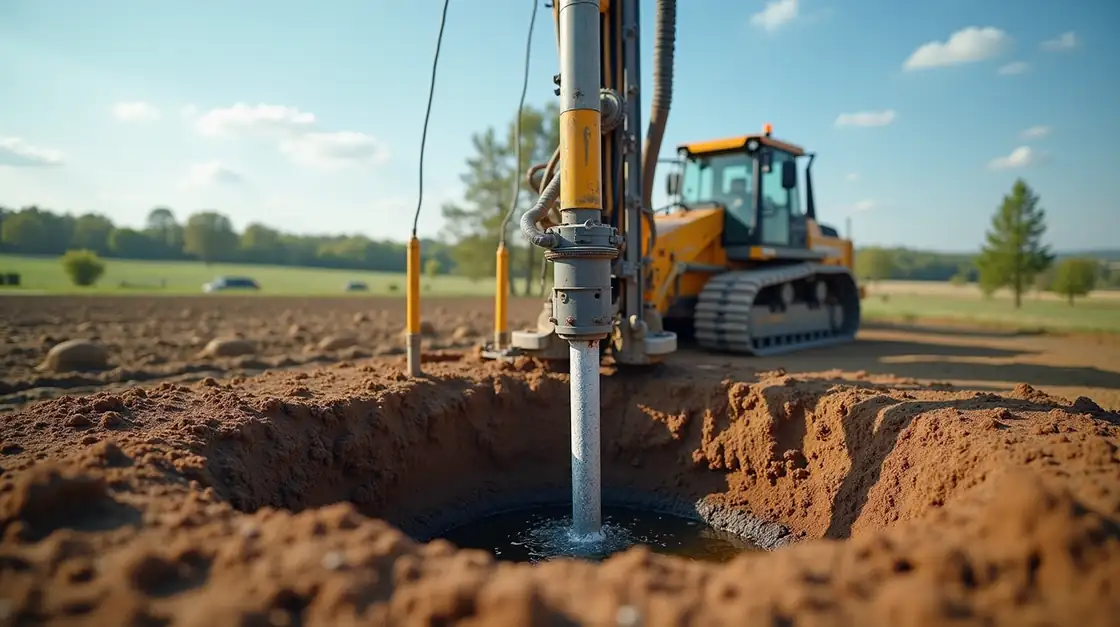
What Most Wells Cost in 2026 (The Short Answer)
If you want a single number to plan around, use $5,000 to $8,000 as your working budget for a typical residential well in 2026. That range assumes a moderate depth of 150 to 300 feet in mixed or soft-to-medium rock, with standard steel or PVC casing, a basic submersible pump, and a pressure tank included. Cheaper wells exist in shallow, easy-drilling ground; far more expensive wells are routine in deep, hard-rock terrain.
The 2026 baseline
Most homeowners should plan for $1,500 to $15,000 total. The midpoint is around $5,000 to $8,000. If your quote is far outside that band, ask the driller to itemize why.
| Scenario | Typical Depth | 2026 Cost Range |
|---|---|---|
| Shallow well in soft soil or gravel | 50 to 100 ft | $1,500 to $4,000 |
| Average residential well in mixed ground | 100 to 300 ft | $3,500 to $8,000 |
| Deep well in hard rock | 300 to 500 ft | $6,000 to $12,000 |
| Very deep or difficult formation | 500 ft or more | $10,000 to $15,000+ |
Ranges reflect 2026 drilling contracts and state cost surveys. Your local geology, access, and equipment scope will shift your number within these bands.
What Drives Well Drilling Cost
Two homes a quarter mile apart can end up with wildly different drilling bills. The price is not driven by one factor but by a handful of variables that compound together. Understanding each one helps you spot a fair quote and catch a lowball bid that will balloon later.
- Depth to a reliable water source. This is the single biggest cost driver. Drilling is priced largely per foot, so a well that hits a good aquifer at 150 feet costs roughly half as much as one that needs 400 feet of boring to produce the same yield.
- Geology and rock hardness. Punching through sand and gravel is fast and cheap. Drilling solid granite or basalt is slow, wears down the tooling, and can double or triple the per-foot rate.
- Casing and well construction. The steel or PVC pipe that lines the borehole, plus the well screen that lets water in while keeping sand out, are material costs that scale with depth and diameter.
- Well development and flushing. After the borehole is drilled, it must be developed (agitated and flushed) so the water runs clear. More development means more labor and water.
- Location and site access. Remote properties, steep or wet terrain, and limited rig access all add mobilization and equipment costs.
- Permits, testing, and water rights. Some states and counties charge permit fees, require bacterial testing, or regulate water rights, and those costs land on you.
Watch for the lowball quote
A bid that is far cheaper than the others usually assumes a shallow depth in soft ground. If the actual borehole goes deeper or hits rock, the driller charges overage per foot. Always ask for the per-foot overage rate in writing before the rig arrives.
Well Drilling Cost by Depth
Because drilling is priced per foot, depth is the easiest variable to estimate. The table below shows typical all-in drilling costs by depth, split between soft formations and hard rock. Use your area’s geology to pick the right column.
| Well Depth | Soft Formation | Hard Rock |
|---|---|---|
| 100 ft | $1,500 to $2,500 | $2,000 to $3,500 |
| 200 ft | $2,500 to $4,000 | $3,500 to $6,000 |
| 300 ft | $4,000 to $6,000 | $5,000 to $9,000 |
| 400 ft | $5,500 to $8,000 | $7,000 to $12,000 |
| 500 ft | $7,000 to $10,000 | $9,000 to $15,000+ |
As a quick rule of thumb, expect to pay roughly $15 to $50 per foot in soft ground and $30 to $80 per foot in hard rock for the drilling and casing work alone.
Well Drilling Cost by Rock Type
The formation the drill bit meets determines how fast the crew works and how quickly the tooling wears. Softer materials are inexpensive and fast; dense, abrasive rock is the opposite. Here is how the common formation types compare on a per-foot basis.
| Formation Type | Cost per Foot | Notes |
|---|---|---|
| Sand, gravel, topsoil | $10 to $20 | Fast, low-cost drilling |
| Soft rock (sandstone, shale) | $20 to $40 | Moderate pace |
| Hard rock (granite, basalt, limestone) | $40 to $80 | Slow, abrasive, pricier |
| Fractured or bouldery ground | $50 to $100+ | Premium, unpredictable |
If you are buying land that already has a well, the previous owner’s boring log (if one exists) or a neighboring well’s depth can tell you what formation to expect. If you are drilling from scratch, a hydrogeological survey or a look at nearby wells in your county’s records is worth the small fee it costs.
Drilling Cost by Region
Geology varies dramatically by region, so the same 250-foot well can cost very different amounts depending on where you live. The ranges below reflect typical 2026 all-in drilling costs by broad region, including the rock types each area is known for.
| Region | Typical Total | Why |
|---|---|---|
| Midwest | $3,500 to $8,000 | Glacial deposits, moderate depths |
| Southeast | $4,000 to $9,000 | Sand and clay, variable limestone |
| Northeast | $5,000 to $12,000 | Hard bedrock, deeper water tables |
| West (mountain / rock) | $6,000 to $15,000 | Dense rock, deep aquifers |
| Southwest (arid) | $5,000 to $12,000 | Deep water tables, water rights |
These are planning ranges. Within any region, your exact site’s geology and access can move the number up or down by several thousand dollars.
What a Drilling Quote Should Include
A complete drilling quote is itemized, not a single lump number. Before you sign, confirm the bid covers each of the line items below. If any are missing, they will show up as surprise charges on the final invoice.
- Drilling labor and rig time. The core cost of boring the hole to the target depth.
- Casing and well screen. The pipe that lines the borehole and the screen that filters water in. Ask for the material (steel or PVC) and diameter.
- Well development. Air-lifting or pumping the well until the water runs clear of drilling mud and fines.
- Sanitary cap and vault. The sealed top of the well that keeps contaminants out. This is a code requirement in most areas.
- Basic water testing. At minimum a bacterial (coliform) test. Many homeowners add a full panel.
- Permit coordination. Filing and fees for the local drilling permit, where required.
What is usually NOT in the drilling quote
The submersible pump, pressure tank, electrical wiring, any water treatment (softener, filter, UV), and interior plumbing are typically separate line items or handled by a different contractor. Budget for those on top of the drilling cost, as covered in the next section.
Ask the driller for the per-foot overage rate, the expected depth based on local data, and whether the price is a firm quote or an estimate. A firm, itemized quote protects you from the most common source of drilling-cost overrun: the borehole going deeper than expected.
The Equipment You Will Buy After Drilling
Drilling gets the water to the surface, but it does not put it in your house. The moment the rig leaves, you need a set of components to move, store, pressurize, and clean the water. Budgeting for this equipment up front is what separates a smooth project from a second wave of surprise invoices. Most homeowners spend another $1,500 to $6,000 on equipment and basic treatment after the well is drilled.
Before you buy anything, size the pump to your well’s actual depth and flow rate. Our step-by-step walkthrough on how to size a submersible well pump walks through the math so you do not end up with an undersized or oversized unit. And before you drink a single glass, verify the water is safe with a proper well water test kit.
| Equipment | Why You Need It | 2026 Price |
|---|---|---|
| Submersible well pump | Moves water from depth to your home | $600 to $2,500 |
| Well pressure tank | Stabilizes pressure and stops short cycling | $150 to $600 |
| Well water test kit | Confirms the water is safe to drink | $30 to $150 |
| Water softener | Removes hardness if your test shows high levels | $500 to $2,500 |
| UV water sterilizer | Neutralizes bacteria if tests are borderline | $400 to $1,500 |
| Well pressure gauge | Lets you monitor system pressure at a glance | $15 to $40 |
Prices reflect 2026 retail ranges for mid-tier units. Premium or high-capacity models run higher; the exact choice depends on your household size and your well’s measured yield.
If your test panel reveals a problem, treatment adds to the bill. Hardness calls for a softener, iron or manganese calls for a dedicated filtration system, and any sign of bacteria calls for disinfection and often a UV unit. To see what those systems cost once you know your water chemistry, our breakdown of well water treatment cost covers the full range by contaminant. And when the time comes to set the pump, our guide to installing a submersible well pump walks through the steps safely.
How to Get an Accurate Drilling Quote
The difference between a fair quote and a painful surprise usually comes down to how much information you hand the driller before they price the job. Follow these steps to get a number you can actually plan around.
- Research your area’s water table. Check your county’s geological survey, the state water department’s well records, or the depth of a neighbor’s well. Knowing your target depth is the single best way to get a firm quote.
- Identify the local geology. Find out whether your area is mostly soil, sandstone, or hard bedrock. This sets the per-foot rate before the bid even starts.
- Get at least three itemized bids. Ask each driller to break out drilling, casing, development, the sanitary cap, and any testing separately, and to state the per-foot overage rate in writing.
- Ask about depth guarantees. Some drillers offer a money-back or reduced-rate guarantee if the well does not produce a minimum flow at the quoted depth. Confirm the terms before signing.
- Confirm licensing and insurance. Verify the driller holds the required state or county well-drilling license and carries liability and workers’ compensation coverage.
- Put the overage terms in the contract. The contract should name the target depth, the per-foot rate beyond it, the casing material and size, and what happens if the well must be deepened or abandoned.
Pro tip
Before drilling, measure or estimate your total well depth and your home’s elevation above the pump. Our guide on measuring well depth covers how to get an accurate static and dynamic level reading, which is exactly the data a good driller wants to see.
How to Keep Your Drilling Cost Down
You cannot always control the geology, but you can control several of the factors that inflate a drilling bill. These are the levers that actually move the number.
- Drill in the shoulder season. Spring and fall are less busy for rig crews than midsummer, which can mean faster scheduling and occasional off-peak pricing.
- Provide easy site access. Clearing the pad, keeping the ground firm and dry, and having a spot for the rig to back in all reduce labor and equipment time.
- Share data with the driller. Handing over your target depth, geology, and a neighbor’s well depth helps the driller plan efficiently and quote a firm price instead of a padded estimate.
- Choose the right casing. Matching the casing material and diameter to your actual needs (rather than maximum spec) saves on materials without sacrificing safety.
- Bundle the equipment work. Having the same crew or a coordinated team handle the pump, pressure tank, and basic wiring can save on separate mobilization fees.
- Compare on scope, not just price. The cheapest bid that excludes development, casing quality, or a depth guarantee often ends up costing more in the end.
Signs You Need a New Well Instead of a Repair
Not every water problem means you need a brand-new well. But if you are weighing a new borehole against fixing an old one, these signs point toward replacement. A new well is a major cost, so get the diagnosis right first.
- The well no longer produces enough water. If the yield has dropped well below what your household needs even after maintenance, the aquifer may be depleted or the well may be silted in.
- Chronic contamination. Repeated bacterial or chemical test failures that no treatment can fix can make a new, better-constructed well the safer option.
- The casing is failing. A cracked or corroded casing that lets surface water in is a structural problem that a repair cannot fully solve.
- Repeated, expensive pump failures. If the well’s depth or condition forces constant pump replacement, the math may favor a new borehole. Compare against our well pump replacement cost guide to see where the line is.
- A drawdown test shows a collapsed yield. A formal well drawdown test can confirm whether the aquifer itself can no longer support your demand.
When in doubt, run the diagnostic tests before committing to a new drill. It is far cheaper to confirm the problem than to drill a redundant hole.
See Also
Frequently Asked Questions
What is the average cost to drill a well in 2026?
Most residential wells cost between $1,500 and $15,000 to drill in 2026, with the national average around $5,000 to $8,000 for a moderate depth in mixed or soft-to-medium rock. Deep, hard-rock wells push toward the top of that range and beyond.
How deep should my well be?
Depth depends on where your local water table sits and how much water you need. Many residential wells are drilled between 100 and 300 feet, but the target is set by your aquifer, not a fixed number. Check your county’s well records or a neighbor’s depth to estimate your likely target before hiring a driller.
Why is well drilling so expensive in some areas?
Hard, abrasive rock like granite or basalt drills slowly and wears down tooling, which raises the per-foot rate. Remote or hard-to-access sites add mobilization cost, and deep water tables in arid regions mean more feet of boring. Geology and access are the two biggest regional price drivers.
Does drilling a well require a permit?
In most states and counties, yes. A drilling permit is a code requirement, and some areas also mandate bacterial testing and a sanitary cap. Your driller usually handles the filing, but confirm the permit and its fees are included in the quote before work begins.
How much should I budget for equipment after drilling?
Plan for roughly $1,500 to $6,000 on top of the drilling cost. That covers a submersible pump, pressure tank, a water test kit, and basic treatment such as a softener or UV unit if your water test calls for it. The exact total depends on your household size, well depth, and water chemistry.
How do I know if a drilling quote is fair?
Compare at least three itemized bids, confirm each lists the target depth, per-foot overage rate, casing material, development, and testing, and check that the driller is licensed and insured. A fair quote is transparent about what happens if the well goes deeper than expected.
#WaterWell #WellDrilling #WellCost #PrivateWell #WellWater #DrillingCost #WellPump #WellMaintenance #WaterWellOwner #WellConstruction #HomeWell #WellDepth #DrillingGuide #WellEquipment #WaterSafety