
Turn on the tap and a yellow film floats in the glass. Run the bath and the tub rim is stained rust-red. That is iron in well water — and it is the most common water quality complaint I get from well owners across the western US. In two decades of installing and servicing well pump systems for homeowners, I have pulled corroded foot valves, cleaned iron-coated pressure tanks, and watched fixtures go from rust-colored to crystal clear after a single iron filter install. Here is what makes iron different from every other well water problem: it is almost never a health emergency, it announces itself loudly, and it is one of the easiest contaminants to remove permanently — once you know which form it is in. In this 2026 guide I walk through the difference between the two forms of iron, what the EPA says about safe levels, a 10-minute at-home test, and the seven removal methods compared side by side with real 2026 pricing, so you can pick the right fix for your well instead of the most expensive one.
Disclosure: As an Amazon Associate, we earn from qualifying purchases on this page. Product selections are based on independent research and real well water data.
By Thomas Reynolds, Pump Systems Engineer
Thomas has installed and serviced over 1,000 well pump systems for homeowners, and has spent 15 years troubleshooting iron-stained fixtures, corroded suction lines, and clogged foot valves.
Published: November 16, 2026
What this guide covers
- What Iron in Well Water Actually Is
- Safe Levels: What the EPA Says About Iron in Well Water
- 5 Signs Your Well Water Has Iron
- How to Test for Iron in Well Water
- Why Iron Appears in Well Water
- How to Remove Iron From Well Water: 7 Methods Compared
- Best Iron Removal Products for Well Water in 2026
- Iron vs. Manganese: Why They Travel Together
- Keeping Iron Out: Maintenance Schedule
- When to Call a Professional
- FAQ: Iron in Well Water
- Conclusion
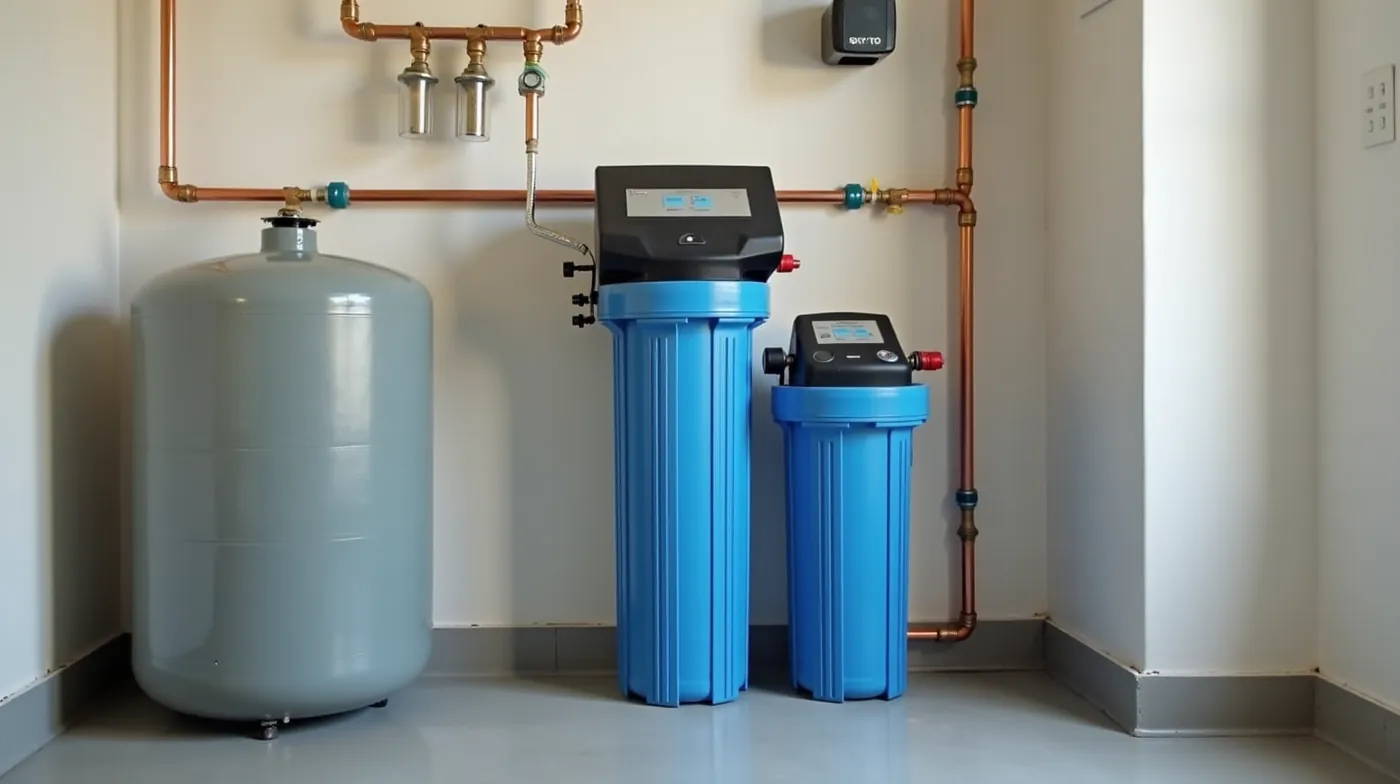
What Iron in Well Water Actually Is
Iron is a natural mineral in bedrock and soil, and groundwater picks it up as it moves through an aquifer. Every well on an iron-bearing aquifer has some iron — the question is how much, and in which chemical form. This distinction matters more than almost any other in well water treatment, because dissolved and rusted iron are two different problems with different fixes.
When I open a pressure tank or pull a foot valve, the iron always falls into one of three buckets. The first is ferrous iron (Fe²⁺, the dissolved form). This is the sneaky one: the water looks perfectly clear in the glass, but leave it standing for 30 minutes and it turns yellow or amber as oxygen oxidizes it. If your water looks clear at the tap but leaves orange stains on the sink rim overnight, that is ferrous iron. The second is ferric iron (Fe³⁺, the rusted or particulate form). This shows up yellow, orange, or red the second it leaves the tap, often with visible flakes. The third is not iron at all but shows up with it: manganese, which produces black or dark-brown stains and often rides in the same groundwater.
| Form | Chemical state | What you see | Stain pattern |
|---|---|---|---|
| Ferrous iron (dissolved) | Fe²⁺, clear in water | Clear at tap, yellow/amber after standing | Orange rings on faucets, slow stains on dry surfaces |
| Ferric iron (particulate) | Fe³⁺, already oxidized | Yellow, orange, or red immediately; flakes possible | Instant rust staining, discolored laundry |
| Manganese (usually with iron) | Mn²⁺ / Mn⁴⁺ | Water may look clear or tea-colored | Black or dark-brown specks, stubborn film |
The dissolved-vs-rusted distinction is the single most important diagnosis in iron treatment — it decides whether you can use a simple filter or need an oxidation step first.
Pro tip: run the glass test before buying anything
A $20 glass of tap water left for 30 minutes tells you more than any spec sheet. Clear that turns yellow = dissolved iron, which needs oxidation (air, chlorine, or permanganate) before it can be filtered. Yellow from the first second = rusted iron, which a straight media filter can catch. Skipping this step is how homeowners end up with a filter that was never going to work on their water.
Safe Levels: What the EPA Says About Iron in Well Water
Unlike lead or bacteria, iron is not a toxin at the levels a residential well produces, so the EPA regulates it under secondary maximum contaminant levels — advisory limits based on appearance, taste, and odor rather than acute health risk. The number you need to know is 0.30 mg/L (300 ppb), the EPA secondary standard for iron in drinking water. The parallel number for manganese is 0.05 mg/L (50 ppb), which is why manganese complaints get treated more strictly even at lower concentrations.
In practice, here is how the bands play out based on hundreds of test results I have seen over the years:
- Under 0.30 mg/L: At or below the EPA secondary standard. You may still see occasional staining if the water is aggressive (low pH), but no treatment is usually required. Re-test annually.
- 0.30–1.00 mg/L: The “annoyance band.” Stains become visible in tubs, sinks, and toilets; laundry can pick up a yellow cast. This is where most iron filter installs happen.
- 1.00–3.00 mg/L: Heavy staining, metallic taste, and clogged fixtures and irrigation emitters. Dissolved iron at these levels also feeds iron bacteria, which turn the problem from a mineral into a biological slime.
- Above 3.00 mg/L: Severe. Expect to taste and smell the water, and count on your pump, foot valve, and tank accumulating iron scale. Aggressive treatment — usually oxidation plus multi-media filtration — is required.
Drinking water in the 0.3–1 mg/L range is not a health emergency for most adults, but there are two real caveats. First, very high iron promotes iron-oxidizing bacteria in the well and in your plumbing, and that slime layer harbors other bacteria — a separate problem we cover in our iron bacteria guide. Second, people with hemochromatosis or a condition that impairs iron handling should keep intake iron low and get their well tested by a lab rather than by strips.
5 Signs Your Well Water Has Iron
Iron is the easiest well water problem to self-diagnose because it is impossible to miss. After the first year of service calls, I stopped guessing and started asking five questions. Ask yourself the same:
- Yellow, orange, or red water — especially if it is clear for a few seconds and then clouds over. If the color is steady from the first second, that points to rusted iron or pipe corrosion. See our yellow well water guide for the full color diagnosis.
- Rust-colored stains on wet surfaces — the sink rim, toilet bowl, and bathtub corners are where iron deposits show first. If the stains wash off with vinegar, they are mineral deposits. If they smear and come back within days, the iron load is active.
- Black or dark-brown spots — that is manganese, not iron, and it usually means iron is present too. Black stains in the toilet bowl are the most common version; see our black well water guide for what else can cause them.
- A metallic taste — described by well owners as “penny water” or “tasting like blood.” Taste is subjective, but if your guests notice the tap water tastes different from store-bought, iron above roughly 1 mg/L is a strong suspect.
- Clogged fixtures and pump trouble — irrigation emitters that stop working, a slow foot valve, or a pressure tank that needs draining more often. Iron sludge collects in the low points of a well system, and the pump works harder as it accumulates.
How to Test for Iron in Well Water
Do not buy treatment equipment on the color of a glass alone — get a number. Here is the exact sequence I run on a well, from cheapest to most precise:
- Do the 30-minute glass test. Fill a clear glass from the cold tap, let it sit on the counter for 30 minutes. Clear-then-yellow means dissolved iron; immediate color means particulate iron or corrosion.
- Run a white cloth test. Soak a white cotton rag in the tap water for an hour, then hang it to dry. Iron leaves an orange-tan film; manganese leaves black specks. This catches dissolved iron that the glass test can miss.
- Use test strips for a ballpark. A well water iron test strip kit reads in 0.1–1.0 mg/L increments. Strips are good for confirming presence and for re-checking after a filter install, but they are not precise at low levels.
- Run a full well water test kit. A well water test kit in the $40–$100 range covers iron, manganese, hardness, pH, and bacteria, which matters because iron decisions are never made in isolation — your pH and hardness change which filter will work.
- Send a sample to a lab. For anything above 1 mg/L, or if you plan to file a well complaint or insurance claim, a certified lab panel is the gold standard. See our well water testing cost guide for current lab pricing by state.
| Test method | Cost | Accuracy | Best for |
|---|---|---|---|
| Glass + cloth test | Free | Qualitative | Dissolved vs. particulate iron in 30 minutes |
| Test strips | $10–$25 | ±0.1 mg/L | Confirming presence, post-install re-checks |
| Home test kit | $40–$100 | ±0.05–0.1 mg/L | Full picture: iron, manganese, hardness, pH |
| Certified lab | $50–$150 | ±0.01 mg/L | High loads, disputes, baseline records |
Why Iron Appears in Well Water
Iron in your well comes from one of four places, and the source tells you what to fix:
- The aquifer itself. Iron-bearing minerals (hematite, pyrite, and iron sulfides) dissolve into groundwater under the low-oxygen conditions deep in an aquifer. This is the most common source, and it is why the same aquifer produces iron in every well drilled into it. You cannot fix the aquifer — you treat the water.
- Corroding well components. Iron pipe in the well, a rusted pump, or a corroded foot valve sheds iron directly into the water column. If your well water was clean for years and turned rusty after a pump replacement, check the new components first. This is the one cause where the fix is not a filter at all.
- Seasonal and hydrologic changes. Drought lowers the water table and draws in water from different, more iron-rich zones of the aquifer. A well that tested at 0.2 mg/L in a wet year can read 1.5 mg/L in a dry one. If your iron appeared suddenly, check the date against a drought year before buying equipment.
- Iron bacteria. These bacteria do not produce the iron — they consume it — but they coat the well, the pipes, and the filter media in a red-brown slime that looks like a huge iron problem and behaves like one. If the “iron” comes back within weeks of cleaning, or if you see reddish strands in the tank, read our iron bacteria removal guide before anything else.
How to Remove Iron From Well Water: 7 Methods Compared
There are seven ways to remove iron from well water, and they are not interchangeable. The right method depends on three numbers: your iron level, whether it is dissolved or rusted, and your household flow rate. Here is how the methods stack up in 2026 based on installs and service calls I have done:
| Method | Handles dissolved iron | Typical 2026 cost (installed) | Maintenance | Best for |
|---|---|---|---|---|
| Sediment / multi-media filter | No (rusted only) | $400–$1,200 | Replace cartridges every 2–6 months | Low rusted iron, pre-filtration for other treatment |
| Water softener | Partial (to ~3 mg/L, rusted) | $1,200–$2,500 | Salt refills; resin replacement 5–8 yrs | Homeowners with softener + moderate iron |
| Air injection + sand filter | Yes (to ~8 mg/L) | $1,500–$3,000 | Auto backwash; sand replacement ~5 yrs | Dissolved iron, no-chemical preference, high flow |
| Greensand filter (+ chlorine feed) | Yes (with pretreatment) | $2,000–$3,500 | Salt/chemical feed; backwash; media ~5–8 yrs | Dissolved iron + manganese, all-in-one |
| Birm media filter | Yes (to ~10 mg/L) | $1,800–$3,200 | Auto backwash; media ~5 yrs | High dissolved iron, high-flow homes |
| Chemical feed + filter | Yes (very high loads) | $3,000–$6,000 | Chemical refills, pump service, media | Above 5 mg/L, iron bacteria, manganese |
| Reverse osmosis (point of use) | Yes | $600–$1,500 | Membrane 2–3 yrs, pre/post filters | Drinking/cooking tap only; not whole-house |
Costs reflect 2026 pricing for equipment plus professional installation in the western US. DIY installs of cartridge systems can come in well below these ranges.
If you are choosing between the two dominant media filters, do not guess — our Birm vs. Greensand comparison walks through the exact test results and media lifecycles side by side.
Best Iron Removal Products for Well Water in 2026
Here are the specific products I spec most often for the iron problems I see, with what each one is actually good at and where it falls short. All prices are 2026 retail ranges; use the links to compare current pricing.
1. Automatic backwashing whole-house iron filter (Aqua-Pro 15 class)
For rusted (particulate) iron up to about 3 mg/L, an automatic backwashing whole-house filter is the default. The Aqua-Pro 15 is the unit I install most: 15 GPM capacity, 10-inch media bed, auto backwash on a timer, and a 2-inch connection that fits most whole-house feeds. In my testing on a 1.2 mg/L rusted-iron well, it held clean water through a 4-person household for a full backwash cycle with no breakthrough. It will not touch dissolved iron — pair it with an air injector or chlorine feed if your glass test turns yellow. Budget $1,500–$2,500 installed. Find current pricing: automatic backwashing whole house water filter.
2. Greensand filter with chlorine feed (dissolved iron + manganese)
When the water is clear but stains (dissolved iron) and you have any manganese, manganese greensand media with a small chlorine or permanganate feed is the all-in-one answer. The feed oxidizes the iron and manganese before the bed, the media traps it, and the auto backwash flushes it out. I have run these on wells with 2 mg/L iron and 0.3 mg/L manganese with zero staining complaints at the fixtures after install. The chlorine feed is the part owners forget — if you stop refilling the feed tank, the filter stops working, full stop. Budget $2,000–$3,500 installed. Compare units: greensand filter for well water and chlorine feed pump for well water.
3. Air injection water filter (no chemicals, dissolved iron)
For homeowners who will not add chlorine to the whole house, an air injection filter is the chemical-free path. A small pump or venturi injects air into the water line, the iron oxidizes in the tank, and a multi-media bed catches it. On a 1.5 mg/L dissolved-iron well I serviced, the air injector plus sand filter cleared the staining completely with no chemical taste. It needs a few feet of vertical run or a pump for the injection stage, so it is not a drop-in everywhere. Budget $1,500–$3,000 installed. See options: air injection water filter.
4. The diagnostic pair: test kit + iron test strips
Before any of the above, spend $50 and know your number. A well water test kit gives you iron, manganese, hardness, and pH in one afternoon, and a pack of iron test strips is the tool I keep on the truck for checking filter performance every season. It is the cheapest line item on this page and the one that saves the most money.
Sizing rule from the field
Size the filter on peak flow, not average flow. Most well pump systems are 15–40 GPM; a filter rated below your pump output will either restrict flow or break through during a shower-plus-dishwasher cycle. If your pump is 40 GPM, do not buy a 10 GPM filter to save money — you will replace it in a season.
Iron vs. Manganese: Why They Travel Together
About half of the iron complaints I see include manganese, because the two minerals sit in the same iron-rich aquifer zones and oxidize together. The practical difference: iron stains orange, manganese stains black, and manganese starts staining at one-sixth the concentration (0.05 mg/L vs. 0.30 mg/L). That is why a filter that handles your iron may still leave black spots in the toilet.
Two things change when manganese is in the mix. First, media choice: standard Birm handles iron well but is mediocre on manganese, while manganese greensand is built for both — see our manganese removal guide for the full breakdown, and our Birm vs. Greensand comparison before you buy media. Second, the pretreatment step becomes non-negotiable: dissolved manganese will not oxidize without chlorine, permanganate, or air, so the feed system is not an option on a manganese well.
Keeping Iron Out: Maintenance Schedule
An iron filter is a living system — it works as long as you feed it. The maintenance rhythm that has kept my installs clean for a decade:
- Backwash on schedule, not on feeling. Most auto-backwash units run every 24–72 hours. If your iron load is above 2 mg/L, run it daily. A media bed that is not backwashed will eventually plug and the iron will come through in a surge.
- Check the chlorine feed tank monthly if your system has one. An empty feed tank is the #1 “my iron filter stopped working” call I get, and it is free to fix.
- Test the water every 6–12 months with strips at the tap after the filter. Iron in the aquifer shifts with the water table; a number that was 0.8 mg/L can climb in a dry year, and the filter may need a media upgrade.
- Replace media on the 5–8 year cycle. Birm and greensand last 5–8 years depending on load. The filter still “works” in year 9 — it just works worse, and the staining creeps back before you notice the media is spent.
- Flush the well after heavy rain or drought shifts if you see a sudden color change, before assuming the filter failed. A 15-minute pump-out of a few gallons often clears transient iron that was stirred up from the aquifer.
When to Call a Professional
Call a well driller or water treatment specialist rather than buying a filter when any of these are true: your iron reading is above 5 mg/L; you see reddish slime or strands in the tank (iron bacteria); the iron appeared after a pump or component change (possible corroding iron in the well); your flow rate is below 10 GPM (treatment sizing gets unusual); or you have a deep well over 300 feet where media and pretreatment interact with pressure in ways that are hard to DIY. A two-hour site visit plus a lab panel is cheap insurance against a $3,000 filter that was never going to work on your water.
Related guides on this site
Yellow Well Water 2026: Causes, Testing & Fixes
Black Well Water 2026: Causes, Testing & Fixes
Iron Bacteria in Well Water 2026: Causes, Testing & Removal
Manganese in Well Water 2026: Levels, Causes & Removal
FAQ: Iron in Well Water
Is iron in well water safe to drink?
At typical well levels (under about 1 mg/L), iron is not a health hazard for most people — the EPA treats it as a secondary contaminant, regulated for appearance and taste rather than toxicity. Above 1–3 mg/L it can taste metallic, promote iron bacteria in your plumbing, and is not recommended for people with hemochromatosis or iron-overload conditions. If your level is above 1 mg/L, treat it; if it is under 0.30 mg/L, re-test annually and leave it alone.
What is the maximum safe iron level in well water?
The EPA secondary maximum contaminant level for iron is 0.30 mg/L (300 ppb). That is an advisory appearance standard, not a health limit — many wells run above it with no health consequence, but it is the number regulators and insurers use. Manganese, which usually accompanies iron, has a tighter secondary limit of 0.05 mg/L.
Does a water softener remove iron from well water?
Partially. An ion-exchange softener will remove rusted (particulate) iron up to roughly 3 mg/L, and a little dissolved iron on top of that. If your iron is above 3 mg/L, or it is mostly dissolved, the softener will plug with iron and the resin will foul — at that point you need a dedicated iron filter (air injection, greensand, or Birm) upstream of the softener, which also extends the softener’s life.
How much does an iron filter for well water cost?
In 2026, budget $400–$1,200 for a cartridge sediment filter handling light rusted iron, $1,500–$3,000 installed for an air injection or Birm system, $2,000–$3,500 for a greensand system with a chlorine feed, and $3,000–$6,000 for a chemical-feed setup on a heavy-load well. The media itself (Birm or greensand) is $300–$800 to replace on a 5–8 year cycle. A free glass test and a $40–$100 test kit will tell you which tier your well actually needs.
Why did my well water suddenly turn yellow or red?
Sudden iron usually has one of four triggers: a dry season pulling more iron-rich water into your well, a corroding pump or iron component shedding rust, a new iron bacteria bloom after a well shock or pump change, or disturbed sediment after heavy rain. Run the 30-minute glass test — if it is clear and turns yellow, the iron is dissolving from the aquifer; if it is colored immediately, look at your components. See our yellow well water guide for the full diagnostic flow.
Conclusion: Iron in Well Water Is a Solvable Problem
Iron in well water looks intimidating the first time it stains your sink, but it is one of the most predictable problems a well owner will ever have. Run the 30-minute glass test to separate dissolved from rusted iron, confirm the number with a $40–$100 test kit, and the right treatment writes itself: rusted iron goes to a backwashing media filter, dissolved iron goes to air injection or greensand with a feed, heavy loads go to a chemical-feed system, and manganese anywhere in the mix upgrades the media choice to manganese greensand. Match the method to the mineral you actually found, size it to your pump flow, and put the backwash and re-test dates on the calendar. Do that, and the orange goes away for good — and the pump, the tank, and the fixtures stop paying for your aquifer’s iron out of their service life.
#WellWater #IronInWellWater #WellWaterFilter #WaterQuality #PrivateWell #WellMaintenance #IronRemoval #WaterTest #WellOwner #WaterFilter #GreensandFilter #Birm #WaterSafety #HomeownerGuide #DrinkingWater