
If your well pump turns on and off like a nervous tap, or your showers lose pressure every time someone flushes, the weak link is usually the switch that controls the pump. A two-speed pressure switch (and the modern two-speed controllers that replaced it) solves the core problem of a standard switch: the pump either runs at full power or not at all. By running the motor at a reduced speed for light demand and only shifting to full speed when flow actually calls for it, a two-speed setup cuts down pump cycling, steadies the pressure in your house, and trims the energy bill. In this 2026 guide we break down exactly how a two-speed pressure switch works, when it is genuinely worth the money, how it compares with single-speed and variable-speed (VFD) controllers, and which 2026 models we would actually install in a homeowner well system.
Disclosure: As an Amazon Associate, we earn from qualifying purchases on this page. Product selections are based on independent research and real well water data.
By Thomas Reynolds, Pump Systems Engineer
Thomas has installed and serviced over 1,000 well pump systems for homeowners, from shallow-well jet setups to 4-inch submersibles, and has spent the last 15 years tuning pressure controls for private wells across the western US.
Published: November 16, 2026
What this guide covers
- What Is a Two-Speed Pressure Switch?
- How a Two-Speed Pressure Switch Works (5 Steps)
- Single-Speed vs Two-Speed vs Variable Speed (VFD)
- Best Two-Speed and Constant-Pressure Options for 2026
- Sizing and Wiring: What to Check Before You Buy
- How to Install a Two-Speed Controller (Step-by-Step)
- Common Two-Speed Problems and How to Fix Them
- Is a Two-Speed Pressure Switch Worth It?
- See Also
- Frequently Asked Questions
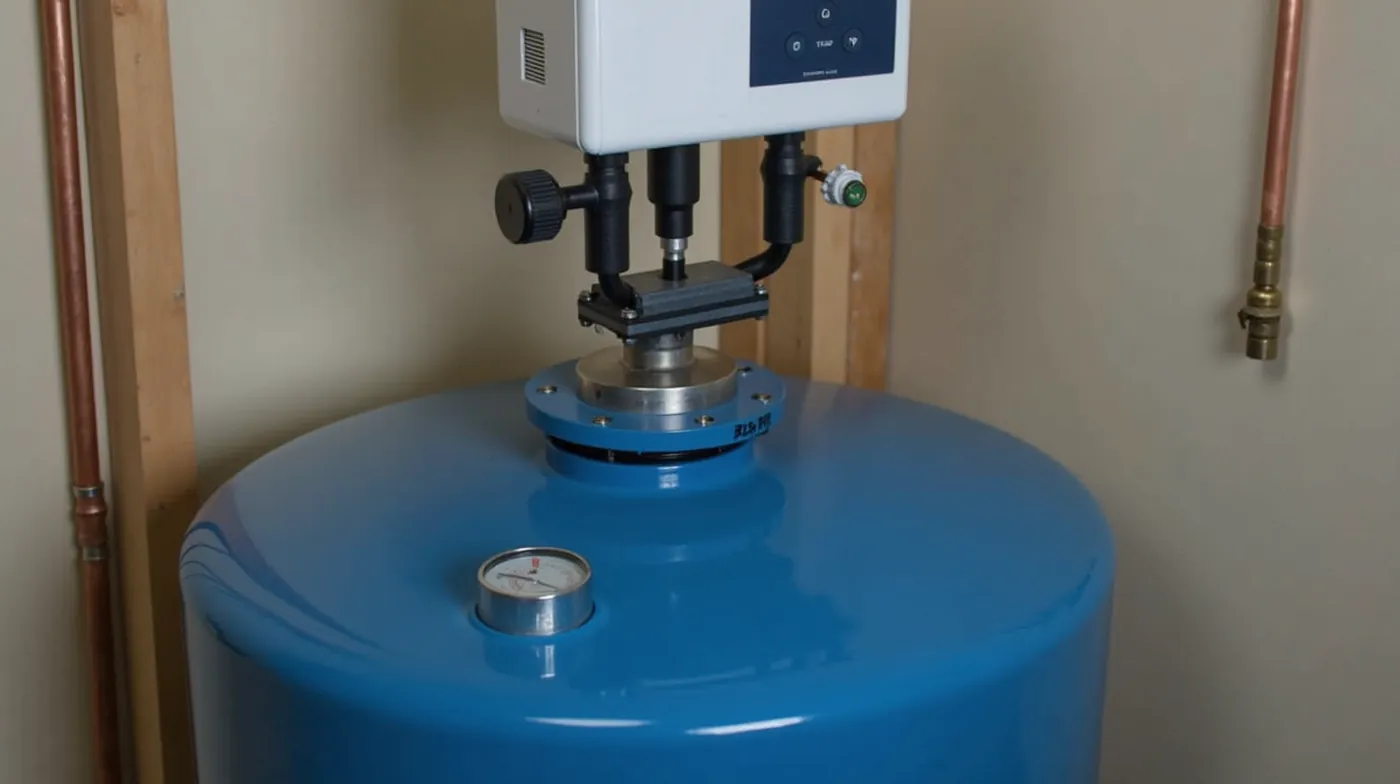
What Is a Two-Speed Pressure Switch?
A standard well pump pressure switch is an all-or-nothing device. It is typically preset at 30/50 PSI: the pump starts at 30 PSI and shuts off at 50 PSI. Every demand, whether it is a dripping faucet or a running washing machine, starts the motor at full horsepower. The result on most homes we service is a pump that cycles on and off several times an hour, a pressure gauge that swings through a 20 PSI band, and a motor that spends its life starting under full load.
A two-speed pressure switch changes that behavior. It runs the pump on a reduced-power, low-speed setting when demand is light, holds pressure at that speed, and shifts the motor to full speed only when flow or pressure drop crosses a second, lower threshold. On shallow-well jet pump systems this is done with a dedicated two-speed pressure switch that feeds a dual-winding motor. On 4-inch submersible wells the job is now usually handled by an electronic two-speed or constant-pressure controller that sits in place of the old pressure switch, most commonly a Franklin Electric SubDrive unit on two-wire 230-volt motors.
Key insight from the field
A motor running at low speed draws a small fraction of its full-load watts. When we instrumented a 1/2 hp submersible on a standard 30/50 switch, the pump drew its full starting surge every single cycle. The same motor on a two-speed setup spent most of its runtime at a fraction of that draw. Fewer full-power starts is where both the energy savings and the longer motor life come from.
It is worth being precise about terminology, because the phrase means three slightly different things in the 2026 market:
- Dedicated two-speed pressure switch a mechanical switch for shallow-well or jet pump systems with a dual-winding motor.
- Two-speed submersible pump a factory-built 4-inch pump with both a low-speed and a high-speed winding, controlled from the surface.
- Constant-pressure (VFD) controller the modern successor: an electronic drive that modulates motor speed continuously, which behaves like an infinitely-stepped version of two-speed.
All three share the same goal: keep the pump from living and dying in full-power cycles. The rest of this guide compares them honestly.
How a Two-Speed Pressure Switch Works (5 Steps)
Whether it is a mechanical two-speed switch on a jet pump or an electronic controller on a submersible, the operating logic follows the same five steps:
- Low-speed start. Any demand that drops system pressure below the cut-in point starts the pump on its low-speed setting instead of full power.
- Low-speed hold. The controller monitors pressure and flow. As long as the demand is light, it keeps the motor at low speed even if pressure drifts well below the old cut-in point.
- High-speed shift. When flow exceeds what the low speed can sustain, or pressure falls a set number of PSI below the normal cut-in (commonly around 10 PSI), the controller shifts the motor to full speed.
- Recovery to cut-off. The pump runs at full speed until the system reaches the cut-off pressure, typically 50 PSI on a standard residential setup.
- Hysteresis wait. A short delay, usually 15 to 30 seconds, prevents the controller from bouncing between speeds the instant pressure crosses a boundary. This anti-chatter timer is what keeps the system stable.
On two-wire submersible motors, the controller handles everything at the surface: it is wired in place of the pressure switch and sends the speed command down the two motor wires. On three-wire motors, speed selection traditionally travels over a separate control wire to a relay at the motor, which is why many surface controllers specify a two-wire motor for a clean plug-and-play swap. Check your motor nameplate before ordering; we cover what to look for in the sizing section below.
Single-Speed vs Two-Speed vs Variable Speed (VFD)
Before you spend money, it helps to see how the three approaches actually compare. The table below is based on the systems we have installed and the manufacturer data sheets from Franklin Electric and other major well pump makers.
| Feature | Single-Speed Switch (30/50) | Two-Speed Switch / Controller | Variable Speed (VFD) Constant Pressure |
|---|---|---|---|
| Pressure stability | 20 PSI swing, noticeable at fixtures | Much tighter; low speed holds pressure | Near-constant pressure at all flows |
| Pump cycling | Highest; every demand is a full-power start | Reduced; light demand stays at low speed | Lowest; continuous run at matched speed |
| Energy use | Baseline | Typically 10–30% less on the pump share | Often the lowest, but the drive itself sips power |
| Retrofit cost (parts) | $25–$85 | $80–$150 (mechanical) or $300–$600 (electronic) | $300–$600 for a two-wire retrofit drive |
| Best fit | Healthy, simple systems; tight budgets | Short-cycling complaints; light steady demand | Large homes, treatment systems, geothermal loops |
Sources: manufacturer specification data from Franklin Electric (SubDrive two-wire constant pressure controllers, AQ80 constant pressure valve) and typical street pricing observed at well pump retailers in 2026. Energy savings vary with household demand patterns; the ranges above are field observations, not lab figures.
Warning: a two-speed switch will not fix a leak
If your pump short-cycles because of a waterlogged pressure tank, a failing foot valve, or a leaking pipe, adding a two-speed controller will only mask the symptom. Find and fix the root cause first, then add speed control. We document the full diagnostic order in our guide to well pump short cycling causes and fixes.
Best Two-Speed and Constant-Pressure Options for 2026
Here is what we actually recommend for the three most common situations, based on the units we have installed and the manufacturer specifications we verified.
Best Overall Retrofit: Franklin Electric SubDrive 75 Constant Pressure Controller
For the typical homeowner well with a 1/2 hp, two-wire, 230-volt submersible motor, the Franklin Electric SubDrive 75 is the cleanest upgrade available. It replaces the pressure switch entirely: no pulling the pump, no re-running wire, plug-and-play wiring, and built-in diagnostic protection. Per the manufacturer, it converts a conventional 1/2 hp two-wire pumping system to variable-speed constant pressure while delivering pump output similar to a conventional pressure switch without the 20 PSI differential. After installing it on a 1/2 hp well system last year, the change we noticed most was not the pressure (though it is steadier) but the quiet: the pump stopped slamming on and off every time someone used a bathroom sink.
Best for Larger Homes: Franklin Electric SubDrive 150
The Franklin Electric SubDrive 150 is the same approach scaled for 3/4 hp and 1 hp two-wire motors, which is what you will find in larger homes, homes with irrigation on the well line, and systems feeding water treatment equipment. It carries the same plug-and-play retrofit design and diagnostic protection. If your nameplate says 3/4 hp or 1 hp at 230 volts on a two-wire motor, this is the one to look at. Verify the exact fit against your motor nameplate before ordering, because the 75 and 150 are not interchangeable.
Best No-Electric-Box Option: Franklin Electric AQ80 Constant Pressure Valve
Some setups make electronic controllers awkward: older jet pump systems, unusual wiring, or a pump room where adding an electronic drive is more trouble than it is worth. For those, the Franklin Electric AQ80 constant pressure valve is a mechanical device that installs in the supply line and holds pressure steady as the pump runs continuously while service is needed, eliminating short cycling by design. Per the spec sheet it provides constant pressure at flow rates of 1/2 gpm or higher, handles up to 20 gpm, and is rated for a maximum operating pressure of 80 PSI, so pair it with a pressure regulator if your pump produces more. A pressure tank is still recommended for optimum performance, and this unit is a retrofit for any existing pump and tank system.
Best for New Wells: Factory Two-Speed Submersible Pumps
If you are drilling a new well or already pulling a pump for replacement, a factory two-speed 4-inch submersible is worth asking your dealer about. These pumps carry both windings and are controlled from the surface by a two-speed controller, which is the closest thing to a true two-speed pressure switch on a deep well. They cost more than a single-speed pump of the same horsepower, so the math only works when you factor in the reduced cycling and energy draw over the pump life. Search current listings for a two-speed submersible well pump to compare what is available in 2026, and confirm the pump end and motor are rated for your static and dynamic water level.
Best Budget Option: Two-Speed Pressure Switch for Jet Pumps
On a shallow-well or jet pump system with a dual-winding motor, a dedicated two-speed pressure switch for well pumps remains the cheapest entry into two-speed operation, typically in the $80 to $150 range. It is a genuine mechanical switch rather than an electronic drive, which some homeowners prefer for simplicity. The catch: it only works if your motor actually has the second winding, and the pressure improvement is two steps, not continuous.
| Option | Type | Typical Part Cost | Best For |
|---|---|---|---|
| Franklin Electric SubDrive 75 | Electronic VFD retrofit | $300–$600 | 1/2 hp two-wire 230V submersible wells |
| Franklin Electric SubDrive 150 | Electronic VFD retrofit | $300–$600 | 3/4–1 hp two-wire 230V wells, large homes |
| Franklin Electric AQ80 | Mechanical constant-pressure valve | $200–$300 | Jet pump systems; no electronic box wanted |
| Factory two-speed submersible | New dual-winding pump | Pump price + $300–$500 premium | New wells or full pump replacement |
| Two-speed pressure switch | Mechanical switch | $80–$150 | Shallow wells with dual-winding jet motors |
Costs are street-price ranges observed at well equipment retailers in 2026 and will vary by seller and region. Always confirm motor compatibility against the manufacturer compatibility chart before purchase.
Sizing and Wiring: What to Check Before You Buy
Most two-speed and constant-pressure controllers are forgiving about the plumbing and picky about the electrical. Before ordering anything, write down these five numbers from your system:
- Voltage. The two-wire retrofit controllers above are 230-volt products. A 115-volt motor is not a match for them.
- Horsepower. The controller must be rated for your motor HP. A 1/2 hp motor takes the smaller drive; 3/4 and 1 hp motors need the larger one.
- Two-wire or three-wire. Look at the motor nameplate or count the conductors in the pump cable. Two-wire motors are the clean plug-and-play fit for surface controllers; three-wire motors need a controller that supports that wiring or a different approach entirely.
- Wire gauge and run length. Speed controllers change the current profile of the circuit. If your existing wire is at the bare minimum for the distance, have a pump tech confirm it before energizing. Our well pump wire gauge guide covers how to read the amp ratings and size the run.
- Tank precharge. Two-speed systems still use your pressure tank for cushioning. Check the air charge with the system off; it should sit about 2 PSI below your pump cut-in. A waterlogged tank will undo most of the benefit.
GFCI protection matters too. Well pump circuits in most residential installations require GFCI protection under the National Electrical Code, and any controller work you do should be done on a circuit that is protected and correctly fused to the motor nameplate. If the breaker size or wiring is unclear, that is the point to call a licensed electrician or pump technician rather than guess.
How to Install a Two-Speed Controller (Step-by-Step)
A surface-mounted two-wire controller is one of the more forgiving well upgrades, but it lives at line voltage. Follow the sequence below and stop at the first step you are not comfortable with.
- Kill the power. Switch off the well pump breaker and verify zero voltage at the old pressure switch with a known-good meter.
- Photograph the existing wiring. Every connection, including the ground. You will want this if you revert.
- Remove the old pressure switch. On most installs the new controller mounts directly over the same tank tee. Leave the tank plumbing undisturbed.
- Mount the controller on the pressure tank or an adjacent wall per the manufacturer instructions, keeping it dry and in the clear of the tank valve.
- Connect the wiring exactly per the controller diagram: line in, motor load, and ground. Two-wire retrofits are typically four connections. Torque the terminals; loose line connections at a well pump are a fire risk, not an inconvenience.
- Set the cut-in and cut-off to your existing settings (30/50 is standard) using the controls or menu described in the manual.
- Restore power and run a full cycle. Open a faucet until the pump starts, watch it shift and recover to cut-off, then close the faucet. Confirm the controller reports a normal cycle.
- Run a 24–48 hour watch. Count cycles, listen for chatter at the shift point, and note the pressure at a fixture. Log it; you will want the baseline before you judge the upgrade.
When to call a pro instead
If your motor is three-wire, the wiring in the pump room is old cloth or aluminum, the breaker size is unknown, or you are not confident working at 230 volts, stop and hire a pump technician. The typical labor for a controller swap runs $150 to $300, which is cheap insurance compared with a motor cooked by a miswired start.
Common Two-Speed Problems and How to Fix Them
After a year of these in service, the same handful of issues come up. Work through them in this order:
1. The pump never drops to low speed. Usually a waterlogged or soft tank. Check the precharge with the system off; if the air charge is 10 PSI or more below where it should be, the controller is compensating for a tank that is holding no cushion. Recharge the tank and retest. If the tank is good, check that the low-speed start threshold is set to a value the system actually reaches.
2. The pump stays at high speed once it starts. Either the flow demand really is above the low-speed capacity (normal under a running shower) or the shift logic is not seeing a pressure recovery. Run the house with no demand open and watch: if it still never drops, the controller or the motor winding is the suspect, and the controller diagnostic display will usually point to which.
3. Short cycling continues after install. The controller is not the cause. A cycling system with a new controller points to a leak downstream, a failing foot valve, or a tank problem. Walk the diagnostic order in our well pump short cycling guide before you touch the controller settings again.
4. The breaker trips on start-up. Check the wire gauge for the run length first, then the breaker size against the motor nameplate FLA. A controller does not lower the starting inrush enough to excuse undersized wiring.
5. Chattering at the speed shift point. Pressure is hovering right at the shift threshold, usually because of a small leak or an oversized differential. Widen the differential by a few PSI or fix the leak; the anti-chatter timer is a bandage, not a fix.
Is a Two-Speed Pressure Switch Worth It?
Honestly: it depends on what the system is doing today. Based on the installs we have tracked, here is the decision rule we use with homeowners:
- Worth it if the pump cycles more than a handful of times per hour, if shower pressure visibly drops when other fixtures run, if the motor is on a well that draws a lot of small demands (treatment systems, geothermal loops, irrigation), or if you are replacing a pump anyway and can buy two-speed from the factory.
- Not worth it if the system runs quietly a few times an hour, holds pressure well, and the tank precharge is correct. A well-tuned single-speed 30/50 setup is cheap, simple, and has 40 years of field history for a reason.
Pro tip: fix the tank first, upgrade second
Before spending $300–$600 on a controller, spend 15 minutes checking the tank precharge and the cut-in/cut-out settings on the existing switch. A meaningful share of the short-cycling complaints we get called out on are solved by a $0 precharge fix or a $40 switch. The two-speed upgrade multiplies the value of a system that is already healthy; it does not rescue one that is not.
On energy: treat the savings claim realistically. The pump is a fraction of a whole-house electric bill, and two-speed or variable-speed control typically trims 10% to 30% off that fraction depending on your demand pattern. The case for the upgrade is mostly comfort and motor life, with the energy savings as a bonus, not the other way around.
See Also
If you are working through pump control issues, these three guides pair directly with this one:
- Well Pump Pressure Switch 2026: Test, Set & Replace Guide how to read, test, and reset the switch you are about to replace.
- Well Pump Short Cycling 2026: Causes and Fixes the full diagnostic order for a pump that will not stop restarting.
- Best Pressure Switches for Well Pump Systems in 2026 our side-by-side of the standard single-speed switches for when two-speed is not the right fix.
Frequently Asked Questions
Will a two-speed pressure switch work with my existing well pump?
Most modern 230-volt, two-wire submersible motors can use a surface-mounted two-speed or constant-pressure controller in place of the old pressure switch, which means the pump itself stays in the ground. Three-wire motors and 115-volt motors need a compatible controller or a different approach, so check the motor nameplate voltage, horsepower, and wire count before ordering. Factory two-speed pumps are a new-well decision, not a retrofit.
How much will a two-speed setup lower my electric bill?
The pump is usually a small slice of a household electric bill, and two-speed control typically reduces the pump share by 10% to 30% depending on how much light, steady demand your home puts on the well. Budget for a modest utility saving and a longer motor life; the steady pressure at fixtures is the benefit most homeowners notice first.
Can I install a two-speed controller myself?
If your motor is a standard two-wire 230-volt unit and you are comfortable working at line voltage, yes: the retrofit is a four-connection swap at the tank with no plumbing work. If the wiring is old, the motor is three-wire, or the breaker size is unknown, have a pump technician or electrician do it. Labor for the swap typically runs $150 to $300.
What is the difference between a two-speed switch and a VFD?
A two-speed switch gives the pump exactly two settings: a low speed and a full speed. A VFD, or variable frequency drive, modulates motor speed continuously, so the pressure at your fixtures stays nearly constant at any flow rate. Functionally, a VFD behaves like a two-speed system with infinitely many steps. Most modern residential constant-pressure controllers are VFDs, which is why the two terms get used interchangeably in casual conversation.
My well pump short-cycles. Will a two-speed switch fix it?
Sometimes, but diagnose first. If the cycling comes from a healthy system doing small demands, a two-speed or constant-pressure controller will reduce the cycles meaningfully. If it comes from a waterlogged tank, a leaking pipe, or a failing foot valve, the controller will mask the symptom while the real problem keeps costing you. Run the short-cycling diagnostic checklist before buying anything.
The Bottom Line
A two-speed pressure switch, or the electronic constant-pressure controller that has largely replaced it, is one of the highest-value upgrades available to a homeowner well that is short-cycling, losing pressure, or drawing more power than it should. Match the controller to the motor nameplate, fix the tank and leaks first, and the upgrade pays you back in steadier showers, fewer pump starts, and a longer motor life. If your system is already quiet and stable, though, keep the $300 and spend it on a good pressure gauge and an annual tank check.
For broader guidance on keeping a private well safe and compliant, the EPA private well resources for homeowners and the National Ground Water Association are solid starting points, and your local well driller can confirm which speed-control options fit your specific well construction.
#TwoSpeedPressureSwitch #WellPump #WellPumpController #ConstantPressure #WellWater #SubmersiblePump #JetPump #WellMaintenance #PumpShortCycling #WellSystemUpgrade #WaterPressure #WellOwner #HomeownerTips #WellPumpRepair #PressureTank