
For dog owners on well water, the first question is simple: can dogs drink well water? The short answer is yes — millions of dogs across the country drink well water every day — but only if that water is actually clean. A private well has no required inspections, no continuous monitoring, and no guarantee that it meets the EPA drinking water standards. Untested well water can carry bacteria, nitrates, heavy metals, and dissolved salts, and dogs drink far more water than most owners realize. This guide covers what well water for dogs really means, the safe levels to test against, the early warning signs to watch for, and the treatment options that make well water safe for your dog in 2026.
Disclosure: As an Amazon Associate, we earn from qualifying purchases on this page. Product selections are based on independent research and real well water data.
By Robert Harrison, Certified Well Inspector
Robert has 20+ years of experience inspecting and testing residential water wells across the western US. He has evaluated well water quality for hundreds of households and farms, including private wells that supply drinking water for family dogs, cats, and livestock.
Published: November 2026
Table of Contents
- Is Well Water Safe for Dogs?
- What Makes Well Water Dangerous for Dogs
- Safe Levels for Dogs: The Numbers That Matter
- Signs Your Dog Is Reacting to Well Water
- How to Test Your Well Water for Pet Safety
- How to Make Well Water Safe for Your Dog
- Well Water for Puppies, Cats & Other Pets
- Frequently Asked Questions
- The Bottom Line
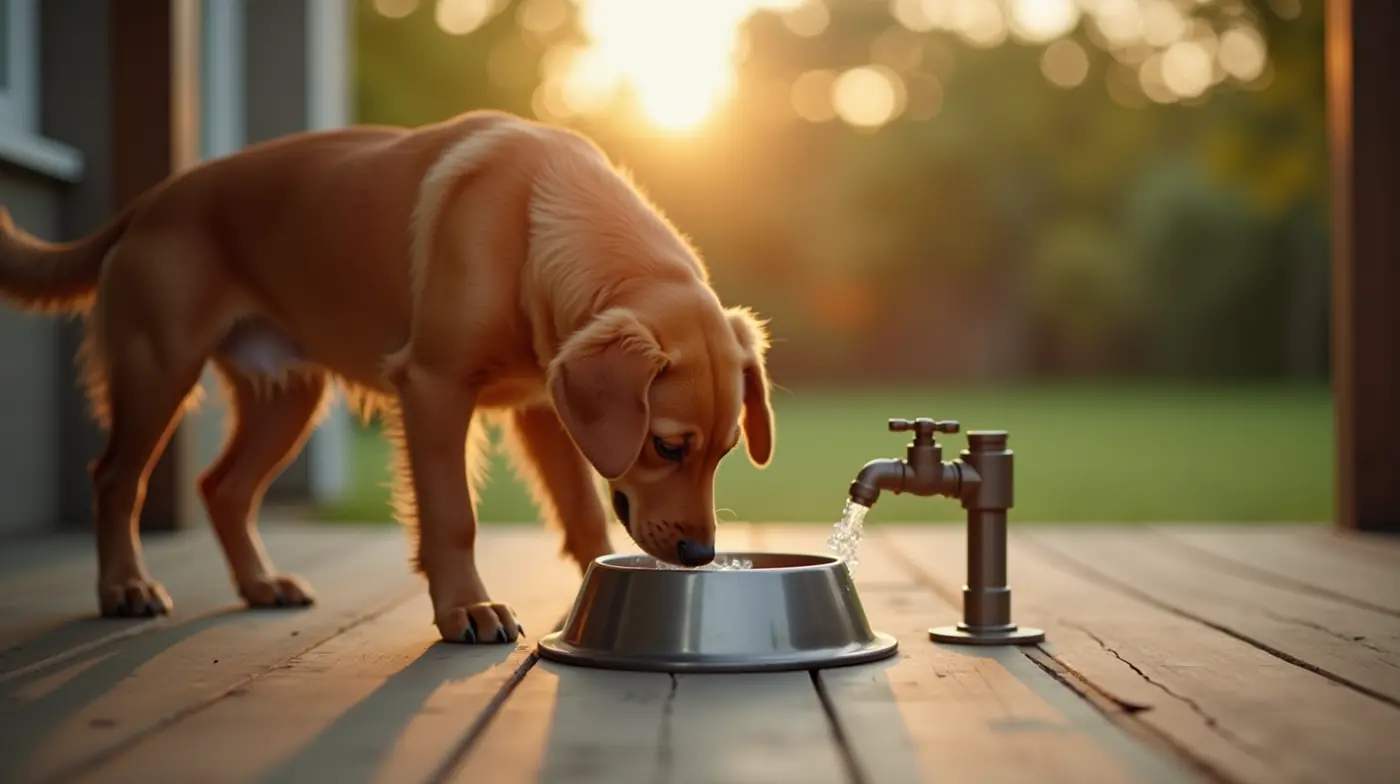
Is Well Water Safe for Dogs?
Yes — with the same caveat that applies to every well on earth: your water is as safe as your last test report. The vast majority of private wells produce water that is perfectly fine for dogs, and well water for dogs is a daily reality on millions of homes and farms. The problem is the untested minority. A private well has no required inspections, no continuous monitoring, and no guarantee that the water meets any of the EPA drinking water standards. Untested well water can carry bacteria, nitrates, heavy metals, and dissolved salts — some of which dogs handle very differently than humans.
Quick Answer
Most well water is safe for dogs once it has been tested and treated where needed. Before giving your dog unrestricted access, run a bacteria and nitrate panel, and retest every year after that. If the panel comes back clean, your dog water bowl is no riskier than any other water bowl in the house.
Dogs are not small humans. They drink more water per pound of body weight than most adults, they gulp from the bowl rather than sip, and their tolerance for specific contaminants differs from ours — puppies in particular mirror the risk profile of human infants when it comes to nitrates. In the hundreds of private well panels we have reviewed over the years, the pattern is consistent: pet-related problems show up in wells near septic systems, livestock, or fertilizer-heavy fields. If your well sits in one of those zones, testing is not optional.
What Makes Well Water Dangerous for Dogs
Four groups of contaminants account for nearly every dog-related well water problem we see: bacteria, nitrates, heavy metals, and dissolved salts and hardness. Here is what each one does, where it comes from, and how it shows up.
Bacteria and E. coli
Surface water intrusion is the most common cause of bacterial contamination. Heavy rain, flooding, or a compromised well cap can push contaminated surface water down into the well, and livestock, pets, and wildlife all add to the bacterial load around a wellhead. For dogs, the usual suspects are E. coli, Giardia, and Cryptosporidium, which cause acute vomiting and diarrhea. A healthy adult dog may shake off a low dose that would knock a puppy or an older dog under. Our companion guide on well water bacteria testing covers the kits, lab options, and safe levels in detail.
Nitrates
Nitrates are the most common chemical contaminant in residential wells. They come from fertilizer, animal manure, and failing septic systems, and they migrate through soil with rainwater. Nitrates interfere with the blood ability to carry oxygen — a condition called methemoglobinemia. In a dog with significant nitrate exposure, the gums take on a blue-gray tint and the animal becomes weak and lethargic. Adult dogs are more tolerant of nitrates than human infants, which is why the EPA limit of 10 mg/L (as nitrate-nitrogen) is set to protect the most sensitive human drinker. Puppies, however, sit much closer to the infant side of that line, so we treat the EPA limit as the ceiling for any well that supplies a home with young animals. Our full breakdown of nitrate in well water covers sources, testing, and removal.
Heavy metals: arsenic, lead, and uranium
Arsenic and lead occur naturally in some aquifers, and they accumulate in the body over months and years of low-level exposure. There is no safe level of either — the EPA arsenic MCL of 10 parts per billion is a regulatory ceiling, not a point where harm stops. Chronic arsenic exposure in dogs can damage the liver, kidneys, and blood; lead attacks the nervous system. If your well was drilled more than 20 years ago, or sits near old industrial land or mining activity, arsenic and lead belong in every test panel. We cover the arsenic question in depth in our guide to arsenic in well water.
Hardness, iron, and salts
These are the least dangerous and the most annoying. High hardness builds scale in pipes and bowls, iron stains everything it touches, and high sulfate or sodium makes water salty enough that dogs start drinking less — which then stresses their kidneys over time. None of these is a poisoning risk at typical well levels, but a dog that ignores its bowl is a dog that is quietly dehydrating. Our guides on well water hardness and iron in well water cover the treatment side.
Safe Levels for Dogs: The Numbers That Matter
The table below lines up the EPA human drinking water standards with what they mean for the dog at the end of your hose. Where pet-specific guidance exists, we note it; where it does not, the human standard is the right target, because that is what your lab report is graded against.
| Contaminant | EPA Limit (Human) | What It Means for Your Dog |
|---|---|---|
| E. coli / coliforms | 0 — no safe level | Any presence means contamination. Test and shock-treat before drinking. |
| Nitrate (as N) | 10 mg/L | Dogs are more tolerant than human infants, but puppies mirror infant risk. Keep under the EPA limit. |
| Sulfate | 250 mg/L (secondary) | Above about 300-500 mg/L can cause diarrhea and reduced intake in dogs. |
| Arsenic | 10 ppb | No safe level. Chronic exposure damages the liver, kidneys, and blood. |
| Lead | 5 ppb (action level) | Neurotoxic at any level. Older homes with lead plumbing add to the risk. |
| TDS (total dissolved solids) | 500 mg/L (secondary) | Dogs tolerate more than humans, but very salty water reduces intake and strains kidneys. |
| Iron | 0.3 mg/L (secondary) | Not toxic, but it stains bowls and causes taste aversion; high iron grows bacterial mats in lines. |
Human limits are from the EPA National Drinking Water Standards; pet-specific thresholds reflect veterinary guidance. Standards marked secondary are taste and aesthetic targets, not health mandates.
Signs Your Dog Is Reacting to Well Water
Contaminated well water rarely announces itself with a single dramatic symptom. In practice, the complaints we hear from well owners with dogs are quieter: a dog that drinks less than usual, a bowl that gets ignored, intermittent diarrhea that comes and goes with the seasons. That is exactly why testing — not symptom-watching — is the only reliable early warning. That said, here is what to watch for:
- Chronic or intermittent diarrhea, especially right after a storm
- Reduced water intake, or a dog that walks away from the bowl
- Vomiting shortly after drinking
- A blue-gray tint to the gums or tongue — a sign of severe nitrate exposure
- Unusual lethargy or weakness without other explanation
- Slow weight loss or coat problems over several months (chronic heavy metal exposure)
Emergency
A blue or gray tint to the gums after drinking well water is an emergency. Methemoglobinemia can progress fast in small dogs and puppies. Call your vet or the ASPCA Animal Poison Control Center at 888-426-4435 immediately — do not wait for it to pass.
Most of the time, none of these symptoms will appear, because most well water is clean. The owners who call us with a sick dog almost always discover, after the fact, that the well had never been tested. The test is the part that keeps the call from ever happening.
How to Test Your Well Water for Pet Safety
You do not need a chemistry degree to keep your dog safe — you need a schedule and a lab. Here is the process we recommend to every well owner with pets:
- Start with a full annual baseline panel. Bacteria (E. coli and total coliforms), nitrates and nitrites, TDS, pH, hardness, sulfate, iron, arsenic, and lead. A state-certified lab can run this in a single sample — our well water testing cost guide breaks down what each test actually costs in 2026.
- Add a heavy metals panel when your well calls for it. After drilling, or if your well is near farmland, old industry, or mining. Arsenic and lead are not on every lab default menu, so ask for them explicitly.
- Screen between lab visits with a home test kit. A well water test kit or a dedicated nitrate test kit will not replace a lab report, but a sudden positive on bacteria or a spike in nitrates between annual panels tells you something changed in the ground.
- Retest after events that move water. Heavy rain, flooding, septic tank work, new livestock near the well, or a new well drilled nearby can all change what is in your water within weeks.
- Keep a log. Write down every result, date, and lab. Trends matter more than single readings — a nitrate that climbs from 6 to 9 mg/L over three years is a trend you want to catch before it crosses the line.
Pro Tip
If your dog is the only animal drinking from the well, a dedicated under-sink RO tap or pet water station gives you a known-clean bowl while the rest of the house runs on well water. It is the cheapest insurance policy in this guide.
How to Make Well Water Safe for Your Dog
Treatment follows the test results. You do not treat what you have not measured — but once you have a clean report with numbers on it, the options are straightforward, and cheap compared to a veterinary bill.
Kill the bacteria
A one-time shock chlorination of the well clears an existing bacterial contamination and is the standard first response. For ongoing protection — especially where surface water intrusion is a recurring problem — a whole-home UV unit kills bacteria and viruses without chemicals. Our UV vs chlorine comparison walks through the trade-offs.
Remove nitrates and salts
Nitrates, salts, and heavy metals are dissolved — no sediment filter will touch them. Reverse osmosis is the only home-scale treatment that reliably removes them. Running an RO tap or a small RO system dedicated to your dog water bowl solves the problem without plumbing the whole house.
Handle hardness and iron
If your panel shows hardness above about 10 grains, a whole-home softener protects your pipes and makes the water more palatable. High iron is handled with an aeration or oxidation system ahead of the softener. Our well water hardness guide has the sizing details.
The table below is the shortlist of products we recommend to well owners with pets, and what each one actually solves.
| Product | What It Solves | Typical Price | When to Use It |
|---|---|---|---|
| Well water test kit | Annual baseline plus between-test screening | $30-$120 | Every well, every year |
| Nitrate test kit | Nitrate screening between lab panels | $15-$40 | Fertilizer, manure, or septic nearby |
| UV water treatment system | Kills bacteria and viruses without chemicals | $300-$600 | After shock-treatment; ongoing bacteria control |
| Reverse osmosis system | Removes nitrates, salts, and heavy metals | $200-$500 | High nitrate or salt — run a dedicated pet water station |
| Whole house water softener | Hardness and scale in pipes and bowls | $500-$1,500 | Hardness above about 10 grains |
| Whole house sediment filter | Sand and sediment after drilling or storms | $100-$300 | New wells, or sandy water after heavy rain |
Prices reflect Amazon listings we reviewed in November 2026; current pricing may vary. UV and softener sizing depends on your well flow rate — check our treatment guides before buying.
Well Water for Puppies, Cats & Other Pets
Dogs get the most attention, but the rest of the household animal needs the same answer from the same test. Here is how the risks shift.
Puppies are the highest-risk drinker in the house. Their organs are still maturing, their water intake per pound is higher than an adult dog, and their nitrate sensitivity approaches that of a human infant. If you are waiting on a test panel and a puppy has just arrived, give the puppy filtered or bottled water until the results are in — it is a two-week inconvenience, not a permanent setup.
Cats drink less than dogs, which is not the safety advantage it sounds like. Lower intake means lower dilution, and cats are notably sensitive to chronic low-level exposure to salts and some heavy metals. A cat that starts drinking from the toilet bowl or a puddle is telling you the well water tastes bad to them — a TDS or sulfate issue is the usual cause.
Small mammals sit on the puppy side of the nitrate line. Rabbits, guinea pigs, and other small pets should get the same conservative treatment as a young dog. For full-scale livestock, our companion guide on well water for horses covers herd testing, frost-free waterers, and farm-scale treatment.
Frequently Asked Questions
Can dogs drink well water straight from the tap?
Yes, if your well has been tested clean and treated where needed. Until you have a clean panel, run the tap for a few minutes after outages, use a filtered or RO pet water station, or give bottled water for the first few weeks. The goal is simply to know what is in the water before your dog builds a habit on it.
Can well water make a dog sick?
Yes. Bacteria cause acute stomach illness, nitrates cause methemoglobinemia (weakness, rapid breathing, blue-gray gums), and heavy metals cause chronic organ damage over months. Which of those risks applies to your well is exactly what a test panel tells you — guessing is not a strategy.
What is a safe nitrate level for dogs in well water?
Aim for the EPA limit of 10 mg/L as nitrate-nitrogen. Adult dogs are more tolerant than human infants, but puppies mirror infant risk, and there is no established safe level above the limit. If your well reads above 10 mg/L, run the pet drinking water through reverse osmosis or blend it with low-nitrate water.
Do dogs need filtered well water?
Not for taste. Treat based on test results: bacteria calls for shock chlorination plus UV, nitrates or salts call for RO on a pet water station, hardness calls for a softener. A dog drinking from a clean, tested well does not need a pitcher.
How often should I test my well water for my dog safety?
Once a year for a full panel, every six months for bacteria if you have livestock nearby or a history of contamination, and immediately after heavy rain, flooding, septic work, or new drilling within a few hundred feet of your well.
The Bottom Line
Well water for dogs is not a coin flip — it is a checklist. Test for bacteria and nitrates at least once a year, add heavy metals when your well age or location calls for it, treat what you find (UV for bacteria, RO or blending for nitrates and salts, a softener for hardness), and retest after anything that could move the water. Most wells pass that checklist without a single expensive treatment, and the ones that do not are caught early, while a fix costs a few hundred dollars instead of a veterinary emergency. Your dog will not tell you the water is off — but the test report will.
See Also
Well water for horses: is it safe to drink (companion guide)
Nitrate in well water: causes, safe levels, and removal
Well water bacteria test: kits, labs, and safe levels
How to shock treat a well: complete chlorine guide
#WellWater #WellWaterForDogs #DogSafety #PetWater #WellTesting #WaterQuality #PrivateWell #DogOwner #Nitrate #EColi #WellWaterTreatment #DogHealth #WellPump #WellSafety #WaterWellOwners