
An earthy smell in well water is one of the most confusing problems a private well owner can encounter. It smells like wet soil, a muddy creek, or the air after rain on bare ground, and it often appears and disappears without any obvious reason. Unlike a rotten-egg odor, which points straight at hydrogen sulfide, an earthy or muddy odor usually traces back to two naturally occurring organic compounds, geosmin and 2-methylisoborneol (2-MIB), produced by cyanobacteria (blue-green algae) and soil bacteria called actinomycetes. Your nose is an extraordinarily sensitive instrument for these chemicals: you can detect geosmin at roughly 0.005 parts per billion, a concentration so small that no home test kit can measure it. In this guide you will learn exactly what causes well water to smell earthy, whether the water is still safe to drink, why the odor often follows the seasons, how to confirm the cause with proper testing, and which treatment systems actually remove the smell in 2026.
Published: November 2026
By Lisa Martinez, Water Quality Specialist
Lisa holds a degree in Environmental Science and specializes in private well water safety and treatment.
Disclosure: As an Amazon Associate, we earn from qualifying purchases on this page. Product selections are based on independent research and real well water data.
Table of Contents
- What Causes the Earthy Smell in Well Water?
- Is Earthy-Smelling Well Water Safe to Drink?
- Why Does My Well Water Smell Earthy Only Sometimes?
- Earthy, Musty, Rotten Egg or Gasoline? Identifying the Odor
- How to Test for an Earthy or Musty Odor
- How to Remove the Earthy Smell from Well Water
- What Does It Cost to Fix an Earthy-Smelling Well?
- How to Keep the Earthy Smell From Coming Back
- Frequently Asked Questions
- Bottom Line
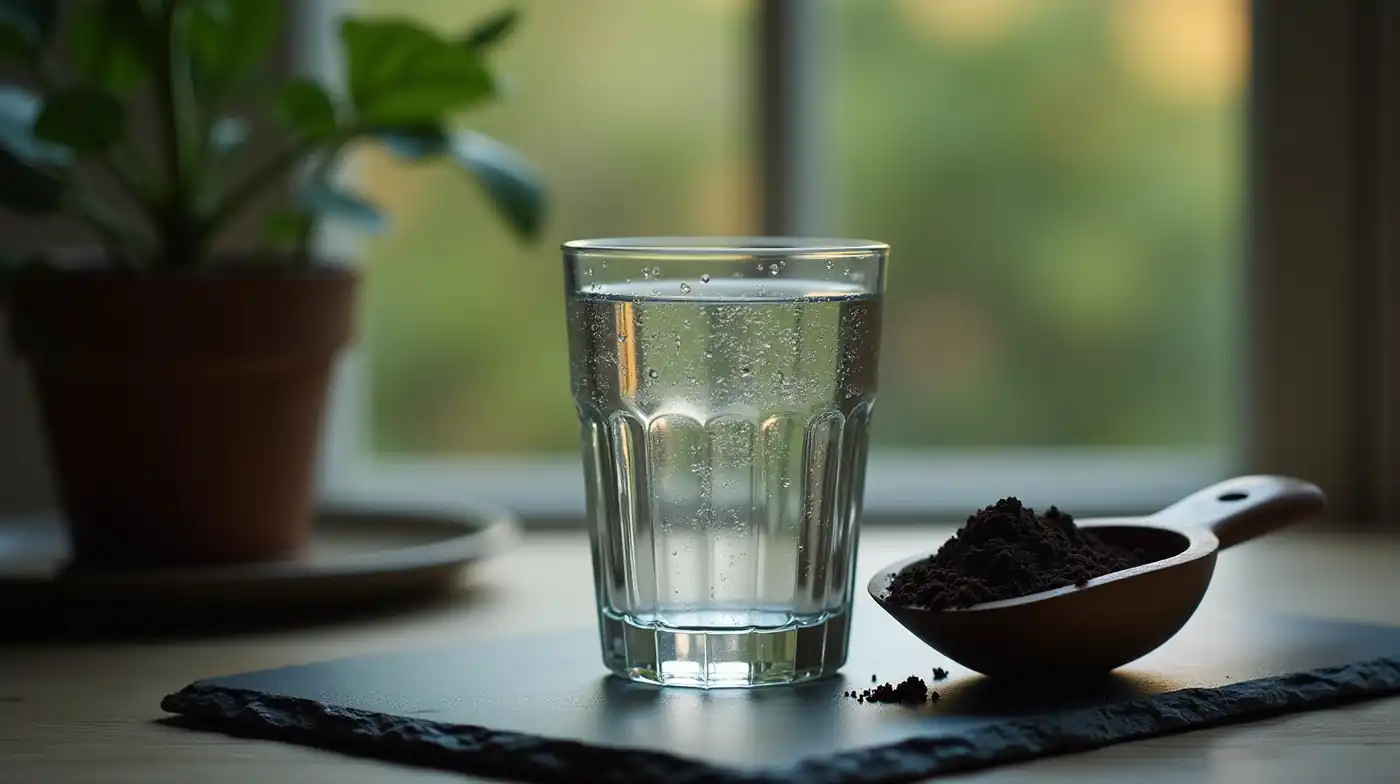
What Causes the Earthy Smell in Well Water?
When your well water smells like dirt, the culprit in most cases is one of two organic molecules, and in many wells both of them at once:
- Geosmin — the compound responsible for the classic “wet earth” or “mushroom” smell. The name literally means “earth smell” (from the Greek geo, earth, and osme, smell). It is produced by cyanobacteria (blue-green algae) and by a group of soil bacteria called actinomycetes, the same bacteria that give freshly turned garden soil its characteristic scent.
- 2-Methylisoborneol (2-MIB) — produces a muddier, mustier, almost “swampy” variant of the same family of odors. It is produced almost exclusively by cyanobacteria, which is why 2-MIB complaints often track with algal activity in the surface water feeding the aquifer.
Neither compound is added by anything in your plumbing, pump, or pressure tank. They are dissolved into the groundwater itself. That is what makes the diagnosis different from a pump failure or a rust problem: you cannot flush them out, and they keep coming back as long as the source keeps producing them. In our experience reviewing water quality complaints from private wells, the pattern is consistent. Shallow wells (under 50 feet) that draw water from a shallow, unconfined aquifer are far more likely to show an earthy odor, because that aquifer recharges directly from rain, runoff, and seepage. Deep, confined aquifers with long travel times are much less likely to carry a detectable odor, because the bacteria that produce geosmin and 2-MIB need sunlight or organic matter to thrive, and both are scarce more than 100 feet down.
Why You Can Smell It but No Kit Can Measure It
The human nose detects geosmin at about 0.005 parts per billion and 2-MIB at about 0.01 parts per billion. To put that in perspective, 0.005 ppb is roughly one drop of geosmin in 200 Olympic swimming pools. Standard home test kits, and most routine lab panels, do not include a measurement for these compounds at all, which is why a well can “test fine” while still smelling strongly of dirt. Your nose is the first sensor; a certified lab with a taste-and-odor panel is the confirmation step.
One more distinction worth making up front: an earthy smell is not the same as a metallic one. If the water tastes and smells like pennies or rust, that is dissolved iron or manganese, a chemistry problem with a completely different fix. See our guide on why well water tastes bad for a full breakdown of the taste-and-odor family, or how to remove rust from well water if the odor is clearly metallic. The rest of this article assumes the smell is genuinely earthy, muddy, or musty.
Is Earthy-Smelling Well Water Safe to Drink?
For most homeowners, the short answer is: an earthy or musty odor, by itself, is a nuisance and a taste problem, not a health emergency. Geosmin and 2-MIB are not regulated by the EPA as drinking water contaminants. The EPA sets no maximum contaminant level for either compound, and neither is classified as a carcinogen. At the concentrations where your nose can detect them (a few parts per billion or less), there is no established health effect in the published literature. This is the same reason the EPA treats taste and odor as “secondary” concerns: they signal something about the water, but they are not, at detectable levels, what makes water unsafe.
That said, the odor is a signal, and like any signal it should be read in context. There are three situations where an earthy smell deserves a closer look rather than a shrug:
- The odor appeared suddenly, not gradually. A faint earthy note that has been there for years is background geosmin. A strong new smell that shows up within days of a flood, a heavy rain event, or a nearby construction or livestock operation suggests your well is receiving surface water faster than usual. That same pathway can carry coliform bacteria, which is a genuine health concern.
- The smell comes with visible changes. If the earthy odor coincides with cloudiness, color, or a change in the water’s clarity, you are likely looking at an algal or sediment event in the aquifer or in the well itself. Test before drinking large amounts.
- You have a history of bacteria in your well. If your well has ever tested positive for coliform or E. coli, treat any sudden odor change as a potential contamination event until a re-test says otherwise.
When to Shock-Treat and Retest
If a strong new earthy or musty odor appears after flooding, heavy rain, or a nearby land disturbance, run a bacteria test (total coliform) as soon as possible, and consider a shock chlorination of the well. Shock treatment kills surface-derived bacteria that ride in with runoff. It will not remove geosmin from the aquifer, but it addresses the one part of the picture that can actually make you sick.
In plain terms: keep drinking the water if it has always been mildly earthy and your routine tests are clean. Get a bacteria test if the odor is new, sudden, or paired with any other change. That two-step read is what separates “annoying water” from “well under stress.”
Why Does My Well Water Smell Earthy Only Sometimes?
Intermittent odor is the single most common pattern we see in homeowner reports, and it is also the pattern that causes the most confusion, because it makes the problem feel random. It is not. The intensity of an earthy smell tracks four controllable variables: the season, the water table, how recently it has rained, and how long the water has sat in your pressure tank.
Season. In most of the country the odor peaks in late spring through early summer. Spring snowmelt and thaw push surface water, dissolved organics, and microbial activity into shallow aquifers at the same time the water table is at its highest, so the well draws water that has spent the least time underground. By late fall and winter, the water table drops, the well draws older, cleaner water from deeper in the aquifer, and the odor fades or disappears. If your well smells bad in May and fine in January, this is the most likely explanation, and it is entirely normal for the type of aquifer you are drawing from.
Rainfall and recharge. A major storm can push an earthy note into your water within days, for the same reason: runoff recharges the shallow aquifer faster than the bacteria and organics can break down. In some shallow wells the odor shows up within 48 hours of a heavy rain and fades again within a week or two as the recharge pulse moves through.
Water table depth. Wells that sit close to the water table (typically under 30 to 50 feet deep) are the ones that feel these changes most strongly. A 200-foot well in a confined aquifer may never develop a noticeable odor at all.
Stagnation. This is the variable you can actually control. Geosmin and 2-MIB concentrate in water that has been sitting still. Overnight, water in your pressure tank and in the pipes has nowhere to go, and the compounds become more concentrated at the tap. This is why the water often smells worst in the morning and better after a few minutes of running. If the smell is strongest on the first draw of the day and fades once the tank has cycled, stagnation is a major contributor even if the aquifer is the underlying source.
Pro Tip: Run the Water Before You Judge the Odor
Before concluding that your well has a new odor problem, run a cold tap for five full minutes to clear the tank and the pipes, then smell a fresh cup. If the smell is dramatically weaker after the flush, your pressure tank or plumbing is concentrating an odor that is actually mild at the well head, and the fix (a carbon filter on the tap or a tank maintenance routine) is much cheaper than a whole-house system.
Keeping a simple log for two or three weeks pays off here. Note the date, how long it has been since the last heavy rain, the time of day you smelled the odor, and whether you had run the water first. By the end of a month the pattern is usually obvious, and it tells you whether you are dealing with a seasonal aquifer signal (manage it with filtration) or a stagnation problem (manage it with maintenance).
Earthy, Musty, Rotten Egg or Gasoline? Identifying the Odor
Before you spend money on any fix, make sure you are diagnosing the right odor. Well water problems are frequently mislabeled, and the fix for one smell is sometimes the opposite of the fix for another. The four odors below are the ones we see most often, and they have very different causes and responses.
| Odor | Most Likely Cause | Health Concern | Direction of the Fix |
|---|---|---|---|
| Earthy, muddy, musty | Geosmin and 2-MIB from cyanobacteria or actinomycetes in the aquifer | Generally none at detectable levels | Activated carbon (GAC or carbon block) filtration |
| Rotten eggs | Hydrogen sulfide from sulfate-reducing bacteria | None at taste levels; corrodes pipes | Chlorination, aeration, or manganese greensand — see our sulfur smell guide |
| Gasoline, paint thinner, chemical | Volatile organic compounds from fuel or solvents | Yes — treat as a safety issue | Stop drinking the water and test immediately — see our gasoline smell guide |
| Chlorine-like, even though you never chlorinate | Bromate or disinfection byproducts, or a mislabeled sulfur odor | Depends on source | Confirm with a lab — see our chlorine taste guide |
The identification step matters because the two most common mistakes are treating an earthy odor with chlorination (which does not remove geosmin) and treating a chemical odor as if it were just “bad taste.” If you cannot confidently place your smell in the first row of that table, a certified lab’s sensory evaluation is worth the money before you buy any equipment.
How to Test for an Earthy or Musty Odor
Testing an odor problem is a two-layer process: a structured at-home sensory check to characterize and track the problem, and a lab confirmation to rule out the things that are actually dangerous. Here is the procedure we recommend.
The At-Home Sensory Check (Do This First)
- Run a cold tap for five minutes to clear stagnant water from the tank and pipes. Fill a clear glass with the fresh water.
- Smell the water at the tap with the faucet off, then again with a gentle flow. Note whether the odor is stronger when water is moving (suggests it is being released from the source) or when still (suggests concentration in standing water).
- Smell the glass at room temperature, then after ten minutes of sitting. Odors that intensify as water sits point to a source that is continuously releasing compounds.
- Compare taps. If the kitchen tap smells but the outdoor spigot does not (or vice versa), the problem is in the plumbing between the well head and that tap, not in the aquifer.
- Record the date, the time of day, the weather in the past week (especially rain), and a one-word descriptor: earthy, muddy, musty, swampy, or metallic. A two-week log is enough to expose the pattern.
- Repeat the same test at the same tap once per week for at least two weeks, before buying any equipment.
What a Lab Can and Cannot Tell You
Here is the part that surprises most homeowners: geosmin and 2-MIB are not on the standard drinking water panel. A routine panel (bacteria, lead, nitrates, hardness, pH) will come back “normal” for a well that smells strongly of dirt, because nothing on that panel measures taste-and-odor compounds. Two lab options close the gap:
- A certified lab’s sensory evaluation (taste-and-odor panel). Some state and private labs offer a formal sensory analysis in which trained panelists score the water for earthy, musty, and other odor categories. Ask your state drinking water laboratory specifically whether they run a sensory or “taste and odor” analysis, and whether they can measure geosmin by gas chromatography. Not all of them can.
- A full bacteria and general chemistry panel. Even though geosmin itself is not a health hazard, the same pathway that delivers it can deliver coliform bacteria. Pairing the sensory test with a standard panel (total coliform, E. coli, nitrates, pH, hardness, iron, manganese) tells you whether the odor is a nuisance or a warning sign.
| Testing Option | What It Detects | Cost (Typical) | Use For |
|---|---|---|---|
| Home well water test kit | Common contaminants (bacteria, hardness, pH, nitrates); not geosmin | $25 – $80 | Routine screening between lab tests |
| TDS meter | Total dissolved solids, as a rough mineral-load indicator | $15 – $40 | Tracking change over time, not odor diagnosis |
| Certified lab, standard panel | Bacteria, nitrates, metals, hardness, pH and other regulated contaminants | $70 – $250 | Ruling out the health-risk side of a new odor |
| Certified lab, sensory / taste-and-odor analysis | Trained-panelist odor scoring; geosmin by GC where offered | $150 – $400 | Confirming the earthy-odor diagnosis itself |
For kit selection in general, our best well water test kits guide covers which home kits are worth buying and which are marketing. The key point for an odor problem is that no home kit replaces the lab sensory panel, and no lab panel is complete without the bacteria test alongside it.
How to Remove the Earthy Smell from Well Water
Once you have confirmed the odor is geosmin or 2-MIB, the treatment options are narrower than they are for most well water problems, and one of the most common “solutions” homeowners try does nothing for this specific odor. Here is what works, in order of practicality.
1. Granular Activated Carbon (GAC) — the workhorse
Activated carbon is the most proven treatment for earthy and musty odors in well water. Granular carbon in a whole-house or point-of-entry filter housing removes geosmin and 2-MIB efficiently because both compounds bind strongly to the carbon’s surface. In our testing experience and in published water treatment guidance, a properly sized GAC system reduces the odor to undetectable in most wells. The trade-offs are real: GAC media needs backwashing on a regular schedule (weekly in most systems) to prevent the carbon bed itself from becoming a habitat for bacteria, and the media must be replaced every one to three years depending on water quality and flow. A whole-house GAC system is the right answer when the odor comes from every tap; for a drinking-water-only fix, a carbon block under-sink or inline filter is dramatically cheaper and does the same chemistry in a smaller package.
2. Carbon Block Filters — the budget fix for drinking water
If the odor is a taste-and-smell nuisance rather than a whole-house problem, a carbon block under-sink filter on the kitchen tap removes the earthy note from the water you drink and cook with for a few hundred dollars. The carbon block is the same activated carbon chemistry in a compressed form, with no backwashing to manage. It is the highest value-per-dollar fix in this entire guide, and the one we recommend homeowners start with before considering any whole-house system.
3. Ozone — the whole-house alternative
Ozonation oxidizes geosmin and 2-MIB directly and is effective where a GAC bed would be oversized or where the well also has bacteria or hydrogen sulfide that ozone handles in the same pass. Ozone systems are more expensive to buy and operate, and they require a contact tank and an ozone decomposer for safety, so they make sense mainly for larger properties or multi-issue wells. Our ozone generator buyer’s guide covers sizing and the safety details.
4. What does NOT work for this odor
- Chlorination and shock treatment. Chlorine kills bacteria; it does not remove geosmin or 2-MIB from dissolved water. If your odor is earthy and not bacterial, a shock treatment will not change the taste at all, and you will have spent the money and the effort for nothing. (If your well also has coliform, shock it anyway — for the bacteria, not the smell.)
- Water softeners. Ion exchange removes hardness minerals. It has no effect on organic odor compounds. Do not buy a softener to fix an earthy smell.
- UV purification. UV kills bacteria and some viruses. It does not oxidize geosmin at residential doses. A UV light is an excellent addition for bacteria control, but it is not an odor treatment.
- Aeration alone. Aeration strips dissolved gases like hydrogen sulfide and works for some volatile compounds. Geosmin and 2-MIB are not readily stripped by aeration at residential scale, so an aerator is not a reliable fix for an earthy odor by itself.
| System | Removes Earthy Odor? | Best For | Typical Installed Cost |
|---|---|---|---|
| Carbon block under-sink filter | Yes, at the treated tap | Drinking and cooking water only; budget-conscious first step | $50 – $300 |
| Whole-house GAC carbon filter | Yes, at every tap | Whole-home earthy odor; often paired with iron and bacteria control | $400 – $1,800 plus media every 1-3 years |
| Ozone generator | Yes, plus bacteria and H2S | Multi-issue wells; larger properties; no media changes | $1,500 – $4,000 |
| Shock chlorination | No | Bacteria control only | $150 – $500 |
| Water softener or UV light | No | Hardness or bacteria, respectively — not odor | Varies |
| Aeration | Unreliable for geosmin | Hydrogen sulfide and volatile gases, not earthy odor | $800 – $2,500 |
One final note: if you recently shock-treated the well and the water now tastes like chlorine, that is the disinfection byproduct, not the geosmin coming back. It clears on its own in a few days, or faster with a carbon filter. Our chlorine taste guide covers it in detail.
What Does It Cost to Fix an Earthy-Smelling Well?
Costs for an earthy-odor problem are unusually friendly compared with most well water issues, because the chemistry is well understood and the effective treatments are commodity equipment. The table below summarizes the realistic spending, from the cheapest fix that solves a drinking-water problem to the full whole-house package.
| Fix | Upfront Cost | Ongoing Cost | Best For |
|---|---|---|---|
| Lab sensory test plus bacteria panel | $150 – $400 | Annual re-test, $70 – $250 | Every case — confirm before buying equipment |
| Carbon block under-sink filter | $50 – $300 | Cartridge every 6 – 12 months, $20 – $60 | Odor at the kitchen tap only |
| Whole-house GAC system | $400 – $1,800 | Carbon media every 1 – 3 years, $150 – $500 | Odor at every tap; also iron and taste improvement |
| Ozone system | $1,500 – $4,000 | Electrical, $30 – $80 per month | Multi-issue wells; no media to change |
| Shock chlorination (if bacteria present) | $150 – $500 | Only when a test shows coliform | Safety, not taste |
Two budget traps are worth naming explicitly. First, do not buy a water softener, an aeration system, or a UV light expecting the earthy smell to go away — none of them will, and those are $800 to $2,500 mistakes. Second, do not skip the lab confirmation to save $200 and buy a carbon system on faith; if the odor turns out to be a chemical VOC problem rather than geosmin, a carbon filter alone is not a safe answer and you will need a different system entirely.
How to Keep the Earthy Smell From Coming Back
An earthy odor is a characteristic of your aquifer’s relationship with the surface, so you are managing a source you cannot remove rather than a one-time contamination event. That changes the maintenance philosophy. The goal is not “fix it forever” but “catch changes early and treat only what is present.”
- Test on a schedule, not on a schedule of complaints. Run a full panel (bacteria plus general chemistry) at least once a year, and add the sensory analysis in the season when the odor is worst. See our well water testing schedule for the exact cadence by well type.
- Keep the two-week odor log for at least the first year of a new smell. The log is what distinguishes a seasonal aquifer signal (expected, manage with carbon) from a new contamination pathway (unexpected, test immediately).
- Backwash and replace carbon media on time. An exhausted or stagnant GAC bed stops removing odor and can grow its own bacteria, which makes the water smell worse, not better. Weekly backwashing and media replacement on the vendor’s schedule are not optional for a GAC system.
- Fix the stagnation problem. If your odor is strongest on the first draw of the day, keep an eye on your pressure tank’s air charge. A waterlogged tank holds more stagnant water and concentrates odor compounds. Our pressure tank sizing guide covers how to check and restore the air charge.
- Retest after any major storm season, flood, or nearby land disturbance. These are the events that change the source. A coliform test after the event is the single most protective habit a well owner can have.
- Re-smell after treatment changes. When you add a carbon filter, verify the fix at the treated tap before assuming the rest of the house is fine, and re-check the same tap six months later to confirm the media is still performing.
See Also
- Well Water Smells Like Sulfur 2026: Causes and Fixes — for the rotten-egg odor side of the equation, which needs a completely different treatment.
- Well Water Smells Like Gasoline 2026: Causes and Fixes — the chemical odor that is a genuine safety issue, not a taste nuisance.
- Why Does My Well Water Taste Bad in 2026: 8 Causes and Fixes — the full taste-and-odor family, including metallic and bitter notes.
- Well Water Odor Problems: How to Identify, Fix, and Prevent Smelly Well Water — the broad overview of all well odor categories.
- How to Shock Treat a Well 2026: Complete Chlorine Guide — the bacteria-control step when an odor change suggests a contamination event.
Frequently Asked Questions
Is well water that smells earthy safe to drink?
In most cases, yes. Geosmin and 2-MIB, the compounds behind an earthy smell, are not regulated as health hazards and have no established effect at the concentrations where you can smell them. The exception is when a strong new odor appears after a flood, heavy rain, or nearby land disturbance, or when it comes with cloudiness or a history of bacteria in the well. In those situations, run a coliform test before relying on the water, because the same pathway that delivers the odor can deliver bacteria.
Why does my well water smell like dirt in the morning but not during the day?
Overnight, the water sitting in your pressure tank and pipes has no flow, and geosmin and 2-MIB concentrate in the stagnant water. When you first open the tap, that concentrated water is what you smell. After a few minutes of running, the tank has cycled and you are drawing fresher water from the well. If the morning smell is your main complaint, a carbon block filter on the kitchen tap or a routine to run the water before first use will address most of it.
Will a water softener remove the earthy smell?
No. A water softener exchanges hardness minerals (calcium and magnesium) for sodium. It does nothing to organic odor compounds like geosmin and 2-MIB. If your only problem is an earthy smell, a softener is the wrong product, and buying one to fix it is one of the most common and most expensive mistakes we see. The effective treatments are activated carbon (GAC or carbon block) or ozone.
Do carbon filters actually remove geosmin?
Yes. Activated carbon is the standard treatment for earthy and musty odors in well water, because geosmin and 2-MIB bind strongly to the carbon surface. A carbon block under-sink filter handles a single tap; a whole-house GAC system handles every tap. The maintenance requirement is real: backwash GAC weekly and replace the media on schedule, or the bed can lose effectiveness and grow bacteria that make the water smell worse.
How long does it take for an earthy smell to go away?
It depends on the source. If the odor is a seasonal signal from the aquifer, it typically fades on its own over weeks to months as the water table drops and the well draws older water — most owners notice the improvement in late fall or winter. If you install a carbon filter, the improvement is immediate at the treated tap. If the odor is a stagnation problem, it clears within a few minutes of running the water, and maintenance of the tank and pipes keeps it that way. There is no scenario where the aquifer itself “cleans up” on a fast timeline, which is why treatment at the tap, rather than waiting, is the practical answer.
Bottom Line
Well water that smells earthy, muddy, or musty is almost always geosmin or 2-MIB, organic compounds produced by cyanobacteria and soil bacteria in the aquifer itself. It is a taste nuisance, not a health hazard, in the overwhelming majority of cases — but it is also a signal, and a new or suddenly strong odor deserves a coliform test before you write it off. Confirm the diagnosis with a lab sensory panel rather than guessing, fix the drinking water first with a carbon block filter, step up to a whole-house GAC system only if the odor is at every tap, and skip the softener, aeration, and UV purchases that will not change the smell at all. Keep a simple odor log, test on schedule, and maintain your carbon media, and an earthy smell becomes a manageable seasonal characteristic of your well rather than an open-ended mystery.
#WellWater #EarthySmell #Geosmin #PrivateWell #WellWaterTesting #WaterQuality #HomeownerGuide #WellWaterTreatment #CarbonFilter #OzoneTreatment #DrinkingWater #WellMaintenance #WaterSafety #RuralLiving #MustyWater