
There are few things as frustrating as soap not lathering in well water — you work a bar of soap into your hands and get gray, weak bubbles that vanish on the first rinse. The water looks the same, the pressure is normal, and it is the same soap brand that sudsed perfectly at your last house. In most homes on a private well, the problem is not the soap. It is the water: high levels of dissolved calcium and magnesium (hard water) chemically bind with soap molecules before they can form bubbles, and every gallon that moves through your pipes does it again. In our experience inspecting residential wells, a lather complaint is one of the most reliable early warnings that a hardness problem is already costing the household money in scale buildup.
In this guide you will learn exactly why soap stops lathering in well water, how to measure the hardness causing it with a 10-minute field test, how to read the results against real-world thresholds, and which 2026 treatment options genuinely restore normal lather — from a full ion-exchange softener to low-sodium conditioners and the one-time descaling of appliances that have already scaled up.
Published: November 26, 2026
By Lisa Martinez, Water Quality Specialist
Lisa holds a degree in Environmental Science and specializes in private well water safety and treatment.
Disclosure: As an Amazon Associate, we earn from qualifying purchases on this page. Product selections are based on independent research and real well water data.
Table of Contents
Why Soap Won’t Lather in Well Water
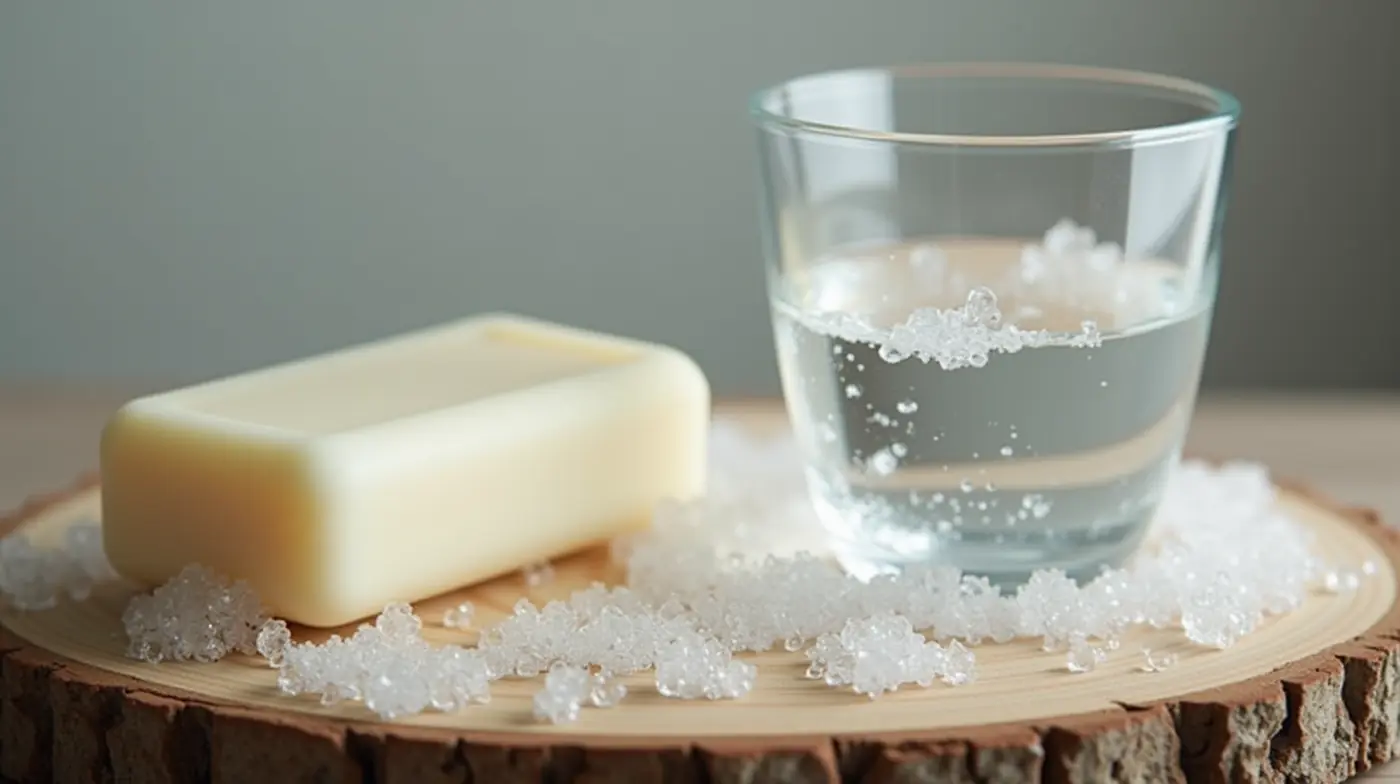
Soap is a salt of a fatty acid, and it works by surrounding grease so your hands can rinse it away. The soap molecule has a water-loving head and an oil-loving tail, and in soft water those molecules form thousands of tiny bubbles — the lather you expect. When your well water carries significant calcium (Ca2+) and magnesium (Mg2+), those hard-water ions swap places with the sodium in the soap. The result is calcium stearate: an insoluble, gray-white precipitate that is the “scum” you wipe off the sink and the reason the water feels like it is not getting clean.
The practical effect is dose-dependent. At moderate hardness, soap still works but needs more of it and lathers slowly. At high hardness, suds may barely form at all, no matter how much soap you use. What we consistently see during well inspections is that lather complaints start earlier than homeowners expect: many people notice weak suds around 8 grains per gallon (GPG), even though their lab report years ago read “normal.”
The conversion you will need
1 grain per gallon (GPG) of hardness = 17.1 mg/L as calcium carbonate (CaCO3). So 10 GPG equals about 171 mg/L. USGS guidance classifies water above 18 GPG (roughly 306 mg/L) as “very hard” — at that level, traditional soap will almost never produce a normal lather.
Hardness is not the only cause, though. When we evaluate a lather complaint, we also rule out:
- Detergent vs. true soap. Synthetic detergents (most dish soaps, laundry detergents, and body washes) are engineered to suds in hard water. If even your dish soap will not bubble, suspect something other than hardness — old fixture scale, a failing water heater, or very high dissolved solids.
- Scale in the delivery system. A heavily scaled showerhead or faucet can deliver water in a thin, aerated stream that suppresses suds even if the water itself is only moderately hard.
- Iron and manganese. These can stain soap scum red-brown or black and make the lather problem look worse. If your scum has color, get a full panel test.
- Very cold water. Soap dissolves and suds more slowly in cold water. Winter lather complaints that disappear in summer are often just temperature, not a new mineral problem.
- High total dissolved solids (TDS). In arid-region wells with high salinity, TDS above 1,000 mg/L can suppress lather independently of hardness. The EPA notes that high TDS gives water a salty or bitter taste and is one of the common non-health-related well water concerns — worth checking if hardness tests come back normal.
How to Test Your Well Water Hardness (Step by Step)
You do not need a lab visit to find out whether hardness is causing your lather problem. A field test takes about 10 minutes and gives you an answer accurate enough to make a treatment decision. Here is the exact process we use:
- Run cold water at the kitchen tap for 2 minutes into a clean glass jar. The kitchen tap is the best reference point because it bypasses the water heater and any point-of-use filters that could skew the reading.
- Dip a water hardness test strip into the water for the time specified on the package (usually 15 seconds), tap off the excess, and compare the color to the chart. Strips read in 5 mg/L increments and are accurate to roughly a grain or two — enough to separate soft from hard water.
- If the strip reads 7 GPG or higher, confirm with a titration drop kit. A well water hardness test kit (titration method) reads to single-grain precision and is the number you want when sizing a softener. Follow the drop-count procedure in the instructions and multiply per the kit’s factor.
- Test a second sample after a heavy water event — after a long irrigation season or heavy rain. In many aquifers the hardness number shifts by a grain or two with the water table, and the high number is the one that matters for sizing equipment.
- Order a certified lab panel at least once a year regardless of field results. Field kits measure hardness well; they cannot tell you about bacteria, nitrates, iron, or PFAS. The EPA recommends testing private wells for these parameters annually, and a lather complaint is a good reason to pull the full report while you are at it.
| Hardness | Lather behavior | Typical visible signs | Action |
|---|---|---|---|
| 1 to 3 GPG | Normal lather | Little to no scum or scale | No treatment needed |
| 4 to 7 GPG | Slightly slower lather, mild scum on cold water | Light film on skin, slow spot formation on glassware | Monitor; treatment optional unless signs progress |
| 8 to 15 GPG | Noticeably reduced lather, gray scum, more soap used | White scale on showerheads, kettle scale, dry skin complaints | Treat: softener or salt-free conditioner |
| 16+ GPG | Severe — little to no lather with true soap | Heavy scale rings, spotted dishes, stiff laundry, reduced heater efficiency | Whole-house ion-exchange softening recommended |
Thresholds compiled from USGS water-quality classification and field experience across 20+ years of well inspections. Lather onset varies with soap type and water temperature.
Pro tip: test where you feel the problem
If the lather problem is worst at the shower but not at the kitchen sink, test both taps. A reading that is 3 or more GPG higher at the showerhead usually means scale is trapping minerals in the fixture — descale the head before blaming the well. In one inspection we ran, a family’s “worsening well water” turned out to be a showerhead with a 40% flow restriction from calcium crust; the well itself had barely changed in two years.
5 Other Signs of Soap Not Lathering in Well Water
If the lather complaint is new, look for these companion symptoms. When they appear together, they confirm a hardness-driven problem and tell you how far the scale has already spread:
- Rough, “not-quite-clean” skin after showering. Calcium soap film is hard to rinse off and is the reason hard water is associated with dry, itchy skin. If your family started using more moisturizer within a year of moving, check the hardness.
- White rings and crust inside the showerhead and faucet aerator. This is calcium carbonate scale. The ring inside the toilet bowl that never fully scrubs out is the same mineral.
- Spotted glasses and dishes. Water spots that appear as dishes air-dry are hardness minerals left behind as the water evaporates. They get worse as scale builds on the rack itself.
- Dull, stiff laundry. Hard water leaves minerals in fabric, making clothes feel boardy and colors fade faster. Our guide to well water in washing machines covers the scale and rust patterns to look for in the machine itself.
- A water heater that seems to run hotter cycles or needs descaling more often. Scale on the heating element acts as insulation: the element runs hotter to push the same heat through, wasting energy and shortening its life. If your last descale cycle pulled a surprising amount of white crust, the hardness number is probably climbing. See our step-by-step water heater descaling guide for the safe process.
During a spring inspection round in the high desert last year, one family’s complaint was exactly the lather one — “the soap just does not work anymore.” Their last lab test, four years old, had read 9 GPG. The new field test read 17. The aquifer had shifted with the dry winter. Same well, same soap, doubled mineral load. That is the pattern behind most “sudden” lather complaints: the water changed, not you.
Treatment Options Compared (2026)
Not every home needs the same fix. The right treatment depends on your measured hardness, your household size, whether you want to avoid added sodium, and how much scale is already in the system. Here is how the main options compare:
| Treatment | What it does | Restores lather? | Typical cost (2026) | Best for |
|---|---|---|---|---|
| Ion-exchange water softener | Removes calcium and magnesium; replaces them with sodium | Yes — fully, at every tap | $500 to $2,500 installed; salt ongoing | Hardness 8 GPG and up, whole-house use |
| Salt-free water conditioner | Conditions minerals so they resist scaling; does not remove them | Partially — lather improves, hardness number unchanged | $150 to $800 installed; no salt | Moderate hardness, low-sodium households |
| Acid limescale remover | Dissolves existing scale on heaters, kettles, heads, aerators | Indirectly — recovers what scale already stole | $10 to $50 per treatment | Every well home, as maintenance |
| Reverse osmosis drinking water system | Membrane strips hardness (and most dissolved solids) at one tap | At the drinking tap only | $300 to $1,500 installed; membrane changes | Taste, cooking water, high-TDS wells |
Costs reflect typical 2026 US residential prices including standard installation; complex well-house wiring or long plumbing runs cost more.
An ion-exchange softener is the only option that actually removes the minerals, which is why it is the standard recommendation at 8 GPG and above. A salt-free conditioner is a legitimate choice for households that want to avoid sodium or have only moderate hardness — but be clear-eyed: it changes how the minerals behave, not how much is in the water, and your hardness test will still read high. For a deeper breakdown of conditioner technologies, see our comparison of water conditioners, scale reducers, and corrosion inhibitors.
Field insight: treat the water, then clean the system
Homeowners who install a softener and see “no improvement” in the first week are usually disappointed by scale that already exists in the showerheads, heater, and appliances. New soft water stops new scale, but it does not dissolve old scale. Plan on one thorough descaling pass within the first month of softening, and the difference will be obvious.
How to Fix Soap Not Lathering in Well Water
Once you have your hardness number, the fix follows a predictable sequence. Here is the complete process, in order:
- Confirm the number. Field strip plus titration kit, ideally two samples a few weeks apart. If both read 7 GPG or less and lather is still weak, re-check soap type, fixture scale, and TDS before spending money on treatment.
- Descale what is already scaled. Soak or treat showerheads, faucet aerators, the kettle, and the water heater with an appropriate acid descaler. A heater flush is the highest-value item on this list — see the step-by-step in our descale a water heater guide.
- Size your softener correctly. Sizing is a function of gallons per day used, measured hardness in GPG, and desired grain-out setting. Under-sizing is the most common softener failure — the unit works but never regenerates fully, so lather degrades again after a few weeks. Our best well water softener sizing guide walks through the math with worked examples.
- Install at the cold-water supply into the house. Standard placement is before the water heater, which protects the heater as a bonus. On well systems, keep the softener out of the freeze zone or winterize it properly.
- Verify with the same test you started with. One week after startup, re-test at the kitchen tap. You should read 1 to 3 GPG at the soft taps. If you are still reading high, check the bypass valve and salt level before calling the installer.
- Maintain it. Keep the brine tank full of salt (never let it run dry — that voids most warranties), and re-test annually. Groundwater hardness is not a fixed number; it moves with the water table.
Warning: do not skip the re-test
The single most common softener “failure” we see is a correctly installed unit that was never verified. A stuck bypass, a low salt setting, or a mis-sized unit will all let hard water through while the system hums along. Ten minutes with a test strip one week after install prevents months of “it was not helping” complaints.
Preventing the Scale That Kills Soap
Even with treatment in place, the goal is to keep the system ahead of the mineral load. The routine that keeps lather problems from returning:
- Flush or descale the water heater annually. This is the biggest efficiency win in any well home, and scale on the element is the first thing that dies when you skip it.
- Soak showerheads and aerators quarterly in white vinegar or a descaler solution — a 30-minute soak removes the crust before it restricts flow.
- Re-test hardness every 12 months with the field kit, and order the full certified lab panel on the same visit. Watch for drift: a jump of more than 2 to 3 GPG year over year is a signal to review your softener sizing.
- Check after big hydrologic events. Heavy snowmelt or a long drought can shift the water table and your mineral load. A lather change in spring that lasts more than a couple of weeks deserves a fresh test.
- Keep a spare descaler and test strips in the utility closet. Both are cheap, and both save you a diagnostic trip when a fixture starts misbehaving.
Hard water is a slow-motion problem: the lather complaint is the visible tip, and the scale in your pipes, heater, and appliances is the part that costs real money. Measure the number, treat to it, and keep the maintenance calendar current, and the problem stays exactly that — a nuisance you manage, not a system you replace.
See Also
- Well Water Hardness 2026: Levels, Testing and Softener Size — the full hardness picture, including how magnesium fits in.
- Best Well Water Softener 2026: Sizing Guide and Top Picks — how to size a softener to your well’s water.
- Best Water Conditioners, Scale Reducers and Corrosion Inhibitors for Well Water in 2026 — low-sodium treatment options compared.
- Well Water in Washing Machine 2026: Scale, Rust and Fixes — what hardness does to your laundry system.
Frequently Asked Questions
Why does my well water make soap not lather at all?
Almost always hardness. Dissolved calcium and magnesium react with soap to form insoluble scum before any bubbles can form. Test with a hardness strip or drop kit: at 8 GPG and above, traditional soap struggles, and at 16 GPG and above, true soap will often produce little lather regardless of how much you use. If your hardness reads low and suds are still weak, look at TDS, fixture scale, and cold water temperature.
Is well water that will not lather safe to drink?
Usually, yes. Hardness has no health-based limit because calcium and magnesium are dietary minerals, and the EPA does not list hardness as a drinking water contaminant. That said, a lather problem is worth a full annual lab test, because the same well can carry nitrates, bacteria, or iron at the same time — the lather tells you about minerals, not about everything in the water.
Will a water softener make soap lather again?
Yes, at every tap it serves, once the unit is correctly sized and verified. After a softener is running, you should be able to cut your soap use roughly in half and see a normal, fast lather. If you are not, re-test at the tap — a bypass valve or low brine level is the usual cause, not the soap.
Do vinegar or baking soda fix hard water lather problems?
No. Vinegar is a good descaler for fixtures and appliances, and baking soda can help clean, but neither removes the dissolved minerals from the water. They treat the scale that hardness leaves behind; only a softener (or a conditioner, for partial relief) treats the water itself.
How much does it cost to fix hard well water in 2026?
A whole-house ion-exchange softener typically runs $500 to $2,500 installed depending on capacity and plumbing, plus roughly $100 to $300 a year in salt. Salt-free conditioners run $150 to $800 with no ongoing salt cost. If your hardness is under 7 GPG, the cheapest effective fix may be a $20 descaler, better soap habits, and an annual re-test.
Bottom Line
Soap not lathering in well water is one of the clearest early warnings a well owner will get: the water chemistry has shifted enough to show up on your hands before it shows up on your bill. Measure the hardness with a field test, confirm with a titration kit, and match the treatment to the number — ion-exchange softening at 8 GPG and above, a salt-free conditioner where sodium is a concern, and an acid descaling pass to recover the appliances scale has already affected. Re-test one week after any treatment, and keep a yearly test on the calendar. Get the number right, and the lather takes care of itself.
#WellWater #HardWater #SoapLather #WaterSoftener #Limescale #PrivateWell #WellWaterTesting #WaterQuality #HomeownerGuide #WellMaintenance #WaterTreatment #WaterHeater #ScaleRemoval #WellOwner #RuralLiving