
Goulds submersible well pumps are the workhorse of residential deep wells in the United States. If your water table sits 30 feet or deeper below ground, a submersible pump like the Goulds SB, GS, or Slimline series is almost certainly what your well needs, and choosing the right one of the many available models is the single most important decision you will make when replacing a failed pump. In this 2026 buyer’s guide, we break down the full Goulds submersible line, explain how to size a pump using your well’s real numbers, and walk through the specs that actually matter so you can buy with confidence.
After two decades of inspecting residential wells, we have opened more pump vaults than we care to count, and Goulds motors are in a large share of them. They are not the cheapest pumps on the market, and they are not the only good option, but the combination of a stainless-steel construction, a widely available CentriPro 4-inch motor, and dealer support in nearly every state makes them one of the three brands a well contractor will hand you first. This guide explains exactly why, and when a different model or brand makes more sense for your well.
Table of Contents
By Robert Harrison, Certified Well Inspector
Robert has 20+ years of experience inspecting and testing residential water wells across the western US. Published: September 16, 2026
Disclosure: As an Amazon Associate, we earn from qualifying purchases on this page. Product selections are based on independent research and real well water data.
What Is a Goulds Submersible Well Pump?
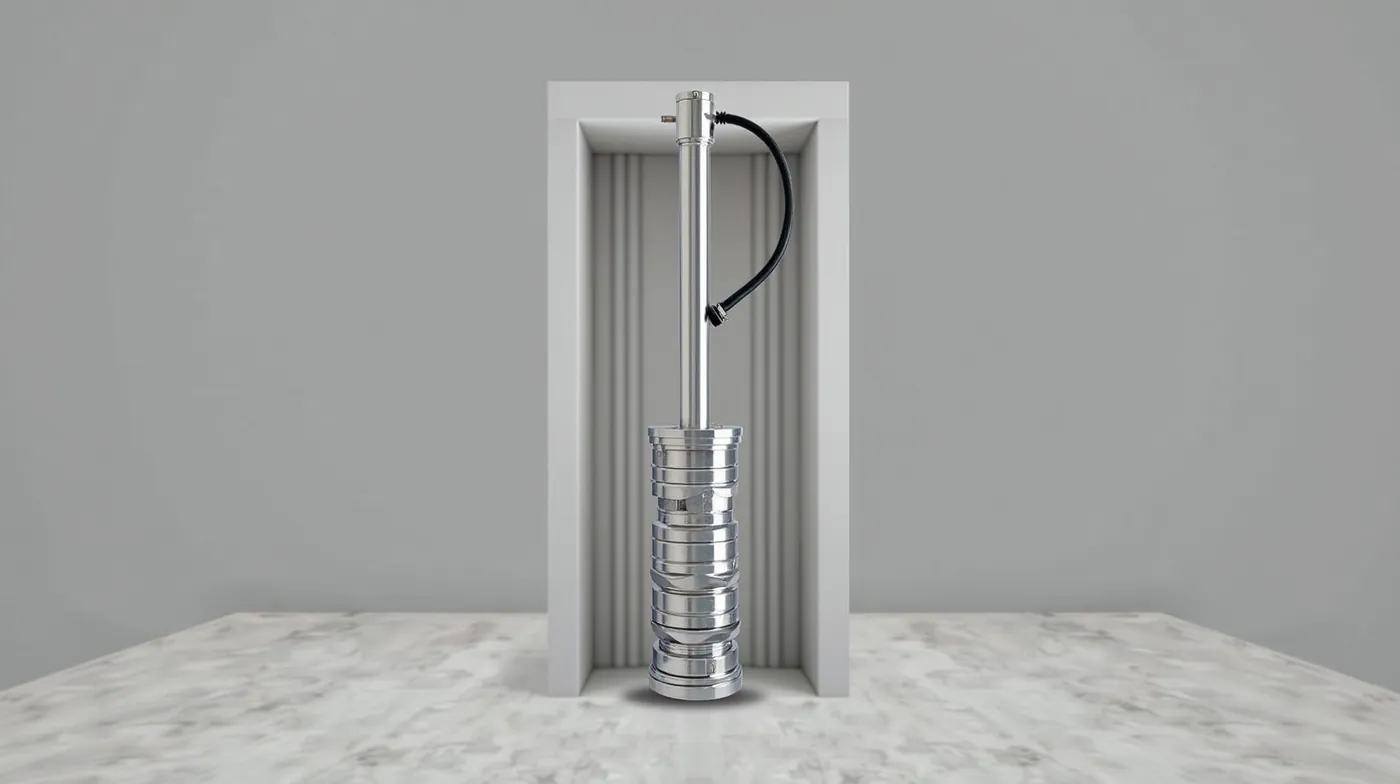
A Goulds submersible well pump is a sealed electric motor and pump assembly that lives inside the well casing, typically 15 to 20 feet below the static water level. Unlike a shallow-well jet pump, which pulls water up from a pit at the surface, a submersible pushes water up a vertical pipe from the bottom. Because it pushes rather than pulls, it can deliver water from depths of 400 feet or more, which is why submersibles are the standard choice for any well deeper than about 25 feet.
The Goulds brand traces back to 1848 in Seneca Falls, New York, and today the residential water line is produced by Xylem, the parent company that also owns the CentriPro motor brand. Most modern Goulds submersibles are built around a CentriPro 4-inch motor, which is one of the reasons parts and replacement motors are so easy to find. If you want the full mechanical background, including how the motor, seal, and pump stages work together, our guide to submersible well pump installation covers the system end to end.
From Our Inspections
In the wells we have tested, Goulds 4-inch submersibles routinely run 10 to 15 years before the motor or the mechanical seal fails. When they do fail, the most common root cause is not the motor itself but sand and grit entering the well, which we cover in our sand in well water guide. A clean well is the best pump warranty money can buy.
Goulds Submersible Well Pump Models Compared
Goulds does not sell one pump; it sells a family of them, grouped by flow capacity and by the well conditions they are built for. The residential lineup that you will actually encounter at a pump supplier breaks down into four groups. We compared the current Xylem product data and typical dealer pricing to build the comparison below.
| Series | Flow Range (GPM) | Horsepower Options | Best For | Typical Price (2026) |
|---|---|---|---|---|
| SB (5SB/7SB/10SB/18SB) | 1.2 – 28 | 1/2 to 1 1/2 HP | Standard 4″ wells, the default residential choice | $1,100 – $2,400 |
| GS (5GS/7GS/10GS/18GS/25GS) | 5 – 25 | 1/2 to 1 HP | High-head applications, 300+ ft lift | $1,200 – $2,600 |
| G Slimline (5G/7G/10G) | 5, 7, 10 | 1/2 to 1 1/2 HP | Tight wells, 5″ casing, abrasive water | $1,300 – $2,800 |
| HS (High Solid) | 5 – 25 | 1/2 to 1 1/2 HP | Wells with elevated sand or solids | $1,400 – $3,000 |
Source: Xylem/Goulds Water Technology product data (5SB–18SB technical brochure) and 2026 dealer price sampling. Prices vary by stage count, voltage, and wire configuration.
SB Series: the default choice
Shop Goulds SB series pumps on Amazon
The SB series is the bread and butter of Goulds residential submersibles. The model number tells you almost everything: a 5SB is rated around 5 GPM at best efficiency, a 10SB around 10 GPM, and an 18SB around 18 GPM. Each is available in 1/2, 3/4, 1, and 1 1/2 HP depending on the flow, and stage counts are selected to match your total dynamic head. The 5SB05 (1/2 HP) is one of the most-installed residential pumps in the country for a reason: it covers the average 1.5-bathroom home on a well shallower than about 150 feet of total head, and it draws little power, which keeps the running cost low.
GS Series: high head
Shop Goulds GS series pumps on Amazon
When your well is deep, the pump needs to build a lot of pressure. The GS series uses a redesigned impeller and extra staging to deliver higher head per stage, which is why a 25GS at 1 HP can push 25 GPM through 300+ feet of total dynamic head. If your well is deep and your house sits on high ground, talk to your supplier about the GS line before settling on an SB.
Slimline Series: tight and abrasive wells
Shop Goulds Slimline pumps on Amazon
The G Slimline (5G, 7G, 10G) has a narrower body that fits wells with restricted casing diameter or where the pump must sit close to a wall. It is also the series we recommend when a well produces grit: the tighter impeller clearances and the option of a 5-inch motor make it more tolerant of abrasive water. If your well has a history of sand in well water, the Slimline or the HS high-solid pump will usually outlast a standard SB in the same well.
Warning: Match the Motor to the Well, Not the House
A 1/2 HP motor in a well that actually needs a 3/4 or 1 HP motor will short-cycle, overheat, and die young. Conversely, an oversized 1 1/2 HP pump on a low-yield well will pump the aquifer dry and trip on low water. Size for the well’s yield and your peak demand, not for the biggest pump you can afford. See the sizing section below for the exact math.
How to Size a Goulds Submersible Pump for Your Well
Every well is different, so a pump that is perfect for your neighbor may be wrong for you. Sizing a Goulds submersible pump comes down to two numbers: total dynamic head (how hard the pump has to work) and peak demand (how much water it has to move). Here is the exact process we use on inspection.
- Find your static water level. Lower a measuring tape with a small weight on a string into the well and stop when it hits water. That depth, measured from the top of the casing, is your static level. If you do not have a tape handy, a pump dealer can do it, and your well driller’s records (ask the county) usually list it.
- Find your drawdown. Run your highest-demand fixture (or a hose at 5 GPM) until the water level stabilizes. The drop from static to the pumped level is your drawdown. Add it to the static level to get your pumped level — this is the level you size against.
- Calculate total dynamic head (TDH). Add the pumped water level to the elevation of your highest fixture (roof, if you have an upstairs bath or a roof irrigation line) plus about 25 PSI of friction loss, converted to feet (1 PSI = 2.31 ft). Example: pumped level 90 ft + house height 40 ft + friction 58 ft (25 PSI) = 188 ft TDH.
- Calculate peak demand in GPM. A common rule of thumb for a home: 1.5 GPM per bathroom fixture in use, plus 5 GPM if you run irrigation from the well. A typical 2-bath home with a sprinkler system needs about 10 GPM at peak.
- Find the model whose curve covers your point. On the Goulds performance curve, locate your TDH on the vertical axis and your demand GPM on the horizontal. The pump must deliver your demand at your TDH with margin. If your point falls near the top of a curve, step up one horsepower.
- Confirm yield. Your well must be able to produce your peak demand continuously. If a 24-hour water test shows the well yields only 6 GPM, no pump — Goulds or otherwise — will make it flow more. Re-drilling or a larger casing may be the real answer.
Pro Tip: Keep 20% Headroom
When you finish the math and land exactly on a model, size up one stage or one horsepower. Wells get shallower and more silty over time, and a pump that is marginally under-powered today is the pump that is tripping the breaker in three years. For the full curve-reading walkthrough with worked examples, see our guide on how to read a well pump curve.
Specs to Check Before You Buy a Goulds Submersible Pump
Once you have a model family in mind, these are the specifications that determine whether it will fit your well and run for years. Check each one against your well’s numbers before you order.
- Voltage and phase. Most homes run 115V or 230V single-phase. The model code encodes this: a “1” after the motor code means 115V, a “2” means 230V. A 230V motor is more efficient at the same horsepower and draws less current, which means a smaller breaker and wire. If your well is far from the house, a 230V motor can be the difference between a run that works and one that sags voltage.
- Wire configuration. A 3-wire pump is hard-wired through a control box (pressure switch, check valve, contactor). A 2-wire pump uses a simpler control and is common in newer installs. Match your existing wellhead wiring or budget for the conversion.
- Motor diameter. Nearly all residential Goulds use a 4-inch (4.0 inch) motor, which fits standard 4-inch and 6-inch casing wells. Verify your casing inner diameter with the driller’s record — a 4-inch motor needs at least 4.5 inches of clear casing to install and retrieve safely.
- Discharge connection. Standard is a 1-1/4″ NPT discharge. Your drop pipe must match. If you are replacing a pump, photograph the old discharge fitting before it comes up.
- Stage count and length. More stages mean more pressure. The water-end length of the pump must clear the bottom of the well by at least 3 feet so it does not stir up settled sand, and must not extend above the pumped water level. When in doubt, have your supplier confirm the stage count for your TDH — this is where most sizing errors happen.
- Seal and motor warranty. Current Goulds residential submersibles typically carry a 3-year motor warranty with a 1-year seal and water-end warranty. Keep the invoice; warranty claims without proof of purchase are routinely denied.
Value Check
A Goulds pump costs more upfront than an equivalent private-label or budget-brand submersible, often by $200 to $500. On a well that runs 4,000 to 6,000 hours a year, that premium is usually recovered in the second year of service, because the CentriPro motor and the dealer network mean fewer callbacks and a replacement motor (not a full pump) when the motor eventually dies. We have documented this trade-off in our well pump replacement guide, which covers the full decision tree.
Common Problems and Maintenance for Goulds Submersible Pumps
Even a well-sized Goulds submersible will fail if the well itself is unhealthy. These are the failure modes we see most often, and what to do about each.
Short cycling (rapid on/off)
If the pump cycles every 30 seconds to a minute, the pressure switch settings are off, the pressure tank bladder has failed, or the pump is oversized for the well. Short cycling kills motors. Check the tank pre-charge first — a tired bladder is the cheapest fix on this list, and our low well water pressure guide walks through the tank test step by step.
High amp draw
A motor that draws 15 to 25% above its nameplate amps is usually being asked to move against a head it was not designed for, or it is running in air. If your pump trips the breaker, the first diagnostic is a clamp-on amp meter at the wellhead, not a new motor. Our well pump amp draw article has the full troubleshooting sequence.
Sand and grit damage
Sand is the number one killer of submersible impellers. If your well pumps sand, the pump will run hotter, the impeller erodes, and efficiency drops until the motor overheats. The fix is usually a larger sand foot or screen, not a stronger pump. If sand is chronic, step up to a Slimline or HS high-solid model at replacement time.
Annual maintenance checklist
- Check the pressure gauge at the wellhead and compare it to your tank settings. A drifting gauge means a failing switch or tank.
- Test the tank pre-charge with the system off: the air side should read about 2 PSI below the pump cut-in pressure.
- Run a flow test at the house tap and note GPM. A 20% drop from the year before is an early warning of well or pump trouble.
- Inspect the wellhead for seepage around the cap. Surface water leaking down the outside of the casing is a contamination path and a pump killer.
- Listen to the pump for grinding or rattling. A healthy submersible is nearly silent at the house; noise at the wellhead means bearing wear.
Goulds Submersible Pump FAQ
Are Goulds well pumps worth the extra cost?
For most residential wells, yes. The premium over budget brands is real but small relative to a full replacement, and the CentriPro motor, stainless construction, and nationwide dealer support mean a Goulds typically runs longer and is cheaper to repair. If you are on a tight budget and your well is shallow, a quality private-label submersible is a defensible choice, but for a well that is deep, high-head, or has any history of sand, the Goulds engineering is money well spent.
What size Goulds pump do I need for a 150-foot well?
“150 feet” is not enough information — you need total dynamic head, which adds house elevation and friction loss, plus your peak demand in GPM. As a rough guide, a 150-foot pumped level with a 40-foot house and a 2-bathroom home needs roughly 220–240 feet of TDH at about 8–10 GPM, which lands on a 3/4 HP or 1 HP SB-series pump. Run the full calculation in the sizing section above, or have your dealer confirm against the Goulds curve.
Can I replace just the motor on a Goulds submersible?
Yes. CentriPro sells replacement motors for most Goulds water ends, and a motor-only repair is typically 40 to 60% of the cost of a new pump. It makes sense when the water end is still sound — which you can judge by inspecting the impeller and stages when the pump is pulled. If the impeller is eroded or the stages are scored, replace the whole pump.
How long do Goulds submersible pumps last?
In a clean, correctly sized well, 10 to 15 years is typical for the motor, and the seal is the usual first failure, often at the 5-to-8-year mark. In a sandy or under-specified well, expect 4 to 7 years. The pump life curve in our how long do well pumps last guide breaks down the data by well condition.
What is the difference between a Goulds SB and a GS pump?
The SB is the standard-efficiency line for normal residential head (roughly under 250 feet TDH). The GS is the high-head line with a redesigned impeller and extra staging, built for deep wells and high-elevation houses where 300+ feet of head is required. If your TDH math comes in above 250 feet, ask your dealer about the GS series before you order an SB.
Final Verdict: Are Goulds Submersible Well Pumps Worth It in 2026?
For the large majority of residential wells in the United States, a Goulds submersible well pump is one of the two or three correct answers to the “what do I put in my well” question. The SB series covers the standard case at a fair price, the GS series covers deep high-head wells, and the Slimline and HS series cover the abrasive or tight-casing edge cases that break cheaper pumps. None of this matters if the pump is mis-sized, which is why the sizing math above is the part of this guide to actually do before you buy.
If your well is deep, your house sits on high ground, or your water has any sand in it, spend the extra to size correctly and choose the right series. Get the static level, the drawdown, and a 24-hour yield test in writing from a local well professional, take those three numbers to a pump dealer who can read a Goulds curve, and you will leave the counter with a pump that runs quietly for the next decade. That is the whole game.
Where to Buy Each Type of Goulds Pump
Once you have picked your series from the sizing math, here is where each one is stocked on Amazon. Availability and exact model numbers (stage count, voltage, wire configuration) vary by listing, so check the product page for the variant that matches your TDH. Prices move weekly, so treat the figures above as a 2026 planning range.
| Pump Type | Best For | Buy on Amazon |
|---|---|---|
| Goulds SB Series | Standard 4″ wells, the default residential choice | View on Amazon |
| Goulds GS Series | Deep, high-head wells (300+ ft TDH) | View on Amazon |
| Goulds G Slimline | Tight-casing and abrasive/gritty wells | View on Amazon |
| Goulds HS High-Solid | Wells with elevated sand or solids | View on Amazon |
Not sure which series fits? Start with a general search for Goulds submersible well pumps on Amazon and compare the listings side by side.
See Also
#GouldsWellPump #SubmersiblePump #WellPump #WaterWell #WellMaintenance #WellDrilling #HomeownerGuide #WellPumpSizing #CentriPro #Xylem #PrivateWell #WellWater #PumpRepair #WellOwner #2026Guide