
A well hydrostatic test is the single most reliable way to confirm two things at once: whether the casing holding your well is still intact, and whether your aquifer can deliver enough water to keep up with your household’s real demand. It is not a water-quality test — it does not tell you what is dissolved in the water. It tells you how the well behaves under pressure and whether water is escaping into the surrounding rock faster than it is being replaced. If your well is taking longer to recover after a shower, your pump is running in short bursts, or you have noticed a slow, steady drop in water level since last year, a hydrostatic test is the diagnostic that separates a simple fix from a serious casing repair. In this 2026 guide we walk you through how to run both halves of the test — the static test and the pumping (drawdown) test — yourself at home, what every number means, and the exact pass/fail limits used by professional well inspectors.
By Thomas Reynolds, Pump Systems Engineer
Thomas has installed and serviced more than 1,000 residential well pump systems and has run hydrostatic and pumping tests on wells from 30-foot domestic supplies up to 600-foot commercial depths.
Last updated: October 22, 2026
Disclosure: As an Amazon Associate, we earn from qualifying purchases on this page. Product selections are based on independent research and real well water data.
What Is a Well Hydrostatic Test?
A hydrostatic well test measures the relationship between the water you take out of a well and the water the ground puts back in. It has two distinct halves that answer different questions. The static test checks the integrity of your well: with the pump off and all faucets closed, it watches whether the water level stays where it should. If the level falls on its own, water is leaking out of the casing into the surrounding formation. The pumping test (also called a drawdown or recovery test) puts a known demand on the well and measures how far the water level drops and how quickly it bounces back.
Three numbers come out of the process. The static water level (SWL) is where the water sits after the well has rested undisturbed, usually for at least 24 hours. The dynamic water level (DWL) is where the water settles while the pump is running at a steady rate. The difference between the two — the drawdown — plus the recovery time (how long it takes the level to climb back toward static) is what tells you whether the well is healthy, marginal, or failing. We have used these exact measurements to diagnose short-cycling pumps, hidden casing cracks, and seasonal aquifer decline on hundreds of private systems, and the same math will work for you.
When You Need to Run a Well Hydrostatic Test
Most well owners never think about a hydrostatic test until something goes wrong. You should run one — or ask your well contractor to run one — in any of these situations:
- You are buying a home on a well. A hydrostatic test is one of the smartest inspection steps before closing, because it reveals yield problems that a simple “turn on the faucet” check never will.
- Your pump short-cycles. Rapid on/off cycling is a classic symptom of a well that cannot hold its water level.
- Recovery is getting slower year over year. A well that took an hour to recover two years ago but now takes four is telling you something is changing in the casing or the aquifer.
- After a flood or extended power outage. Standing water and air in the line can mask a compromised casing until it is tested.
- Before replacing a pump. You want to know the true water level before you buy a motor, or you risk installing a pump that is sized for a water level that no longer exists. See our guide on how to measure your well depth for the baseline numbers the test relies on.
- As routine maintenance. A hydrostatic test every one to two years is the cheapest insurance you can buy for a system worth thousands of dollars. It slots directly into our annual well water maintenance checklist.
Tools and Equipment You Will Need for a Hydrostatic Test
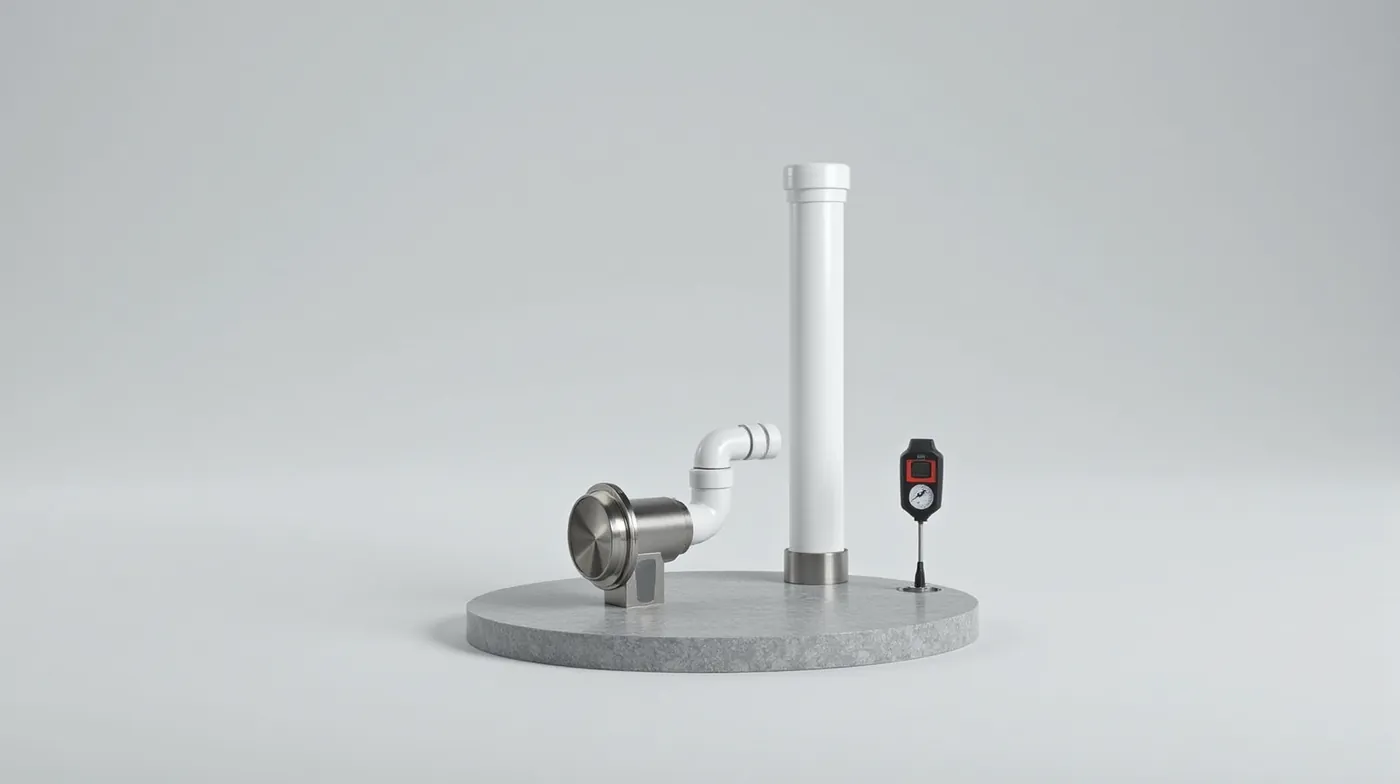
You do not need a drilling rig to run a meaningful hydrostatic test at home. The static test can be done with a test pipe and a tape measure if nothing else. For the full pumping test you will want to be able to read water level, measure flow, and run a pump at a known rate. Below is the equipment we recommend, what each piece does in the test, and what it typically costs. Every product is linked so you can check current pricing.
| Tool | Role in the Test | Typical Cost | Why It Matters |
|---|---|---|---|
| Digital Pressure Gauge | Reads line pressure at the pressure tank before and after the test. | $15 to $40 | Fast baseline; a falling gauge while the system is sealed points straight to a leak. |
| Well Water Level Meter | Measures static and dynamic water level inside the well. | $40 to $120 | The core of drawdown math — you cannot size a problem without an accurate SWL and DWL. |
| Well Water Flow Meter | Measures gallons per minute while the well is being pumped. | $30 to $90 | Establishes your real demand rate so the drawdown number is meaningful. |
| Portable Well Test Pump | Draws water at a controlled, repeatable rate during the pumping test. | $100 to $400 | Lets you test at a set GPM without running your whole house pump. |
| Schedule 40 PVC Test Pipe | A clean tube lowered to the water so you can mark the level by eye. | $10 to $25 | The low-cost way to read water level when you do not own a meter. |
Pro tip
You do not need to buy all five items to get a useful answer. A $20 test pipe plus a $20 tape measure is enough for the static test. Add the water level meter and a flow meter when you are ready to quantify yield. A full DIY kit is typically $200 to $400 all in, versus $300 to $600 for a professional pumping test.
How to Perform a Static Hydrostatic Test (Step-by-Step)
The static test is the leak check. Its whole job is to answer one question: with no water being used, does the water level hold? Here is the exact sequence we run in the field.
- Stop all water use and kill the pump. Turn off every faucet, the irrigation, and any appliance that draws water, then flip the well pump’s breaker so the system is fully at rest.
- Let the well rest. For a true static reading the well should be undisturbed for at least 24 hours. If you have time, test in the morning before anyone uses water.
- Insert a clean test pipe. Lower a Schedule 40 PVC test pipe (sized to fit your well casing with a small gap) down until it reaches the water. A water level meter can do the same job and is more precise.
- Mark the static water level. Where the water meets the pipe, mark it with a pencil and note the time and the air temperature. This is your SWL.
- Leave it undisturbed and re-measure. After four to six hours, with the pump still off and no water used, read the level again.
- Compare the two readings. A drop of one inch or less means the casing is holding. A steady, measurable drop with no water use means water is escaping out of the well.
- (Optional, more sensitive) Watch a sealed gauge. On systems with a sealed pressure tank, you can also watch the tank gauge over the same interval. A slow, continuous pressure loss while the house is dry is another strong leak indicator.
How to Run a Well Pumping (Drawdown) Test
The pumping test is where you find out if the well can keep up. It measures how far the water drops under a known demand and how fast it recovers. Run it on a day when you can leave the pump running for a couple of hours without needing the water.
- Record the static water level. Use your resting measurement from the static test as your SWL, or take a fresh reading after the well has had time to rest.
- Pump at a constant rate. Run the well pump (or a portable test pump) at a steady flow that matches your household’s peak demand, commonly 5 to 10 gallons per minute for a single-family home. A flow meter keeps the number honest.
- Log the water level over time. Every 15 to 30 minutes, measure and write down the water level. Keep the pump running the whole time.
- Wait for the level to stabilize. Continue until the water level stops dropping and holds steady at its lowest point for about 30 minutes. This is your dynamic water level (DWL). It typically takes two to four hours to reach.
- Stop the pump and track recovery. Turn the pump off and record the water level again every 15 to 30 minutes until it climbs back to (or close to) static. The time to recover is your recovery rate.
- Do the math. Drawdown equals SWL minus DWL. Recovery time is the clock from pump-off back to static. Both numbers, together with your pumping rate, define the well’s condition.
From our testing, a healthy domestic well pumped at five to eight GPM will usually show a drawdown of somewhere under 20 feet and recover to within a few inches of static within an hour. A well that drops 40 or 50 feet and then takes many hours to climb back is under serious stress, whether from a casing problem or a genuinely low-yield aquifer.
How to Read Your Hydrostatic Test Results (Pass or Fail)
Numbers on their own mean little; it is the pattern that tells the story. The table below is the pass/fail framework we use when we walk a well owner through their results.
| What You Observe | What It Means | Verdict | Recommended Action |
|---|---|---|---|
| Level holds (under 1 inch drop) and recovers in under an hour | Intact casing and a healthy aquifer | Pass | No action; retest every one to two years |
| Slow drop with recovery taking one to four hours | Minor leakage or a low-yield aquifer | Caution | Monitor; retest in six to twelve months |
| Rapid drawdown with slow or only partial recovery | Casing breach or demand outpacing supply | Fail | Professional well repair or evaluation |
| No meaningful recovery within 24 hours | Severe leak or the well is running dry | Fail | Urgent professional diagnosis |
What a Failed Hydrostatic Test Means (and What to Do Next)
A failing result does not automatically mean you need a new well. It means the water is leaving the system faster than the ground is replacing it, and the next step is finding out where. The most common causes we see, in rough order of frequency, are:
- A cracked or split casing. Over decades, casing joints can weep, especially in soils that shift with freeze and thaw or heavy rain. This is the classic cause of a well that once recovered fast and no longer does.
- Intake or screen failure. A worn screen or an intake set too close to the bottom can pull sediment and let water bypass the usable zone, mimicking a leak.
- High or growing demand. A new irrigation system, a swimming pool fill, or a second bathroom can quietly push your household past what the aquifer sustains. The well is fine; the demand changed.
- Seasonal or long-term aquifer decline. Drought and over-pumping in the region can genuinely lower your water table year over year. This is where keeping an annual record of your SWL matters so much.
The fix depends on the cause. A small casing weep can often be sealed with a grout or resin injection from inside the well. A badly split section may need the casing repaired or the well re-drilled. If the problem is simply demand, the answer is to reduce simultaneous use or add storage, not to spend thousands on a new well. If your hydrostatic numbers are trending the wrong way, pair them with our guide on a well pump that will not build pressure, because the two problems almost always travel together, and keep your baseline numbers current using our well depth measuring method.
How Much Does a Hydrostatic Well Test Cost?
The cost depends on whether you do it yourself or hire a professional, and on whether you run just the static check or a full pumping test.
- DIY static test: roughly $30 to $60 in a one-time test pipe and tape measure, or more if you add a digital gauge.
- DIY full pumping test: a water level meter plus a flow meter and a test pump puts you in the $200 to $400 range for reusable equipment.
- Professional static / drawdown test: a well contractor typically charges $150 to $400 to run a test and read the numbers for you.
- Professional pumping test with yield report: a more thorough, multi-hour pumping test with a written yield analysis commonly runs $300 to $600 or more.
Against the $1,500 to $10,000 it can cost to repair or re-drill a well that is quietly failing, a test that costs a few hundred dollars is one of the best-value diagnostics a well owner can buy. If you are weighing a pump replacement, run the test first so you size the new motor against the water level that actually exists, not the one from when the well was new.
Frequently Asked Questions About Well Hydrostatic Tests
How often should I run a hydrostatic well test?
For a healthy well, once every one to two years is enough to keep an eye on your water level and yield. Run one sooner if you notice short-cycling, slow recovery, a change in water color, or if a flood or power outage has affected your system.
Can I do a hydrostatic test without a pump?
Yes. The static (leak) test needs no pump at all — just a test pipe, a marker, and patience. You only need a pump for the second half, the pumping or drawdown test, which is where you measure how the well performs under demand.
How much drawdown is normal for a well?
There is no single magic number, but a common working range for a domestic well pumped at five to eight gallons per minute is a drawdown of under 20 feet with recovery within about an hour. Much deeper drawdown, or recovery that takes many hours, is a signal to investigate the casing and the aquifer.
Does a hydrostatic test check my water quality?
No. A hydrostatic test measures volume, water level, and recovery — it tells you about the casing and the aquifer, not about bacteria, iron, manganese, or chemicals. For water quality you need a separate lab sample. The two tests answer completely different questions and both matter.
When should I call a well contractor instead of testing myself?
Call a pro when your numbers show a clear failure (no recovery, a rapid falling level), when the well is deep or the casing is in poor condition, or when you need a repair such as grouting or re-drilling. A professional can also run a multi-rate pumping test and a formal yield report, which is worth having when you are buying, selling, or insuring a property on a well.
See Also
- How to Measure Well Depth 2026 — the baseline water-level and depth numbers every drawdown calculation depends on.
- Well Pump Won’t Build Pressure 2026 — a failing hydrostatic test is one of the top reasons a pump cannot hold its pressure.
- Well Water Maintenance 2026 — fold the hydrostatic test into your annual well inspection schedule.
#HydrostaticTest #WellHydrostaticTest #PrivateWell #WellCasing #WellWater #WellMaintenance #WellPump #DrawdownTest #WellLeak #WaterWell #WellInspection #WellOwner #WellWaterTest #PrivateWellWater #WellCare