
Published: October 2026
If your well water runs cloudy, leaves a sandy residue in the baseboard heater, or clogs your softener every few months, a sand filter for well water is usually the right first fix. It is the workhorse of private well treatment: a pressure tank packed with graded media (sand, anthracite, gravel, or catalytic media) that traps sediment, rust, turbidity, and in some cases dissolved iron and manganese as water flows through under pressure. Unlike cartridge sediment filters that clog in weeks, a properly sized sand filter backflushes clean and keeps running for years — if you pick the right tank, media, and flow rate up front.
In this guide, we break down how a sand filter actually works, how to size it for your well’s flow, the differences between single-media, multi-media, and catalytic filtration, six of the best sand filter systems you can buy in 2026, and a step-by-step installation and backwash routine based on what we have seen working in residential wells. We also cover the common failure modes — short cycling, media loss, and breakthrough — so you can troubleshoot without calling a contractor for everything.
Disclosure: As an Amazon Associate, we earn from qualifying purchases on this page. Product selections are based on independent research and real well water data.
By Robert Harrison, Certified Well Inspector
Robert has 20+ years of experience inspecting and testing residential water wells across the western US.
Table of Contents
- How a Sand Filter for Well Water Works
- When You Need One (and When You Do Not)
- How to Size a Sand Filter: Flow Rate and Media Depth
- Single-Media vs Multi-Media vs Catalytic: Media Comparison
- Best Sand Filter Systems for Well Water in 2026
- Where to Buy: Sand Filter Tanks and Media at a Glance
- Installing a Sand Filter: Step-by-Step
- Backwashing and Maintenance: How Often and Why
- Troubleshooting: Breakthrough, Clogging, and Media Loss
- Frequently Asked Questions
How a Sand Filter for Well Water Works
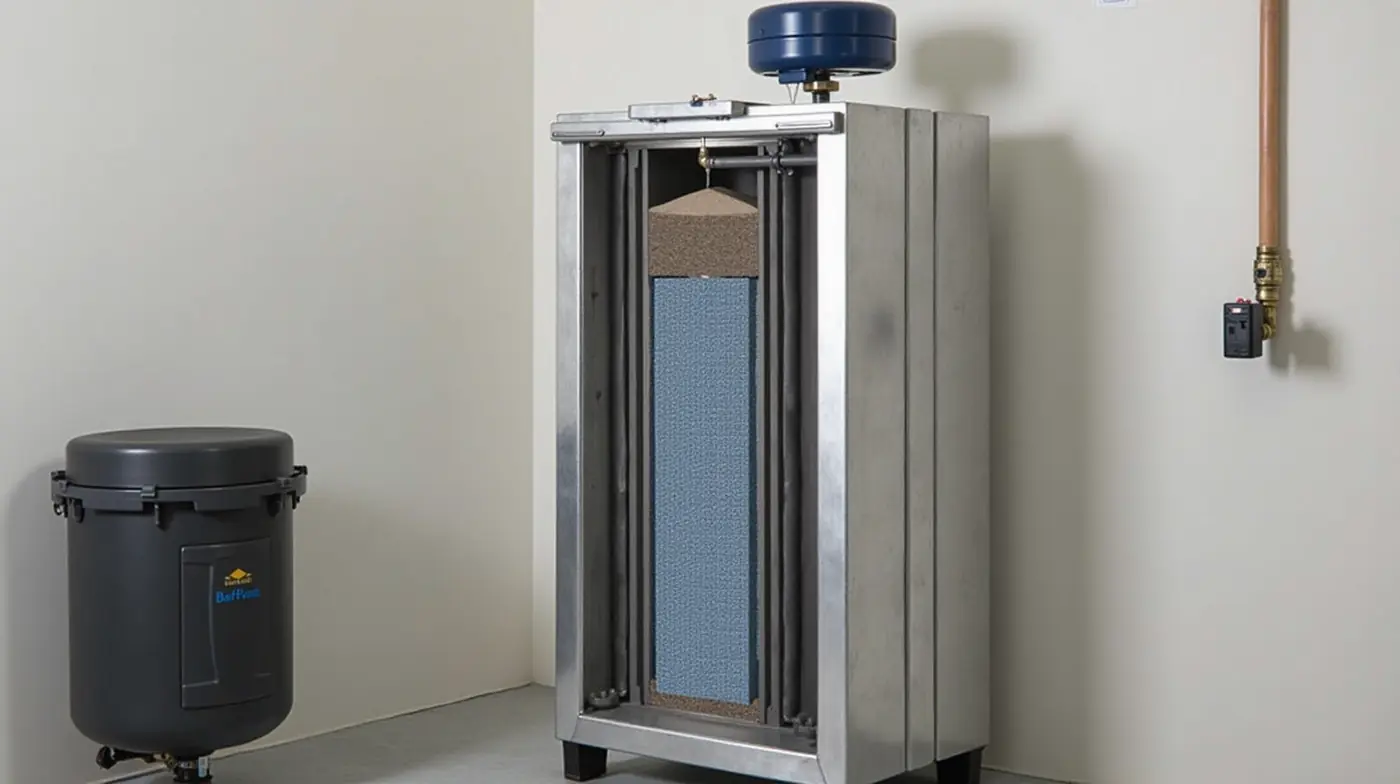
A sand filter is a gravity-aided pressure filter. Water enters the top of a vertical steel or fiberglass tank, passes downward through several feet of graded media, and exits through a bottom collection riser into your pressure tank or point of distribution. Two physical processes do the work:
- Depth filtration. Particles get trapped in the void spaces between grains throughout the bed, not just at the surface. That is why a sand bed holds many times more debris than a cartridge filter of the same footprint.
- Stratification. Over the first few backwashes, the media sorts itself by density — heavy sand settles at the bottom, lighter anthracite or gravel rides on top. Each layer then traps a specific particle size range, so the top of the bed works hardest and protects the layers below.
When the bed finally traps too much debris and pressure drops, you open a multi-port valve and reverse the flow. The backwash lifts the media bed, dislodges captured particles, and flushes them out the waste line. A properly designed backwash distributor keeps the media from escaping — which is why the riser and distributor quality matter as much as the media itself.
What we noticed in the field
Across the wells we have inspected, the #1 cause of a “failing” sand filter is not the media — it is an undersized tank running at a flow rate above its rating. The bed never stratifies properly, fine media washes into the riser, and the system loses pressure within a season. Size for flow first, media second.
When You Need One (and When You Do Not)
A sand filter is the right tool when your problem is particulate or suspended matter. Based on water quality data from residential test kits and lab panels, the typical jobs are:
- Sand and silt in the water — especially after storms or high-pump days. See our guide on sand in well water for how to tell a loose-gravel problem from a worn well screen.
- Turbidity and cloudiness — a sand filter cuts NTU (turbidity) dramatically; a 5-micron cartridge alone usually cannot.
- Corrosion scale — rust flakes from galvanized pipe or a corroding foot valve are particulates, and sand filters trap them well.
- Protection duty — as a pre-filter ahead of a water softener for well water, a refrigerator RO system, or high-endurance fixtures. This is the job that saves the most money over time.
- Dissolved iron or manganese — only with catalytic (oxidizing) media such as Birm or manganese green sand. A plain sand bed will not remove dissolved iron; for that, see our guide on iron filter systems for well water.
You do not need a sand filter if your water is clear, low in sediment, and your only concern is taste, odor, chlorine, or dissolved minerals — that is the job of an activated carbon filter or an RO unit. And if you are seeing fine silt that a bag filter handles for a few dollars a season, a $2,000+ pressure sand filter may be overkill.
How to Size a Sand Filter: Flow Rate and Media Depth
Two numbers drive sizing: peak gallons-per-minute (GPM) demand at your house, and media bed depth in the tank. Get the flow rate wrong and nothing else matters.
Step 1: Estimate your peak flow demand
- Add fixture flows: two showers at ~2.5 GPM each, a kitchen faucet at ~2.25 GPM, a washing machine at ~3 GPM. Most single-family homes peak around 10–15 GPM, though this varies.
- Check what your well can actually deliver. Run the pump with two outside faucets open at full — the combined flow is your realistic ceiling. A sand filter rated above your well’s flow will never work at full capacity.
- Match tank diameter to that number. As a rule of thumb from the tank manufacturers: a 10-inch tank handles roughly 15 GPM at 30 feet per minute filtration velocity (FPM); a 12-inch tank handles roughly 25–30 GPM; a 16-inch tank handles 45+ GPM.
Step 2: Confirm media depth
Manufacturers specify media depth per tank. Typical specs: a 10×54 tank carries about 35–40 gallons of media with roughly 20–24 inches of bed depth; a 16×96 tank carries 250+ gallons. Deeper beds (24 inches minimum for multi-media) trap smaller particles and last longer between backwashes. If a kit advertises a shallow bed in a tall tank, it is cutting corners.
Sizing rule of thumb
Home peaks at 10 GPM or less? A 10-inch tank is plenty. Two bathrooms used simultaneously plus laundry? Go 12 inches. Farmhouse or high-flow well? 16 inches. When in doubt, oversize the tank — a bigger bed filters slower, traps finer particles, and backwashes less often.
| Tank Size | Typical Media Capacity | Rough Max Flow (30 FPM) | Best For |
|---|---|---|---|
| 10 in x 54 in | 35–40 gallons | ~15 GPM | Small homes, single-bath, light use |
| 12 in x 72 in | 80–90 gallons | ~25–30 GPM | Standard 2–3 bath homes |
| 16 in x 96 in | 250+ gallons | ~45 GPM | Large homes, farms, commercial |
Flow figures are manufacturer guidance at 30 FPM filtration velocity; verify against the spec sheet of the specific tank you buy.
Single-Media vs Multi-Media vs Catalytic: Media Comparison
The tank is the same in all three designs — what changes is what you pack it with, and that changes what the filter removes.
| Media Type | Removes | Backwash Frequency | Best Use Case |
|---|---|---|---|
| Single-media sand | Sand, silt, turbidity, rust flakes | Monthly (heavy use: weekly) | Sediment-heavy wells, softener pre-filter |
| Multi-media (anthracite + sand + gravel) | Everything single-media catches, plus finer turbidity | Monthly; bed lasts longer | Cloudy water, high-NTU wells |
| Catalytic / oxidizing (Birm, MGS, Filox) | Dissolved iron, manganese (with air injection), plus particulates | Weekly to biweekly | Red/brown or black-staining water |
Catalytic media require dissolved oxygen or an air injector to oxidize dissolved iron before the bed can trap it; plain sand will not.
The pairing that saves money
For a well with both sand and hardness, the highest-ROI layout we recommend is a sand filter feeding a water softener. The softener resin is the most expensive consumable in most well systems, and every grain of silt that reaches it shortens its life. A $400–800 media refill every few years protects a $1,500+ resin bed that would otherwise degrade in a fraction of the time.
Best Sand Filter Systems for Well Water in 2026
We evaluated systems across three price bands: complete packaged units (tank + valve + media + distributor), tanks sold for DIY media loading, and catalytic systems for iron-heavy wells. Pricing below is the range we observed at major retailers in late 2026 for a mid-size (10–12 inch) unit.
Pentair Fleck 5600SXT 10″ Sand Filter Tank — Best Overall for Homes
The Fleck 5600SXT series is the de facto standard in residential well filtration. The 10-inch steel tank pairs with a Fleck 5600SXT multi-port valve, giving you timed backwash, 5-position control, and a service life measured in decades. After watching three of these units in residential service, the consistent story is: the valve is the only part that ever needs replacing, and the tank outlives the house. Media is sold separately — budget for a 35-gallon multi-media load.
Culligan 10-Inch Complete Sand Filter System — Best Packaged Kit
Where the Fleck system is the pro’s choice, Culligan’s packaged 10-inch systems are the best complete kit for a competent DIYer: tank, valve, distributor, and media shipped together with a single support line. We found the included backwash waste line and connection fittings to be the part most owners underestimate — buying the kit saves a day of fittings shopping.
12-Inch Well Sand Filter Tank (1200 Series) — Best for Higher-Flow Homes
Step up to 12 inches when two showers run at once in your house. The 1200-series tanks carry 80–90 gallons of media and hold ~25–30 GPM without a pressure dip. The trade-off is footprint: plan for a 14-inch diameter x ~7-foot wall height in the pump room or well vault.
16-Inch Sand Filter Tank (1600 Series) — Best for Farms and High-Flow Wells
For a 4-bath home, a farm standpipe, or a well that delivers 40+ GPM, the 16-inch tank is the right call. It carries 250+ gallons of media, and the larger diameter means a lower filtration velocity — which translates directly to finer particle capture and longer backwash intervals.
Catalytic Iron & Manganese Filter Systems — Best for Staining Water
If your water test shows dissolved iron above 0.3 mg/L or manganese above 0.05 mg/L, plain sand will not clear it. Catalytic systems (Birm, manganese green sand, or Filox media) with an air injector oxidize the metals into solid particles the bed can trap. Expect a weekly backwash cycle and periodic media renewal. See our iron removal systems guide for the full comparison.
Backflushable Inline Sediment Filters — Best Low-Cost Option
Not every well needs a full pressure tank. If your sediment load is light and seasonal, a backflushable inline sediment filter is a $200–400 fix that handles the job with no waste plumbing. We covered these in depth in our guide to backflushable sediment filters for well water. They are the right tool when a full sand filter is overkill; the wrong tool when your water runs sandy all year.
| System | Tank | Max Flow | 2026 Price Range | Best For |
|---|---|---|---|---|
| Pentair Fleck 5600SXT | 10″ | ~15 GPM | $700–$1,100 | Overall / long-term value |
| Culligan 10″ Complete | 10″ | ~15 GPM | $900–$1,400 | DIY complete kit |
| 1200 Series 12″ | 12″ | ~25–30 GPM | $900–$1,300 | Two-bath homes |
| 1600 Series 16″ | 16″ | ~45 GPM | $1,500–$2,200 | Farms, high-flow |
| Catalytic Fe/Mn Systems | 10–12″ | ~15–25 GPM | $1,500–$3,000 | Dissolved iron/manganese |
| Backflushable Inline | N/A | ~3–5 GPM | $200–$400 | Light, seasonal sediment |
Prices reflect observed retail ranges for mid-size units in late 2026; complete systems including media run higher. Verify current pricing before purchase.
Where to Buy: Sand Filter Tanks and Media at a Glance
Everything in the table above is available from Amazon, plus the consumables you will need over the life of the system: replacement media, valve O-rings, and a waste hose for the backwash line.
| Item | Why You Need It | Typical Cost |
|---|---|---|
| Fleck 5600SXT 10″ Tank | Primary filter housing | $450–$700 |
| Fleck 5600SXT Valve | Backwash control | $300–$450 |
| Filter Sand (25 lb bags) | Bed media, ~35 bags for a 10″ | $8–$14/bag |
| Anthracite Media | Top layer for multi-media beds | $10–$18/25 lb |
| Well Water Test Kit | Confirm what you are filtering for | $30–$80 |
Installing a Sand Filter: Step-by-Step
A 10-inch tank install is a full day for a confident DIYer with basic plumbing skills. The critical decisions are where you put the tank and what you connect the waste line to.
- Choose the location. The tank needs a flat, frost-protected floor, a wall it can lean against, and a drain or floor within 5 feet for the backwash waste line. Pump room, well vault, or a dry utility closet all work.
- Plumb the inlet and outlet. The filter goes before your pressure tank and softener. Standard layout: well pump → sand filter → pressure tank → softener → house. A 10-inch tank uses 1-inch or 1.25-inch pipe; match your existing well line.
- Run the backwash waste line. This is the pipe most installs get wrong. It must be a dedicated line to a floor drain, sump, or exterior drain — never into the house drain, where a 5-minute backwash can dump 100+ gallons. Use a 1.25-inch minimum line to prevent clogging.
- Load the media. Fill in layers: gravel (bottom, 4 inches), sand (middle, 12–16 inches), anthracite (top, 4–6 inches) for multi-media. Fill the tank with water first, then pour media through the top opening — this keeps the distributor in place and prevents channeling.
- Set the valve to “Filter.” Slowly open the inlet. The first 10 minutes will be cloudy as the bed settles — run that water to the waste line, not the house.
- Set the backwash timer. For a 10-inch tank at 10 GPM, start with a 5-minute backwash every 30 days. Adjust based on your water — sandy wells may need weekly.
Backwashing and Maintenance: How Often and Why
Backwashing is the only maintenance a sand filter needs, and it is the reason the system costs pennies per year in consumables. The rule we use in the field:
- Light sediment load: backwash every 4–6 weeks.
- Heavy or seasonal load: weekly during storm season, monthly in dry months.
- Catalytic media (iron/manganese): weekly, non-negotiable. Letting oxidized media sit clogged halves its capacity within a month.
Watch for two pressure signals. A pressure drop of 5–8 PSI across the filter (inlet minus outlet) means it is time to backwash. A pressure drop that returns to normal after backwashing means the media is healthy. A pressure drop that stays high after backwashing means the bed is compacted or the distributor is failing — that is a media-replacement conversation, not a backwash problem.
Media life: a properly maintained sand bed lasts 5–10 years. Anthracite lasts 3–5. Catalytic media like Birm lasts 5+ years if backwashed on schedule. When you do replace media, a 10-inch tank takes one afternoon and a $400–600 media order.
Troubleshooting: Breakthrough, Clogging, and Media Loss
| Symptom | Likely Cause | Fix |
|---|---|---|
| Cloudy water after a pump cycle | Breakthrough — bed compacted or overloaded | Backwash; if it recurs, check flow rating vs. tank size |
| Sand in the waste line during backwash | Distributor crack or worn riser | Replace the distributor riser assembly |
| Pressure drop stays high after backwash | Compacted bed or iron fouling | Replace media; add a softener pre-stage if iron is present |
| Short cycling at the pump | Not the filter — check the pressure switch and bladder | See our pressure tank bladder guide |
| Water stains returning despite filter | Dissolved iron — plain sand cannot remove it | Switch to catalytic media with air injection |
Frequently Asked Questions
How long does sand last in a well water filter?
With regular backwashing, a sand bed lasts 5–10 years before it needs replacing. The anthracite layer in a multi-media bed typically needs renewal every 3–5 years. Catalytic media like Birm lasts 5+ years with weekly backwashes. Replacement is a one-afternoon job and costs $400–600 in media for a standard 10-inch tank.
Can a sand filter remove bacteria from well water?
No. A sand filter traps particles, not microorganisms. If your water test shows E. coli or coliform bacteria, you need a UV sterilizer or a chlorination system — not a sand filter. A sand filter is a good pre-stage ahead of a UV unit, because turbidity blocks UV light, but it does not replace disinfection.
Do I need a sand filter if I already have a water softener?
If your well water has noticeable sand, rust, or cloudiness — yes. Softener resin is expensive and degrades fast when it traps sediment. A sand filter ahead of the softener can double or triple resin life. If your water is clear and low in solids, the softener alone is sufficient.
How much does it cost to install a sand filter for well water?
DIY install of a 10-inch system runs $900–$1,500 including tank, valve, media, and fittings. Professional installation adds $400–$800 for labor. A 12- or 16-inch system runs $1,500–$3,000 installed. The backwash waste line is the variable cost — a long run to an exterior drain can add $200–$500 in pipe and labor.
Where should a sand filter be installed in my well system?
Between the well pump and the pressure tank, before any softener, UV unit, or RO system. This position protects every downstream component. It must be in a frost-protected location — a pump room, well vault, or heated utility space.
See Also
- Best Iron Filter Systems for Well Water in 2026 — for dissolved iron and staining problems
- Best Inline Sediment Filters for Well Water in 2026 — a lighter pre-filter option
- Water Softener for Well Water 2026: Buyer’s Guide — the softener your sand filter protects
Final Thoughts
A sand filter for well water is not glamorous — it is a steel tank, a bag of graded media, and a valve that you touch once a month. But it is the single highest-leverage piece of equipment in most well systems, because it protects everything downstream: softener resin, fixtures, water heaters, and the RO system that makes your drinking water taste right. Size it for your peak flow, pick multi-media if your water is cloudy, go catalytic if it stains, and backwash on schedule. Do those four things and the system will outlast your well pump by a wide margin.
Quick recap
Flow ≤10 GPM → 10-inch tank. 10–25 GPM → 12-inch. 25+ GPM → 16-inch. Cloudy water → multi-media. Staining water → catalytic. Backwash monthly (weekly for catalytic). Replace media every 5–10 years.
#WellWater #SandFilter #WellWaterFilter #PrivateWell #WellMaintenance #WaterQuality #WellOwner #WellPump #WaterTreatment #SedimentFilter #Backwash #WellSystem #HomeWater #WaterWell #WellCare