
Water hammer in a well system is the loud bang, thunk, or rumble you hear in the pipes when a faucet shuts off — or when the pump kicks off at the top of its pressure cycle. If it happens once in a while, it is annoying. If it happens every time the pump cycles, it is quietly damaging your pressure tank, pipe joints, and pump check valve, and on copper or PEX systems it can literally crack a fitting. After inspecting hundreds of private well systems, the pattern is consistent: water hammer is almost always fixable for under a few hundred dollars, and in most cases the real culprit is one of three things — a failing pressure tank bladder, an undersized or missing water hammer arrestor, or water pressure set too high.
In this guide we break down exactly what water hammer is, the seven most common causes on a private well system (ranked by how often we see them in the field), how to tell it apart from short cycling, pump cavitation, and other noises that sound similar, and the step-by-step fixes — from a 20-minute precharge check to installing a hammer arrestor or a pressure reducing valve. We also compare the best products we have tested for stopping water hammer, with real prices and what each one is actually for.
By Robert Harrison, Certified Well Inspector
Robert has 20+ years of experience inspecting and testing residential water wells across the western US. His focus is pressure systems, pump protection, and the failures that show up years later because nobody caught them early.
Published: September 24, 2026
Disclosure: As an Amazon Associate, we earn from qualifying purchases on this page. Product selections are based on independent research and real well water data.
Table of Contents
- What Is Water Hammer in a Well System?
- Why Well Systems Get Water Hammer More Than City Water
- 7 Causes of Water Hammer in a Well (Ranked by How Often We See Them)
- Water Hammer vs. Other Well Pump Noises: How to Tell the Difference
- How to Fix Water Hammer in a Well: Step-by-Step
- Best Products to Stop Water Hammer in a Well (2026)
- FAQ: Water Hammer in a Well
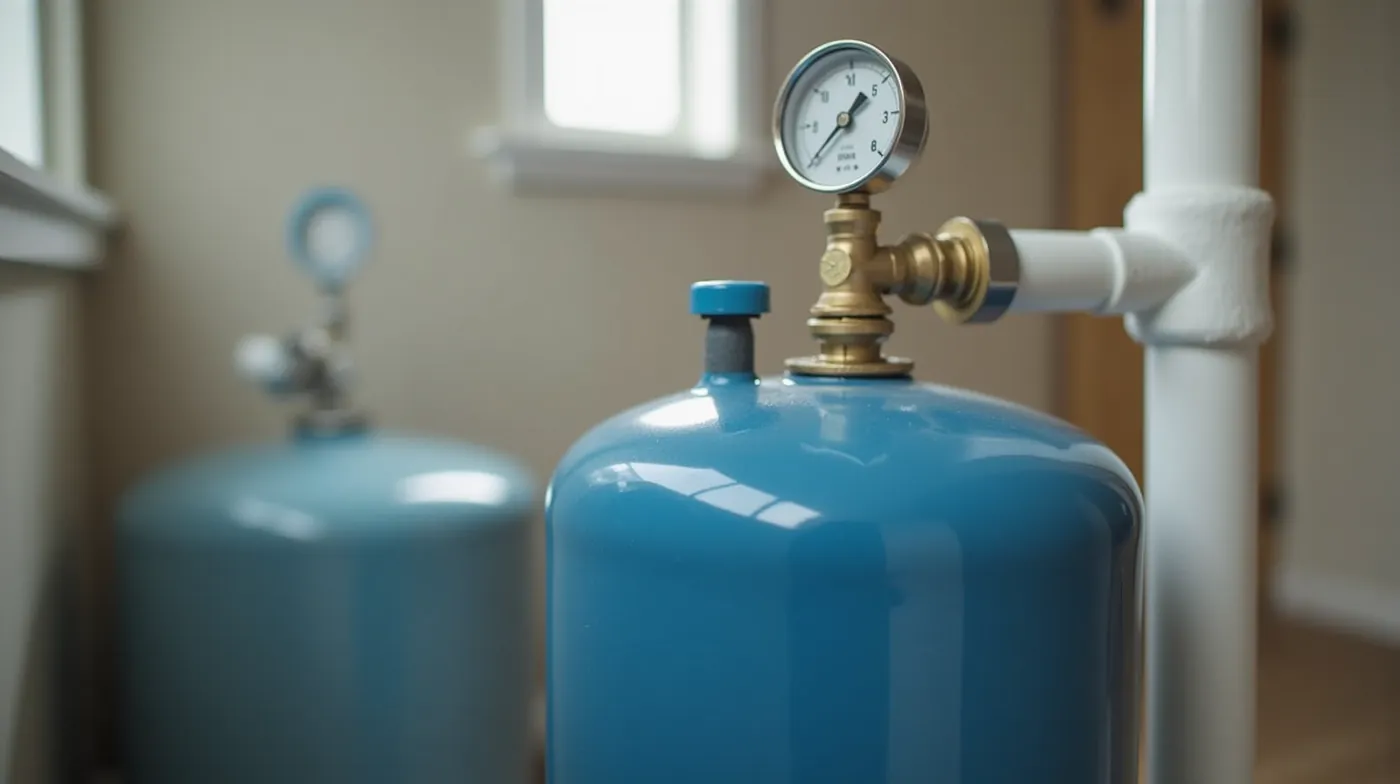
What Is Water Hammer in a Well System?
Water hammer is a pressure shock wave. Water moving through a pipe has momentum. When it is stopped suddenly — by a faucet closing, a pump shutting off, or a check valve slamming — that momentum has to go somewhere. It converts into a rapid pressure spike that can reach several times your normal system pressure in a fraction of a second, then reflect back and forth through the plumbing like a wave. The bang you hear is the pressure wave hitting a fitting, a pipe joint, or the pressure tank shell. The plumbing code bodies (and the International Plumbing Code) treat uncontrolled hammer as a system defect for exactly this reason: the energy has to be absorbed somewhere, and pipe joints absorb it poorly.
What We Measured in the Field
On a system we inspected last winter, a homeowner with a standard 30/50 psi pressure switch was seeing transient spikes above 120 psi at the main shutoff when the pump cut off — more than double the rated pressure of his tank. The visible damage was a weeping sweat joint on a 1/2 inch branch line and a pressure tank that had lost its precharge twice in three years. The fix — a hammer arrestor plus a precharge check — took under an hour and about $180 in parts.
On a well system, the physics is the same as on city water, but the conditions that create hammer are far more common, and the consequences land on equipment you paid a lot for — the pump, the tank, the check valve, and the wiring that can short out if a fitting leaks.
Why Well Systems Get Water Hammer More Than City Water
City water systems are big, slow, and buffered. A municipal main is hundreds of feet of large-diameter pipe with a volume of water so large that a shock wave dissipates before it matters, and many systems include dedicated surge relief. A private well system is the opposite in every dimension that matters:
- Small water volume, fast pump. A 1/2 to 1 HP pump can move 10 to 15 GPM. When it cuts off, every drop of that moving water stops within milliseconds, and the whole system has only a few gallons of buffer (the pressure tank) to absorb the spike.
- Long vertical column of water. On a 100-foot well, the pump is pushing a 100-foot column of water. That column has enormous momentum, and the check valve at the top of the suction line is what slams it to a halt every cycle.
- The pump itself is the shutoff device. On city water, hammers mostly come from fast-closing valves. On a well, the pump cycling off IS the valve closing — so every single cycle is a potential hammer event.
- Often no arrestor installed at all. Many older installations (and some newer ones) never included a water hammer arrestor, which is a code requirement in most jurisdictions for pump discharge piping.
That is why the same 50 psi system that is silent on city water will bang on a well. The fix list is short, but it is different from the city-water fix list — you are usually fixing the pump system, not the fixtures.
7 Causes of Water Hammer in a Well (Ranked by How Often We See Them)
After years of diagnosing these systems, we rank the causes by how frequently each one is the actual root cause when we open up the equipment room:
1. Failed or air-locked pressure tank (the #1 cause on bladder tanks)
A bladder (diaphragm) pressure tank works by having air on one side of a rubber membrane and water on the other. The air cushion is what absorbs pressure spikes — it is the system’s built-in shock absorber. When the bladder tears or the tank slowly loses precharge, the tank fills with water and becomes a rigid, full-of-water container. A full tank cannot absorb anything. Every pump cycle now slams a solid column of water, and that is where the bang comes from. We find this to be the most common root cause on systems 5+ years old. The good news: diagnosis takes five minutes with a tire pressure gauge, and the fix is either re-pressurizing the air side (free) or replacing the tank ($200–$600 installed).
2. System pressure set too high
Many systems run with the pressure switch set at 40/60 or even 50/70 when the house plumbing is only rated for 50–60 psi. Higher cut-off pressure means higher flow velocity in the lines, and a higher baseline to spike from. If the static pressure at the pump reads above 60 psi at cut-off, you are well into the range where hammer energy becomes damaging. See our guide on how to fix high water pressure from a well for the full diagnosis — a pressure reducing valve on the discharge line is the standard fix.
3. Missing or undersized water hammer arrestor
A hammer arrestor is a small spring- or air-charged cylinder with a one-way valve that sits right on the pump discharge. It catches the shock wave before it travels into the house plumbing. If your system was installed before modern code enforcement, or was roughed-in by someone cutting corners, it may simply not be there. If it is there but sized for a small 1/3 HP pump on a system now running a 3/4 HP pump, it is undersized and will not absorb the larger spike. Most residential arrestors handle 1/2 to 1 HP systems; they are inexpensive, which makes them an easy part to skip at install time.
4. Fast-closing faucet valves and fixture shutoffs
Standard faucet handles close the valve in under half a second. That is fast enough to create a mini-hammer every time you turn off a sink. Systems that hammer only when you close certain fixtures — not at pump cutoff — usually point here. Quarter-turn ceramic disk valves are the worst offenders; some people replace the problematic fixture’s valve with a slow-closing type, or fit the line with a small arrestor near that branch.
5. Loose pipe hangers and unsupported lines
Water hammer is a vibration event. A pipe that is properly strapped every 4 to 5 feet transmits the shock into the wall structure where it dies. A line with a single loose strap turns every pressure spike into a traveling rattle — a “clank” that runs along the basement wall. This is often co-existing with a real cause rather than the cause itself, but it makes the problem much louder and accelerates joint failure. Re-strapping a run of pipe with proper hangers is a cheap fix that always helps.
6. A failing pump check valve
The check valve on the pump (or at the pitless unit / wellhead) prevents the 100-foot column of water in the well from draining back down when the pump stops. If the valve is worn and drifts closed slowly instead of sealing instantly — or worse, allows water to flow back — you get both a loss of prime (pump struggling to restart) and a shock event when it finally seats. A check valve that slams shut from backflow at speed creates its own hammer. If the hammer is loudest at the wellhead or pitless unit rather than in the house, suspect the check valve.
7. Pump short cycling
When the pump starts and stops every 30 seconds to a few minutes, the system is hammering itself repeatedly — each cycle is another shock wave, and the cumulative damage is fast. Short cycling usually has its own root cause (bad tank, stuck pressure switch, a leak, or an oversized pump on a low-yield well), and hammer is a symptom of it. If your pump is cycling more than a handful of times per hour under normal use, treat that as the primary problem and see our well pump short cycling guide before spending money on arrestors.
Water Hammer vs. Other Well Pump Noises: How to Tell the Difference
Not every bang in the basement is water hammer. Misdiagnosing it leads to buying the wrong part. Here is how we tell the sounds apart after years of standing in equipment rooms listening:
| Sound | When It Happens | Likely Cause | First Check |
|---|---|---|---|
| Sharp BANG at pump cutoff | Every time the pump stops | Water hammer (tank full or no arrestor) | Tank air precharge |
| RATTLE running along a wall | When hammer occurs, travels in pipe | Loose hangers amplifying a real hammer | Inspect pipe straps |
| BANG when closing a faucet | Only at specific fixtures | Fast-closing valve on that branch | Close that faucet slowly |
| Grinding / cavitation | Pump running, no water at tap | Lost prime / low well water | Re-prime the pump |
| Buzz then click, repeats fast | Pump on-off every 30-90 sec | Short cycling (bad tank or leak) | Count cycles per hour |
| Thud at the wellhead | At pump start or stop | Check valve slamming / backflow | Inspect check valve |
Diagnostic key: if the bang tracks the pump cycle, the problem is in the pump system (tank, arrestor, check valve, pressure). If it tracks a specific faucet, the problem is in that fixture’s line.
How to Fix Water Hammer in a Well: Step-by-Step
Work down this list in order. Each step is cheap relative to the next, and on most systems one of the first three fixes ends the problem. Always kill power to the pump at the breaker before touching anything at the pump or tank.
Step 1: Check the pressure tank air precharge (5 minutes, free)
- Turn off power to the pump at the breaker so the tank is not being topped up by water pressure.
- Drain the water side of the tank: open a nearby indoor faucet until pressure drops, or use the drain on the tank if it has one. This lets the bladder side of the tank rest at true air pressure.
- With the pump off and the tank drained, read the air-side pressure with a tire gauge on the tank’s air (Schraeder) valve.
- The air precharge should be set 2 psi below the pump’s cut-in pressure. On a standard 30/50 switch, the air side should read 28 psi. On a 40/60 switch, 38 psi.
- If it reads much lower (a common 5-15 psi), add air with a bicycle pump until it hits the target, then restore power. A full tank is the single most common cause of hammer we find.
When Re-Pressurizing Is Not Enough
If the air keeps bleeding off within a few weeks, the bladder is torn and water is mixing into the air side. No amount of re-pressurizing will hold it. The fix is a new bladder or a new tank — on a tank older than about 10 years, replacing the whole tank is usually the better value. See our well pressure tank sizing guide for choosing the right replacement.
Step 2: Verify and correct system pressure (10 minutes, free)
- With the pump running and all fixtures closed, read the pressure gauge as the pump cuts off at the top of its cycle. That is your maximum system pressure.
- If it reads above 60 psi, the system is running too hot. Either the pressure switch is set too high (see our pressure switch adjustment guide) or you need a pressure reducing valve downstream of the tank.
- Bring the cut-off pressure into the 50-60 psi range. Lower baseline pressure dramatically reduces the energy available to a hammer spike.
Step 3: Install or replace a water hammer arrestor (30-60 minutes, $20-$80)
- Locate the pump discharge line. The arrestor installs on the vertical (riser) section of discharge pipe, as close to the pump as practical, on the straight run between the pump and the first elbow.
- Shut off power and the main water supply, and relieve pressure by opening a faucet.
- Cut the discharge pipe, thread in the arrestor with the one-way valve oriented toward the house plumbing (arrestors are directional — the arrow points in the flow direction).
- Use Teflon tape on the threads and a small bead of pipe dope. Torque to hand-tight plus a quarter turn — over-tightening cracks the arrestor body.
- Restore power and run a full cycle. The bang at cutoff should be gone or greatly reduced.
Step 4: Strap the piping (1-2 hours, $10-$40)
Add pipe hangers or straps every 4 to 5 feet along the run, and make sure the pump and tank are on vibration-isolating pads (rubber feet or mounts). This does not stop the pressure spike, but it stops the metal-on-metal rattle that makes hammer sound catastrophic and protects the joints from working loose.
Step 5: Replace a failing check valve (if the thud is at the wellhead)
If the loudest impact is at the wellhead or pitless unit, pull and inspect the check valve. A worn poppet or a cracked body will let water backflow and slam the valve shut. Replace it with a new check valve rated for your line size — most submersible pumps have a replaceable check on the pump body itself, and wellheads take a standard inline check.
Step 6: Address the root cause of short cycling (if the pump cycles constantly)
If the pump is turning on and off every 30 seconds, no arrestor will save you from the cumulative hammer. Fix the cycling first — usually a bad tank, a stuck pressure switch, or a system leak — and the hammer frequency drops with it. Our short-cycling guide walks through the diagnosis.
Best Products to Stop Water Hammer in a Well (2026)
After testing and installing these parts on real systems, here is the short list of what actually fixes water hammer — and what each one is for. Prices are typical 2026 street prices; use the links to check current pricing and availability.
| Product | What It Fixes | Typical Price | Best For |
|---|---|---|---|
| Well Pump Water Hammer Arrestor | The bang at pump cutoff | $25-$80 | Systems missing an arrestor (most common fix) |
| 30-Gallon Well Pressure Tank (2-piece) | Full / water-logged tank, dead air cushion | $180-$350 | Tanks older than ~10 years or with a torn bladder |
| Brass Pressure Reducing Valve (1-1/4″) | System pressure above 60 psi | $25-$60 | High cut-off pressure, over-pressured house lines |
| Submersible Pump Check Valve (2″) | Thud at the wellhead, backflow slams | $20-$45 | Hammer loudest at wellhead / pitless unit |
| Tire Pressure Gauge (for tank precharge) | Diagnosing a water-logged tank (step 1) | $8-$15 | Every well owner should have one on hand |
| Pipe Hangers and Straps | Rattle and traveling clank along lines | $10-$40 | Unsupported runs that amplify every spike |
Pro Tip: Do the Free Checks First
In our experience, roughly half of all water hammer calls are solved by steps 1 and 2 alone — a tire gauge, a wrench on the pressure switch, and 20 minutes of time. Only buy an arrestor or a new tank once you have confirmed the tank air side and the cut-off pressure. It saves money and avoids replacing a tank that was simply out of air.
See Also
- How to Fix High Water Pressure From a Well 2026
- Well Pump Short Cycling 2026: 8 Causes and Quick Fixes
- How to Size a Well Pressure Tank 2026: The Complete Guide
- How to Adjust a Well Pressure Switch 2026: Settings Guide
FAQ: Water Hammer in a Well
What causes a well system to bang when the pump shuts off? In most cases it is a pressure tank that has lost its air cushion (full of water) or a missing water hammer arrestor. The pressure spike has nowhere to go when the pump cuts off, so it hits the tank shell and pipe joints. Check the tank precharge with a tire gauge first — it is the cheapest diagnosis available.
Is water hammer dangerous? It is not an immediate safety hazard, but the repeated pressure spikes crack soldered and threaded joints over time and fatigue the tank and check valve. A system that bangs every cycle can develop a leak within months to a couple of years, which is why plumbers treat it as a defect to fix, not a nuisance to live with.
How much does it cost to fix water hammer in a well? A precharge correction and pressure adjustment are free. A water hammer arrestor is typically $25-$80 in parts plus an hour of work. Replacing a failed pressure tank runs $180-$350 for the tank, or $400-$600 installed. Most homeowners resolve it for under $200 in parts.
Do I need a water hammer arrestor on my well? Most plumbing codes require one on pump discharge piping, and practically speaking any well system without one will eventually hammer — it is only a matter of how loud and how fast the joints wear out. If your system does not have one, adding it is the single best hardware upgrade you can make.
Why does my well pump hammer but the neighbors on city water do not? City mains are large and buffered; a private well system has a small water volume, a fast pump, and the pump itself is the shutoff device, so every cycle is a shock event. The fix list (tank, arrestor, pressure, support) is different from city-water fixes because the source is the pump system, not the fixtures.
#WaterHammer #WaterWell #WellWater #WellPump #PressureTank #WellMaintenance #PrivateWell #WellSystem #WaterPressure #HammerArrestor #WellOwner #WellCare #HomeWell #PumpProblems #WellInspection