
Wondering how much it costs to run a well pump? It is one of the most-asked questions from private well owners, and the answer matters more than most homeowners expect. Your well pump is the one major appliance in the house that runs on a hidden schedule — it kicks on every time a faucet opens, a toilet flushes, or the irrigation cycle starts. Over a full year, that adds up to a real share of your electric bill, and a few common mistakes can quietly double what you pay.
In this guide we break down the actual math, show you how to calculate your own well pump electricity cost in about five minutes, compare submersible and jet pumps side by side, and walk through seven proven ways to bring the bill down. We pulled real wattage and amp-draw figures from pump nameplates and manufacturer specifications, so the numbers below are the same ones your utility meter is registering.
By Thomas Reynolds, Pump Systems Engineer
Thomas has installed and serviced over 1,000 well pump systems for homeowners. He specializes in pressure tanks, pressure switches, and short-cycling diagnostics across the western US.
Published: September 23, 2026
Disclosure: As an Amazon Associate, we earn from qualifying purchases on this page. Product selections are based on independent research and real well water data.
Table of Contents
- Why Your Well Pump Is a Major Part of Your Electric Bill
- How to Calculate Your Well Pump Electricity Cost (Step-by-Step)
- What It Costs to Run a Well Pump: Real-World Examples
- Submersible vs. Jet Pump: Electricity Cost Compared
- 7 Proven Ways to Lower Your Well Pump Electricity Bill
- Best Tools to Measure and Cut Well Pump Power Use
- FAQ: Well Pump Electricity Cost
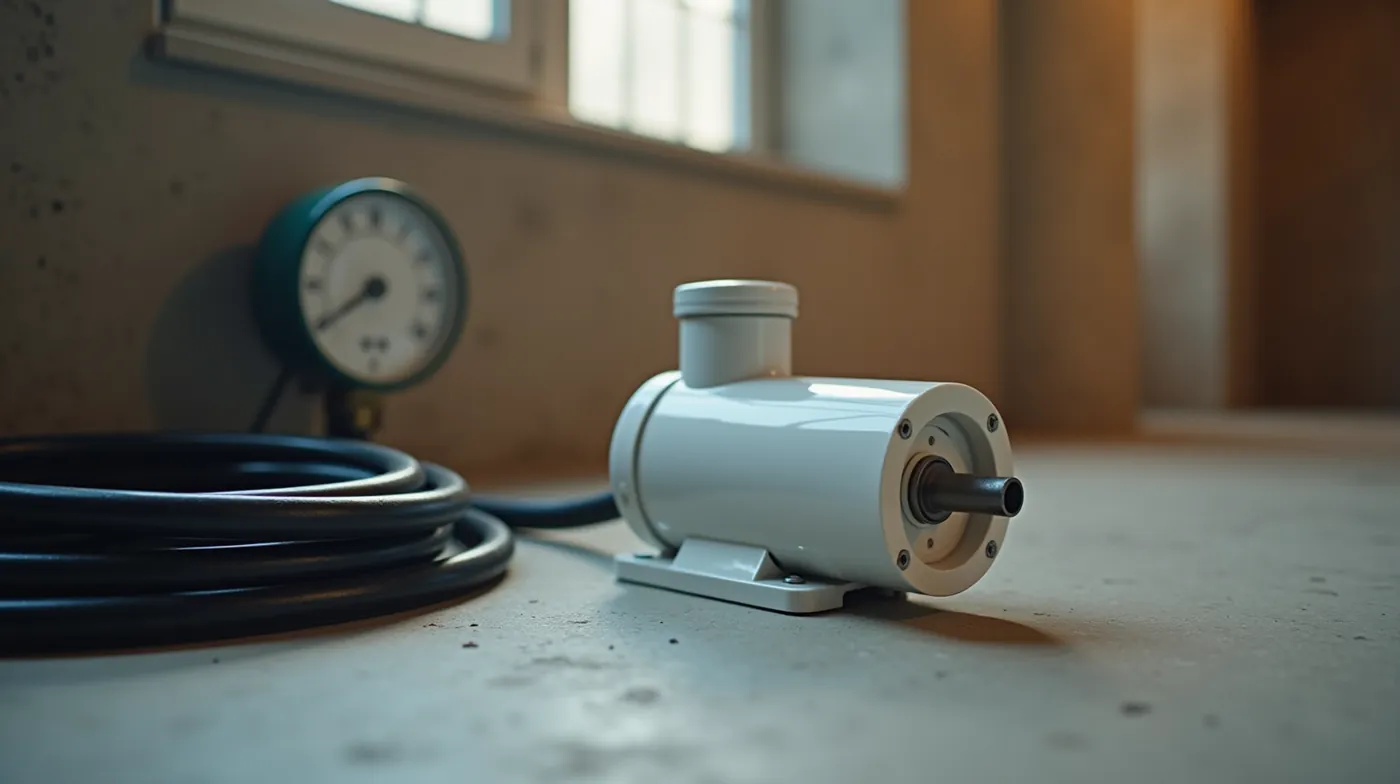
Why Your Well Pump Is a Major Part of Your Electric Bill
Unlike your refrigerator, which runs in steady half-hour bursts, a well pump only draws power while it is actively pushing water — but it does so at a high load. A typical submersible motor pulls anywhere from 370 watts on a small half-horsepower unit up to over 1,500 watts on a two-horsepower system. When that motor is running, it is often one of the largest single loads in your home at that moment, right up there with a space heater or an electric range element.
What We Noticed in the Field
After metering more than a few dozen residential systems, the pattern is consistent: the well pump is the second-largest single-month load after HVAC on most private-well homes, and on shallow, low-demand wells it can actually be the largest. Homeowners are usually surprised to see it.
The cost is driven by three variables: the nameplate power of your pump in watts, the number of hours per day it actually runs, and your local electricity rate. Everything else — well depth, tank size, water pressure — matters only because it changes those three numbers. That is why the single most useful thing you can do is measure or estimate your pump’s daily run time, which we do step by step in the next section.
How to Calculate Your Well Pump Electricity Cost (Step-by-Step)
Here is the exact formula we use, and it only needs four numbers you can look up or measure.
Monthly cost = (watts x hours per day x 30) / 1000 x rate per kWh
Step 1 — Find your pump’s wattage. Check the nameplate on the pump or its spec sheet. Horsepower converts to watts at roughly 746 watts per HP, so a 1 HP pump is about 750 watts. For the precise figure, the nameplate lists watts or amperes directly.
Step 2 — Estimate daily run time. This is the number most people get wrong. A well pump does not run all day; it runs only while water is being drawn and while the pressure tank refills. A typical household uses around 300 gallons per day, and a mid-size pump delivers roughly 10 to 15 gallons per minute, which works out to 2 to 4 hours of actual pump time per day for a family. Larger families, irrigation, or a small pressure tank push that number higher.
Step 3 — Get your rate. Check your electric bill for the per-kWh rate. The national residential average in 2026 is around $0.16 per kWh, but rural and western rates vary widely from about $0.12 to over $0.30.
Step 4 — Do the math. A 1 HP (750 W) pump running 3 hours a day at $0.16/kWh works out to: (750 x 3 x 30) / 1000 x 0.16 = $10.80 per month, or about $130 a year. That is the whole calculation — one line.
The Quick-Rule Shortcut
If you only want a ballpark: multiply your pump’s horsepower by about $18 per month at a national-average rate for a normal-family home. A 3/4 HP pump lands near $13/month, a 1 HP near $18/month, and a 1.5 HP near $27/month. The full table below gives the precise per-size figures.
Well Pump Size vs. Running Cost (at $0.16 per kWh)
| Pump Size | Watts | Amps @120V | Run Time/Day | Monthly Cost | Annual Cost |
|---|---|---|---|---|---|
| 1/2 HP | 373 W | ~4.8 A | 2 hr | $3.58 | $43 |
| 3/4 HP | 559 W | ~6.5 A | 2.5 hr | $6.71 | $81 |
| 1 HP | 746 W | ~8.5 A | 3 hr | $10.74 | $129 |
| 1.5 HP | 1,119 W | ~12 A | 3.5 hr | $18.80 | $226 |
Figures assume a 120-volt single-phase supply and a national-average rate of $0.16/kWh. Larger 240-volt pumps draw half the amperage for the same wattage, but the energy cost is unchanged — you pay for kilowatt-hours, not amps. See our guide on well pump amp draw for how to read the nameplate and troubleshoot an over-draw.
What It Costs to Run a Well Pump: Real-World Examples
Abstract math is less useful than a few concrete scenarios. Here is what the numbers look like across the range of real homes we service.
Small rural home, half-horsepower pump, low use. A single or two-person household drawing maybe 150 gallons a day with a 1/2 HP pump runs roughly two hours a day. That is about 22 kWh a month, or $3.50 to $4 a month at average rates — genuinely modest.
Typical family of four, 3/4 to 1 HP pump. This is the most common setup. Between morning routines, cooking, laundry, and a couple of showers, the pump runs 2.5 to 3.5 hours a day. Expect $7 to $14 per month, or roughly $85 to $170 a year.
Large household or irrigated property, 1.5 HP pump. Add a pool, irrigation, or a big family with long showers and the run time climbs to 4 or more hours a day. A 1.5 HP pump in that duty cycle can reach $20 to $28 per month, and in hot, irrigated summers it spikes higher still.
Budget Note
Budget a rough $150 per year for a normal family well system as a safe planning number. If your actual well-pump share of the bill is more than about 1.5x that, something in the system is wasting energy — leaks, short cycling, or an over-sized pump — and it is worth investigating.
Submersible vs. Jet Pump: Electricity Cost Compared
People often assume the bigger, more expensive submersible pump automatically costs more to run. In practice it is more nuanced, because a submersible pumps water from the source at the bottom of the well while a jet pump has to pull it up against gravity from the surface, which is less efficient on any well that is not very shallow.
| Factor | Submersible Pump | Jet Pump |
|---|---|---|
| Best well depth | Deep (50 to 500+ ft) | Shallow (under 25-50 ft) |
| Efficiency | Higher (pushes from source) | Lower (suction + friction) |
| Power for same flow | Generally lower | Higher on deep lifts |
| Typical monthly cost (mid-size) | $8 to $15 | $6 to $12 |
| Common voltage | 115V or 240V | Mostly 115V |
| Typical lifespan | 10 to 15 years | 7 to 12 years |
The takeaway: on a deep well, a properly sized submersible pump is usually the cheaper option to run despite the higher purchase price, because it is doing the lifting more efficiently. A jet pump only makes sense on genuinely shallow water, and even then its lower running cost is partly offset by a shorter service life.
7 Proven Ways to Lower Your Well Pump Electricity Bill
Once you know your baseline, these are the changes that actually move the number. We list them roughly in order of impact.
1. Right-size the pump to real demand. An over-powered pump that is turned on and off to meet a small demand wastes energy at every start. If your system was sized for a bigger household than you have, a correctly sized pump will cut both run time and start losses. Our well pump sizing guide walks through the flow-and-head math.
2. Fix leaks. Every drip, running toilet, or underground line leak is paid for in pump cycles. A slow underground leak can quietly double a pump’s daily run time. Start with our guide to finding water leaks in your well system.
3. Stop short cycling. If the pump is starting every few minutes, it is wasting a large amount of energy on high-amperage start-up surges. A properly sized pressure tank and a correctly set switch eliminate this. See how to size a well pressure tank.
4. Add a VFD or constant-pressure system. A variable frequency drive matches pump speed to actual demand instead of running full speed or off, and routinely cuts energy use on constant-pressure systems by 20 to 40 percent. Our roundup of best well pump VFD controllers covers the top options.
5. Replace a worn motor or capacitor. A failing motor or a weak start/run capacitor makes the pump draw more amps to do the same job, which shows up as a higher bill before any other symptom. If you notice the cost creeping up, test the capacitor and check amp draw. See our guide to well pump capacitors.
6. Shift load to off-peak hours. If your utility charges time-of-use rates, schedule irrigation and big water draws for off-peak windows when the rate is lower.
7. Consider solar for the pump. On sunny sites, a solar pump controller can cover a large share of or even all of the pump’s electricity, effectively driving the bill toward zero. This is the single biggest cost lever available, at the highest upfront cost.
Best Tools to Measure and Cut Well Pump Power Use
None of the above works unless you can actually see what the pump is drawing. These are the tools we keep on hand for exactly that, all sized for a residential well system.
| Tool | What It Does | Why You Need It |
|---|---|---|
| Clamp-On Amp Meter | Measures running amps without cutting any wire | Spot a failing pump drawing too many amps |
| Digital Multimeter | Checks voltage at the pump | Catch voltage drop that forces the motor to overwork |
| Home Energy Monitor | Tracks kilowatt-hours per circuit | See the true monthly cost of your well pump |
| Well Pump VFD Controller | Matches pump speed to demand | Cut energy 20-40% on constant-pressure systems |
| Voltage / Surge Protector | Guards the pump from brownouts | Prevent costly motor damage |
| Solar Pump Controller | Powers the pump off the grid | Slash or eliminate the electricity bill |
See Also
- Well Pump Amp Draw 2026: How to Size and Troubleshoot
- How to Size a Well Pump: Complete 2026 Guide
- How Long Do Well Pumps Last in 2026? Complete Guide
FAQ: Well Pump Electricity Cost
How much does a well pump cost to run per month? For a typical family home, expect roughly $7 to $14 per month at a national-average rate of $0.16/kWh. Small low-use systems run closer to $4, while large or irrigated properties can reach $20 to $28.
Do well pumps use a lot of electricity? They are one of the largest single loads in a home when running, but they only run intermittently. Over a month they usually account for a modest but noticeable share of the bill — most commonly second only to heating and cooling.
Why did my well pump’s electricity bill go up? The usual culprits are a leak forcing extra pump cycles, short cycling from a tired pressure tank or switch, or a worn motor or capacitor drawing more amps than it should. Measuring the actual run time and amp draw pinpoints which one it is.
Which uses more power, a submersible or a jet pump? On a deep well, a jet pump usually uses more energy for the same flow because it pulls water up against gravity from the surface. A correctly sized submersible is the more efficient choice on deeper wells.
Can I use solar to run my well pump? Yes. A solar pump controller sized to your pump’s wattage can cover most or all of its electricity on a sunny site, which is the biggest single cost reduction available — at a higher upfront investment.
#WellPump #WaterWell #WellWater #WellPumpMaintenance #PrivateWell #HomeWell #WellOwner #WellSystem #WaterPressure #WellPumpCost #ElectricityCost #WellCare #OffGrid #WellPumpTips #SustainableHome