
A well pump fuse is the fast-acting, single-use protection device in your pump’s electrical circuit. It is designed to open the circuit the moment current spikes above a safe level, protecting the wiring, the motor, and in many cases the rest of your home from what a shorted winding or failed connection can do. On most modern systems that job has been taken over by the breaker in your main panel, but thousands of homes still run a fuse-disconnect box at the well house or basement — and the moment that fuse blows, the well goes silent. After installing and servicing more than 1,000 well pump systems, we can tell you a blown well pump fuse is almost never a fuse problem: the fuse is the symptom, and it did its job. In this 2026 guide you will learn what the fuse actually does, exactly how to size one to your motor nameplate, the eight most common reasons it blows, a five-minute multimeter test, and a safe step-by-step replacement procedure.
By Thomas Reynolds, Pump Systems Engineer
Thomas has installed and serviced over 1,000 well pump systems for homeowners. He specializes in pump electrical faults, motor sizing, and code-compliant well system upgrades across the western US.
Disclosure: As an Amazon Associate, we earn from qualifying purchases on this page. Product selections are based on independent research and real well water data.
Published: October 23, 2026
What Is a Well Pump Fuse?
Follow the power in your well system and the path is the same every time: from the main panel, through a disconnect (the switch box that lets you kill the pump without touching the panel), through the pressure switch and contactor, and down the supply cable to the pump motor. A well pump fuse sits in that chain — usually in the disconnect box — and it is the first protection device the pump circuit sees. If the motor develops a short, a winding grounds out, or moisture bridges a terminal, the current surges to multiples of normal and the fuse element melts, opening the circuit.
The National Electrical Code (NEC 70) requires overcurrent protection on every motor branch circuit, and Article 430 sets the sizing rules. In practice that means your pump must have either a fuse or a circuit breaker rated for the motor’s current — and the rating has to be chosen with the motor’s startup behavior in mind, which is where most homeowners go wrong.
The Three Types Homeowners Actually See
When we open disconnect boxes on residential wells, one of three fuse types is almost always present:
1. Blade fuses. The flat, cartridge-style fuses in older blade-type disconnects (the box with a rotating handle). These are typically 10–30 amps and are the most common “well pump fuse” homeowners describe on forums. Blade fuses can be standard (fast-blow) or time-delay, and the difference matters enormously at pump startup — more on that in the sizing section.
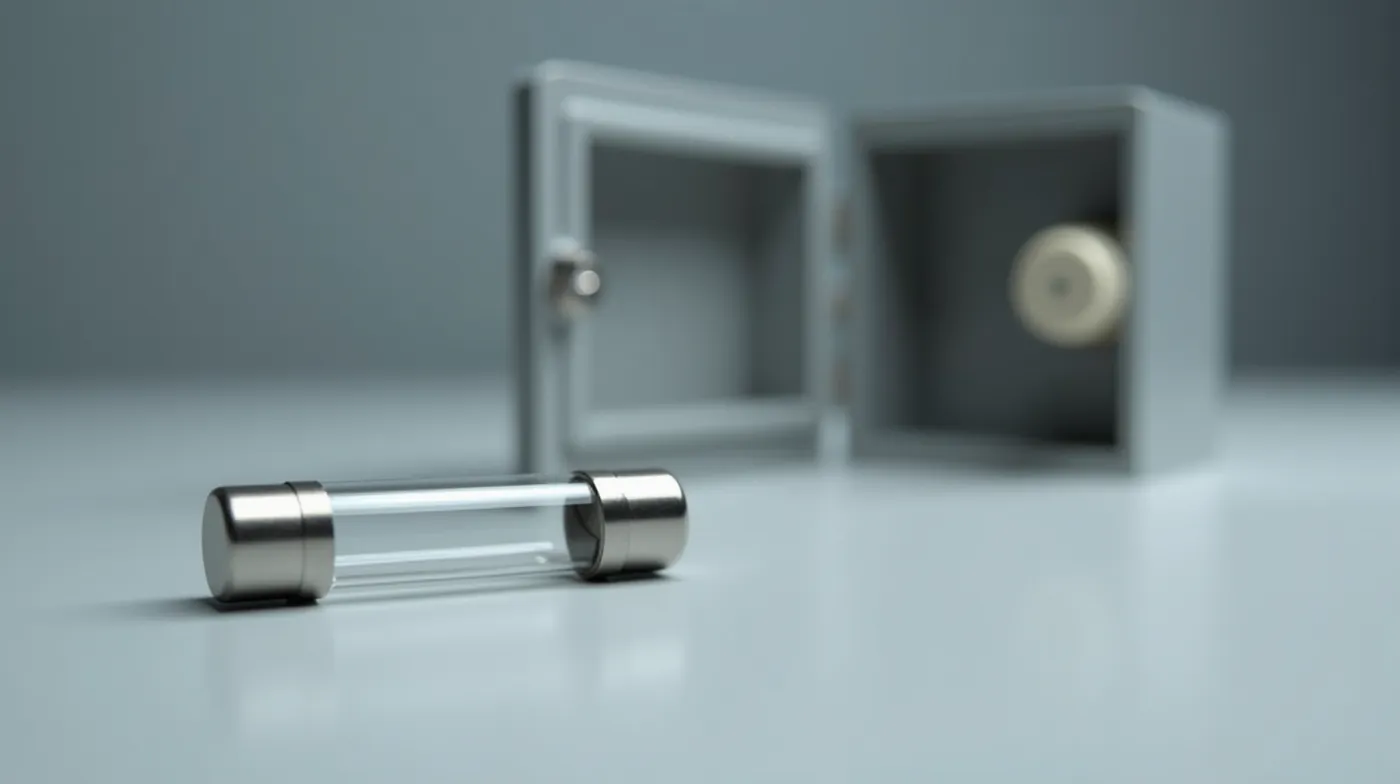
2. Cartridge fuses. Cylindrical fuses with a metal cap on each end, found in some mid-century control boxes and a few pump controller units. Sized the same way as blade fuses; physically harder to replace because the holders are often corroded shut.
3. In-line fuses. A small fuse body with a pigtail wire, spliced into the pump supply cable. These are the least common on modern installations (most are now fused or broken at the panel) but they show up on older 2-wire submersible systems where the disconnect is far from the panel.
One detail separates an experienced repair from a forum guess: standard versus time-delay (dual-element) construction. A standard fuse blows as soon as current exceeds its rating. A dual-element fuse has a second, slower element that lets brief current surges — like the locked-rotor inrush a pump motor draws for a half-second at startup — pass without opening. Get that detail wrong and your “solved” fuse will blow on the first pump cycle.
What Size Fuse Does a Well Pump Need?
The starting point is always the full-load amp (FLA) rating on the pump nameplate, not the horsepower. Two 1 HP motors can draw meaningfully different current, and the nameplate number is what your protection device is sized against. From there, pump manufacturers publish fuse and breaker charts — the Goulds/Xylem service manual and Zoeller installation instructions both include them — and the values are consistent across brands:
| Motor (115V, 2-wire) | Standard (fast-blow) fuse | Dual-element time-delay fuse | Typical circuit breaker |
|---|---|---|---|
| ½ HP | 25 A | 15 A | 20 A |
| ¾ HP | 20 A | 10 A | 15 A |
| 1 HP | 25 A | 15 A | 20 A |
| 1½ HP | 30 A | 15–20 A | 25 A |
Typical values from Goulds/Xylem and Zoeller service documentation for residential 2-wire pumps. 230V single-phase pumps run roughly half these amp values. Always confirm against your pump nameplate and the manufacturer’s chart before replacing anything.
Why the two fuse columns differ so much
A standard fast-blow fuse rated 15 amps will open the instant a 1 HP pump motor draws its startup surge — which can be 4–5× running current for a fraction of a second. That is why the standard-fuse column runs 60–100% larger than the time-delay column: it must ride through the locked-rotor inrush. A dual-element fuse, with its slower second element, can be rated much closer to the motor’s running current and still start the pump every time. If your box holds a standard fuse, replace it with the standard-fuse column rating. If it holds a time-delay fuse, use the time-delay rating. Mixing the two is the number-one cause of “the fuse keeps blowing” after a replacement.
One rule overrides every chart: never size up past the manufacturer value. A larger fuse stops protecting the wire, and the wire — not the fuse — is what catches fire. For a deeper look at how to read and measure your motor’s actual current, see our guide to well pump amp draw and how to troubleshoot it.
Why Does My Well Pump Fuse Keep Blowing?
A fuse that blows once and stays blown after the real fix is normal. A fuse that blows on the first start, or every second start, is your system telling you something upstream is drawing more current than it should. In the field, we see eight causes behind nearly every repeated-blow call:
1. The motor is drawing above its nameplate amps. Worn bearings, a weakening impeller, or aging windings all raise running current. The motor may start fine and then draw 15–30% over rating within a minute, tripping protection on the longer side of the cycle.
2. A shorted or grounded winding. Insulation breaks down from age, heat, or moisture, and current finds a low-resistance path to the motor housing or between windings. This is the dangerous one: the fault current is high enough that even a correctly sized fuse may only slow the damage down.
3. A failing start capacitor. A shorted or degraded capacitor can multiply inrush current and drag the motor through startup at excessive amps. If the pump hums and stumbles at start before the fuse opens, the start capacitor deserves a multimeter test before you blame the motor.
4. Wrong fuse type or undersized replacement. The most common DIY mistake: a time-delay box fitted with a standard fast-blow fuse, or a 15-amp slot filled with a 10-amp part. The fuse “blows” on every startup inrush, even though the motor is perfectly healthy.
5. Corroded or loose connections. Oxidized terminals in the disconnect, a loose ground lug, or a corroded splice in the supply cable create hot spots that raise current draw and can arc under load. We find corroded fuse holders on a surprising share of repeated-blow systems — the holder, not the fuse, is the real culprit.
6. Voltage drop on long runs. A well house 200+ feet from the panel on undersized wire sags voltage at startup. The motor compensates by drawing more current, and the fuse sees the result at the box. If your fuse only blows in hot weather or when other big loads are running, measure voltage at the pump under load.
7. A failing contactor. A contactor with pitted or welding contacts arcs every cycle, spiking current. The fuse sees the arcs the way a motor would. If the contactor clicks weakly or the fuse blows within seconds of the click, test the well pump contactor before anything else.
8. Moisture or rodent damage in the disconnect box. Condensation on terminals, a spider web across the bus, or rodent-chewed supply cable can create a slow, intermittent short that blows the fuse unpredictably.
Warning: do not “fix” a repeated blow with a bigger fuse
The single most dangerous response to a well pump fuse that keeps blowing is to install the next size up. The fuse is sized to protect wire and motor that were not designed for more current. Upsizing it removes the last defense your system has against a shorted winding overheating — a fire and an $800–$2,500 pump replacement waiting to happen. Diagnose the cause or call an electrician.
Testing the Fuse: A 5-Minute Multimeter Check
Before replacing anything, confirm the fuse is actually open. A corroded holder can mimic a blown fuse, and a good fuse in a bad holder will still leave the pump dead. Here is the test we run on every job, with a basic $25–$60 digital multimeter:
Step 1. Turn off the pump breaker at the panel and switch the pressure switch off (or unplug the pressure switch if that is easier). If the system has a disconnect handle, turn that off too. You want zero sources feeding the fuse.
Step 2. Set the multimeter to its lowest resistance range (ohms) or the continuity beep setting. Touch the two probes together first to confirm the meter works and reads near zero.
Step 3. Remove the fuse from its holder — use fuse pliers or long-nose pliers, and never pull a hot fuse by hand.
Step 4. Place one probe on each metal end of the fuse. A healthy fuse reads below 0.5 ohms (most beep continuously). A blown fuse reads OL, infinity, or a steadily climbing number: the element is open and the part is spent.
Step 5. With the same setting, test across the empty holder’s contacts. A good holder reads near zero ohms end to end. Anything above a couple of ohms — or an open reading — means the holder is corroded and should be replaced along with the fuse.
Step 6. Verify there is truly no voltage: set the meter to AC volts and probe the holder contacts. You should read 0 V. If you read anything, stop and re-check the breaker and pressure switch — something is still feeding the circuit.
One caveat: a continuity test proves the fuse is closed, not that it will hold under load. If the fuse tests good and the pump still will not run, the fault is downstream — contactor, wiring, or motor — and the next stop is the contactor test in our well pump contactor guide.
Replacing a Blown Well Pump Fuse: Step by Step
Once you have confirmed the fuse is open and you know the correct type and rating from the chart above, the swap itself takes ten minutes:
Step 1. Kill the power for real. Breaker off at the panel, pressure switch off, disconnect handle off. Treat “off” as unverified until your meter says 0 V.
Step 2. Confirm zero voltage at the fuse holder with the meter on AC volts (Step 6 above). This is the step that keeps people safe, not the fuse replacement.
Step 3. Photograph the box before touching anything. A phone picture of the terminals, wiring, and fuse in place is worth more than any memory when you are reassembling.
Step 4. Remove the old fuse with pliers. Inspect it: a clear body with an intact filament means it may have opened on a legitimate surge; a bulged body, melted end caps, or soot around the holder means a heavy fault — note that, because it tells you the cause was significant.
Step 5. Install an identical replacement — same type (standard or dual-element), same amperage, same physical size. Do not substitute a larger rating, and do not substitute a standard fuse for a time-delay slot.
Step 6. Inspect while the box is open. Check the holder contacts, the terminal screws, and the nearby cable for heat discoloration (browning of paint or wire insulation), corrosion, or loose lugs. Tighten anything loose; replace anything discolored. This is where you catch the real cause of a repeated blow.
Step 7. Restore power and watch the first cycles. Breaker on, pressure switch on. Open a faucet and let the pump start. Listen for a clean spin-up with no hum, and if you have a clamp meter, watch the current settle to near the nameplate value within a few seconds.
Step 8. If it blows again, stop. Do not replace a second fuse in the same visit without diagnosing the cause from the list above. Two blown fuses in one session means the motor, wiring, or a component upstream is failing — that is an electrician or well driller call, and it is cheaper than the alternative.
If you are not comfortable working inside a live disconnect box, that is a perfectly rational decision — well pump electrical work is mains voltage, and a licensed electrician will handle the diagnosis in an hour for far less than a burned motor costs.
Best Fuses and Accessories for Well Pumps (2026)
Based on the fuse types we see across the 115V and 230V residential systems we service, this is the shelf worth keeping. Every item below is available through Amazon search — product names are linked:
| Product | Best For | Key Specs to Match | Typical Price |
|---|---|---|---|
| Dual-Element Time-Delay Fuse (15 A) | Fuse-disconnect boxes on 115V pumps; the correct choice for most startup-inrush situations | Class R or RK1, 15 A, 250 V; match blade or cartridge form to the holder | $8–$15 |
| Standard Blade Fuse (20–25 A) | Older blade-type disconnects originally fitted with fast-blow blades | 20–25 A, 250 V; only use if the original was a standard (non-time-delay) blade | $6–$12 |
| In-Line Time-Delay Fuse with Holder | Retrofitting protection onto older pump supply cables that lost their original in-line fuse | 15–20 A time-delay, 600 V rating; install in the dry side of the circuit | $10–$20 |
| Fuse Holder Replacement (15 A) | Corroded or pitted holders that mimic a blown fuse | Match blade size; brass contacts over plastic where heat is a concern | $5–$10 |
| True-RMS Digital Multimeter | The fuse test, voltage checks, and winding resistance checks in this guide | 600 V rated, continuity + ohms + ACV; any $30–$60 unit handles this work | $25–$60 |
| Clamp-On AC Ammeter | Measuring motor draw under load without cutting the pump wire | 40 A+ range for 115V pumps; compare reading to nameplate FLA | $30–$80 |
| Fuse Puller Pliers | Removing fuses safely, including ones seated in corroded holders | Insulated handles; fits standard blade and cartridge sizes | $5–$9 |
Keep one spare of your system’s exact fuse in the well house. In our experience the homes that suffer the longest “no water” events are the ones that had to drive to the hardware store at 7 a.m. after a weekend blow — with a $10 spare on the shelf, the whole episode is a ten-minute swap.
Well Pump Fuse vs. Circuit Breaker: How the Two Work Together
Most questions we get assume the fuse and the breaker are interchangeable. They are not — they sit in different places in the system and do slightly different jobs:
| Feature | Well Pump Fuse | Circuit Breaker (Panel) |
|---|---|---|
| Typical location | Fuse-disconnect box at the pump, well house, or in-line with the supply cable | Main electrical panel, feeding the pump circuit |
| Reusability | Single-use — replace after every blow | Resettable — flip back after the cause is addressed |
| How it opens | Element melts when current exceeds rating (thermal, plus magnetic element in dual-element designs) | Thermal bimetal or magnetic coil trips the mechanism |
| Typical rating (1 HP, 115V) | 15 A dual-element (or 25 A standard) | 20 A breaker |
| What it protects best | The motor and the wire nearest the load; fastest response to a hard short at the pump | The whole branch circuit; can add GFCI/AFCI protection and manual shutoff convenience |
| Replace when | After every blow — always with an identical type and rating | It trips repeatedly with no findable cause, or the mechanism no longer holds off |
On a modern system both exist: the panel breaker is the primary protection and the disconnect is the manual shutoff. On older systems the fuse in the disconnect is often the only overcurrent device between the panel and the motor — which is why a blown fuse on an old well can mean a long drive to the store. If your breaker trips instead, our guide to well pump breaker trips and the 8 causes behind them walks through the same diagnosis from the panel side.
When a Blown Fuse Points to Bigger Electrical Damage
A blown well pump fuse is usually good news: the protection device worked, and the damage stopped at the fuse. The problem is what comes next. A fuse that opens on a hard short may have already let enough current through to heat the motor windings, discolor the insulation, or bake a moisture problem into the start winding. That damage is silent — the motor can run fine for a day, a month, or a season, and then fail when the weakened insulation finally grounds out.
The pattern we watch for
A well pump fuse that blows on the first start after the pump has sat idle — overnight, over a weekend, through winter — usually points to a motor that has lost insulation resistance. Moisture or age weakens the winding insulation, the first start current finds the weak spot, and the fuse opens within seconds while the motor hums and stalls. That pattern means the motor, not the fuse, is the problem. If you see it twice, budget for the motor: our well pump replacement cost guide breaks down what a new pump actually costs installed, so the decision is a number instead of a guess.
The cost math is why the fuse deserves respect. The fuse itself runs $8–$15. The wiring it protects runs hundreds of dollars. The motor it protects runs $800–$2,500 installed. Every time the fuse blows and you replace it with the correct part, you are the cheapest insurance your well system will ever have. Every time you bypass it or oversize it, you are signing that bill in advance.
Frequently Asked Questions About Well Pump Fuses
What size fuse do I need for a 1 HP well pump?
For a typical 1 HP, 115V, 2-wire submersible or jet pump, manufacturer charts call for a 15 amp dual-element time-delay fuse or a 25 amp standard fast-blow fuse, with a 20 amp circuit breaker in the panel. Check your pump nameplate and the manufacturer’s chart first — the chart in this guide is the industry-typical value, not a substitute for your specific motor’s documentation.
Can I put a bigger fuse in my well pump to stop it blowing?
No. The fuse rating is tied to the wire size and the motor design. A bigger fuse lets more current through than the wire and windings can carry, which converts a $15 part failure into overheated wire, a burned motor, or worse. If the correct fuse keeps blowing, the system has a fault that needs diagnosing — that is what the eight-cause list above is for.
How often should a well pump fuse blow?
Never, ideally. A healthy well system can go many years without a single fuse event. One blow after a lightning strike, a power surge, or a one-off motor fault is survivable — replace the fuse, watch the first cycles, and move on. A blow every few weeks is a chronic fault: motor, capacitor, contactor, or wiring. Treat repeated blowing as a diagnostic trigger, not a maintenance chore.
Does my well pump even have a fuse?
It depends on the age of the system. Wells installed before the mid-1990s often have a fuse-disconnect box at the pump or well house. Newer systems typically run a dedicated circuit breaker in the main panel with a simple on/off disconnect, and no fuse at all. Find the pump’s circuit at the panel and follow the wire: if the box it leads into holds a blade or cartridge fuse, that is your well pump fuse. If it is just a handle on a box with no fuse inside, your breaker at the panel is doing the fuse’s job.
Do submersible pumps have a built-in fuse?
Not a fuse, but most do have a built-in thermal overload protector wired in series with the motor windings. It opens if the motor overheats and re-closes automatically once the motor cools. That protection is different from a fuse: it responds to heat over minutes, not current spikes over milliseconds, and it does not protect the wiring. For a full look at these devices, see our guide to the well pump protector and its role in system safety.
The Bottom Line on Well Pump Fuses
A well pump fuse is the cheapest, most reliable protector in your well system — and the most misunderstood. Size it from the manufacturer’s chart, not your guess: 15 amps dual-element for a typical 1 HP 115V pump, with a standard fast-blow option roughly 60–100% larger. Test it in five minutes with any basic multimeter, replace it in ten, and treat every blow as a report card from your motor, not an annoyance from a part. Keep a spare of the exact type on the shelf in the well house, never size up past the chart, and when the same fuse blows twice in one session, stop and diagnose the cause — because the fuse is almost always telling the truth, and the rest of the system is what is lying by keeping the water on.
See Also
Well Pump Contactor 2026: Test, Replace & Wiring Guide
Well Pump Breaker Trips 2026: 8 Causes and Fixes
Well Pump Amp Draw 2026: How to Size and Troubleshoot
#WellPump #WellPumpFuse #WellWater #WaterWell #WellMaintenance #WellElectrical #HomeownerGuide #WellEquipment #SubmersiblePump #JetPump #WellRepair #DIYRepairs #PrivateWell #ElectricalSafety #WellPumpTroubleshooting