
Sandy water coming out of the tap is one of the most common complaints we hear from private well owners: a fine layer of tan grit settling in the toilet tank, the bathtub, and the washing machine drum. Sand in well water is almost never a chemical problem. It is a physical one, and the right fix depends entirely on where the sand is coming from. In this 2026 guide we break down the eight causes of sand in well water, show you a five-minute DIY test to measure it, and compare the filtration and well-work methods that actually get sand out of the water for good — based on what we have seen hold up in real installations.
By Robert Harrison, Certified Well Inspector
Robert has 20+ years of experience inspecting and testing residential water wells across the western US, including hundreds of sand-and-sediment diagnostics on drilled and driven wells.
Disclosure: As an Amazon Associate, we earn from qualifying purchases on this page. Product selections are based on independent research and real well water data.
Published: November 2026 · Last updated: November 8, 2026
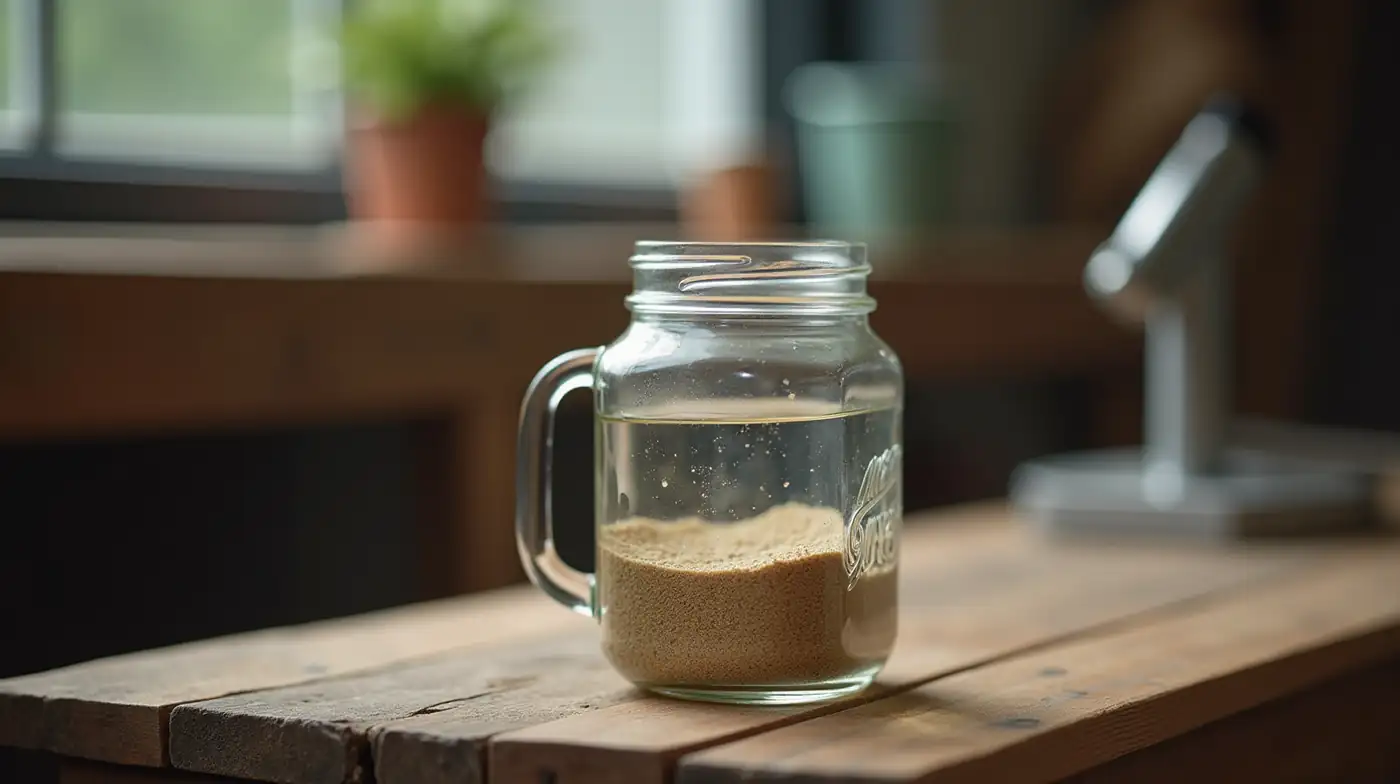
Is Sand in Well Water Safe to Drink?
The short answer: a few grains of sand will not make you sick. Sand is mostly silica, a chemically inert material that passes through the body without being absorbed. That is why there is no EPA maximum contaminant level for sand specifically — it falls under sediment and turbidity guidance instead, and the concern is what the sediment does to your equipment and to the treatment you rely on.
That does not make it harmless. In 20-plus years of well inspections, the pattern is consistent: sand is a messenger. It tells you something physical is changing in your well — the gravel pack is migrating, the screen is letting material through, or the water level has dropped into a sand-bearing zone. The USGS notes that sand in well water most often points to well construction or maintenance issues rather than aquifer chemistry, and fine silt in particular can carry bacteria and clog filter media far faster than its volume would suggest.
Quick Answer
Occasional coarse grains: monitor it. A steady film of fine silt in every fixture: your well is losing material, and the problem will get worse, not better, without intervention.
There is also a mechanical cost. Silt that settles in your water heater tank insulates the burner or heating element and accelerates scale. Sand that reaches a submersible motor or a pressure tank degrades it over time, and fine particles are the number-one reason sediment filters clog between change-outs. In other words, sand in well water is a warning light, not a disease — but ignoring the warning light is how small repairs become expensive ones.
Why Is There Sand in My Well Water? The 8 Causes
Before you buy anything, figure out which of these is actually happening. The pattern of when the sand appears — constant, after every start-up, or only in peak season — tells you a great deal.
- A new well, or a drop in water level. Freshly drilled wells shed sand for weeks while the gravel pack settles. More often, a falling water table (drought or heavy irrigation season) drops the static level below the bottom of the screen, exposing loose formation sand.
- Gravel pack loss (washout). The gravel surrounding the screen migrates down the well or up past the top of the screen. Once the pack thins, loose formation sand flows straight through the screen slots.
- Damaged or undersized well screen. Corroded slots, a punctured screen, or — on older wells — slots sized too wide for the local grain size all let sand through continuously.
- Foot valve failure (jet pumps). When the foot valve at the bottom of the well fails to hold, the pump loses prime between cycles. Every restart then sucks loose sand off the bottom of the well and pushes it into your house.
- Over-pumping (high drawdown). If the pump withdraws water faster than the aquifer recharges it, the drawdown cone deepens and pulls loose sand up with the flow. This cause shows up only during peak demand.
- Casing damage. A collapsed or leaking shallow casing lets unconsolidated material from the fill zone into the well. Expect sand plus a change in taste or odor.
- Seasonal fluctuation. Summer irrigation season drops the water table across the whole aquifer. If your sand returns every July and disappears by February, the water level — not your well — is the variable.
- Nearby drilling activity. New wells nearby pull water and vibrate the formation. Several of our clients reported a sand spike that began the week a neighbor started drilling.
| Cause | Typical Signs | How to Confirm |
|---|---|---|
| New well / water level drop | Sand in first weeks after drilling, or each dry season; improves with rain | Jar-test log over 4–8 weeks; check water level trend |
| Gravel pack loss | Steady fine sand, worse with heavy use, does not clear | Video well inspection + flow test |
| Damaged / undersized screen | Constant low-level sand, spikes after pump cycling | Video inspection; compare slot width to local grain size |
| Foot valve failure (jet pump) | Pump loses prime; sand burst at every restart | Prime/hold test; pull and inspect the foot valve |
| Over-pumping | Sand only during peak demand (laundry, irrigation) | Pump-off / step-drawdown test |
| Casing damage | Sand plus taste/odor change, surface-water turbidity | Dye test and video inspection of casing |
| Seasonal fluctuation | Returns each dry season, clears in winter | Year-round jar-test log against rainfall/irrigation |
| Nearby drilling | Spikes that correlate with a neighbor’s drilling schedule | Check local drilling reports; retest after activity stops |
Diagnosis patterns from residential well inspections; confirmatory testing per USGS ground-water guidance (USGS Circular 1186).
How to Test for Sand in Well Water (5-Minute DIY Check)
You do not need a lab to size this problem. This jar test is the one we run on site during inspections, and it takes five minutes plus thirty to let the water settle:
- Fill a clear mason jar to the one-quart line from the cold kitchen tap.
- Let it sit, undisturbed, for 30 minutes.
- Measure the sediment layer at the bottom with a ruler: under 1 mm is light, 1–3 mm is moderate, and over 3 mm is heavy.
- To separate true sand from silt, pour 5 gallons through a 5-micron filter (a coffee filter works in a pinch). Sand grains stay on the media; clay and fine silt pass through.
- Dry the residue and weigh it. A rough rule of thumb from our lab work: under 0.1 g per 5 gallons is background level, 0.1–0.5 g is worth monitoring and pre-filtering, and over 0.5 g is a mechanical problem to fix at the source.
Pro Tip
Test the cold tap, not the hot. Hot water dissolves mineral scale out of the tank and lines, which fakes a sand result. And if you suspect the pump end of the system, test at the lowest fixture in the house.
Wait Before You Buy
If the sand appeared after a long outage, a storm, or a neighbor’s drilling, retest in 24–48 hours before buying equipment. One-off events often clear on their own.
If your water is a drinking source and silt persists, pair the jar test with a lab panel covering turbidity, bacteria, and metals. See our guide on how often you should test well water for the full schedule and what each test costs.
How to Remove Sand From Well Water: 5 Methods Compared
There are two families of fix: treat the water, or fix the well. Here are the five methods we actually install, in order of increasing investment.
- Spin-on 5-micron sediment filter. A single cartridge at the point of entry. Cheap, easy, and effective for light sand — but under a heavy load it clogs within weeks, so treat it as a monitor more than a solution.
- Whole-house sediment filter system (staged). A 100/20/5-micron staged cartridge system mounted at the pressure tank. Handles moderate sand across the whole house; plan on cartridge changes every 2–4 months.
- Backflush sediment filter. A self-cleaning unit that reverses flow to clear the media. The right answer for heavy, continuous sand; the cost is upfront, and you need a drain nearby.
- Sand media (deep-bed) filter. A tank of graded sand that captures fine silt down to roughly 10 microns and backwashes itself. Best when the problem is fine silt rather than coarse grains.
- Well cleaning — surge, air-lift, or re-gravel. The only option that fixes the source. A professional pulls the pump, surges or air-lifts the well, and re-packs the screen with gravel sized for your formation. If your jar test shows over 3 mm of sediment, start here, not with a filter.
| Method | Best For | Removes | Typical 2026 Cost | Maintenance | Fixes Source? |
|---|---|---|---|---|---|
| Spin-on 5-micron filter | Light sand, single point of entry | Grains ≥ 5 microns | $20–60 | Cartridge every 1–3 months | No |
| Staged whole-house system | Moderate sand, whole home | Sand ≥ 5–20 microns | $180–500 | Cartridges every 2–4 months | No |
| Backflush filter | Heavy, continuous sand | Coarse sand and grit | $300–850 | Periodic backwash, drain needed | No |
| Sand media (deep-bed) filter | Fine silt plus sand | Silt down to ~10 microns | $400–1,200 | Backwash as needed | No |
| Well cleaning / re-gravel | Steady or heavy sand at the source | Sand at the source | $500–3,000 | Every 10–15 years | Yes |
2026 pricing from regional well contractors and current Amazon listings; well-work costs vary with depth, region, and formation.
The Insight
Filters treat the symptom; the well is the source. We have seen homeowners cycle through backflush systems every six months because a well cleaning would have ended the problem. If the sand is steady rather than seasonal, budget for an inspection before you buy filtration.
If the well itself is packed with silt rather than just shedding sand, our step-by-step guide on how to unclog a well covers the DIY surge process to try before you call a contractor.
Where to Buy: Sand-Removal Products That Work
Everything below is available on Amazon through the links in the table (our affiliate tag, at no cost to you). Prices are typical 2026 street prices for the category — use them as a budgeting baseline, not a quote.
| Product | Use Case | Typical 2026 Price |
|---|---|---|
| 5-Micron Spin-On Sediment Filter | Point-of-entry prefilter for light sand | $20–60 |
| 100-Micron Whole-House Prefilter | First stage for heavy sand loads | $60–150 |
| Whole-House Sediment Filter System | Staged whole-home filtration | $180–500 |
| Backflush Sediment Filter | Heavy, continuous sand loads | $300–850 |
| Well Pump Foot Valve | Jet pumps losing prime and pulling sand | $25–70 |
| Well Drilling Gravel | Re-graveling the screen pack | $15–45 (10 lb) |
| Well Water Test Kit | Lab-grade drinking water panel | $30–90 |
Prices checked November 2026 via Amazon search listings; affiliate links (waterwellowners-20).
One rule from the field: if you run a staged system, put the coarsest micron first. A 100-micron prefilter ahead of a 5-micron final stage doubles or triples the life of the fine cartridge under sand load. The full sequencing logic is in our well water filter order guide.
When to Call a Well Professional
Call a well contractor — not a plumber — when any of these are true:
- The pump short-cycles, runs dry, or the pressure tank never builds full pressure.
- Sand is collecting in the sump pit, basement, or the pressure tank itself.
- Your jar test shows over 3 mm of sediment after 30 minutes, month after month.
- The sand burst comes at every pump start-up — the classic signature of a failed foot valve or screen.
From our cost tracking over the past two years, a professional inspection with video and a flow test typically runs $150–$400; a surge clean runs $500–$1,500, and a re-gravel with screen work runs $1,500–$3,000 depending on depth and region. If you are also seeing signs of a failing well pump, get the pump evaluated at the same visit — sand damage and bearing wear usually show up together.
Sand in Well Water: Frequently Asked Questions
Is sand in well water a health risk?
Coarse sand is not a direct health risk — silica is inert, and there is no EPA MCL for sand. The indirect risks are real, though: silt can shield bacteria from chlorine during disinfection, and it accelerates clogging of the filters that keep your water clean.
How much sand is too much in well water?
Use the jar test: under 1 mm of settled sediment per quart after 30 minutes is background; 1–3 mm is moderate and worth filtration; over 3 mm, or any visible sand in the sump pit, is a well problem that needs a professional.
Can sand in well water damage my water heater?
Yes. Sand settles at the bottom of the tank, insulates the burner or heating element from the water, and accelerates scale. Flush the tank annually with a garden hose if you see sediment, and consider a sediment prefilter ahead of the heater.
Will a 5-micron filter remove sand from well water?
It will capture visible grains, but under a heavy sand load a 5-micron cartridge clogs within weeks and your pressure drops fast. Stage it: a 100-micron prefilter ahead of a 5-micron final stage doubles or triples the life of the fine cartridge.
Why did sand in my well water suddenly start?
Five suspects, in order of frequency: a water level drop (drought or irrigation season), foot valve failure on a jet pump, screen damage, a long outage that let sand settle and then resuspend, or a neighbor’s new well. Run the jar test twice, 24 hours apart, and log when the sand is worst — start-up, peak demand, or constant — before you buy anything.
The Bottom Line
Sand in well water is a mechanical signal, not a chemistry problem — and that is good news, because it is diagnosable with a five-minute jar test and fixable with either filtration or well work. Light and seasonal sand is handled by a staged sediment system; steady or heavy sand means the well itself is losing material, and a professional inspection plus cleaning is the permanent fix. Test first, treat second, and fix the source whenever you can.
See Also
#WellWater #SandInWellWater #PrivateWell #WellMaintenance #WellPump #WaterFilter #SedimentFilter #WellOwner #WaterQuality #WellDrilling #HomeWater #WellCare #DrinkingWater #WellInspection #RuralLife