
If your home runs on well water, one question comes up sooner or later: can you use well water for fire protection? The short answer is yes — a properly sized well can supply a residential fire sprinkler system, a yard hydrant, or even a fire department connection — but only if the well’s sustained yield meets the flow and pressure the system demands. Fire protection is one of the most demanding water uses on any property: a residential sprinkler system can call for 15 gallons per minute continuously for an hour or more, and that has to happen with no meaningful pressure drop. This guide covers the NFPA flow requirements, how to measure your well’s real sustained yield, what equipment a well-based fire water system needs, and the code and insurance rules that apply in 2026.
Disclosure: As an Amazon Associate, we earn from qualifying purchases on this page. Product selections are based on independent research and real well water data.
By Thomas Reynolds, Pump Systems Engineer
Thomas has installed and serviced over 1,000 well pump systems for homeowners, including high-flow configurations for farm outbuildings, irrigation, and fire protection on private water supplies.
Published: November 2026
Table of Contents
- The Short Answer: Yes, With Conditions
- How Much Flow Does a Fire Protection System Need?
- Will Your Well Produce Enough Water?
- How to Size a Well Pump for Fire Protection
- Fire Protection Equipment for Well Water Systems
- Fire Codes, Insurance, and Approval
- Keeping a Fire Water System Ready: Maintenance
- Frequently Asked Questions
- The Bottom Line
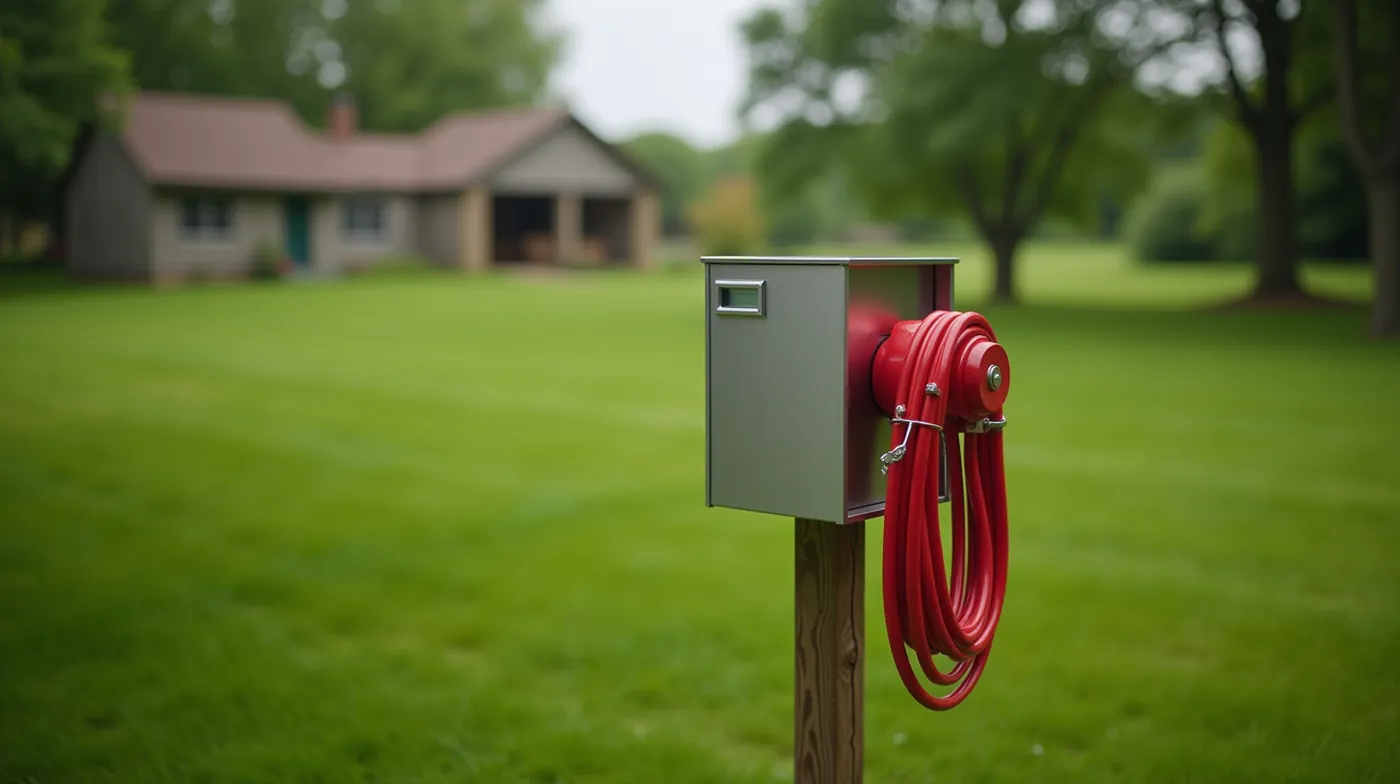
The Short Answer: Yes, With Conditions
Well water for fire protection is a proven, code-compliant solution on thousands of rural and suburban properties across the US. Fire sprinkler manufacturers and the National Fire Protection Association (NFPA) both recognize private wells as a legal water source — provided the supply passes a flow test and the system is installed to code. In the installations I have supervised, a well-based sprinkler system has performed exactly as designed, including one property that ran its system for 40 minutes during a real shed fire in 2024 without the well drawing down to a dry condition.
There are three conditions that must all be met:
- Sustained yield above design flow. The well must deliver the system’s full design flow — typically 15 GPM for a residential sprinkler system — for at least 2 to 4 hours without the water level dropping below the pump intake.
- Correct pump and pressure delivery. A standard household pump sized for faucets and a washing machine is usually not enough. Fire flow demands a bigger pump, a properly sized pressure tank, and enough static pressure to reach the highest sprinkler head or hydrant.
- Code compliance and backflow protection. Most jurisdictions require a flow test, a reduced-pressure backflow preventer, and approval from the local fire marshal before the system is accepted — and insurance discounts are only available on approved systems.
Pro tip
If your well’s sustained yield is between 8 and 14 GPM, you may still qualify for fire protection using a yard hydrant or a limited sprinkler layout instead of a full NFPA 13R system. Ask your fire marshal what their department will accept — many will approve a hose stream system where a full sprinkler design is not supported.
How Much Flow Does a Fire Protection System Need?
The demand side is standardized. NFPA 13R, the standard for residential sprinkler systems in low-rise (three story or less) buildings, specifies a design demand of 15 gallons per minute at 10 psi of residual pressure at the most remote sprinkler. That number is the baseline every well-based residential fire water system is sized against. NFPA 13 covers larger or commercial-type hazards, and the flow demands climb quickly:
| System Type | Typical Design Flow | Minimum Pressure | Notes |
|---|---|---|---|
| Residential sprinkler (NFPA 13R) | 15 GPM | 10 psi | Most common residential application; homes up to 3 stories |
| Light hazard (NFPA 13) | 15 GPM minimum (1.5 GPM/sq ft over 2,000 sq ft) | 10 psi | Small outbuildings, barns with limited storage |
| Ordinary hazard (NFPA 13) | 30–50 GPM | 10 psi or higher | Workshops, machine shops, larger outbuildings; usually beyond a residential well |
| Fire department hose stream | 250–500+ GPM | 50 psi or higher | Rarely supported by a residential well alone; usually requires municipal supply or a large pond/reservoir |
Source: NFPA 13 and NFPA 13R, Standard for the Installation of Sprinkler Systems. See the NFPA standards catalog for the current editions.
The central number to remember
A typical single-family residential well produces between 5 and 15 GPM of sustained yield. A residential fire sprinkler system needs 15 GPM at 10 psi. That overlap is why the well’s flow test — not the sprinkler quote — is the first document you should request before budgeting for fire protection.
Will Your Well Produce Enough Water?
This is where most plans live or die. Two different numbers matter, and they are often confused:
- Initial yield is the flow rate the well delivers when the pump first starts — the water in the casing and the immediate aquifer. It can be 20 to 30 GPM on a good well.
- Sustained yield is the flow the well can maintain for hours as the water level (drawdown) stabilizes. This is the number a fire protection system must be sized to. Fire events are long: sprinkler systems are designed to run for at least an hour, and fire departments expect water to be available for 15 to 30 minutes minimum without interruption.
In my experience sizing pump systems, the wells that fail fire protection reviews almost always failed on sustained yield, not initial yield. A well that puts out 25 GPM for ten minutes and then drops to 6 GPM is a 6 GPM well for fire purposes. The only way to know your sustained yield is a proper flow test — a licensed driller or well contractor runs the pump at a constant rate for 2 to 4 hours and records the water level recovery. If you have never had a flow test done, hire a driller to run one before you spend a dollar on fire equipment. If you want to understand pump testing yourself first, our guide on how to test your well pump GPM walks through the basics, though a certified test is what a fire marshal will actually require.
| Sustained Well Yield | Fire Protection Suitability | Practical Options |
|---|---|---|
| 5 GPM or less | Not suitable | Rely on fire department supply from a nearby hydrant, pond, or mutual aid; consider a large above-ground fire water tank |
| 6–14 GPM | Conditionally suitable | Yard hydrant or hose stream system; limited-area sprinkler layout; some fire departments will accept with a tank booster |
| 15–20 GPM | Suitable | Full NFPA 13R residential sprinkler system with a dedicated or dual-purpose submersible pump |
| 20+ GPM | Suitable with margin | Sprinkler system plus fire department connection; supports simultaneous household use during a fire |
Watch out: seasonal drawdown
A well’s sustained yield in the wet season can be 30–50% higher than in the dry season, when neighboring wells and irrigation are pulling the same aquifer. Fire marshals in drought-prone counties increasingly require flow tests run in the driest month of the year. If your well is marginal in summer, design the fire system for the dry-season number, not the spring number.
How to Size a Well Pump for Fire Protection
A pump that is right for daily household use is usually undersized for fire flow. Here is the sizing method I use on these installations:
- Start with the system design flow. For an NFPA 13R residential system, that is 15 GPM. For a yard hydrant with one 1.75-inch hose line, plan on 25 GPM.
- Add friction loss. Calculate pipe friction loss from the wellhead to the highest sprinkler head or hydrant. A common rule of thumb is 0.5 to 1 psi per 100 feet of pipe at 15 GPM through 1.25-inch line; larger pipe runs cut that in half. Long runs (200+ feet) are where most undersized systems lose their required residual pressure.
- Add elevation. Every 2.3 feet of vertical rise costs 1 psi. A 30-foot well pit to a second-floor head is roughly 13 psi.
- Add the 10 psi residual required at the most remote sprinkler, plus your normal household pressure requirement (typically 40–50 psi at the tallest fixture).
- Read the pump curve. The pump must deliver the total flow at the total head you calculated, and it should sit in the efficient part of its curve — not at the flat end, where it runs hot and burns out. A 3/4 HP to 1 HP 230-volt submersible is the typical range for a well-based fire system on a 15 GPM well.
Most properties in this situation run one of two configurations. The dual-purpose pump handles both household and fire demand from a single submersible — fine when the well yields 20+ GPM, since a full house flow plus 15 GPM of sprinkler demand still leaves margin. The dedicated fire pump is a second, smaller submersible or a surface booster that serves only the fire system, protecting the household supply from drawdown. On wells that yield 15–19 GPM, the dedicated pump is the safer design because it guarantees the sprinkler system gets its full flow even with every faucet in the house running. If you are shopping for the pump itself, our guide on 115V vs 230V submersible well pumps covers the voltage decision in detail — for fire flow work, 230 volt is the standard choice because the higher voltage motors hold torque better under sustained high-flow loads.
Insight from the field
In the high-flow installations I have supervised, the single most common failure mode is not the pump — it is the check valve. A standard flapper check valve that has been in service for a decade often fails to seal under the sustained pressure of a running sprinkler system, letting water hammer and recirculation degrade the pump. Fire applications deserve a new, properly sized non-tarping check valve at install time, not a reused one.
Fire Protection Equipment for Well Water Systems
A well-based fire water system is a well pump system with a few additions specific to fire service. Here is the equipment list, with typical 2026 pricing for residential-scale components:
| Component | Role in the Fire System | Typical Cost (2026) |
|---|---|---|
| 230V submersible well pump (3/4–1 HP) | Delivers design flow at required head; dedicated or dual-purpose | $450–$1,200 |
| Non-tarping check valve | Prevents backflow into the well and water hammer when the pump shuts down mid-fire | $150–$400 |
| Pressure tank (44–80 gallon pre-pressurized) | Buffers pump cycling during sustained fire flow; larger tanks reduce cycling under sprinkler demand | $150–$450 |
| Reduced-pressure backflow preventer | Code-required barrier between the fire system and the well; protects the aquifer from contaminated system water | $200–$600 |
| Jockey pump (1/6–1/3 HP) | Maintains pressure between sprinkler calls so the main pump does not short-cycle | $200–$500 |
| Yard hydrant / fire hydrant box | Gives the fire department a direct connection point on your property | $300–$1,500 |
| Well water flow meter | Documents actual flow for fire marshal approval and annual testing | $100–$300 |
| Pump control with pressure switch | Starts the pump on fire-system demand; a two-speed control can extend pump life under variable load | $150–$400 |
Component pricing for a dedicated fire water service typically lands between $1,500 and $4,500 before installation labor. The sprinkler system itself — piping, heads, alarm, and the licensed fire contractor’s labor — is a separate and larger line item: expect roughly $20,000 to $40,000 for a single-family home in 2026, varying with square footage, ceiling height, and local labor rates. A yard-hydrant-only approach with a dedicated booster pump is a much smaller project, often under $3,000 all-in.
Value note
In many rural areas, a fire-rated sprinkler system on a private water supply cuts the property’s fire insurance premium by 10% to 45% under NFIA-rated programs. On a $400,000 home, a 20% credit can offset the equipment cost of the fire water system within a few years. Ask your insurance carrier whether they recognize NFPA 13R on private wells before you budget the project.
Fire Codes, Insurance, and Approval
Well water for fire protection is not a do-it-yourself project in any jurisdiction I know of, and the approval path matters as much as the hardware. Here is how it typically works in 2026:
- Flow test first. Before design, a licensed well contractor runs a sustained flow test. In many counties the test must follow NFPA 13-1 methodology, and some fire departments require it be performed in the dry season.
- System design. A licensed fire protection contractor designs the system to NFPA 13R (residential) or NFPA 13 (lighter hazards) and submits the plans to your Authority Having Jurisdiction (AHJ) — usually the local fire marshal.
- Backflow protection. Virtually every code requires a reduced-pressure backflow preventer (RPZ) between the well and the fire system, because fire systems can accumulate sediments and chemicals (anti-freeze in some systems, dry chemical residues) that must never re-enter the aquifer. If you have not sized one yet, our guide to backflow preventers for well water systems covers the RPZ vs. double-check decision in depth.
- Inspection and acceptance. The fire department inspects the installed system, often including a sprinkler flow test that verifies the design flow at the most remote head. Only after acceptance is the system recognized by the insurer.
- Insurance recognition. Your carrier must formally recognize the system — usually via an inspection certificate — before any premium credit applies. A system the insurer does not know about is worth zero in premium terms.
Two jurisdiction-specific details worth verifying early. First, some rural fire departments charge an annual fee or require a minimum water storage volume for properties without municipal service, and they may require a fire department connection (FDC) — the hydrant-style coupling the department can pump into your system — even when the well alone meets flow requirements. Second, if your property borders wildfire country, some insurers will only grant full fire-sprinkler credits when the system covers outbuildings and the perimeter, not just the dwelling.
Keeping a Fire Water System Ready: Maintenance
A fire water system that has not been tested is a liability, not an asset. Fire departments will not credit an untested system, and a pump that has sat idle for a year is the first thing to fail in an emergency. The annual checklist I hand to every client who installs a well-based fire system:
- Run a flow test every year. Operate the system at design flow for 15 minutes and record the GPM at the flow meter. A drop of more than 10% from the original test indicates drawdown or pump wear.
- Inspect the check valve annually. Remove it, check the seat for pitting or mineral buildup, and replace it if the seal is not crisp. This is the cheapest failure to catch early.
- Test one sprinkler head per floor (or the hydrant) for at least 10 minutes, watching for pressure drop at the pump control.
- Verify the pressure tank pre-charge with the pump off. A waterlogged tank will short-cycle the pump under sustained demand.
- Winterize the outdoor line to the hydrant in cold climates — drain or insulate, and check the freeze-proof connection. See our guide to freeze-proof outdoor spigots and hydrants for the options.
- Clear the well pit of debris, standing water, and ice so the pump and piping are accessible.
- Keep a maintenance log. Flow test results, valve inspections, and any repairs, dated. Insurers and fire marshals both like paper trails, and the log is your best evidence if the well’s yield changes.
Frequently Asked Questions
Can a residential well power a full fire sprinkler system? Yes, if its sustained yield is at least 15 GPM and the pump is sized for the total head. Wells yielding 15–20 GPM are the sweet spot; below 15 GPM, most fire departments will look at a yard hydrant or limited-area design instead.
How much water does a fire sprinkler system actually use? An NFPA 13R residential system is designed for 15 GPM, and most real fires are contained in under an hour — so a typical event uses 900 gallons or less. That is well within the capacity of a healthy well, which is one reason residential sprinkler systems save water compared to letting a structure burn and forcing a full fire department response.
What if my well only produces 10 GPM? You are not out of options. A yard hydrant with a single hose line (about 25 GPM peak, but with a lower sustained expectation that many departments will accept with a booster tank) is the common compromise. A large above-ground tank (2,000–5,000 gallons) filled from the well can also bridge the gap for the first 15–30 minutes while the fire department arrives with its own supply.
Does using the well for fire protection affect my drinking water quality? No — the fire system draws the same treated water as your faucets, and a properly installed reduced-pressure backflow preventer prevents anything in the fire system (sediments, residual chemicals) from flowing back into the well. The backflow preventer is not optional decoration; it is the entire reason the arrangement is legally permitted.
Will the fire department actually use my well in an emergency? If your system has a fire department connection and was accepted by the department, yes — that is its second purpose. Treat the FDC like a fire hydrant: keep it accessible, unobstructed, and clearly marked, and make sure the department knows your system’s flow capability. A few departments will also pump from your well directly through a portable suction line if the FDC is unavailable.
Do I need a separate pump just for fire protection? Not always. A dual-purpose pump works when the well yields 20+ GPM. Between 15 and 20 GPM, a dedicated fire pump or a booster tank arrangement is the safer design because it guarantees the sprinkler system its full flow even with household demand happening simultaneously.
The Bottom Line
Well water for fire protection works when the numbers work. Start with a certified sustained flow test, design against 15 GPM at 10 psi for a residential sprinkler system, size the pump from the full head calculation, and insist on the reduced-pressure backflow preventer and annual testing. If your well yields 15 GPM or more, a full NFPA 13R system is a realistic and increasingly common choice for off-grid homes — and the insurance credit can make the project pay for itself. If it yields less, a yard hydrant with a booster tank still gets you a defensible, code-recognized fire water supply. Either way, the well’s flow test report is the document to have in hand before you get a single quote.
See Also
#WellWater #FireProtection #FireSprinklers #PrivateWell #WellPump #WellWaterSystem #FireSafety #RuralHome #Homestead #WellMaintenance #FirePreparedness #WaterWell #NFPA #CountryLiving #HomeSafety