
You can hear the well pump running. The pressure switch clicks, the motor hums, and every light in the well house says the system is working. But when you open the tap, nothing comes out — not even a trickle. This is the classic well pump runs but no water failure, and it is one of the most common — and most misleading — problems a private well owner can face, because a running pump sounds like everything is fine. The reality is that a pump that runs but delivers no water is moving air, not water, and in most cases that points to one of eight causes: a failed foot valve, a leaking check valve, an air leak in the suction line, a clogged intake, a seasonal water-level drop, a seized impeller, a misconfigured variable-frequency drive, or a frozen supply line. This 2026 guide walks through how to tell which one you have, a 30-minute diagnosis you can run with basic tools, what each fix costs, and when the job belongs to a professional.
By Robert Harrison, Certified Well Inspector
Robert has 20+ years of experience inspecting and testing residential water wells across the western US. He has diagnosed more than 1,000 pump and pressure system failures for homeowners.
Disclosure: As an Amazon Associate, we earn from qualifying purchases on this page. Product selections are based on independent research and real well water data.
Published: November 23, 2026
Table of Contents
- What “Well Pump Runs But No Water” Actually Means
- The 8 Most Common Causes
- How to Diagnose It: A 6-Step Checklist
- Cause vs. Fix, Side by Side
- When to Call a Professional
- Where to Buy the Parts
- Frequently Asked Questions
- The Bottom Line
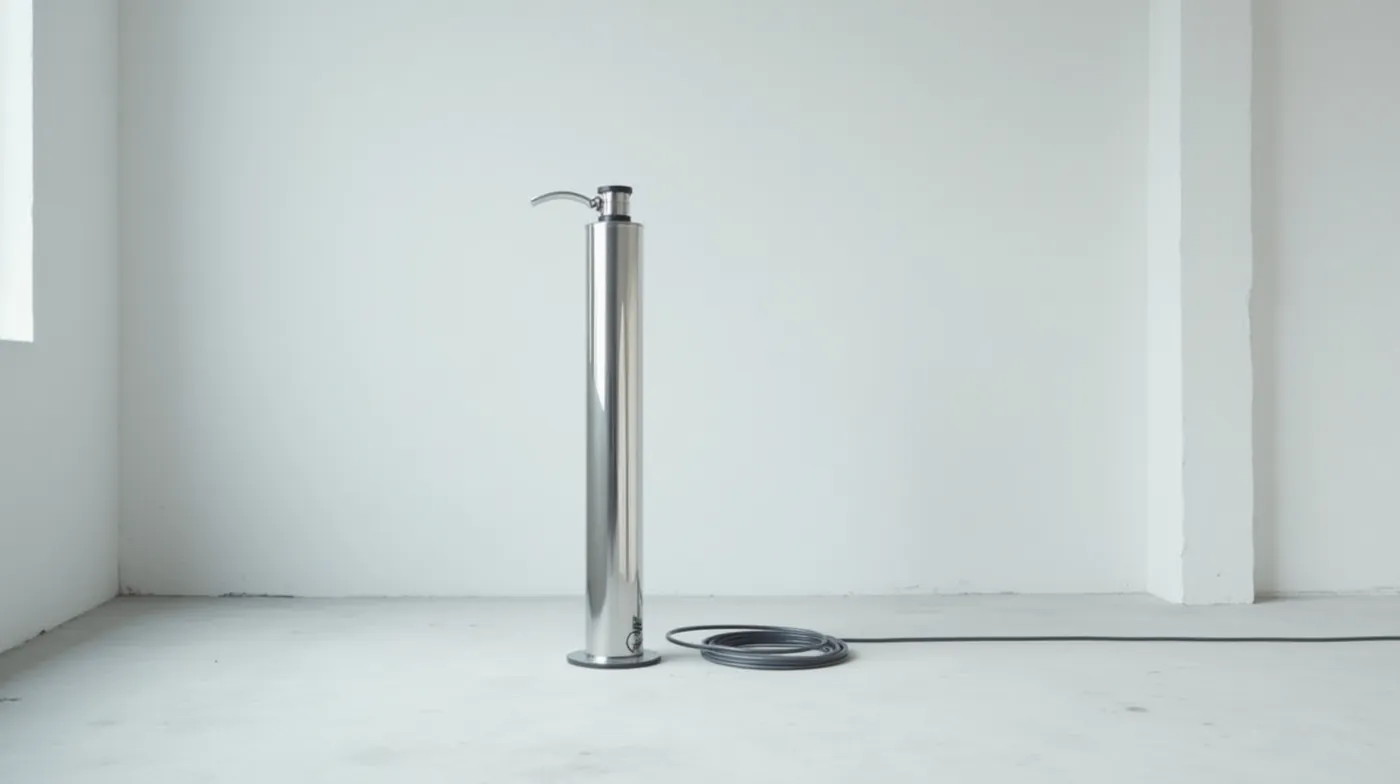
What “Well Pump Runs But No Water” Actually Means
A healthy well pump takes water from the well and pushes it into the pressure tank and house lines. When the pump runs but the faucets stay dry, one of two things is happening: the pump is pulling air instead of water (the system lost its prime, or the intake is above the water table), or the pump is pulling water but cannot move it (a mechanical or electrical failure inside the pump itself). Those two families of failure need completely different fixes, so the first job is to tell them apart.
The pattern at the tap gives you most of the answer before you touch a wrench:
| What you see at the tap | What it tells you | Most likely culprits |
|---|---|---|
| Nothing at all — only air, even after minutes | System has no prime, or pump is above the water | Foot valve, check valve, air leak, low water level |
| Water for a few seconds, then air again | Prime leaks away the moment the pump stops | Leaking check valve or foot valve |
| Weak, sputtering, or gurgling flow | Water is reaching the pump, but air or debris is mixed in | Partial intake clog, worn impeller, air leak |
| Pump runs continuously but pressure never builds | Pump cannot develop head, or VFD is cutting it off | Seized or worn impeller, misconfigured VFD, frozen line |
After 20 years of pulling pumps out of dry wells, the pattern that stands out is this: in the large majority of cases, the motor is perfectly healthy and the water is still in the well. The failure lives in the plumbing between the two — the valves, the suction line, and the prime. That is good news, because those are the cheapest parts of the system to fix.
The 8 Most Common Causes
Here are the eight causes we see in the field, in roughly the order you should check them. Each one includes the tell-tale sign, how to confirm it, and the fix.
1. Lost Prime — the Foot Valve Has Failed
A jet pump (the above-ground kind with a pipe going down the well) depends on a stainless steel foot valve at the bottom of the suction line to hold water in the pipe when the pump stops. Rubber seats in these valves harden and crack with age. Once the seat leaks, every time the pump shuts off, the water drains back down the well and the next start begins by pulling air. If your pump runs, delivers a few seconds of water, and then goes to air, this is the first thing to replace. The valve itself is a $25–$60 part; the labor to pull the pump and swap it is the real cost.
2. Leaking Check Valve
Every jet pump system has a second one-way valve — the brass swing check valve — usually in the well house or at the top of the suction line. It does the same job as the foot valve: keeping the line full. A check valve that no longer seals lets the entire column of water in the suction pipe drain back into the well, and you lose your prime exactly the same way as with a bad foot valve. The good news is that the check valve is the easiest part of the whole system to reach. Turn off the pump, relieve pressure, and replace it in under an hour for $15–$40 in parts. If replacing the check valve alone does not hold the prime, the foot valve is next.
3. Air Leaks in the Suction Line (Jet Pumps Only)
A jet pump can only push water up if the suction pipe stays airtight. A cracked fitting, a loose union, or a section of line that has corroded through will let air in every time the pump runs, so the pump chases air instead of water. We typically find the leak at the pitless unit, at the check valve, or at the oldest section of line. To confirm it, prime the system, watch the pressure gauge while the pump runs, and look for pressure that oscillates or never reaches cut-out. Any joint that is wet or hissing is your leak. Re-tape the threads with a quality pipe thread sealant, replace cracked fittings, and re-prime. This is also why submersible pumps, which sit in the water and never rely on suction, simply cannot have this failure.
4. Clogged Intake or Screen
Debris, silt, or gravel working down the well can wrap around or pile up in front of the pump intake. The pump keeps running at normal amperage, but it is straining against a blocked inlet and flow drops to nothing. This is common after a heavy storm, after the well has sat unused through winter, or in wells with loose gravel. A submersible with a clogged basket will often draw slightly higher amps than its nameplate rating. The fix is to pull the pump, clean the intake screen and basket, and re-develop the well — open the water wide for a full flush, which is exactly the procedure in our how to flush a well step-by-step guide. If gravel keeps migrating into the well, the well may need professional development or screen work.
5. Seasonal Water-Level Drop — the Pump Is Above the Water
Every well has a static water level (where the water sits at rest) and a pumping level (where it drops while the pump runs). In a dry spell, or in a well that was drilled shallow, the pumping level can fall below the intake. The pump runs happily — it just has air to pull. We see this every late summer and early fall, and it is the cause homeowners least expect, because nothing in the system is actually broken. Measure the water level with a well water level tape lowered through the well cap until it clings to the water. If the pumping level is within a few feet of the intake, the well needs to be re-developed, or the pump needs to be relocated lower — see our guide on how deep to install a submersible well pump for the clearance rules. A well that stays dry even in wet season is a different story entirely: that is a yield problem, and it belongs in a conversation with a driller, not a parts store.
6. Seized or Worn Impeller
This is the “pump is moving water but cannot move it” failure. If the motor hums at the correct amperage but the pump produces no flow — or only a dribble — the impeller may be seized on the shaft, or worn down by sand and years of service. A pump that ran fine for a decade and suddenly loses most of its flow has usually let grit into the bearing and impeller stack. From outside, a seized-impeller pump often draws slightly lower amps than its nameplate rating, because the motor is turning air with less resistance than water. There is no in-place repair for this. The fix is a replacement pump sized for your well diameter and static level — typically a 1/2 HP to 1 HP submersible for a standard residential well — plus the pull-and-install labor.
7. Misconfigured VFD or Pressure Switch
If your pump is on a variable-frequency drive, a “well pump runs but no water” report is very often a settings problem. VFDs have a dry-run protection feature that trips the pump the moment flow drops, and the flow and pressure parameters are set per pump model. A firmware update, a replaced VFD, or a new pump with a different curve can leave the drive cutting the pump off before it develops any pressure. The pump runs for a few seconds, the drive trips, and the taps stay dry. Check the VFD fault history first — a repeating dry-run or low-pressure fault confirms it. On a simple pressure switch system, the analogous failure is a cut-in pressure set so high that the pump cannot reach it, or a switch contact that bounces. Both are bench-level fixes, and a miswired or failed VFD is not one we recommend a homeowner troubleshoot live.
8. Frozen or Restricted Supply Line
It is November, so this one is on the table. An ice plug in the buried line, the casing, or the tank connections will let the pump run against a closed system with zero flow. The giveaway is location: if the pump runs fine but only the faucets below a certain point are dry, or if the well house or pitless area saw a hard freeze, thaw the line before touching anything else. We cover the safe methods — and the ones that damage casings — in our how to unfreeze a well guide. Keep the heat on the well house and the pitless area through winter; a frozen line is the most expensive version of this failure because it can crack the casing on the way to thawing.
How to Diagnose It: A 6-Step Checklist
Run these in order before buying any parts. Thirty minutes with a pressure gauge, a tape, and a clamp meter will separate a $30 fix from a $900 pump job.
- Watch the gauge, not just the tap. Open an outdoor spigot and let the pump run. If the gauge climbs and holds, the pump is developing pressure and the problem is downstream (a valve, a frozen line, a blockage in the house). If it never climbs, the pump is not moving water.
- Listen at the well head. Gurgling and gulping means the system is full of air and losing its prime — foot valve, check valve, or air leak. A smooth, steady hum means water is reaching the pump and the problem is inside the pump or its drive.
- Measure the water level. Lower a water-level tape through the well cap until it clings, and compare the static level to your pump intake depth. If the water is above the intake at rest, the well itself is not the problem. If it is below, stop and read cause 5.
- Try a manual prime. On a jet pump, fill the suction line through the priming port with a hand primer or a garden hose, then start the pump. If water arrives and holds, your check or foot valve is leaking. If it arrives and drains away within minutes, the leak is confirmed — replace the check valve first, then the foot valve if it persists.
- Run the pump to clear and time it. Run a single outdoor spigot at full flow for up to 10 minutes. If silt or debris passes and flow stabilizes, the intake was partially clogged — flush the well properly rather than running the pump dry. If flow never materializes, move to step 6.
- Measure the running amperage. A clamp meter at the pump disconnect will tell you whether the impeller is turning. Amps near the nameplate rating with no flow points at a seized or worn impeller (cause 6) or a VFD trip (cause 7). Zero or near-zero amps points at an electrical problem, which is a separate failure — see our well pump trips breaker guide for that family of faults.
If you hear nothing at all from the pump — no hum, no click, no motor sound — you do not have this problem, and our well pump not working guide covers that failure instead.
Cause vs. Fix, Side by Side
The table below summarizes all eight causes with the DIY difficulty and the typical parts cost we see quoted in 2026. Labor costs vary a lot by region and by how deep your well is, so treat the parts column as your budget floor.
| Cause | Key symptom | DIY difficulty | Typical parts cost |
|---|---|---|---|
| Failed foot valve | Prime drains after each run | Hard — requires pulling the pump | $25–$60 |
| Leaking check valve | Water flows seconds, then air | Easy — well house access | $15–$40 |
| Air leak in suction line | Pressure oscillates, wet joints | Moderate | $20–$150 (fittings) |
| Clogged intake or screen | Sputtering flow, higher amps | Hard — pull and flush | $0–$200 (dev. labor if pro) |
| Water level below intake | Worse in dry season | Pro — relocation or re-dev | $0–$1,500+ |
| Seized or worn impeller | Full amps, no flow | Hard — pump replacement | $400–$1,200 (pump) |
| VFD or switch misconfiguration | Pump trips after seconds | Pro — live electrical | $0–$300 |
| Frozen supply line | Dry after a hard freeze | Moderate — thaw carefully | $0–$200 |
When to Call a Professional
Call a well service tech before spending money on parts in these situations:
- The pump will not come out of the well. A stuck pump needs special pullers, and forcing a cable can snap it inside the well. Our stuck well pump guide covers what is safe to try from the surface.
- The water level is below the pump intake. Relocating a submersible lower in the well, or re-developing a low-yield well, is driller-level work.
- You are working on live high-voltage circuits or a VFD. A 230V pump circuit is not the place to learn, and VFD parameters are set per pump curve — a wrong setting can burn a winding.
- The well house, pitless unit, or casing is frozen. Improper thawing cracks casings and costs thousands. This is the one “wait it out” is never the right answer, but only a professional should apply heat near a pitless assembly.
- Nothing you replace holds a prime. If the check valve, foot valve, and suction line are all new and the system still loses prime, there is a crack in the casing or a void in the grout that only a driller can find.
Where to Buy the Parts
Every part in this repair is available as a standard off-the-shelf item. Here is the shopping list mapped to the causes above, with the specifications that matter:
| Part | Used for | Specs to match |
|---|---|---|
| Stainless foot valve | Cause 1 — holding prime in the well | Match your suction line size (usually 1 inch) |
| Brass swing check valve | Cause 2 — backflow at the well house | Match the suction line size |
| Hand primer | Diagnosis step 4 — re-priming the jet pump | Fits standard priming ports |
| Pipe thread sealant | Cause 3 — resealing suction joints | White PTFE or pipe dope for threaded joints |
| Water level tape | Diagnosis step 3 — finding the static level | 100 ft minimum, non-absorbent backing |
| Submersible well pump | Cause 6 — replacing a worn pump | Match well diameter, voltage, and static level |
One tip from the field: when replacing a pump, buy the pump and a new pitless unit at the same time if your system uses one. The pitless unit is a wear item with rubber seals that fail on the same schedule as pump seals, and the labor to pull the pump is already being done.
Frequently Asked Questions
Why does my well pump run but only give a little water?
Reduced flow with the pump running almost always means water is reaching the pump but the system is not moving its full volume: a partially clogged intake, a worn impeller, a suction line that is too small for the pump, or a VFD limiting speed. Run the 6-step checklist above — the amperage reading in step 6 separates a mechanical restriction from a drive limitation.
How long should I run the pump to try to get water flowing?
On a jet pump with a manual prime, 30–60 seconds is enough — if the system is going to prime, it primes fast. Running a jet pump dry for extended periods can overheat it, so stop after a minute or two and re-check. On a submersible pump, do not “run it and hope” — if it is not flowing within a minute, shut it off and measure the water level, because a submersible can run safely in air for a while but will overheat if it keeps cycling with no water to carry the heat away.
How do I know if my well has actually run dry?
Measure the static water level with a water-level tape at a time of day when the pump is off and no one has been using water. Compare it to your pump intake depth (usually on the pump or in your well records). If the static level is above the intake and the pumping level is not, the well has yield but not depth margin. If the static level itself is below the intake, the aquifer is not recharging where that well sits — a driller can assess whether re-development helps or whether the well is done.
Is it normal for a new well to give air in the water at first?
Yes, for a while. New and recently disturbed wells contain loose fines and air that need to be worked out — that is what well development is for. Short bursts of air in the first weeks are normal; a pump that runs but never holds water is not. If a brand-new well will not prime, have the driller who installed it come back — this is inside the installation warranty in most states.
How much does it cost to fix a well pump that runs but gives no water?
Parts range from $15 for a check valve to about $1,200 for a replacement submersible pump, and professional labor to pull and reinstall a pump typically runs $300–$800 depending on depth and access. The 6-step diagnosis is worth doing first, because in our experience the majority of these calls turn out to be a leaking valve or a clogged intake — a few dozen dollars of parts instead of a pump job.
The Bottom Line
A well pump that runs but delivers no water is almost never a mystery: the system is either full of air it cannot hold, or the pump cannot move the water it is pulling. Work the eight causes in order — foot valve, check valve, suction line, intake, water level, impeller, drive, freeze — and let the tap pattern and the amperage reading tell you which one you have. A $30 check valve and a hand primer solve more of these failures than any other combination in the trade, and a 30-minute diagnosis keeps you from buying a new pump for a leak that was at the top of the well house the whole time. If the water level is the problem, or the pump will not come out, hand it to a well professional — but take the gauge readings and amp numbers with you, because they will cut their diagnosis in half.
See Also
#WellPump #WellWater #WellPumpRepair #FootValve #CheckValve #SubmersiblePump #JetPump #WellMaintenance #PrivateWell #WaterWell #HomeownerGuide #WellSystem #WellDrilling #DIYRepairs #WellCare