
If your well pump stuck today, the clock is running on two things: your household water supply and, depending on the cause, the pump itself. A stuck pump is rarely a single fault. It usually shows up as one of three very different failures — a motor that hums but refuses to turn, a motor that spins with no water coming up, or a pump that will not stop running because the switch or contactor is welded on. Each one has a different fix, a different cost, and a different timeline, and the wrong fix for the wrong mode can turn a $40 part into a $3,000 well job. In the years I have spent pulling, re-pulling, and servicing residential pumps across the western US, I can tell you that most stuck well pump situations are solved by a homeowner with a bailer, a rope, and a couple of hours — as long as the diagnosis is right. This 2026 guide walks through all seven causes, a safe step-by-step unsticking process, what retrieval actually costs when the pump will not come out, and the prevention habits that keep it from happening again.
By Thomas Reynolds, Pump Systems Engineer
Thomas has installed and serviced over 1,000 residential well pump systems across the western US, from single-family homes to acreage with long drop tubes and high static feet.
Disclosure: As an Amazon Associate, we earn from qualifying purchases on this page. Product selections are based on independent research and real well water data.
Published: November 21, 2026 · Last updated: November 21, 2026
Table of Contents
- What “Well Pump Stuck” Actually Means: 3 Failure Modes
- The 7 Most Common Causes of a Stuck Well Pump
- How to Unstick a Well Pump: Step-by-Step (Do This in Order)
- If the Pump Will Not Come Out: Retrieval Options and 2026 Costs
- Where to Buy the Parts (2026)
- Preventing a Stuck Well Pump: 7 Habits That Work
- When to Call a Professional
- FAQ: Well Pump Stuck Questions Homeowners Ask
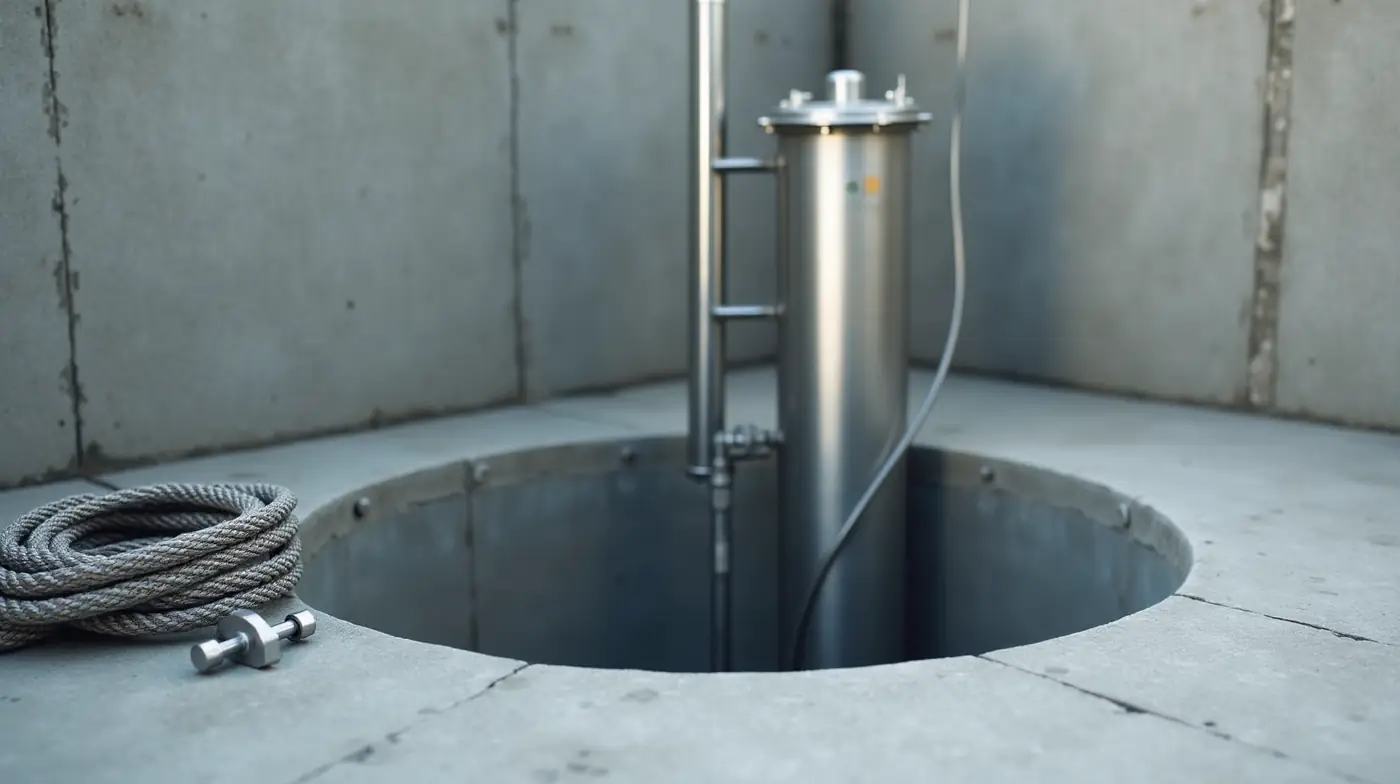
What “Well Pump Stuck” Actually Means: 3 Failure Modes
“My well pump is stuck” can mean three different physical things, and the symptom you hear at the pump panel tells you which one you have. Spend five minutes on this before you buy anything, because mode A and mode C are electrical-adjacent while mode B is almost always mechanical, and the toolkits do not overlap.
Mode A: The motor hums but does not turn
Standing at the well head or basement pump panel, you hear a steady hum or buzz but no water moves, no pressure builds, and usually the breaker trips within seconds. This is a locked rotor: the impeller cannot spin, so the motor sits at its maximum stall current (three to five times rated) and the breaker does its job. The impeller is jammed by debris, mineral scale, a collapsed drop tube, or ice, or the shaft and bearing have seized outright. This is the most common meaning of a stuck well pump and the one homeowners most often misdiagnose as a “dead motor.”
Mode B: The motor runs but no water comes up
The pump starts normally, runs at a healthy sound, maybe even holds some pressure for a few seconds — and then the flow stops or never arrives. The motor is fine; the pump is moving nothing. Causes include a sheared impeller shaft, a foot valve that is wide open so the well keeps draining back down, a check valve that will not hold, or a drop tube and cable that slipped below the pump so the column of water is no longer connected to the discharge. If your situation matches this mode, our well pump will not build pressure guide covers the overlap in detail.
Mode C: The pump runs and runs and will not stop
Here the pump is “stuck on” electrically. The contactor contacts have welded together, so the pump keeps running even after pressure cut-out is reached, or the pressure switch contacts are stuck closed. The pump may be perfectly healthy and simply being run flat out until it overheats — at which point it will fail. Check your well pump short cycling article if the on/off pattern is rapid, and the pressure switch guide if it is a continuous run with no cycling at all.
The 7 Most Common Causes of a Stuck Well Pump
Ordered roughly from most common and cheapest to fix, down to the ones that usually mean a replacement. Each entry names the symptom signature, the physics behind it, and the fix.
1. Impeller Blocked by Sand, Debris, or Mineral Deposit
This is the number-one cause of a stuck submersible pump, and it is almost always a downstream symptom of a well that is passing solids. Sand, gravel fragments, or a hard mineral crust (common in high-hardness or high-iron water) works its way into the impeller chamber and wedges the vanes, so the motor cannot turn. The signature is a hum with no rotation, often appearing after a period of heavy use or a sand event. The fix is to bail the casing out, clear the intake strainer, and get the pump out long enough to free the impeller — then solve the sand problem at the source, because a pump that is stuck once by sand will be stuck again. Our sand in well water guide covers the well-side causes and filtration options. A hand-crank well pump bailer is the single most useful tool in this scenario.
2. Dry Running: The Pump Ran Against Air and Cooked
Submersible pumps are lubricated and cooled by the water they move. When the well level drops below the intake — a summer drawdown, a cracked casing losing yield, a neighboring well pumping harder — the pump runs dry. Without water, the motor and bearings overheat in minutes; the O-rings and bushings glaze, the shaft binds, and the pump is stuck solid. Owners often describe this as “the pump died after the lake drained” or “we had low water for a week and then it would not start.” The damage is usually permanent — dry-run seizure is one of the top reasons pumps end up as scrap — but a float switch that cuts power when the level drops below the pump is cheap insurance, and a well that is losing water needs its own diagnosis before any new pump is installed. See our well pump running out of water article for the nine causes of a dropping level.
3. Frozen Casing or Frozen Impeller
Anytime the well head, casing, or pump zone is below freezing, a stuck pump is a seasonal possibility. Water in the casing freezes and expands, locking the impeller or the pump body to the wall of the casing. The signature is a hum with no turn in the first weeks of a cold snap, often after the pump has been sitting idle. The fix is controlled thawing — slow heat at the well head, never an open flame against the casing — and then re-priming. If you live anywhere the ground freezes, the how to winterize a well pump guide walks through the full seasonal routine, including keeping a shallow well from icing over. A pump that was frozen hard and left unthawed for days may have a cracked casing or a warped shaft, so check it with a multimeter before assuming the thaw brought it back.
4. Foot Valve or Strainer Clogged, So the Pump Keeps Re-Draining
A “stuck” that is really a priming failure: the pump starts, pushes a little water, stops, and the whole column drains back down the well because the foot valve is open or its strainer is clogged with sand. To the owner it looks like the pump is stuck in a loop — starting, failing, starting again — and each start is a hard locked-rotor event against the full water column. The foot valve is the cheapest failure in this entire guide and the most commonly ignored. Test it by cutting power at the tank cut-out pressure and watching a gauge: if pressure bleeds off within minutes, water is draining back and the foot valve (or the in-line check valve) is the suspect. A replacement well pump foot valve runs $25–$80 installed by a homeowner on a shallow system, and our foot valve for a well pump guide covers testing, fitting, and replacement in depth.
5. Mechanical Seizure: Bearing Failure, Sheared Shaft, or Winding Burn
Every pump has a service life, and when it ends, the failure is usually one of three internal parts: the bearing seizes (most common), the impeller shaft shears (second, often from a momentary blockage), or the windings burn out after sustained overcurrent (third). The signature is a motor that starts fine one week and is silent or humming the next, with no recent sand event, freeze, or dry-run to blame. At this point the pump is not stuck in a fixable sense — it is worn out — and the question becomes repair-versus-replace. A 1/2 HP 230-volt 230V submersible well pump in the 2026 market runs roughly $300–$900 depending on brand and depth rating, and matching size to your well is the single most common replacement mistake. Our how to size a well pump guide walks through horsepower, voltage, and head requirements.
6. Cable, Drop Tube, or Guide Wire Slipped or Tangled
Submersible pumps hang from a cable assembly with a drop tube (and often a guide wire) that stays in the well while the pump is pulled. When the cable slips inside its strain-relief fitting — from a worn clamp, a vibration event, or a previous pull that was not done properly — the pump drops several feet. That alone rarely stops the pump, but a dropped pump often lands on the old foot-valve debris pile or in a zone where the casing is slightly constricted, and now it is jammed. A tangle between the guide wire and drop tube can also bind the assembly. The signature here is unusual: the pump may run, but the water level or pressure behavior changes, and the cable length at the head no longer matches the well depth. This is a retrieval-and-reseat job, not a repair at the surface.
7. Electrical “Stuck”: Welded Contactor or Stuck Pressure Switch
The last category is not mechanical at all. The contactor — the heavy relay that switches the pump on and off — can weld its contacts closed after years of arcing, so the pump receives continuous power and runs flat out until it overheats and trips. A pressure switch with pitted, stuck-closed contacts does the same thing from the other side. The signature is a pump that runs continuously with no cycling and a tank that fills past cut-out with no relief. Kill power first (always first), then inspect the contactor: a healthy one clacks audibly when the switch cycles, and a welded one will not drop out even with the pump off and the switch manually toggled. Replacement contactors cost $25–$70. If this is your mode, the pump itself may be completely healthy — the “stuck pump” was stuck on, not stuck in the well. Our well pump pressure switch guide covers the test and set procedure.
How to Unstick a Well Pump: Step-by-Step (Do This in Order)
Run these steps in sequence. Each one is cheap, takes minutes, and eliminates a whole class of causes before you commit to pulling the pump.
Safety first, every time
Before any of the steps below, switch the pump off at the breaker and leave it there. A well pump is a 115- or 230-volt motor that is very easy to restart accidentally by a guest, a pressure drop, or a floating switch. Never work on a pump that is energized, and never put any part of your body into the well opening with power on.
- Cut power and confirm the mode. With power off, note exactly what you heard before: hum with no turn (Mode A), run with no water (Mode B), or run forever (Mode C). If it is Mode C, skip to Step 7 — the mechanical steps will not help a pump that is stuck on electrically.
- Check the cheap causes at the panel. Look at the contactor (does it click when the switch cycles?), the pressure switch (is it clicking at all?), and the breaker (what amperage, and is the pump on a dedicated circuit?). A welded contactor or stuck switch is a $40 fix that explains a “stuck” pump with a perfectly healthy motor.
- Check pressure bleed-off. Cut power at cut-out pressure, put a gauge on the test cock, and watch. If pressure bleeds down within 10–20 minutes, water is draining back through an open foot valve or check valve — that is Cause 4 and it is your fix. Replace the valve before pulling the pump.
- Bail the casing out. For Mode A (locked rotor) or Mode B (no water), get the standing water level down and the casing clear. A hand-crank well pump bailer or a bailer pump on a rope pulls water a few feet at a time. This also tells you where the water level sits relative to the pump — critical for diagnosing a dry-run seizure. Our how to pump out a well guide covers the full technique, including what the water level tells you about the well itself.
- Try the rope-and-turnbuckle wiggle — gently, if you can. If your pump was installed with a lift ring or eye bolt (check the installation records, or look at what comes up when you pull), a turnbuckle on a strong rope can be used to take tension on the cable and apply gentle vertical force to break the impeller free of a light debris jam or a freeze. Never yank. Never hang weight from the cable. A stuck pump that is seized hard will not move with rope force, and a yanked cable can shear at the strain relief and drop the pump to the bottom of the well — which is the single most expensive mistake in this guide. Two or three gentle pulls with no movement means stop and move to the retrieval options below.
- Thaw it if the season fits. If this is a cold-snap failure, apply slow, controlled heat at the well head and casing — a heat lamp or heat wrap at the head, never an open flame or a torch against the pipe. Give it hours, not minutes. As the ice releases the impeller, the motor may free up on its own. After a thaw, run the pump in short cycles while watching amperage with a clamp meter or a digital multimeter — a pump that came out of a freeze often has marginal windings, and the amperage reading tells you whether it is worth keeping. The well pump winterizing routine prevents this from becoming an annual event.
- For Mode C, fix the electrical side. With power off, replace the welded contactor or the stuck pressure switch (both are straightforward mechanical swaps — label the wires before you touch anything). Re-energize and confirm the pump now cycles normally. If the pump was running continuously, inspect it for heat damage before assuming it survived the flat-out run.
- If none of the above works, the pump needs to come out. That is the retrieval decision — and it is where cost diverges fast, so read the next section before you call anyone or buy anything.
If the Pump Will Not Come Out: Retrieval Options and 2026 Costs
When gentle rope force fails, the pump has to be pulled by a more deliberate method. The right option depends on three things: whether the pump has a lift point (eye bolt or ring), how deep it hangs, and whether it is merely jammed or actually welded in by scale or collapse. Here is the realistic 2026 landscape, based on pricing I have seen across residential jobs in the western US.
| Retrieval method | How it works | Best for | Typical 2026 cost |
|---|---|---|---|
| Rope + turnbuckle (DIY) | Strong rope through the lift ring, turnbuckle on a fixed point at the head; steady vertical pull with periodic wiggles to break the jam | Pumps with an eye bolt, shallow to mid depth (under ~100 ft), light debris or freeze jam | $50–$150 in rope/turnbuckle gear, DIY labor |
| Pro pull with pump hoist or come-along | Technician rigs a come-along or winch on the cable assembly, applies controlled force, bails water as the pump rises | Most stuck submersibles, any depth, no lift point (cable crimped or clamped correctly) | $200–$600 for service and pull |
| Casing jetting / mechanical unjam | High-pressure water or a mechanical tool works the pump body free from scale, collapse, or a constricted casing zone | Pumps stuck by mineral scale or a pinched casing; freeze jams that will not release | $500–$1,500 depending on depth and condition |
| Re-drill (last resort) | Old pump is abandoned in the well; a new bore is drilled alongside it and a new pump installed | Pump welded in, casing collapsed around the pump, or a failed pump with no lift point at great depth | $8,000–$25,000+ (regional variation is large) |
Cost ranges reflect 2026 western US residential pricing; urban markets and deep or difficult wells sit at the top of each range.
The one question that determines your cost
Before anyone quotes you, ask: “does the pump have a lift point, and is the casing intact around it?” A jammed pump with an eye bolt in a clean casing is a half-day job. A scaled-in pump in a constricted casing can be a week of jetting. The first scenario costs a few hundred dollars; the second can cost thousands. Get that answer in writing before authorizing work.
Where to Buy the Parts (2026)
Everything a homeowner realistically needs for a stuck well pump situation, with the part, what to check when choosing it, and where to buy it.
| Part | What to check | Typical 2026 price | Buy |
|---|---|---|---|
| Hand-crank well pump bailer | Cable length past your pump depth; 3/4-in. or larger head for fast pulls | $30–$80 | Amazon |
| Pump pull rope & turnbuckle kit | Rope rated past 500 lb working load; turnbuckle in matching size | $40–$90 | Amazon |
| Well pump foot valve | Match thread size (1-1/4 in. or 1-1/2 in. NPT) and screen style to your well | $25–$80 | Amazon |
| Full-port check valve | Full-port (not reduced) so it does not become the new flow restriction | $20–$60 | Amazon |
| 230V submersible well pump (replacement) | Match HP, voltage, and max head to your well — see the sizing guide; prefer models with a lift eye | $300–$900 | Amazon |
| Submersible pump float switch | Cuts power when water drops below the pump — the dry-run insurance policy | $30–$90 | Amazon |
| Digital multimeter | AC voltage + continuity at minimum; a clamp meter for amperage is worth more | $25–$80 | Amazon |
Preventing a Stuck Well Pump: 7 Habits That Work
Every cause in this guide has a prevention that costs less than the cheapest fix. These are the habits I recommend at every service call, in rough order of value-per-dollar.
- Service the foot valve every year. Pull the pump for its annual check, remove the foot valve, and clear the strainer. Ten minutes of work prevents the most common “stuck loop” failure. Details in the foot valve testing and replacement guide.
- Never let the well run dry. If your level is dropping, find out why before the pump finds out for you — cracked casing, drawdown, or a neighbor’s well. A float switch is the mechanical backstop, but it is insurance, not a plan.
- Winterize on schedule. In freeze country, the seasonal routine — head insulation, casing protection, and the right decision about draining versus protecting — is the only reliable defense against freeze-seizure. See how to winterize a well pump in 2026.
- Watch your tank precharge. A waterlogged tank makes the pump cycle constantly, and a pump that starts hundreds of times a day wears out its bearings and its contactor. Our waterlogged pressure tank guide covers the test and the fix.
- Filter the sand out before it reaches the impeller. If your well passes solids, a proper pre-filter upstream of the pump takes the abrasive load off the impeller vanes — and your fixtures. The sand in well water guide covers the filter options and sizing.
- Flush the well periodically. A well that sits idle for months is more likely to arrive stuck when you need it. A controlled flush clears settled debris from the intake zone; the how to flush a well guide walks through the procedure and the safety rules.
- Check the electrical side at the same time. While the pump is out for service, have the contactor, pressure switch, and amperage checked. A pump that draws 20 percent more than nameplate full-load amps is already telling you something is wrong — catch it before it is a seized rotor, not after.
When to Call a Professional
Call a well driller or pump specialist — not a general handyman — when any of these is true:
- The pump has no lift point, or the cable has slipped inside its strain relief.
- Gentle rope force produced no movement after a reasonable attempt — the pump is seized hard and needs hoisting or jetting.
- The well is deep (over ~150 ft) or the casing condition is unknown; retrieval risk climbs fast with depth.
- The motor still locks up after the mechanical causes are cleared — at that point it is a windings or bearing failure, and the decision is replace.
- There is any water in the electrical box, a burning smell at the panel, or the fault is in the wiring rather than the pump components. That is an electrician’s job.
Expect a $100–$250 diagnostic/service call and the retrieval ranges in the table above. A reputable company will quote the retrieval before starting, and will tell you up front whether the pump is likely recoverable or whether you are looking at a re-drill decision.
FAQ: Well Pump Stuck Questions Homeowners Ask
Can I unstick a well pump myself?
Often, yes — if the cause is a light debris jam, a freeze, an open foot valve, or a welded contactor, a homeowner with a bailer, rope, turnbuckle, and a multimeter can solve it for under $200. The line is movement: if gentle, controlled force produces nothing, stop. Hard-seized pumps need hoisting or jetting equipment, and forcing one yourself risks dropping it to the bottom of the well, which converts a few-hundred-dollar job into a re-drill conversation.
Why does my well pump hum but no water comes out?
A hum with no rotation is a locked rotor: the impeller cannot turn, so the motor sits at stall current until the breaker trips or the thermal protector opens. The usual culprits, in order, are debris in the impeller (sand or mineral), a frozen casing, a failed foot valve loading the pump against a full column, or a seized bearing. Work the step-by-step list in this guide in order — the cheap mechanical causes come first, because they are the most common and the cheapest to fix.
What happens if a submersible pump runs dry?
Submersibles are lubricated and cooled by the water they move. Running dry, the motor and bearings overheat within minutes, the O-rings and bushings glaze, and the shaft binds — the pump ends up stuck solid and usually beyond repair. Repeated dry runs also cook the windings. This is why a float switch and a diagnosed water level matter: dry running is one of the top reasons otherwise healthy pumps die, and it is entirely preventable.
How much does it cost to get a stuck well pump out?
A jammed pump with a lift point in a clean casing: roughly $200–$600 for a professional pull. A pump that is scaled in or in a constricted casing and needs jetting: $500–$1,500. A pump that cannot be recovered at all: a re-drill, which runs $8,000–$25,000+ depending on region and well depth. The biggest cost driver is not the pump — it is the condition of the casing around it, which is why you should get that answer in writing before authorizing any work.
How long do well pumps last, and when should I replace instead of repair?
A quality residential submersible runs 10–20 years depending on water quality, cycling rate, and whether it ever ran dry. Replace rather than repair when the motor has locked up after the mechanical causes are cleared (bearing or winding failure), when the pump is at the end of its life and the repair approaches 40–50 percent of a new pump’s cost, or when it was a dry-run seizure — those failures tend to be internal and permanent. If you are replacing, size the new pump properly; our how to size a well pump guide covers horsepower, voltage, and head so the replacement does not repeat the original mistake.
See Also
Related well pump guides
Foot Valve for Well Pump 2026: Test, Fit & Replace
How to Winterize a Well Pump in 2026: Step-by-Step
How to Pump Out a Well 2026: Step-by-Step Guide
#WellPump #WellPumpStuck #WellWater #SubmersiblePump #WellPumpRepair #WellMaintenance #WellDrilling #FootValve #PressureTank #WellPumpProblems #HomeownerTips #WaterWell #DIYHome #PumpCare #WellCare