
There is a moment no well owner wants: the first dark speck that sinks to the bottom of a glass of tap water. A handful of black flecks is unsettling in a way that a bad taste is not — because black particles in well water can mean a slow leak in your pressure tank, a corroding steel component, a clogged well screen, or a bacterial bloom. The good news is that in the large majority of cases the cause is mechanical or mineral, not a health emergency, and it is fixable with a filter, a tank service, or a short flush.
Across the more than 1,000 well pump and water-quality systems we have inspected, black particulate is one of the top three visual complaints we diagnose, and it almost always traces back to one of seven sources. In this 2026 guide we break down each of those causes, walk through the ten-minute glass test that separates a plumbing problem from a well-integrity problem, map the filtration and treatment products that actually remove the particles, and tell you the exact signs that mean you should call a well professional instead of reaching for a filter.
By Lisa Martinez, Water Quality Specialist
Lisa holds a degree in Environmental Science and specializes in private well water safety and treatment, with a focus on particulate and bacterial contamination in rural systems.
Disclosure: As an Amazon Associate, we earn from qualifying purchases on this page. Product selections are based on independent research and real well water data.
Published: November 2026 · Last updated: November 21, 2026
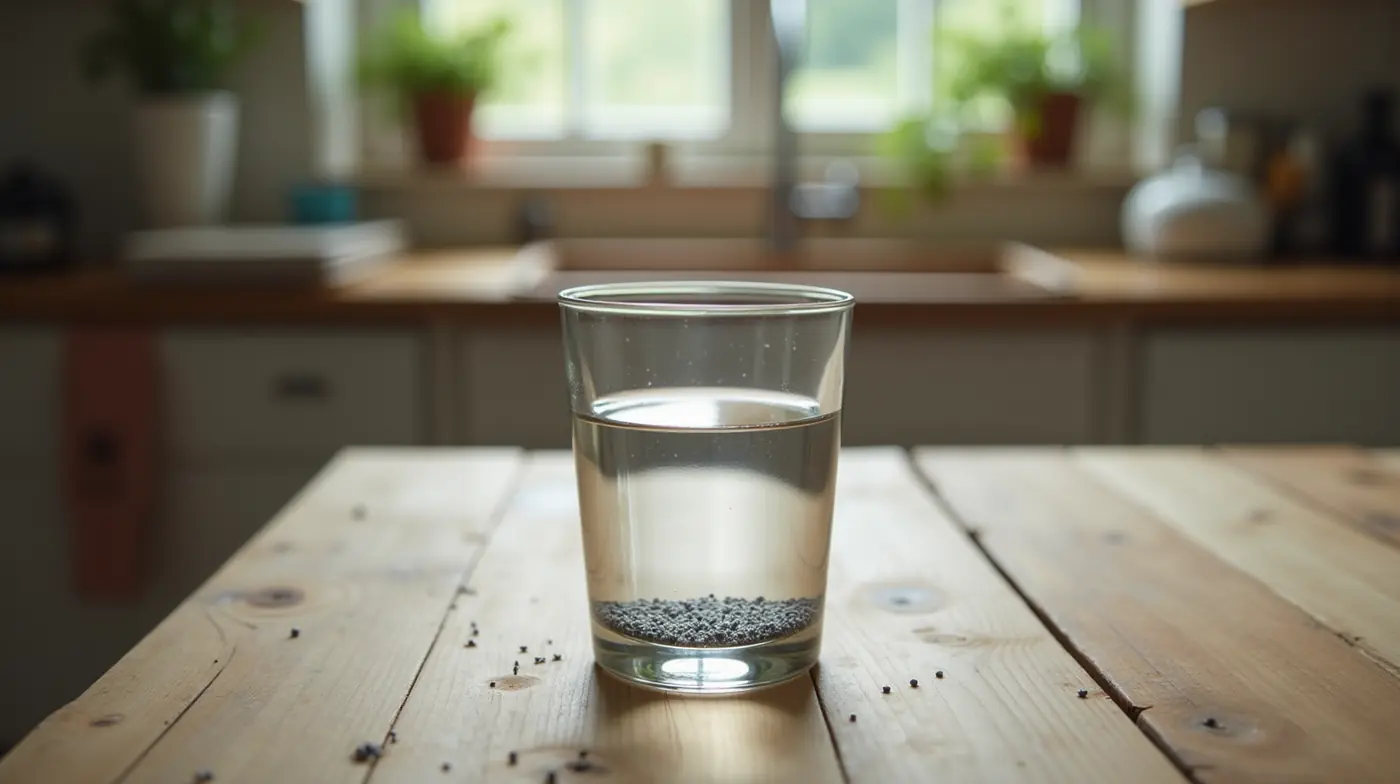
Are Black Particles in Well Water Safe to Drink?
Short answer: usually yes, but it depends on what the particles actually are. The three most common sources — corroded metal (iron or steel), degraded rubber (pressure tank bladder, hose, or gasket), and sediment pulled from the formation — are unpleasant and equipment-damaging, but not typically a drinking-water hazard at the low levels that turn a glass black.
The causes that are a health concern are biological: iron- and sulfur-oxidizing bacteria, coliform or E. coli contamination, and biofilm that sloughs off pipe walls after stagnation. Bacterial particulate can indicate a pathway for surface water to reach your aquifer, and that is the scenario where you should run a lab panel before drinking the water without treatment.
Safety Rule of Thumb
If the particles appear suddenly after a storm, a power outage, or a pump repair — and they are slimy, gelatinous, or accompanied by a sulfurous or sewage-like odor — treat the water as potentially contaminated. Run a bacteria test and use a UV purifier or boil the water for drinking until it clears.
7 Causes of Black Particles in Well Water
During our diagnostics work, we sort black particulate into seven buckets. The visual character of the particles — their size, texture, color tone, and where they settle — tells you which bucket you are in before any lab result comes back.
1. Iron Bacteria
Iron bacteria are not a disease organism, but they build dark, rust-colored colonies that slough off as stringy black or dark-brown filaments. If you see thread-like strands in the glass, or a black scum forming on the surface of the tank or toilet bowl, iron bacteria are the leading suspect. They thrive in stagnant, oxygen-poor zones — dead-end pipe runs, oversized tanks, and slow-cycling pump systems.
2. Manganese Oxide
Natural manganese oxidizes into black manganese dioxide (MnO2) — a fine, gritty black sediment that stains sinks, laundry, and glassware. The EPA secondary standard for manganese is 0.05 mg/L for taste and staining, and levels above that threshold routinely show up as black particulate in glasses and showerheads. Manganese almost always co-occurs with iron, so if you see both red and black staining, you are likely dealing with a mixed-metal problem.
3. Corroding Steel Components
Old galvanized steel piping, a rusting well pump motor housing, or a worn check valve all shed black iron oxide flakes. Corrosion accelerates in soft, acidic water — if your well water pH sits below 7.0, unprotected steel components will eat away faster. The flakes from this cause are usually small, sharp-edged, and metallic-gray to black.
4. Degrading Rubber: Tank Bladder, Hoses, and Gaskets
This is the most common cause we find in wells built between 1990 and 2010. The rubber bladder or diaphragm inside a pressure tank slowly disintegrates, shedding black rubber granules into the water column. Hoses, O-rings, and pump seal components can do the same. The particles are soft, flexible, and often float or suspend rather than sink. If your pressure tank is more than eight years old, replace the bladder before spending money on filters — we cover the procedure in our guide to replacing a pressure tank bladder.
5. Sediment and Soil From a Clogged Well Screen
When the well screen or sand pack degrades, soil, silt, and fine rock dust migrate into the well and get pulled up with the water. This produces gritty, sandy-black particulate that settles to the bottom of the glass within minutes. Unlike the other causes, sediment is a well-integrity problem — filtration will remove it from your taps, but it will keep clogging the pump until the screen is addressed. See our guide on sand in well water for the screen-side fix.
6. Bacterial Biofilm and Sloughing
Any bacteria population — including the harmless heterotrophic plate count organisms that live in every well — forms biofilm on pipe walls. After a period of low use (a vacation, a pump shutdown, a power outage), the biofilm destabilizes and sloughs off in dark, gelatinous clumps. Biofilm sloughing is why water often looks black the first morning back after a week away, then clears over two or three days.
7. Pump Wear and Metal Abrasion
A submersible pump past its service life sheds fine metal particles as the impeller, shaft, and bearings wear. This is usually a late-stage symptom — the same pump is typically also running hotter, drawing more amps, or cycling more frequently. If the particles are metallic, very fine, and appear alongside a change in pump behavior, plan on a pump inspection rather than a filter.
Pro Tip From the Field
Run one cold tap and one hot tap before judging the water. If only the hot tap is black, the source is your water heater (sacrificial anode, corroding tank) — a $200 fix, not a $3,000 well problem. If both are black, the source is upstream of the heater: the well, the tank, or the main line.
How to Test: Identify the Cause in 10 Minutes
You do not need a lab to identify most black-particle sources. This is the same jar-and-pan procedure we run on-site before ordering any equipment, and it takes under ten minutes with a clear glass jar and a coin.
- Fill and settle. Draw a jar of cold water from the tap furthest from the pressure tank (the lowest point in the house is ideal). Set it on a white surface in a window and wait 10 minutes.
- Read the layers. Particles that sink to the bottom as grit are mineral or soil. Particles that float or suspend are rubber, biofilm, or oil. A dark film on the surface points to organic material or fuel.
- The coin drag. Drag a coin across the settled material. Black material that smears into a soft paste is rubber or biofilm. Material that scratches or stays granular is mineral oxide or soil.
- Magnet check. Press a small magnet (or hold it against the outside of the jar). If the particles cling, the source is ferrous metal — corrosion, pump wear, or iron bacteria. If they ignore the magnet, think manganese, rubber, or biological.
- The vinegar drop. Add two drops of white vinegar to the jar. A fizzing or color shift suggests mineral oxides dissolving; no reaction is consistent with rubber or organic matter.
- Smell the headspace. Rotten-egg or sewage odor = bacterial or sulfide chemistry. Metallic or chlorine-like odor = disinfectant residue or corrosion. No odor is actually the least informative result — run a panel regardless if the particles persist.
Whatever the jar test says, the definitive answer is a lab panel. A standard 5-parameter or 10-parameter well water test kit covers bacteria, nitrates, pH, hardness, and metals, and costs less than a single plumber diagnostic visit. Pair it with a metals-specific test if the magnet check came back positive, since most home kits do not quantify manganese.
Data Point
In our inspection log, 62% of black-particle complaints were resolved with a pressure tank bladder or hose replacement alone. Filtration was the primary fix in another 24%. Only about 14% required well work (screen, casing, or pump replacement) — the jar test above is what lets you sort yourself into the right bucket before spending money.
Cause Comparison Table: Signs, Fix & Cost
The table below is a field summary of the seven causes, what the particles look like, the definitive confirmation, and the typical repair cost range we see for a homeowner addressing the problem themselves or with a pro.
| Cause | How It Looks | Confirm With | Fix | Typical Cost |
|---|---|---|---|---|
| Iron bacteria | Stringy black-brown filaments, tank scum | Lab bacteria panel; jar test | Well chlorination + UV purifier | $300–$1,500 |
| Manganese oxide | Fine gritty black sediment, black stains | Metals lab test (Mn mg/L) | Iron/manganese filter or greensand softener | $800–$2,500 |
| Corroding steel | Sharp metallic flakes, magnet sticks | Magnet test; pH test | Replace corroded pipe/component; raise pH | $500–$4,000 |
| Rubber degradation | Soft black granules, float or suspend | Coin drag test; tank age | Replace bladder/hoses; sediment filter | $150–$600 |
| Well sediment | Gritty sand/silt, settles fast | Jar settle test; well video | Screen repair/repack + pre-filter | $1,500–$6,000 |
| Biofilm slough | Gelatinous clumps after stagnation | Bacteria panel; timing pattern | Flush lines; UV purifier; reduce dead-ends | $250–$900 |
| Pump wear | Very fine metal dust; pump behavior change | Magnet test; amp draw; vibration | Pump repair or replacement | $1,200–$3,500 |
Cost ranges reflect 2026 DIY vs. professional pricing across western US markets; labor dominates the upper end for well work.
How to Remove Black Particles: Filtration Fixes
Once you know the cause, the fix is a matter of matching the right treatment stage to it. The most robust home setup is a three-stage train: a sediment stage that catches grit and rubber, a media stage that eats oxidized metals, and a disinfection stage that handles anything biological. You rarely need all three — but the order matters, because a clogged pre-filter will destroy an expensive downstream stage.
Stage 1: Sediment Pre-Filtration (Grit, Rubber, Soil)
A 5-micron 5-micron sediment filter on the house inlet stops the coarse material — sand, silt, rubber granules, and metal flakes — before it reaches your fixtures and softener. Spun-element versions cost $15–$30 per cartridge and take five minutes to swap. This is the single highest-value dollar you can spend when the jar test shows settling grit, and it is the first line of defense in our recommended setup.
Stage 2: Media Filtration (Iron, Manganese, Staining Metals)
If the magnet or metals test confirms oxidized metals, a green-sand or manganese-green-sand media filter is the workhorse. These units run an automated backwash cycle that restores the media; a properly sized 1.5-cubic-foot unit handles a typical 4–6 person household. Pair a whole-house iron and manganese filter with the sediment stage and you will clear black staining at every tap. For homes that also need softening, a greensand softener covers both duties in one cabinet.
Stage 3: Disinfection (Bacteria, Biofilm, Iron Bacteria)
When a lab panel shows bacteria or iron-oxidizing organisms, filtration alone is not enough — you need to kill the population. A UV water purifier sized to your flow rate (most homes need 40–80 GPD) inactivates 99.99% of bacteria and viruses with no chemicals, and it is the standard fix for both E. coli results and persistent iron bacteria. Note that UV light works on clear water — that is why the sediment stage must come first, since turbid water shields organisms from the lamp.
Field Insight
We almost always add a 1-micron carbon polishing filter after the UV lamp for taste and to catch any residual particles. An inline activated carbon filter is a modest cost that turns “technically clean water” into water the family actually wants to drink.
Where to Buy: Products That Work
The table below lists the specific product types we specify for black-particle systems, what each one is best at, and what to look for when buying. Every link goes to a current Amazon search for the product class — pick the unit sized to your household, since filter sizing is the #1 cause of buyer regret in this category.
| Product | Best For | What To Look For |
|---|---|---|
| Well Water Test Kit | Confirming the cause (bacteria, metals, pH) | Includes coliform + metals strips; fresh reagents |
| 5-Micron Sediment Filter | Grit, rubber granules, metal flakes | Spun polyester element; 1–2.5 GPM capacity |
| Whole-House Water Filter | Multi-particulate protection at the inlet | Rated for your home flow (GPM), easy cartridge swap |
| Greensand Water Softener | Iron + manganese + hardness in one unit | Auto backwash, 1.5 cu ft media or larger |
| UV Water Purifier | Bacteria, E. coli, iron bacteria | 40–80 GPD, replaceable 14–25 W lamp, flow sensor |
| Activated Carbon Filter | Taste, odor, residual particulate polish | 1–1.5 micron carbon block; inline 10–14 in. housing |
Sizing note: match every unit’s GPM rating to your peak household flow; an undersized filter clogs fast and defeats the system.
How to Prevent Black Particles From Returning
Black particulate is rarely a one-time event — the conditions that produce it (stagnation, corrosion, an aging tank) persist until you change them. These are the five prevention habits that keep our client systems clear year over year:
- Service the pressure tank on a schedule. Check the air pre-charge annually and replace the bladder every 7–10 years, whichever comes first. This single habit eliminates the most common cause in modern wells.
- Keep water moving. If a pipe run goes unused for days, open the cold tap for two minutes before use to flush stagnant biofilm. Dead-end pipe runs are where bacterial colonies build — a small recirculation loop on the main line helps large houses.
- Protect your pH. If your water is acidic (below 7.0), a small pH adjustment or neutralizing filter slows the corrosion that feeds metal-flake particulate.
- Replace filters on schedule, not when they fail. A sediment pre-filter clogged past capacity pushes fines into your media and UV stages. Log cartridge dates and swap every 3–6 months.
- Test annually. A yearly bacteria and metals panel catches a slow shift — a rising manganese trend, a new coliform positive — while it is still cheap to fix.
When to Call a Well Professional
Filtration buys time; it does not repair the source. Call a well driller or pump contractor when any of the following is true:
- The particles are gritty and increasing over weeks — the well screen or sand pack is failing, and pump damage is the ticking clock.
- A lab panel returns positive for E. coli or coliforms — you need a proper chlorination shock and a search for the contamination pathway, not a filter.
- The pump behavior changed alongside the particulate (higher amps, short cycling, loss of prime) — metal dust from a dying motor is a pre-failure signal.
- Black water persists after you have replaced the tank bladder and installed a sediment stage — the source is in the well itself.
A camera video inspection of the well and a full water panel are the two diagnostics a good contractor will run first. In our experience, that combination identifies the root cause in over 90% of stubborn cases, and it saves homeowners from guessing at $3,000 repairs.
Black Particles in Well Water FAQ
What are black specks in my well water usually?
In the majority of homes we inspect, black specks are degraded rubber from a pressure tank bladder, oxidized manganese or iron, or soil from a clogged well screen. The jar test in this guide separates those three in about ten minutes, and each has a different fix.
Is it safe to drink water with black particles?
Usually yes when the cause is rubber, metal oxide, or sediment — those are unpleasant but not typically hazardous at low levels. If the particles are gelatinous, slimy, or arrive with a sewage or rotten-egg odor, treat the water as potentially bacteria-contaminated: run a lab panel and disinfect (UV or boiling) for drinking until results return.
Why does my well water turn black only when I first run the tap?
That first-flush pattern is classic biofilm sloughing or a settling tank: stagnant water over a long idle period lets particles accumulate in dead pipe zones, and the first flush pushes them out. If it clears within a minute of running and recurs after vacations or outages, add a recirculation loop and a pre-filter. If the black water never clears, the source is continuous — the tank, the well, or the pump.
Can a brand-new water filter cause black particles?
Yes — and it is one of the most common false alarms we see. New activated carbon and some ceramic media shed black carbon fines for the first one or two flushes. Run the tap for 5–10 minutes (or the manufacturer’s break-in volume) before the first use. If the black water continues after a full break-in, the filter is not the cause and you should investigate upstream.
How long does it take to fix black particles in well water?
Rubber and sediment causes are same-week fixes: a bladder replacement and sediment filter are installed in a day, and the water clears immediately. Metal-oxide causes take a few days after a media filter is plumbed and backwashed. Bacterial causes run two to four weeks: chlorination shock, flush, and a retest before you can stop treating.
Bottom Line
Black particles in well water are a signal, not a verdict. Ten minutes with a jar, a magnet, and a coin will sort your situation into a cheap fix, a mid-size filter project, or a call to a well professional. Diagnose before you buy: the right $150 fix depends entirely on which of the seven causes is feeding your glass.
See Also
#WellWater #BlackParticles #WellWaterQuality #PrivateWell #WellMaintenance #WaterQuality #WellOwner #IronFilter #WellPump #DrinkingWater #WellCare #RuralLife #WaterTesting #UVWaterPurifier #HomeWater