
A waterlogged pressure tank is one of the most common and most misunderstood problems in residential well systems. If your well pump starts and stops every 15 seconds, your water pressure surges the moment you open a faucet, or the tank feels heavy and “full” when you try to move it, the air cushion inside your tank has likely been replaced by water. Without that cushion, the tank stores no pressure, and your pump has to do all the work on every single cycle.
In this guide we walk through exactly how to diagnose a waterlogged pressure tank, the four ways to fix it, and how to keep it from happening again. We include real pressure readings from field work, a size comparison table, and answers to the questions homeowners ask most.
By Thomas Reynolds, Pump Systems Engineer
Thomas has installed and serviced over 1,000 well pump systems for homeowners across the western US, from shallow jet pump setups to 300-foot submersibles.
Published: November 2026
Disclosure: As an Amazon Associate, we earn from qualifying purchases on this page. Product selections are based on independent research and real well water data.
Table of Contents
- What Is a Waterlogged Pressure Tank (and How Do You Know)?
- Why Your Pressure Tank Got Waterlogged: 5 Causes
- How to Diagnose a Waterlogged Pressure Tank: 5-Step Test
- How to Fix a Waterlogged Pressure Tank: 4 Methods
- Pressure Tank Size and Precharge Comparison (2026)
- How to Prevent a Waterlogged Tank: Maintenance Checklist
- Waterlogged Tank vs. Other Pressure Problems
- Frequently Asked Questions
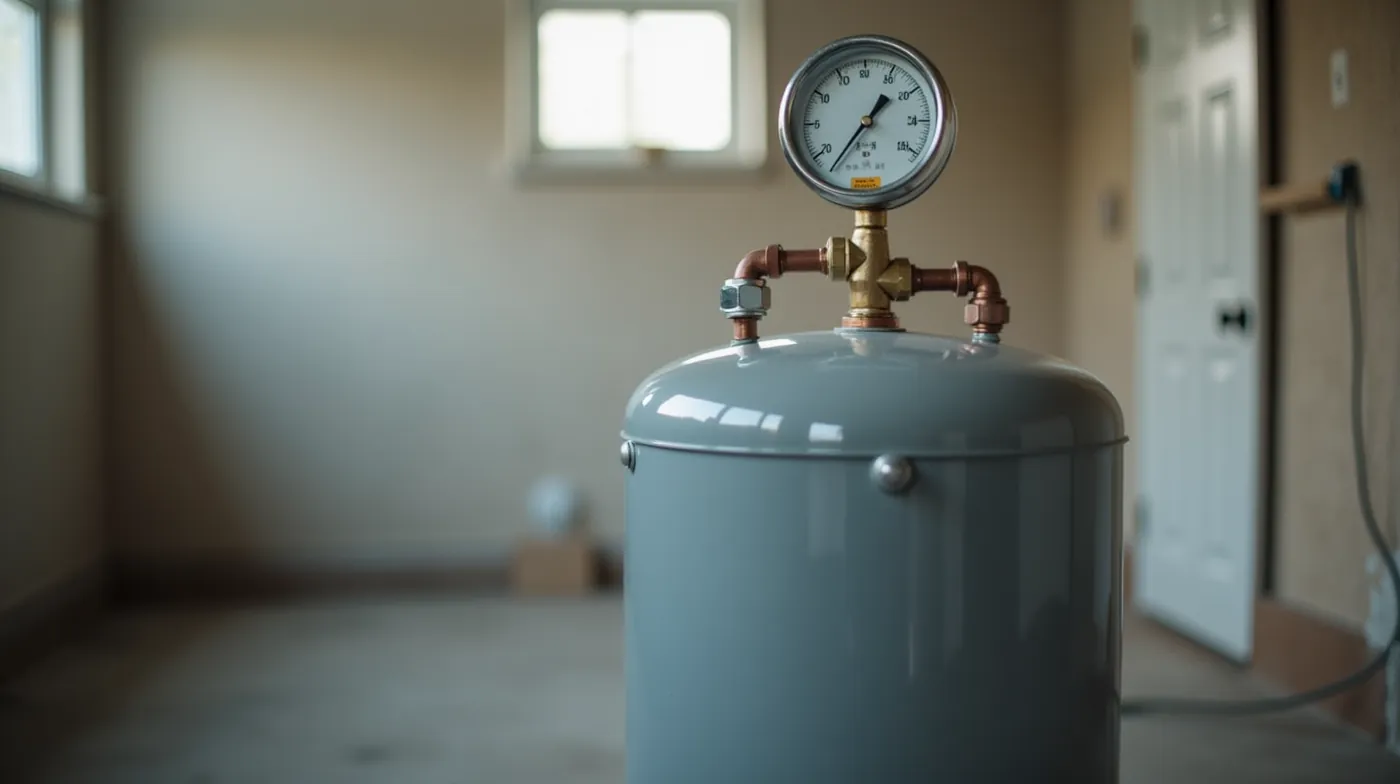
What Is a Waterlogged Pressure Tank (and How Do You Know)?
Every residential well system uses a pressure tank to store water under pressure and keep the pump from cycling on every tiny draw. Inside a diaphragm (bladder) tank, a rubber membrane separates the tank into two chambers: an air side and a water side. The air side is precharged to 2 PSI below your pressure switch cut-in point, which is typically 38 PSI on a standard 30/50 switch. That compressed air is what cushions the pump: as you draw water, the air compresses and releases water without the pump having to restart.
A tank is waterlogged when that air side is flooded with water. The bladder has failed or been punctured, or the tank was filled on the wrong side during service, so water has taken the place of the air cushion. The tank still holds water, but it no longer stores any pressure. The pump, which should cycle every few minutes under normal use, now starts and stops every few seconds because there is no cushion to absorb the draw.
Field note
After servicing more than 1,000 well systems, the number one way we see waterlogging start is not a bad bladder. It is a tank that was drained for maintenance, recharged on the water side, and never recharged on the air side. The bladder is fine. The air cushion simply does not exist. Check the precharge before you buy a new bladder.
The four telltale symptoms of a waterlogged tank
- Short cycling — the pump starts and stops every 5 to 30 seconds, often audibly from the basement or well house.
- Pressure surges — water hammers in the pipes and pressure spikes when you open or close a faucet.
- No pressure at the tank — the gauge reads near 0 PSI after a small draw instead of holding between your cut-in and cut-out pressures.
- A heavy tank — a 44-gallon tank with a healthy air cushion weighs about 240 to 250 pounds. A waterlogged 44-gallon tank weighs 350 to 370 pounds. If you can barely lift one corner, it is full of water.
Why Your Pressure Tank Got Waterlogged: 5 Causes
Before you reach for a wrench, identify which of these five causes actually applies. Each one points to a different fix, and the wrong fix is the most common way homeowners end up with a new bladder that waterlogs again within a year.
1. Failed or ruptured bladder (most common on tanks 5+ years old)
The rubber diaphragm is a consumable part. Chlorinated water, high pH, and thermal cycling degrade it, and most bladders last 5 to 10 years. A slow leak lets water creep into the air side over months; a full rupture dumps the air side into the water side within hours. When the bladder fails, the fix is to replace the pressure tank bladder — a 2 to 3 hour job for most homeowners with basic plumbing skills.
2. Bladder punctured during service
Screwing a fitting into the top wet-side port with a wrench that is too large, or a pressure washer nozzle that slips, can tear the bladder at the weld seam. If your tank was serviced recently and then started short cycling, suspect a service puncture before anything else — it is cheaper to verify with a Schrader test than to assume the old failure came back.
3. Lost precharge, mistaken for waterlogging
This is the most common misdiagnosis in the field. If the air side simply lost its charge through the Schrader valve over time, the symptoms are nearly identical to waterlogging — but the bladder is intact and the fix is a 15-minute recharge with a compressor, not a new bladder. The difference shows up in the air stem test below: a healthy bladder reads 38 PSI (or your set precharge) on the Schrader port; a failed bladder reads 0 PSI, or water squirts out when you crack the valve.
4. Tank installed or recharged on the wrong side
During installation or after a drain, the air side must be charged while the water side is isolated. If water enters while the air side is open, the tank comes online waterlogged. This is common on DIY installs and after well drilling companies re-set a system. If your tank is new and already cycling every 20 seconds, call the installer back before spending money on parts — recharging the precharge is part of the install job.
5. Corroded or sediment-fouled tank
Old steel tanks rust from the inside out, and sediment from a poorly screened well can clog the bladder weld area. On tanks over 15 years old, the tank itself is usually the weak link, and a full replacement beats a new bladder that will fail in the same corroded shell.
How to Diagnose a Waterlogged Pressure Tank: 5-Step Test
Run these five steps in order. Total time is about 20 minutes, and you only need a 0-160 PSI air gauge (a tire gauge works fine) and an adjustable wrench. Write down your readings — they tell you exactly which fix applies.
Safety first
Flip the well pump breaker OFF before disconnecting any plumbing or opening the tank. A 50 PSI tank holds about 10 gallons of pressurized water that can whip a hose off a fitting. Never open a tank with the water side pressurized.
- Shut off the pump. Flip the breaker for the well pump. Open a cold faucet inside the house and let it run until pressure bleeds off, then close it. The system is now safe to work on.
- Read the tank gauge. Note the pressure with no water flowing. On a healthy system this should sit between your cut-in and cut-out pressures (30 to 50 PSI is typical). If it reads 0 to 5 PSI after the pump has cycled, that is your first red flag.
- Test the air precharge. Find the Schrader valve (it looks like a tire valve) on the top of the tank, on the air side. With the water side depressurized, attach the air gauge. A healthy bladder reads the precharge — usually 38 PSI on a 30/50 system. If it reads 0 PSI, or water squirts out when you crack the valve, the bladder is failed and the tank is waterlogged. If it reads 38 PSI and the system is still short cycling, the problem is elsewhere — check our well pump pressure switch guide for the next test.
- Do the drain test. On tanks with a drain at the bottom of the air side (or the top port on vertical tanks), open it slowly. Healthy tank: you hear air hiss out, then maybe a little water. Waterlogged tank: water comes out immediately, full stream. This is the definitive test.
- Do the weight test (quick sanity check). A 44-gallon tank: about 250 pounds healthy, about 360 pounds waterlogged. An 80-gallon tank: about 340 pounds healthy, about 600 pounds waterlogged. If you can barely lift one corner of an 80-gallon tank, it is waterlogged — no instruments needed.
How to Fix a Waterlogged Pressure Tank: 4 Methods
Pick the method that matches your diagnosis. Method 1 costs nothing; Method 3 costs a few hundred dollars and a half day. Most waterlogging cases end up in Method 2.
Method 1: Recharge the air precharge (15 minutes, $0)
Only for tanks where the Schrader test showed an intact bladder that simply lost its charge. Follow these steps:
- Shut the pump off at the breaker and depressurize the water side, exactly as in the diagnostic test above.
- Attach an air compressor (or a bicycle pump, for the stubborn) to the Schrader valve.
- Charge to 2 PSI below your cut-in pressure: 38 PSI for a 30/50 switch, 33 PSI for a 25/45 switch, 43 PSI for a 40/60 switch.
- Close the Schrader cap, restore the breaker, and run the system. The pump should now cycle normally, with a 2 to 5 second delay after you stop a faucet.
Method 2: Replace the bladder (2 to 3 hours, $40 to $90 for the part)
This is the standard fix for a failed bladder on a tank that is otherwise in good shape — no rust, less than 15 years old. A 44-gallon tank bladder runs $40 to $90. The full procedure — draining, disassembling the top port, swapping the bladder, reseating the seal, and recharging the air side — is covered step by step in our pressure tank bladder replacement guide. Two things we always check during the job: the tank shell for internal rust (which would make a new bladder a waste of money), and the seal on the top port (a dried-out seal will leak air back out within a year and bring the problem right back).
Method 3: Replace the entire tank (half a day, $150 to $450)
Replace the tank instead of the bladder when the shell is rusted, the tank is over 15 years old, or the tank is simply too small for your household. Size up when you replace: a household that is short-cycling on a 20-gallon tank will keep short-cycling on a 20-gallon replacement. A 44-gallon pressure tank is the standard residential choice; a 80-gallon pressure tank suits high-demand homes with two or more bathrooms running at once. The comparison table below shows what each size actually stores.
Method 4: Fix the root cause so it does not come back
- Pump running dry or short-stroking: a pump that runs dry repeatedly can vent and overheat, and the cycling hammers a healthy bladder. Check the check valve and well yield — see our guide on a well pump running out of water.
- Stuck or misadjusted pressure switch: a switch stuck between contacts cycles the pump constantly and wears the bladder down early. Clean the contacts and verify the cut-in and cut-out settings with the gauge.
- Waterlogged because of a bad install: if a driller or plumber re-set your system and left the air side flooded, call them back. Recharging the precharge is part of the install job, not an extra.
Pressure Tank Size and Precharge Comparison (2026)
Standard precharge is 2 PSI below the cut-in pressure of your pressure switch. The table below shows the most common tank sizes, the precharge they take on a 30/50 switch, and how much usable water each one actually stores.
| Tank Size | Precharge (30/50 switch) | Usable Water | Weight When Waterlogged | Best For |
|---|---|---|---|---|
| 20 gallon | 38 PSI | ~4 gal | ~200 lbs | Single-bath cottages, low demand |
| 44 gallon | 38 PSI | ~12 gal | ~360 lbs | Standard 1-2 bath home (most common) |
| 80 gallon | 38 PSI | ~18 gal | ~600 lbs | High-demand homes, 2+ baths running at once |
| 118 gallon | 38 PSI | ~25 gal | ~850 lbs | Large homes, irrigation + domestic use |
| 176 gallon | 38 PSI | ~37 gal | ~1,150 lbs | Farms, large ranch homes |
| 265 gallon | 38 PSI | ~55 gal | ~1,700 lbs | Commercial light, multi-building |
Usable water and weights are typical manufacturer spec values for pre-charged diaphragm tanks at a 30/50 cut-in/cut-out setting. Your actual stored water varies with precharge and switch settings.
How to Prevent a Waterlogged Tank: Maintenance Checklist
Waterlogging is almost always preventable with two habits. Neither takes more than five minutes a year.
- Check the air precharge every 6 months. With the pump off and the water side depressurized, read the Schrader port. It should sit at 2 PSI below your cut-in pressure. If it is low, recharge with a compressor. This single check catches most waterlogging before it starts.
- Inspect the tank annually for rust and sediment. A rusted shell will destroy a new bladder, and sediment from a poorly screened well will clog the weld. See our guide on how to clean a well pressure tank.
- Keep the pressure switch adjusted correctly. A switch set too close to the cut-out cycles the pump far more often than it should and wears the bladder down faster. If your pump runs more than 20 to 30 cycles an hour during normal use, recheck the switch settings and consider a larger tank.
- Service the system the right way. If you or a contractor drains the tank, make sure the air side is isolated during water-side work and the precharge is re-set at the end of the job. “We forgot to recharge the tank” is a fixable installer error, not an extra charge.
Pro tip
A few-dollar Schrader cap keeps sediment out of the air port. It sounds trivial, but in our field experience a surprising number of lost precharges trace back to dirt working its way past a missing or cracked cap.
Waterlogged Tank vs. Other Pressure Problems
Short cycling has several causes, and fixing the wrong one wastes money. The table below is how we separate the four most common culprits in the field.
| Test | Waterlogged Tank | Lost Precharge (bladder OK) | Stuck Pressure Switch | Failing Pump |
|---|---|---|---|---|
| Pump cycle time | 5 to 30 sec | 30 to 90 sec | Near-continuous | 30 to 90 sec, weak flow |
| Schrader port reading | 0 PSI or water out | Low (10 to 25 PSI) | Normal | Normal |
| Gauge after a small draw | Drops to near 0 | Drops a few PSI, holds | Erratic, bounces | Drops slowly, recovers weakly |
| Tank weight | Heavy (waterlogged) | Normal | Normal | Normal |
| Fix | Replace bladder or tank | Recharge air | Clean or replace switch | Replace pump |
Readings assume a 30/50 switch with a 38 PSI precharge. Values are typical ranges from field testing across residential systems in 2025 to 2026.
See Also
Frequently Asked Questions
Is water from a waterlogged pressure tank safe to drink?
Yes, in almost every case. A waterlogged tank means water reached the air side; it does not mean the water is contaminated. Run the cold tap for a minute to clear the tank, and test for bacteria if you have not tested in the past 12 months — a failed bladder can trap standing water, so a routine coliform test is a sensible habit after any bladder work.
How long does a pressure tank bladder last?
With normal water chemistry and a correct precharge, 5 to 10 years is typical. Chlorinated or high-pH water, and a system that cycles constantly, cut that down to 3 to 5 years. Replacing the bladder at 7 to 8 years on a tank with a good shell is cheaper than a full tank replacement.
Can I fix a waterlogged tank with just a compressor?
Only if the bladder is intact. A compressor can restore a lost precharge in 15 minutes, but it cannot push water back out of a ruptured bladder. Run the Schrader test first: if you see water at the air port, the bladder needs replacing, not a recharge.
Does a waterlogged tank damage the pump?
Indirectly, yes. Every short cycle is a full start and stop event with high inrush current. A pump cycling every 15 seconds runs several times more per hour than it was designed for, which accelerates bearing wear and trips the thermal overload. Fix the tank first — a “dying” pump often turns out to be perfectly healthy.
How often should I check the air pressure in my tank?
Every 6 months is the practical minimum — spring and fall, when you are checking the system for the season. Take the reading with the pump off and the water side depressurized, and recharge if the precharge has dropped below 35 PSI on a 30/50 system.
The Bottom Line
A waterlogged pressure tank is rarely a mysterious failure — it is a missing air cushion, and the diagnostic test above tells you in 20 minutes whether the fix is a 15-minute recharge, a $60 bladder, or a new tank. Fix the air side, keep the switch adjusted, and check the precharge twice a year, and your pump will cycle the way it was designed to.
#WaterloggedPressureTank #WellPump #PressureTank #WellWater #WellSystem #HomeWell #WellMaintenance #PressureTankBladder #WellPumpRepair #WaterPressure #WellOwner #ResidentialWell #WellDrilling #WaterSystem #HomeImprovement