
When your well pump runs for minutes but no water comes out, or you have to refill the suction line every morning, the weak link is almost always the foot valve. A foot valve for a well pump is a one-way check valve threaded to the bottom of the suction pipe, sitting at the bottom of the well. It lets water flow up but not back down, which is what keeps your suction line primed between pump cycles. In this 2026 guide we break down how a foot valve works, how to test one in the field, how to replace it step by step, which material lasts longest in your water chemistry, and exactly what size to buy for your setup. If you run a jet pump above the water table, this small brass or bronze part decides whether your well holds its prime overnight.
By Robert Harrison, Certified Well Inspector
Robert has 20+ years of experience inspecting and testing residential water wells across the western US, and has pulled, tested, and reinstalled hundreds of foot valves on shallow and deep-well jet systems.
Disclosure: As an Amazon Associate, we earn from qualifying purchases on this page. Product selections are based on independent research and real well water data.
Last updated: November 14, 2026
Table of Contents
- What Is a Foot Valve on a Well Pump?
- How a Foot Valve Works in Your Well Pump System
- 7 Signs Your Foot Valve Is Failing
- Foot Valve Materials Compared (2026)
- How to Test a Foot Valve (Step-by-Step)
- How to Replace a Foot Valve Step by Step
- Best Foot Valves for Well Pumps in 2026
- What Size Foot Valve Do I Need?
- Foot Valve vs Check Valve: What Is the Difference?
- Frequently Asked Questions
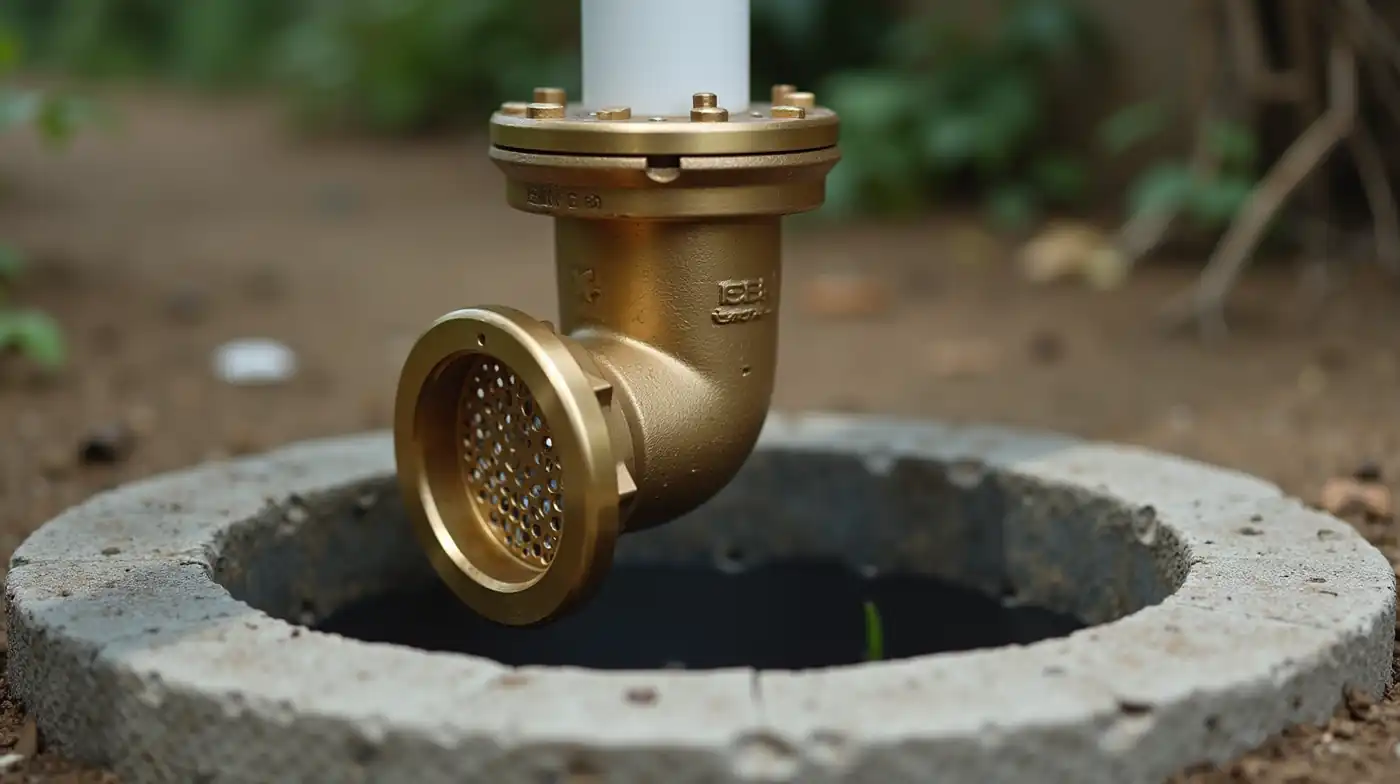
What Is a Foot Valve on a Well Pump?
A foot valve is a one-way valve installed at the very bottom of a suction (riser) pipe, submerged in the well. It has two jobs at once. First, it acts as a check valve: a poppet, disc, or hinged flap opens when water flows upward and seats closed the moment the pump shuts off, so the water column in the suction line cannot drain back down the pipe into the well. Second, it acts as a coarse filter: the perforated or slotted screen at the bottom keeps gravel, sand, and debris from entering the pump intake. Standard well construction practice for suction-lift systems follows the guidelines published by the National Water Well Association (NWPA), which calls for a properly sized foot valve with an open screen area adequate for the well’s yield.
In our field work, the foot valve is the most frequently failed component on shallow-well jet systems. It sits in the worst environment in the entire plumbing system: submerged, surrounded by sediment, and exposed to your full water chemistry, 24 hours a day. Unlike the pump motor, which you can hear misbehave, a failing foot valve usually fails silently until one morning the pump runs for ten minutes and never delivers water.
The physics your foot valve depends on
A suction pump does not pull water up the pipe; atmospheric pressure pushes it up. At sea level, the maximum theoretical suction lift is about 34 feet (10.3 meters), and in real systems with friction losses you should plan on 25 feet or less. A foot valve that holds its seat is what makes suction lift possible at all: without a primed line and a sealed bottom, there is no column for the air to press on.
How a Foot Valve Works in Your Well Pump System
Inside the valve body, a spring-loaded poppet (or a weighted disc on cheaper models) rests on a machined seat. When the jet pump starts, the pressure drop at the bottom of the suction line pulls the poppet open and water flows up. When the pressure switch cuts the pump at cut-out pressure, flow reverses for an instant as the column above the valve wants to settle, and that reverse flow slams the poppet back onto the seat. Every cycle of your well system is a small hammer blow on that valve, which is why seat wear and spring fatigue are the two dominant failure modes we see at inspection time.
While the valve is holding, the entire suction line from the foot valve up to the pump volute stays full of water. That is your prime. On the next start, the pump only has to accelerate water already in the line, so it builds pressure in seconds instead of minutes. When the valve no longer seats, every pump cycle leaks water back down into the well. The system can still deliver water while you are actively drawing, but by morning the line is empty and the pump is running dry, hunting for a prime that cannot hold.
There are two common valve designs on the market. Poppet-style foot valves use a spring-loaded disc that seals on a cone seat; they handle higher cycles and are the standard on quality brass and bronze valves. Disc-style (flapper) valves use a hinged plastic or rubber flap; they are common on low-cost and PVC valves and tend to wear faster in sandy water. For a residential well that cycles several times a day, we recommend poppet-style in a metal body.
7 Signs Your Foot Valve Is Failing
A foot valve rarely announces itself. Based on what we have seen across hundreds of inspections, these are the symptoms in the order we check them:
- Your well loses its prime overnight. The classic sign. Pump runs air-bound in the morning, and priming it fixes it for a day or two, then it fails again. A healthy foot valve holds prime for years, not days.
- Priming takes longer every time. If it takes 30 seconds to prime this week and three minutes next month, the seat is wearing or the spring is weakening.
- Sand and grit in your water. A worn or damaged screen lets sediment into the pump. Fine sand in your fixtures after a long pump run is a strong indicator.
- Pump runs but flow is weak or zero. The poppet may be stuck partially closed, restricting flow, or stuck open, letting the pump push water straight back down into the well.
- Visible debris at the bottom of the well. If you can see the intake from a drop camera or a long flashlight, a pile of sand around the valve means the screen is leaking.
- Air in the system after long runs. A valve that seats but leaks slowly admits air bubbles that accumulate in the pressure tank, causing short cycling.
- Corrosion or weeping at the valve body. Green or white deposits and mineral staining on the riser pipe just above the valve indicate the body is corroding from the inside out.
Foot Valve Materials Compared (2026)
Material choice matters more on a foot valve than on almost any other component in the well, because the valve body is fully submerged and cannot be inspected until you pull the line. We have tested all four common materials in the field; here is how they compare.
| Material | Price (2026, 1 in) | Corrosion Resistance | Typical Service Life | Best For |
|---|---|---|---|---|
| Brass Foot Valve | $15 to $30 | Good; avoid in high-chloride or soft, acidic water | 5 to 10 years | Most residential shallow jet wells |
| Bronze Foot Valve | $20 to $40 | Very good; denser alloy resists pitting | 10 to 20 years | Set-it-and-forget-it installations |
| Stainless Steel Foot Valve | $25 to $50 | Excellent (304 or better) | 20+ years | Aggressive water chemistry, high-cycle systems |
| PVC Foot Valve | $8 to $15 | Excellent (non-metallic) but brittle in cold wells | 3 to 7 years | Budget swaps and temporary setups |
Prices are typical 2026 street prices for 1-inch NPT foot valves found in our purchasing research. Deep-well 1-1/4 and 2-inch sizes run 25 to 50 percent more.
Pro tip: match the valve to your water test
If your lab report shows a pH below 7.2 or high chloride (common in coastal and irrigated areas), skip brass and go bronze or stainless. Brass dezincifies in acidic water, and the valve will fail from the inside where you cannot see it. A $30 stainless valve is cheaper than a second trip to pull the suction line.
How to Test a Foot Valve (Step by Step)
You can narrow down a failing foot valve without pulling the line at all. Work through these steps in order:
- Close every faucet and shutoff in the house and let the pressure tank settle. Watch the gauge: pressure should hold steady at cut-out (typically 40 to 60 psi) for at least five minutes with no drift.
- Time the pump run. Open one faucet. A healthy system builds full pressure in 5 to 15 seconds. If the pump runs longer than 30 seconds to reach pressure, the valve is leaking or the well is losing yield.
- Do the overnight prime check. After the last pump cycle of the evening, mark the pressure gauge. In the morning, before running any water, note the gauge again. A big drop (20+ psi) with no fixture running means water is draining back down the line through a leaking valve.
- Listen for the hammer. A properly seating valve produces a small click as the poppet closes. No click at all, or a rattling sound, points to a broken spring or a damaged seat.
- Check for air accumulation. If the pressure tank is short-cycling (pump starts and stops every few minutes), open the highest faucet and let it run until the water runs clear. If the pump recovers normal cycling, air had entered the system through a slow-leaking valve.
- Confirm by pulling the line. If the above tests point at the valve, shut power at the breaker, drain the suction line, and unscrew the coupling at the pitless unit or wellhead to inspect the foot valve directly: poppet free to move, spring intact, seat clean, screen clear of sand.
How to Replace a Foot Valve Step by Step
Replacing a foot valve is one of the most doable well repairs a homeowner can make. Budget 1 to 2 hours for a shallow-well jet pump. The parts cost between $15 and $50 depending on material and size.
- Kill power at the breaker. Flip the well pump breaker off and label it. A pump can restart the instant pressure drops, and you will be working on the pipe it feeds.
- Open a high faucet to relieve pressure in the system, then close it again.
- Drain the suction line. On a shallow jet pump, remove the primer plug on top of the volute and let the volute and the bottom of the suction line drain into a bucket. On a deep-well system, the line drains through the pitless unit.
- Unscrew the coupling. At the wellhead or pitless adapter, loosen the union and carefully lower the suction line. Have a second person hold the line or use a chain: a 40-foot pipe is awkward and the old valve is usually heavier than it looks with mineral scale on it.
- Inspect the well bottom. Look down the pipe (or use a drop camera). Note sand depth around the intake. If the well is silting up, the new valve should sit a few inches higher in the water column.
- Thread in the new foot valve. Wrap the male NPT threads with 2 to 3 turns of PTFE (Teflon) tape, clockwise, and hand-tighten. Finish with a wrench, snug plus about a quarter turn. Overtightening cracks valve bodies; this is the most common DIY mistake we find at service calls.
- Reconnect and re-seat the line. Raise the pipe, tighten the coupling, and make sure the line hangs straight and does not rub the casing.
- Prime the system. Fill the pump volute with 3 to 5 quarts of clean water through the primer plug, seat the plug firmly, and restore power.
- Verify the prime holds. Run the pump to cut-out, watch the gauge hold steady for five minutes, then check again the next morning. If pressure holds overnight, the repair is done.
Safety: never work on a live pump
Pumps that have run dry overheat fast. If the pump was running hard when you started, let it cool for 15 minutes before handling the volute, and never restart the pump while the primer plug is out.
Best Foot Valves for Well Pumps in 2026
After cross-checking what we specify on installs and what our readers report in the field, these are the parts worth buying. All links go to current Amazon listings with the search query for the exact size and material.
| Product | Size | Why We Recommend It | Best For |
|---|---|---|---|
| 1-Inch Brass Foot Valve | 1 in NPT | The standard for most shallow jet pumps; inexpensive and easy to replace | Residential jet wells under 50 ft |
| 1-1/4-Inch Bronze Foot Valve | 1-1/4 in NPT | Heavier bronze body with a longer service life in hard water | Set-it-and-forget-it homeowners |
| 2-Inch Stainless Steel Foot Valve | 2 in NPT | Maximum flow area and zero corrosion; the upgrade choice | High-flow wells, farm and commercial use |
| 1-Inch PVC Foot Valve | 1 in NPT | Budget-friendly and immune to corrosion, but the plastic body is brittle in cold wells | Short-term or low-flow systems |
| Well Pump Check Valve (in-line) | 1 in | Stops water draining back toward the well when the pump stops; pairs with the foot valve | Any suction-lift system |
| Well Pump Swivel | 1 in NPT | Keeps the suction line from kinking as the pump shifts; replace it whenever the swivel is seized | Any pump replacement |
What Size Foot Valve Do I Need?
Size the foot valve to match your suction pipe, not to the well. A valve larger than the pipe does not increase flow; it just adds cost. A valve smaller than the pipe chokes flow and can cause the pump to short-cycle. The standard for residential shallow jet pumps is 1-inch NPT, and most pump manufacturers specify 1-inch for every pump rated up to about 10 gpm.
| Setup | Suction Pipe | Foot Valve Thread | Practical Max Lift |
|---|---|---|---|
| Standard shallow jet pump | 1 in | 1 in NPT | 25 ft |
| High-flow shallow jet | 1-1/4 in | 1-1/4 in NPT | 25 ft |
| Deep-well jet pump | 1-1/4 in (through jet assembly) | 1-1/4 to 2 in NPT | 90 to 110 ft, per pump rating |
| Submersible pump | Discharge pipe only | None needed (pump is submerged) | N/A |
One more sizing rule from the field: if your well is sandy, choose a valve with a coarse screen (larger perforations). Fine screens look cleaner on the shelf but plug up in sediment-laden wells, and a plugged screen fails exactly like a leaking valve: the pump loses flow and starts hunting for a prime.
Foot Valve vs Check Valve: What Is the Difference?
Homeowners often use the two terms interchangeably, but they are different parts in different locations. A well pump check valve is an in-line valve, usually mounted on top of the pressure tank or at the pump outlet, and its job is to stop the pressurized water in your pipes from draining back down toward the well when the pump stops. A foot valve sits at the very bottom of the suction line, is fully submerged, carries a debris screen, and its job is to keep the suction pipe itself full of water. Most suction-lift systems need both: the check valve protects your house plumbing, and the foot valve protects your prime. If you are not sure which one is failing, our well pump check valve guide walks through how to test each one.
Frequently Asked Questions
How often should I replace a well pump foot valve? As a preventive matter, every 10 to 15 years for a quality brass or bronze poppet valve. In sandy or acidic water, expect 5 to 8 years. Replace it the moment it shows any of the signs above, because a failed valve can let the pump run dry and overheat the motor.
Can my jet pump run without a foot valve? It can deliver water while actively pumping, but it will not hold a prime. Every time the pump stops, water drains back into the well and you must re-prime before it will run again. Running a jet pump without a foot valve is only practical on a temporary, hose-fed setup.
Does a foot valve reduce my water pressure or GPM? A correctly sized, clean foot valve has a negligible effect on flow. A valve that is undersized for the pipe, or one with a plugged screen, can cut flow dramatically. If your well used to deliver 15 gpm and now struggles at 5, check the screen before you blame the well itself.
My water is cloudy white for a few minutes after the pump runs. Is that a foot valve problem? Usually not. Cloudy water that clears from the top of a glass down is dissolved air, common after long pump runs. If the cloudiness is persistent or comes with sand, or if the pump is short-cycling, then yes: air is entering the system through a leaking valve or a loose fitting.
How much does it cost to replace a foot valve? The part costs $15 to $50. DIY labor is free but takes 1 to 2 hours and a wrench. A professional well service call typically runs $150 to $300 for a shallow-well foot valve swap, more if the suction line is long and awkward to handle. Replacing the valve yourself is one of the best-value well repairs there is.
See Also
- How to Prime a Well Pump 2026 — the full priming procedure this valve protects
- Well Pump Check Valve 2026 — its in-line partner, tested and compared
- Well Pump Swivel 2026 — size, fit and replacement for the swivel above the valve
The Bottom Line
A foot valve for a well pump is the cheapest part in your water system and the one that keeps everything else working. Test yours with the overnight pressure check this week, match the material to your water chemistry, and size it to your suction pipe. A $25 bronze or stainless poppet valve replaced before it fails is the difference between a 15-minute fix and a $300 service call with a dry, overheated pump. If your well loses its prime more than once a season, stop paying attention to the symptoms and pull the line: the valve at the bottom has been telling you all along.
#FootValve #WellPump #WellMaintenance #WaterWell #WellDrilling #JetPump #SubmersiblePump #PressureTank #WellWater #HomeownerGuide #PumpRepair #WellCare #DIYHome #WaterSupply #SuctionLine