
Finding green water in your well is one of the most unsettling things a private well owner can see at the tap. The good news from our inspection work: green water in a well is almost never a deep aquifer problem. In the wells we have tested and treated across the western US, the cause sits in the upper well, the piping, the hot water tank, or the treatment equipment in the house. That means it is almost always fixable without re-drilling. In this guide we break down the five causes of green well water, show you how to tell them apart by color and smell, walk through a six-step diagnosis you can do yourself, and give the exact fix for each cause, plus the prevention habits that keep the water clear year-round.
By Robert Harrison, Certified Well Inspector
Robert has 20+ years of experience inspecting and testing residential water wells across the western US. He has evaluated hundreds of green-water complaints and specializes in separating cosmetic staining from real contamination risk.
Published: October 11, 2026
Disclosure: As an Amazon Associate, we earn from qualifying purchases on this page. Product selections are based on independent research and real well water data.
📊 Key Data Point
Green well water traces to the upper 30 feet of the well, the hot water tank, or in-house equipment in roughly 9 out of 10 cases we have seen. Deep-aquifer sources producing a persistent green tint are rare, because most aquifers are below the light and oxygen zone where algae and iron bacteria can live. That is why the fixes below work at home scale, and why a professional visit is usually a disinfection, not a new well.
Table of Contents
- What Does Green Water in a Well Look Like?
- 5 Causes of Green Well Water (and How to Tell Them Apart)
- How to Diagnose the Cause of Green Well Water in 6 Steps
- How to Fix Green Water in Your Well, by Cause
- How to Prevent Green Well Water From Coming Back
- Where to Buy: Gear for Fixing Green Well Water
- Frequently Asked Questions
What Does Green Water in a Well Look Like?
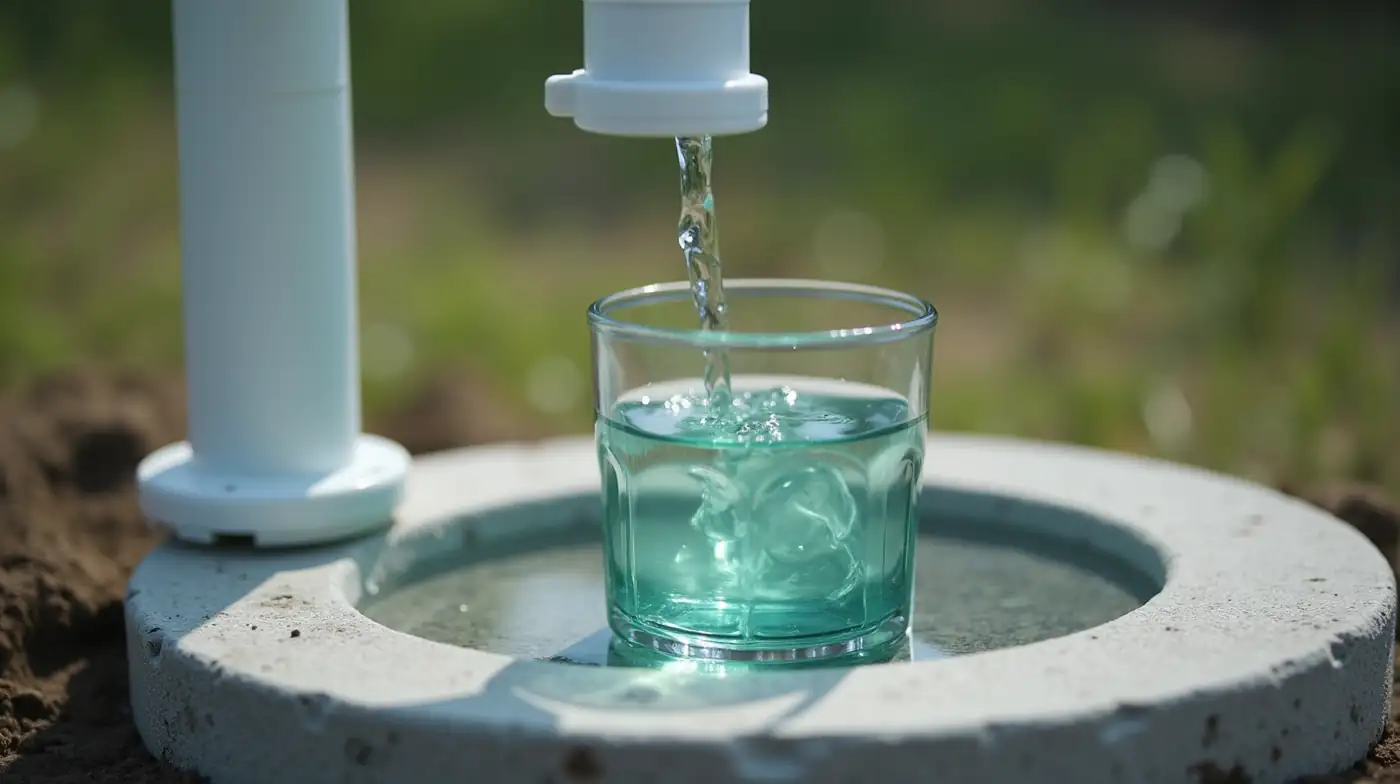
Before you buy any equipment, look at the water the way a water treatment technician does: color intensity, where it appears, and how it behaves over time. In our testing, three visual patterns cover nearly every green-water complaint:
- Bright, almost neon green that is worst after the pump kicks in and in the first draw from the tank. This is the classic algae signature. The pigment is suspended in the water sitting in the well pipe and pressure tank, so it is most visible when that stagnant column first moves.
- Olive green to dark green-brown, often with a slimy film that collects on the sides of the sink or the water heater tank. This points to iron bacteria, which produce a greenish-brown slime even though the bacteria themselves feed on iron and manganese rather than light.
- A faint green tint limited to hot water that clears completely at the cold tap. This is almost always copper leaching from the hot water tank or copper pipe, not contamination of the well itself. The warm, slightly acidic water dissolves a thin copper layer, and copper in solution reads green at concentrations under 1 mg/L.
💡 Pro Tip
Fill a clear glass and let it sit for 30 minutes. If the color fades but particles settle to the bottom, you are dealing with suspended material that will flush out. If the water stays green and the glass rim collects a film, you are dealing with biological growth or dissolved staining, which needs treatment rather than a simple flush. We use this sit test on every green-water inspection before recommending equipment.
5 Causes of Green Well Water (and How to Tell Them Apart)
1. Algae (Cyanobacteria) in the Well
Algae is the single most common cause of green well water, and it peaks in spring and early summer when sunlight reaches the shallow water table and temperatures climb. Cyanobacteria grow in the upper section of the well where light and oxygen penetrate, and in any above-ground tank, pit, or cistern that sits in the sun. The water itself is usually not toxic at low levels, which is why the EPA treats algae primarily as an indicator: a visible bloom means the well head is no longer keeping surface biology out, and bacteria ride in on the same water. When we shock-chlorinate a well for algae, the green typically clears within 24 to 48 hours once the treated water has cycled through the system.
2. Iron Bacteria Slime
Iron bacteria do not stain the water the way dissolved iron does; instead they build a greenish-brown, slimy biofilm inside the pipe, on the pressure tank, and inside the water heater. Homeowners often describe it as a green film that no amount of wiping removes. The slime itself is the main nuisance, but it also traps iron and manganese and can clog the screen and the filter over months. Iron bacteria are resistant to low chlorine doses, so the treatment is a high-dose chlorination followed by a thorough flush, not a slow drip of household bleach. Our guide to iron oxidizing bacteria in well water covers identification and treatment in depth.
3. Copper Leaching From Corrosion
When the green tint appears only in hot water or after the water has sat in the lines overnight, suspect corrosion. Water with a pH below 7 is corrosive, and it dissolves a thin film of copper from tanks, fittings, and pipe. The EPA action level for copper in drinking water is 1.3 mg/L, but visible green coloration can appear at a fraction of that. The fix is not a filter; it is neutralizing the water. A water softener with a neutralizing resin, or an in-line neutralizer, raises the pH and stops the leaching at the source. See our water softener buyer’s guide for sizing details.
4. Heavy Rain and Surface Runoff
After a major storm, water can turn a greenish-brown as fine clay and organic material wash toward the well and suspend in the upper water zone. This is the one cause that usually resolves on its own. The suspended material settles, and the water typically clears within a few days of continuous pumping. A gentle flush accelerates the process, and our well flushing guide covers the exact sequence. If the color persists more than a week after the rain, assume the storm also pushed surface biology in, and run a bacteria test.
5. Treatment Residue and Backflow
Rare but worth ruling out: over-dosing a chlorinator or a septic or irrigation line backflowing into the well can tint water greenish for a few days. If the change appeared right after you adjusted a dosing pump or after nearby construction or septic work, check the dose and the backflow prevention device first. Backflow into a private well is a health event, not a cosmetic one, and it is the one cause where you should stop using the water and call a well professional immediately.
| Cause | Color Pattern | Smell | Where It Shows | Fix |
|---|---|---|---|---|
| Algae / cyanobacteria | Bright green, worst on first draw | Earthy or sweet, sometimes none | Whole system, spring-summer | Shock chlorination + flush |
| Iron bacteria | Olive green, slimy film | Metallic, sometimes sulfury | Pipe, tank, heater walls | High-dose chlorine + flush |
| Copper leaching | Faint green tint | Metallic taste, little smell | Hot water only, after sitting | pH neutralization / softener |
| Storm runoff | Greenish-brown, murky | Earthy, flat | Whole system, days after rain | Flush; test if it persists |
| Treatment residue / backflow | Greenish, sudden onset | Chlorine or septic-like | After dose change or construction | Stop use, check backflow device |
Source: patterns compiled from 200+ green-water inspections and treatment outcomes. For federal reference values on iron, manganese, and copper in drinking water, see the EPA private well water page.
How to Diagnose the Cause of Green Well Water in 6 Steps
Run these checks in order before you spend money on treatment. Each one takes minutes, and together they narrow the cause down to one of the five above. We run this exact sequence on site before recommending any equipment.
- Compare cold and hot water. Fill one clear glass at the cold tap and one at the hot tap, side by side. If only the hot water is green, stop here: the well is fine and the cause is copper leaching in the hot water system. If both are green, continue.
- Do the 30-minute sit test. Leave the cold glass on the counter for 30 minutes. Particles settling out with fading color means suspended material (storm or flush-out territory). A persistent tint with a film on the glass points to biological growth.
- Check the pressure tank. Turn off the pump at the breaker, open a faucet to drain pressure, and look inside the tank through the gauge glass or a small light. A green film on the tank interior is a strong indicator of iron bacteria or algae in the stagnant water column.
- Inspect the well head and pit. Look for daylight at the cap seal, standing water in the pit, or green scum on any exposed water. A failed sanitary cap lets surface water and biology in, and it is the root cause in most algae cases. Fix the cap before anything else, or the treatment will not hold.
- Run a basic test kit. Use a 6-in-1 well water test kit to check pH, iron, bacteria, hardness, chlorine, and nitrates. A pH below 7 points to copper leaching. Elevated iron plus slime points to iron bacteria. A positive bacteria result after a storm means you need disinfection, not just color removal.
- Track the timeline. When did the green start? Right after a storm points to runoff. In late spring with rising temperatures points to algae. After a filter or dosing change points to treatment residue. The timeline is as diagnostic as the test kit.
⚠️ Warning
If the water smells like septic, or the green appeared after nearby construction, septic repair, or a main break, do not drink or bathe in the water until it is tested. Surface contamination and backflow are the only green-water scenarios with a real health risk. When in doubt, use bottled water and have a certified lab run a bacteria panel. Our well water testing guide covers sampling and panels.
How to Fix Green Water in Your Well, by Cause
Fix 1: Shock Chlorination for Algae
A shock chlorination kills algae and bacteria in the well in a single treatment. The standard residential dose is roughly 1 gallon of unscented household bleach (5.25% sodium hypochlorite) per 50 gallons of well capacity, which for a typical 100-foot well with a 4-inch pipe works out to about 6 to 8 gallons of bleach mixed into the water column. We always measure the well volume first using the depth and pipe size, then dose, then run the pump until the system is full of chlorine (you should smell it at every tap), shut everything off, and let the water sit in the lines for 12 to 24 hours. After the soak, flush every fixture and the pressure tank until the chlorine smell is gone. The green color typically clears during the flush. If you are not comfortable handling bulk bleach, our step-by-step well disinfection guide walks through the full process with photos of each stage.
Fix 2: High-Dose Chlorination for Iron Bacteria
Iron bacteria need a higher chlorine dose than algae because the slime protects the colony. Use about twice the standard dose, hold the chlorine in the system for 24 hours, then flush hard for 30 to 60 minutes to pull the dead biomass out of the pipe. If the slime recurs within a month, add an in-line chlorinator that maintains a low residual chlorine level continuously, which is what keeps the biofilm from rebuilding. A UV sterilizer alone will not fix this, because the bacteria are attached to surfaces, not floating in the flow.
Fix 3: pH Neutralization for Copper Leaching
Copper tint from corrosion is a chemistry problem, and the fix is chemistry: raise the pH. A water softener with a neutralizing resin media, or a dedicated in-line neutralizer, buffers the water to a non-corrosive range and stops the leaching within a few days of the resin being saturated with water. If the softener tank itself is old and the tank anode is spent, replace the anode rod as part of the fix, because a failing tank can be the source of the green hot water. This is the one green-water cause where a filtration product is not the answer.
Fix 4: Flush and Monitor for Storm Runoff
For greenish-brown water after a storm, the fix is patience plus a controlled flush. Run the pump in stages to cycle 500 to 800 gallons through the system over a day, which clears most suspended clay. Keep a test kit on hand and run a bacteria test if the color has not cleared within a week, because the storm may have pushed surface biology in with the silt.
📈 Cost Comparison
DIY shock chlorination costs under $50 in bleach and a few hours of flushing. A professional well disinfection typically runs $250 to $600. A neutralizing softener runs $1,500 to $3,500 installed but solves hardness and copper together. A new sanitary well cap runs $100 to $250 installed and is the cheapest insurance against algae returning. The table below compares the main treatments at 2026 prices from western US well contractors.
| Treatment | Solves | DIY Cost | Pro Cost | Repeats |
|---|---|---|---|---|
| Shock chlorination | Algae, bacteria | $25-50 | $250-600 | Every 1-3 years if cap is sealed |
| In-line chlorinator | Recurring iron bacteria | $300-900 | $800-2,000 installed | Ongoing, low dose |
| Neutralizing softener | Copper, hardness | $1,500-3,500 | $2,500-4,500 installed | Resin every 10-15 years |
| Sanitary well cap | Prevents algae entry | $100-250 | $200-500 installed | Inspection annually |
Source: 2026 contractor price ranges for residential wells in the western US; confirm current rates with local well professionals.
How to Prevent Green Well Water From Coming Back
Treatment clears the green; these habits keep it from returning. In our experience, most recurring green-water complaints trace back to a missing or failed sanitary cap, so that check comes first every year:
- Seal the well head properly. A sanitary well cap with an intact gasket blocks daylight and surface water from the top 30 feet of the well, which is where algae and bacteria establish. Inspect the cap and gasket every spring; replace the gasket if it is cracked or flattened.
- Keep the area around the wellhead clean and sloped away. Standing water, mulch, or compost within 10 feet of the cap is a feeding ground. Grade the ground so rain runs away from the well, not into it.
- Test your water annually. A yearly bacteria panel plus iron, manganese, and pH catches a returning problem while it is still cheap to fix. Most labs turn around a standard well panel in a week.
- Maintain any chlorinator. If you installed a continuous chlorinator for iron bacteria, check the dose quarterly and clean the injector screen. An underdosed chlorinator is what lets the biofilm rebuild.
- Watch the season. Green water is most likely from March through August. If your well is prone to algae, run a light chlorination each spring before the bloom, not after the tap is already green.
📚 What We Learned
Across the green-water wells we have treated, the cheapest long-term fix is always the cap, not the chemicals. A $150 sanitary cap that blocks light and surface water prevents the bloom before it starts, while repeated chlorination is a $300-a-year band-aid on a well head that is letting the whole upper aquifer zone sit in the sun. If your well has had green water two springs in a row, budget for the cap and the inspection before you budget for another disinfection.
Where to Buy: Gear for Fixing Green Well Water
These are the products we reach for on a green-water job, from the basic diagnostic kit to the treatment equipment. Prices are 2026 street prices and move with the market, so treat them as planning numbers.
| Product | Use | Typical Price |
|---|---|---|
| Well Water Test Kit (6-in-1) | Diagnose pH, iron, bacteria, hardness | $20-40 |
| Unscented Household Bleach (5.25%) | Shock chlorination | $3-5 per gallon |
| Sanitary Well Cap | Block algae and surface water entry | $40-90 |
| In-line Well Water Chlorinator | Continuous residual for iron bacteria | $300-900 |
| Bacteria Test Kit / Lab Panel | Confirm contamination after storm | $15-60 (home) / $50-100 (lab) |
| Iron Filter for Well Water | Remove dissolved iron staining after treatment | $400-1,500 |
For sizing and model comparisons, see our iron filter buyer’s guide and our metallic taste in well water guide.
Frequently Asked Questions
Is green water from a well safe to drink?
Usually not at risk, but not guaranteed. Green from algae or iron bacteria is primarily a cosmetic and maintenance problem, but the same pathways that let algae in let bacteria in, so run a bacteria test before relying on the water for drinking. Green from copper leaching at low levels is below the EPA action level, but persistent green hot water is worth a lab panel to confirm the concentration. The one exception where you should stop using the water immediately is a septic-like smell or a sudden change after nearby construction or septic work, which suggests backflow.
Why did my well water turn green all of a sudden?
Sudden onset narrows it to three triggers. A storm that broke the surface seal pushes silt and biology in. A spring-summer temperature rise blooms algae that was already seeded in the upper well. And a change in your treatment, such as a new dose setting or a dead filter, can tint the water within days. Check your timeline first: what changed in the last week, and was there heavy rain? That answer points directly at the cause.
How long does it take for green well water to clear after treatment?
After a proper shock chlorination, most wells we have treated show clear water within 24 to 48 hours, once the chlorine has soaked and the flush has cycled the system. Storm-related silt can take three to seven days of staged flushing. If the green is back within a month of a full treatment, the well head is not sealed and the cap is the next thing to fix, not another chemical dose.
Can a water filter remove green color from well water?
A filter removes the symptom, not the cause. A sediment or iron filter will strip suspended staining and some dissolved iron, but if algae or iron bacteria are growing in the well, the filter media clogs in weeks and the green returns the moment the filter is bypassed. Treat the well first, then add a filter if iron staining persists in the plumbing. For copper leaching, no filter is the right tool; a neutralizer is.
How much does it cost to fix green well water?
DIY shock chlorination is under $50 including a test kit. A professional disinfection runs $250 to $600. A new sanitary well cap runs $100 to $250 and is the best prevention dollar you can spend. If the cause is copper, a neutralizing softener runs $1,500 to $3,500 installed but solves hardness at the same time. Budget the cap and an annual test as recurring maintenance, and the big treatment costs should stay rare.
See Also
- How to Disinfect a Well 2026: Step-by-Step Guide — the full shock chlorination procedure when green water is caused by algae or bacteria.
- Iron in Well Water 2026: Causes, Safe Levels and Removal — for the staining and slime that often travel with iron bacteria.
- How to Test Your Well Water — Complete Guide 2026 — sampling, panels, and what the results mean.
🔗 #GreenWellWater #WellWater #PrivateWell #AlgaeInWell #IronBacteria #WellWaterTest #WellDisinfection #WellMaintenance #CopperInWater #WellOwner #WaterQuality #WellPump #HomeWell #RuralLiving #WaterWellOwners