
A well pump hanger is the small piece of hardware doing one of the most important jobs in your private well system. It is the threaded component at the top of the well — or at the discharge tee in a shallow well — that your pump hangs from. The guide wire, the safety chain, and the pump body all load through it, which makes the hanger the single point of failure between your pump and the bottom of the well. When a hanger threads loose, cracks, or is undersized for the pump, the result is not a leak or a pressure problem: the pump falls. Based on two decades of servicing residential well systems, a dropped pump is one of the most expensive failures a well owner can have, because it usually means a full pump pull, a replacement motor, and sometimes a trip to the well driller to inspect the casing. This guide covers exactly how a hanger assembly works, how to size one for your pipe and pump, a step-by-step replacement procedure you can follow at the wellhead, and the hangers, platforms, guide wires, and safety chains we recommend for 2026.
By Thomas Reynolds, Pump Systems Engineer
Thomas has installed and serviced over 1,000 well pump systems for homeowners, from shallow jet pump setups to 300-foot submersible installations across the western United States.
Published: October 22, 2026
Disclosure: As an Amazon Associate, we earn from qualifying purchases on this page. Product selections are based on independent research and real well water data.
What Is a Well Pump Hanger Assembly (And Why It Fails)
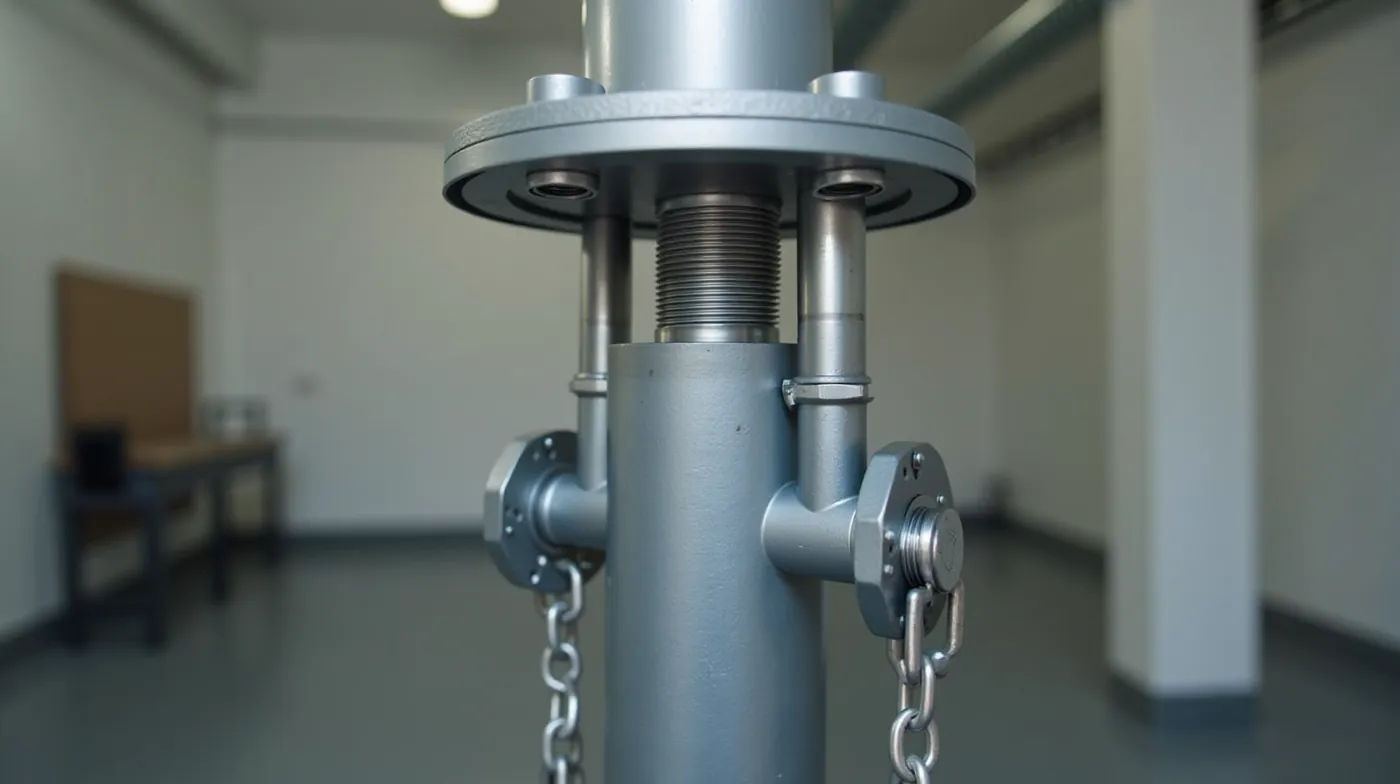
The hanger assembly on a submersible well system has four parts, and each one has a distinct job:
- Hanger — a threaded body, typically zinc-plated steel, that screws into the top of the casing or into a tee fitting. A T-nut or threaded eye is mounted in the hanger’s bore.
- Guide wire — a 1/4-inch or 5/16-inch stainless steel wire that runs through the T-nut and down to the pump. It carries the pump’s working load.
- Safety chain — a short heavy chain, usually 3/8-inch, that connects the hanger to a link on the pump. It should never carry the pump’s weight under normal operation.
- Platform or swivel — a slotted disc or rotating fitting that lets the pump settle at the correct depth and twist freely, so torque does not travel into the guide wire or the motor cable.
The hanger also protects your plumbing. Once the pump hangs from the guide wire, the discharge line should be weightless — supported at the wellhead and at the house, and never carrying the pump. If your discharge line is visibly pulled down at the hanger, the pump is loading the line instead of the wire, and every fitting in the system is taking load it was never designed to carry.
In our inspection work, hangers fail in four predictable ways. First, corrosion: zinc-plated hangers in humid or coastal air pit and eventually crack, usually at the thread root. Second, overloading: a heavy pump on a hanger rated for less will slowly stretch the threads over years. Third, vibration: a pump that short-cycles works the hanger threads loose month after month. Fourth, improper installation: a hanger that was cross-threaded, under-tightened, or installed without a swivel will fail far sooner than the same part installed correctly.
Typical submersible pump weights we see on service calls
1/2-hp: 30–45 lb • 3/4-hp: 40–60 lb • 1-hp: 60–85 lb • 1.5-hp: 85–110 lb • 2-hp: 105–140 lb. When sizing a hanger, the manufacturer’s load rating should exceed the pump weight with at least a 2:1 safety margin — a 100-lb pump wants a hanger rated for 200 lb or more. Confirm the rating on the part or its spec sheet, not on the listing page.
Well Pump Hanger Sizes: Match the Pipe, Not the Pump
The most common sizing mistake we find on service calls is buying a hanger to match the pump instead of the pipe. The hanger threads must match the well pipe — the casing on a deep well, or the tee in the discharge line on a shallow well. The pump is a secondary fit: the T-nut, guide wire, and platform are what connect the hanger to the pump, and those come in standard sizes.
| Pipe size | Application | Typical pump | What to buy |
|---|---|---|---|
| 2-inch NPS casing | Standard domestic deep well (most common) | 1/2–2 hp submersible | 2-inch well pump hanger with T-nut |
| 1-1/4-inch casing | Older or small-diameter wells | 1/3–1/2 hp submersible | 1.25-inch hanger or adapter assembly |
| 2-inch discharge tee | Shallow well, hanger at the tee above the tank | Jet pump or small submersible | Tee-mount hanger with swivel |
| 4-inch or 6-inch casing | High-yield or commercial wells | 3 hp and up | Large-diameter hanger; verify load rating |
For the guide wire, order stainless steel in 1/4-inch or 5/16-inch, cut to the depth of the pump plus 5–10 feet of slack. The wire should hang free about 6–12 inches below the pump at working depth so the pump is not sitting on the T-nut. For the safety chain, 3/8-inch grade 70 in a 10–15 foot length is the standard choice for residential submersible pumps.
How to Replace a Well Pump Hanger (Step-by-Step)
Replacing a hanger on a 2-inch submersible well is a half-day job for a comfortable DIYer, and in most cases you do not have to pull the pump. The hanger lives at the wellhead, and the pump can stay on its guide wire the whole time — as long as you support it first.
- Lock out power at the well pump disconnect and verify zero voltage at the terminals with a multimeter. A pump that starts mid-job is a serious injury risk.
- Relieve system pressure. Open an interior faucet until the pressure gauge reads near zero, then turn the pump circuit off at the breaker panel for good.
- Expose the hanger. On a submersible well, unbolt the wellhead cover and clear debris from the top of the casing. On a shallow well, work at the discharge tee between the pump line and the pressure tank.
- Support the pump. Rig a pump puller strap or a come-along over the wellhead and take the tension off the guide wire. The pump must hang from your support, not the old hanger, before you touch the threads.
- Apply penetrating oil to the hanger threads and let it soak 15–30 minutes if the assembly looks corroded.
- Back the hanger out with a T-handle pipe wrench, turning counterclockwise. Keep the pump support under load the whole time.
- Inspect the threads. Clean the mating threads with a wire brush and look for cracks, pitting, or stripping. If the casing threads are damaged, stop — that is a casing repair, not a hanger swap.
- Wrap the new hanger threads with PVC thread seal tape (or the sealant the manufacturer specifies), hand-start the hanger, then tighten with the wrench: snug, then about one to one-and-a-half more turns. Overtightening a zinc-plated hanger strips the threads.
- Run the guide wire back through the T-nut, hang the pump at its marked depth, and connect the safety chain from the hanger to the pump’s chain link.
- Reconnect, restore power, and run the system. Confirm the pressure builds to the switch cutout, the gauge holds, and nothing weeps at the hanger.
When to stop
If you are hammering, prying, or putting more than two wrenches on the hanger, stop. Forcing seized threads with a pipe wrench strips the casing and turns a $60 part into a several-thousand-dollar well repair. Penetrating oil, a come-along, and a slow morning beat brute force every time.
Well Pump Platform vs. Hanger: Which Do You Need?
Every hanger works the same way, but two hardware styles dominate: the fixed hanger and the sliding platform. A fixed hanger suspends the pump at one depth — whatever your guide wire is cut to. A platform is a slotted disc that threads into the T-nut, and the pump hangs from a hook that slides along the slots. You can move the pump deeper or shallower without cutting the wire, which matters more often than you would think: replacement pumps from different manufacturers have different motor lengths, and a pump that hung at 180 feet may need to hang at 175 feet in its replacement.
| Feature | Fixed hanger | Sliding platform |
|---|---|---|
| Depth adjustment | Fixed at wire cut length | Slides to any depth in slot range |
| Typical cost | $30–$80 | $50–$110 |
| Best for | Set-and-forget installs | Pump replacements, depth changes |
| Failure mode to watch | Thread stretch under overload | Slot wear, hook walking under vibration |
| Our recommendation | New wells with a known pump | Any well over 5 years old, or a pump change |
Pro tip from the field
Mark the guide wire with a permanent marker at the pump’s current working depth before you touch anything. If the wire frays in a few years, you can buy a new one cut to the exact length, and the mark tells the next service visit where the pump hangs — something the next well company will thank you for.
Guide Wires and Safety Chains: The Parts Everyone Forgets
The hanger only works as well as the two parts hanging from it. The guide wire is the primary load path: it should be stainless steel (mild steel will rust through in a well with chlorides or treatment chemicals), 1/4-inch or 5/16-inch, and cut to pump depth plus 5–10 feet of slack so the pump hangs free instead of bearing on the T-nut. When a wire frays, replace it — a frayed load-bearing wire is not a repairable wire.
The safety chain is the backup. It connects the hanger to a dedicated link on the pump and is sized so that if the guide wire or the hanger fails, the chain holds the pump at the top of the well instead of the bottom. Two rules from our inspection work: the chain should not be taut under normal operation (it is a catch, not a load path), and it should be inspected for stretched or corroded links at the same annual visit you check the pressure tank air charge. Many state plumbing codes require a safety chain on submersible pumps, and some specify the size — check your local code or ask a licensed well contractor. For background on what the well code expects from your whole installation, the National Well Builders Association maintains the standards reference list used across most US jurisdictions.
Best Well Pump Hangers, Platforms & Hardware for 2026
For the parts that matter, here is what we specify on installs in 2026. Prices are typical US retail ranges compiled from our service estimates and recent install quotes; the links go to current listings so you can compare options and stock at your local retailer.
| Product | What it does | Typical price | Best for |
|---|---|---|---|
| 2-Inch Well Pump Hanger | Suspends the submersible at the top of 2-inch casing | $40–$80 | Most domestic submersible wells |
| 1.25-Inch Well Pump Hanger | Small-diameter casings and 1/2-hp pumps | $30–$60 | 1-1/4-inch casing, older small wells |
| Well Pump Platform with Guide Wire | Slide-adjustable depth, no wire cutting | $50–$110 | Pump changes, depth adjustments |
| 1/4-Inch Stainless Guide Wire | Primary suspension line for the pump | $25–$45 | Any submersible install or replacement |
| Well Pump Safety Chain | Backup load path if wire or hanger fails | $20–$45 | Code-required catch on most submersibles |
| Well Pump Hanger Repair Kit | Replacement hanger, T-nut, and seal tape | $35–$75 | Worn threads or a seized T-nut |
| 24-Inch T-Handle Pipe Wrench | Removes and installs hangers with leverage | $15–$30 | Every wellhead toolbox |
| PVC Thread Seal Tape | Seals the hanger threads on install | $8–$15 | Any threaded fitting work |
Source note: prices are typical 2026 US retail ranges compiled from our service estimates and current listings; individual prices vary by seller.
Common Hanger Mistakes That Drop Pumps or Crack Casing
- Sizing for the pump, not the pipe. The threads must match the casing or tee. A hanger that does not start turning easily is the wrong hanger — do not force it.
- Skipping the swivel or platform. A pump that cannot twist freely puts torque on the guide wire and the motor cable at every start and stop cycle.
- Letting the discharge line carry the pump. If the line is pulled down at the hanger, the pump is not hanging from the wire. Add a line clamp at the wellhead so the plumbing is weightless.
- No safety chain. “It is just backup” is exactly the part that matters when the hanger fails.
- Overtightening zinc-plated threads. Snug plus one to one-and-a-half turns is plenty; more than that strips the threads.
- Waiting on corrosion. A hanger that is pitted but holding is a ticking part. Replacing a $50 hanger at your next service visit is the cheapest insurance in well ownership.
See Also
- The full lift-out and setting procedure lives in our step-by-step submersible well pump installation guide.
- The valve that sits just above the hanger assembly: well pump check valve 2026 — how it works, test and replace.
- If your pump is stuck in the well, read how to free or pull a stuck well pump before you start rigging.
Frequently Asked Questions About Well Pump Hangers
How do I know what size well pump hanger I need?
Match the hanger to the pipe, not the pump. Most domestic deep wells use 2-inch casing, which takes a standard 2-inch hanger; older small-diameter wells may use 1-1/4-inch casing. Then check the hanger’s load rating against your pump weight with at least a 2:1 margin — a 100-lb pump wants a hanger rated for 200 lb or more. If you are replacing a hanger, the old part tells you the size: measure the threads and match them.
Can I replace a well pump hanger without pulling the pump?
On most 2-inch submersible wells, yes — the hanger sits at the wellhead. Support the pump with a puller strap or a come-along, swap the hanger, and re-hang the pump on its wire. If your hanger threads into the casing below the wellhead flange, or the well is a shallow well with the hanger at the discharge tee, a pump pull is usually required.
Do I need a safety chain on my well pump?
Most codes require one on submersible pumps, and every well inspector we have worked with checks for it. It is a catch, not a load path: 3/8-inch chain, 10–15 feet, connected between the hanger and the pump’s chain link, with no tension under normal operation.
How much does it cost to replace a well pump hanger?
Parts run $40–$110 depending on hanger type and whether you add a platform. DIY labor is a few hours at the wellhead. A professional service call for the hanger swap alone is typically $150–$400, and more if the pump has to come up out of the well.
How often should I inspect the pump hanger?
Once a year — pair it with your pressure tank air charge check. Look for pitting or cracking in the threads, stretched or corroded chain links, fraying in the guide wire, and a discharge line that is being pulled down toward the hanger. Any of those is a fix-this-visit problem, not a wait-and-see one.
The Bottom Line on Well Pump Hangers
The well pump hanger is the least glamorous part of your well system and the one whose failure is the most expensive to fix. Size it to the pipe, support the pump before you touch the threads, add the swivel and the safety chain, and inspect the whole assembly once a year alongside your tank precharge. Do those four things and the hanger will quietly hold the pump up for decades — which is exactly what you want from a $50 part. If your well has any of the warning signs in this guide, or you are about to replace the pump, our well pump replacement cost guide for 2026 breaks down what the whole job should actually cost.
#WellPumpHanger #WellPump #WaterWell #PrivateWell #WellMaintenance #SubmersibleWellPump #WellPumpPlatform #GuideWire #SafetyChain #WellDrilling #WellOwner #WaterWellOwners #HomeWell #WellEquipment #PumpRepair