
If you woke up to dead taps, a pump that hums but delivers no water, or a well system that simply will not run, the first question is how to thaw a frozen well without burning out the pump or cracking a pipe. The short answer: a frozen well system is thawed in a specific order, from the house side back toward the well, with controlled heat. Never with open flame near the wellhead, and never by forcing the pump to run against a solid ice plug. This guide walks through that order, what to look for in each part of the system, and the equipment that makes the job faster and safer.
It also matters where the freeze happened, because the repair is different for a frozen outdoor spigot, a frozen supply line in the pit, and a submersible pump that is ice-bound two hundred feet underground. The first section separates those cases, the step-by-step section gives you the procedure for each, and the prevention section covers the submersible pump heater, heat tape, and insulation that keep the whole system moving through a deep freeze. By the end you will know which method to use, what it costs, and when the job has become a professional one.
By Thomas Reynolds, Pump Systems Engineer
Thomas has installed and serviced over 1,000 well pump systems for homeowners, and specializes in pump selection, pressure systems, and well electrical. He writes about the equipment side of private wells.
Disclosure: As an Amazon Associate, we earn from qualifying purchases on this page. Product selections are based on independent research and real well water data.
Published: November 27, 2026
Table of Contents
- What Actually Freezes in a Well System
- Signs Your Well Has Frozen
- How to Thaw a Frozen Well: The Safe 7-Step Procedure
- Which Thawing Method to Use for Each Part
- What Not to Do When Your Well Is Frozen
- How to Keep Your Well From Freezing All Winter
- When to Call a Professional
- Tools and Equipment
- See Also
- Frequently Asked Questions
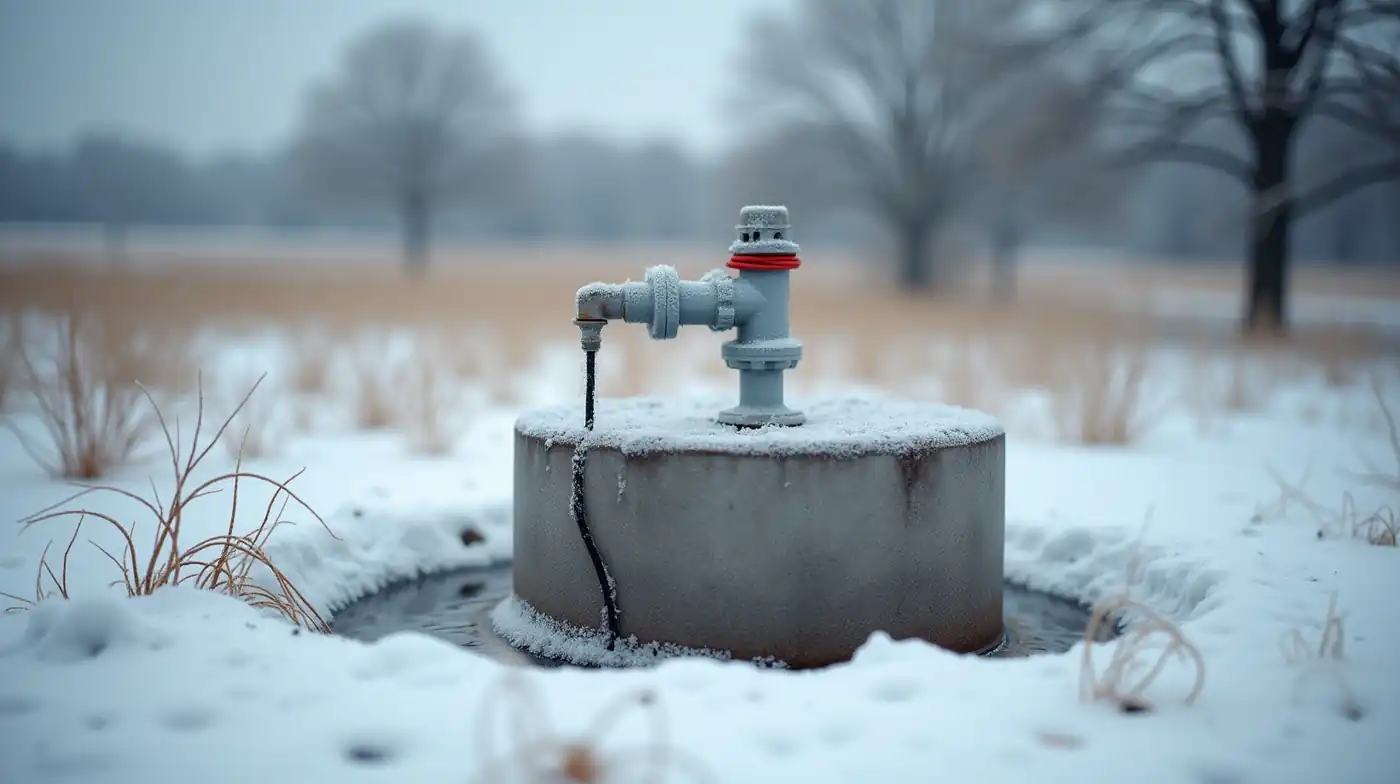
What Actually Freezes in a Well System
Start with the fact that removes most of the fear: the water in the well itself does not freeze. Below the frost line, the ground holds a steady temperature that is above freezing, so the water column in the formation and the bottom of the well stays liquid even in the middle of January. What freezes is the water that sits still in the equipment and the piping: the supply line between the pump and the house, the well pit or pitless adapter, the pressure tank, and, in a severe freeze, the water around the submersible pump motor.
The common thread is still water. Water that is moving does not freeze, even below zero, which is why a well system that runs regularly survives deep freezes and a system that sits idle for a week can be ice-bound by morning. Depth matters too: a well with a jet pump or a submersible pump sitting near the frost line is exposed, while a pump at 150 feet is protected by the ground until the water table drops low enough to put the pump into the ice.
After thawing more than a dozen frozen systems in the Pacific Northwest over the past twenty years, the pattern we see is consistent: the freeze starts at the pit or the pitless adapter, because that is where the supply line crosses the frost line and the water is closest to cold air. The pump itself is the last part to freeze and the first part owners assume is dead, which is why a burned winding shows up on so many of these calls.
| Part of the System | Does It Freeze? | What You Notice |
|---|---|---|
| Water in the formation and casing | No, below the frost line | Nothing; the well keeps producing |
| Supply line in the ground | Yes, where it crosses the frost line | Pump runs but little or no water reaches the house |
| Well pit or pitless adapter | Yes, the most common freeze point | Pump cycles but pressure never builds |
| Pressure tank | Yes, in unheated spaces | No pressure anywhere, tank feels solid |
| Submersible pump | Yes, in deep freezes or a low water table | Pump hums but will not start, trips the breaker |
| Outdoor spigot | Yes, the shutoff is in the wall | Only the outside tap is dead, indoors is fine |
Signs Your Well Has Frozen
Before you thaw anything, identify where the freeze is, because the repair for a dead spigot takes thirty minutes and the repair for an ice-bound pump takes a day. Work from the house outward: turn on an indoor tap, check the outdoor spigot, open the well pit if you have one, and note what the pump does when you restore power. The table below maps the symptoms to the likely freeze point and the severity.
| Symptom | Likely Freeze Point | Severity |
|---|---|---|
| Only the outdoor spigot is dead | Spigot valve in the wall | Minor, half an hour |
| Low pressure, sputtering flow indoors | Partial freeze near the house | Moderate, one to two hours |
| Pump runs, pressure never builds | Ice plug in the line or pit | Moderate, two to six hours |
| Pump hums, will not start, trips breaker | Pump ice-bound at the bottom | Severe, six to twenty-four hours |
| Everything dead after a hard freeze | System-wide, pit plus line | Severe, a day or more |
The one-sentence diagnosis
If the pump runs but no pressure builds, the ice is in the plumbing between the pump and the tank. If the pump will not start at all, the ice is on the pump. That single distinction decides whether this is a two-hour job or a twenty-four-hour job.
How to Thaw a Frozen Well: The Safe 7-Step Procedure
This is the sequence we run on a frozen system, and it is the sequence you should follow. The logic is always the same: kill the electrical risk first, find the freeze, then apply heat from the warmest part of the system back toward the coldest, and restore power only when water can actually move.
- Shut the pump off at the breaker. This is not optional. A pump pushing against an ice plug draws locked-rotor current that can overheat the winding in minutes, and every minute the pump struggles, it is one minute closer to a $1,500 replacement instead of a two-hour thaw. Leave the breaker off until the whole procedure is done.
- Find the freeze point, working from the house outward. Turn on an indoor tap and note the pressure. Check the outdoor spigot. Open the well pit and look: a frozen pit shows a white ice crust on the water surface and a solid-looking adapter. If you have no pit, listen at the wellhead where you can. If the pump hummed but would not start before you killed power, assume the pump is ice-bound and plan for the long thaw.
- Thaw the house-side piping first. Where the supply line comes into the house, wrap self-regulating heat tape around the pipe and plug it in, or apply a heat gun on a low setting while moving it constantly. Never hold a heat gun on one spot long enough to feel it getting hot. The goal is gentle, even warmth. This section usually thaws in thirty to ninety minutes.
- Thaw the well pit or pitless adapter. For a pit: wrap heat tape around the casing at the adapter and the supply line where it leaves the pit, and let it run. If the pit is flooded with ice, you can also pour warm (not boiling) water slowly over the ice crust to start it moving, then finish with the heat tape. For a pitless adapter well with no pit, the heat goes on the riser where it is accessible, and the thaw works its way down. Plan on two to six hours.
- Thaw the submersible pump. If the pump is ice-bound, the honest answer is patience plus purpose-built heat. The correct tool is a submersible well pump heater, which a pro lowers on its own cable and lets melt the ice around the motor over six to twenty-four hours. Wells with a dedicated thawing or casing line can circulate warm water down the line instead, which is faster. The old welding-rod method, where a rod is fed into the line and carries current to generate resistive heat, still works in a pinch but it is for experienced people only and it is the last option, not the first.
- Thaw the pressure tank if it is in a cold space. A frozen tank is a steel shell full of ice and it will not build pressure until it thaws. Move a small tank indoors if you can, wrap it with heat tape, or apply a heat gun from a distance. Do not use an open flame on a steel tank, and do not try to bang the ice out.
- Restore the system and verify. Turn the breaker back on. The pump should start and build pressure within a couple of cycles. Run the water until it runs clear and stable, because a thawed system often carries dissolved air and a little debris. If the water comes out discolored or the pump loses prime, the next steps are written in our well flushing guide and our well pump losing prime guide. If the pump still will not start after the thaw, stop and diagnose before you force it again.
Timing you can plan around
A house-side line thaws in under two hours with heat tape. A pitless adapter takes two to six hours. An ice-bound submersible pump takes six to twenty-four hours, and forcing it faster is how pumps get destroyed. Set the expectation with the household: the water comes back in order, not all at once.
Which Thawing Method to Use for Each Part
Every thawing method on the list below is a trade-off between speed and risk. Slow, gentle methods are safer and usually cheaper; fast methods carry more of a chance of damage. The table compares the six methods we actually see used, where each one works, what it costs, and how risky it really is.
| Method | Works On | Typical Time | Cost | Risk |
|---|---|---|---|---|
| Self-regulating heat tape | Exposed line, pit, tank | 2–6 hours | $30–80 per roll | Low, self-regulating |
| Heat gun or hair dryer | House-side pipe, spigot | 30–90 minutes | $50–150 tool | Low if kept moving |
| Submersible pump heater | Ice around the pump | 6–24 hours | $200–400 installed | Low, purpose-built |
| Warm water circulation | Line and pump, via casing or thaw line | 1–4 hours | $50–200 for pump and hose | Medium, needs setup |
| Welding rod (resistive heat) | Line or pump, last resort | 2–8 hours | $30 for rods | High, trained use only |
| Propane torch | Never on a well system | — | — | High, do not use |
Prices reflect typical 2026 retail ranges for the equipment listed; installation labor varies by region.
What Not to Do When Your Well Is Frozen
Most of the permanent damage on a frozen well comes from the owner, not the freeze. The freeze is a plumbing problem; the mistakes below are how it becomes a pump problem, a fire hazard, or a structural repair. From the calls we take, these are the five things to never do:
The five ways a freeze becomes a disaster
A well system is mostly plastic, steel, and water. Any method that treats it like a house pipe, with flame, hammer, or force, is one mistake away from a repair that costs more than the water was worth.
- Do not run the pump against the ice. A locked-rotor pump drawing full current against a solid plug overheats its winding in minutes. The breaker may save it, or it may not. If the breaker trips every time, that is the pump telling you to stop, not a prompt to reset and try again.
- Do not use an open flame at the wellhead or in the pit. Pitless adapters and wellhead seals are plastic or rubber, casing is steel that warps, and the wellhouse or pit can hold flammable material. A torch that thaws the line in twenty minutes can also destroy the wellhead in the same twenty minutes.
- Do not pour boiling water down the well. Thermal shock can crack a plastic pitless adapter or the casing itself, and in a confined pit space the flash of steam is a real burn hazard. Warm water, poured slowly, is the outside limit of what is acceptable.
- Do not hammer the frozen pipe. A pipe that cracks at a fitting under a hammer will leak the moment it thaws, and the leak will re-freeze next week in a worse shape than the original ice.
- Do not run the pump dry while you diagnose. A submersible pump that runs dry loses its seal and can overheat, and a system that is frozen is exactly the system that is at risk of running dry the moment the ice moves. Keep power off until you know water can move.
How to Keep Your Well From Freezing All Winter
The thaw is the emergency fix; the list below is what keeps the emergency from coming back. In the order of what actually works, starting with the single most effective protection that exists for a well system in a cold climate:
- Install a submersible pump heater. A submersible well pump heater sits in the well next to the pump and holds the water around the motor above freezing, which means the pump can start even after the coldest night. It is the difference between a frozen pump that takes a day to thaw and a pump that simply runs. Budget $200 to $400 installed.
- Wrap the supply line with self-regulating heat tape. Where the line crosses the frost line, typically at the pit or the wellhead, wrap self-regulating heat tape around the pipe and plug it into a GFCI circuit. It only draws power when the pipe is cold, so it is safe to leave on all winter. A $40 roll has saved more wells than any other piece of equipment in this article.
- Insulate the pit and the wellhead. A dry, insulated pit does not freeze. Wrap the casing with closed-cell foam and keep the pit cover on. If you have a wellhouse, the full seasonal checklist is in our well house winterization guide.
- Keep water moving during deep freezes. Water in motion does not freeze. During a forecast of several days below zero, running the pump for thirty minutes every few hours is the cheapest insurance in this list, and it is why a system that runs all winter survives what kills an idle one.
- Drain the outdoor spigot. A frost-free spigot is designed so the shutoff sits inside the warm wall; if it is still freezing, the valve is leaking and the line is draining into the cold. Shut it off indoors, open the spigot, and let the small amount of water in the stub drain out before the freeze.
- Keep the pressure tank warm. A tank in an unheated cellar or garage is a freeze waiting to happen. Move it if it is small, insulate it if it is not, or add a small space heater on a thermostat for the tank room in the coldest weeks.
The complete seasonal version of this list, with the timing for each task, is our well pump winterization guide, and it is the article to save for October.
| Prevention Measure | What It Protects | Cost |
|---|---|---|
| Submersible pump heater | The pump and the water around it | $200–400 installed |
| Self-regulating heat tape | The supply line at the frost line | $30–80 per roll |
| Pit insulation and dry pit | The pit and the pitless adapter | $50–150 |
| Wellhouse insulation and heat | The indoor side of the system | $100–500 |
| Drained frost-free spigot | The outdoor tap | $100–200 if replaced |
When to Call a Professional
A thaw is a homeowner job in most cases, but there are five situations where the right move is to call the well service company and pay for the truck:
- The pump will not start after a full thaw. If the ice is gone and the pump still will not run, the winding or the seal may have taken damage during the freeze. That is a pump job, not a pipe job, and forcing it further makes it worse.
- The water comes back discolored or the test shows bacteria. A freeze-and-thaw cycle can stir the bottom of the well and push surface water down the annular space. A flush and a lab test come first, and a shock treatment if the test says so, which is covered in our well shock treatment guide.
- The water table has dropped and the pump is in the ice. When the pump is sitting below the water level in a frozen column, the thaw is a professional job with the right equipment.
- The casing or pitless adapter is cracked or warped. Thermal shock damage looks minor at the surface and keeps getting worse. A leaking adapter lets surface water into the well, which is a contamination problem, not just a plumbing one.
- You have no safe access to the pump. A deep well with no casing line and no thaw line means the pump heater has to go in on a pro rig, and that is exactly what the pro is for.
Tools and Equipment
Everything on this list is available at typical 2026 retail prices, and the heat tape plus the pump heater are the two items we recommend keeping in the garage in every cold-climate well system. The GFCI outlet matters because the pit and the wellhead are wet locations and the heat tape and pump heater circuits should be protected there. A digital infrared thermometer is the tool that tells you the thaw is actually working without you guessing by touch.
| Item | Role in a Thaw | Typical Price |
|---|---|---|
| Submersible well pump heater | Melts ice around the pump, prevents refreeze | $200–400 |
| Self-regulating heat tape | Thaws and protects the supply line | $30–80 per roll |
| Closed-cell foam pipe insulation | Insulates the line and the pit casing | $15–40 |
| 20-amp GFCI outlet | Protected power at the wet wellhead | $20–50 |
| Heat gun | Fast thaw on the house-side pipe | $50–150 |
| Digital infrared thermometer | Confirms the thaw is progressing | $20–60 |
| Welding rods | Last-resort resistive heat, trained use only | $25–40 |
See Also
A frozen well sits inside a larger winter maintenance picture. These companion guides cover the rest:
- How to Winterize a Well Pump in 2026: Step-by-Step Guide — the October checklist that prevents this problem before the first freeze, with timing for each task.
- How to Flush a Well 2026: Step-by-Step Guide — run a full-flow flush after the system is thawed to move dissolved air and stirred sediment out of the line.
- Well Pump Losing Prime 2026: 8 Causes and How to Fix It — the next thing to check if the pump will not hold pressure once the ice is gone.
Frequently Asked Questions
How long does it take to thaw a frozen well?
It depends on where the freeze is. A house-side line or a dead spigot thaws in thirty minutes to two hours with a heat gun or heat tape. A well pit or pitless adapter takes two to six hours with heat tape. A submersible pump that is ice-bound takes six to twenty-four hours, and that is the honest number: the ice around the motor melts at the rate the heat can get into the water, and forcing it faster is what burns pump windings. If you start the thaw in the evening, plan to have water back the next afternoon at the latest.
Can I run my well pump while it is frozen?
No, and this is the single most important rule in this article. A pump pushing against an ice plug draws locked-rotor current, which runs the winding hot and can overheat it in minutes. If the breaker trips when you try, that is the system telling you to stop, not a prompt to reset and try again. Keep the power off, thaw the system, and only then restore power with water able to move.
Does the water in a well itself freeze?
The water in the formation and at the bottom of the well does not freeze, because below the frost line the ground holds a steady temperature above freezing. What freezes is the water sitting still in the supply line, the pit, the pressure tank, and around the pump motor. That is why a deep well keeps producing even in January, and also why a pump that has dropped into a frozen column of water at a low water table can become ice-bound.
What is the difference between thawing a frozen well and thawing a frozen house pipe?
A frozen house pipe is indoor plumbing, and the fix is heat applied to the section of pipe between the warm interior and the ice, usually with a heat gun or towels. A frozen well system is the supply path between the well and the house, which includes the pit, the pitless adapter, and the pump itself, none of which you can reach with a towel. The thaw order is also different: a house pipe is thawed from the warm end back, and a well system is thawed from the house side back toward the well, with the pump always last and never forced.
Will thawing a frozen well damage my pump?
A slow, gentle thaw does not. The damage on a frozen well comes from three specific actions: running the pump against the ice, applying an open flame to plastic fittings or the wellhead, and pouring boiling water into a confined space. If the pump will not start after the thaw is complete, stop and diagnose before you force it, because at that point the problem is electrical, not frozen, and the fix is different.
The Bottom Line
Knowing how to thaw a frozen well is knowing the order: breaker off, find the freeze, gentle heat from the house side back toward the well, power back on only when water can move. The spigot and the house-side line thaw in under two hours, the pit in a few, and the pump takes the patience it takes, which is why the pump heater is the one piece of equipment we install on every cold-climate well. The freeze itself is a plumbing problem; the burned windings, the warped wellhead, and the cracked casing are all what the owner adds to it. Thaw slowly, never with flame, and the well will give you water back on its own schedule.
Once the system is running, run it until the water is clear, check the pressure, and put the prevention list on the calendar before the next cold snap. The winterization guide is the article to save for October, and the heat tape is the $40 roll that keeps most of this article from ever being relevant to you.
#FrozenWell #WellWater #WellPump #ThawWell #WellMaintenance #WinterWell #PrivateWell #WellSystem #HeatTape #PumpHeater #RuralLiving #HomeownerGuide #WellCare #CountryLiving #WaterSupply