
Your well has always felt a little slow, and now it has crossed a line: the shower takes twice as long to get warm, the kitchen tap dribbles while the toilet is refilling, and the pressure gauge still reads a perfectly normal 40 PSI. That combination — decent pressure but poor flow — is one of the most common well water complaints we get, and it is almost never as complicated as it feels. In this guide, we walk through exactly how to increase well water flow in 2026: how to measure your well's real output in five minutes, the ten fixes ranked by cost and likely payoff, and how to tell whether the bottleneck is a clogged intake screen, a tired pump, a waterlogged tank, or the aquifer itself.
Flow and pressure are two different numbers. A well system can hold 42 PSI at the gauge and still push out only 1.5 gallons per minute, which is why "the pressure is fine" is not a diagnosis. We start with the simple test that separates the two, then work down the list of fixes in the order that saves you the most money: a $20 screen cleaning before an $800 pump replacement. Every fix below includes the 2026 cost, the difficulty for a competent DIYer, and the amount of flow you can realistically expect to get back.
By Thomas Reynolds, Pump Systems Engineer
Thomas has installed and serviced over 1,000 well pump systems for homeowners, specializing in submersible pump sizing, VFD retrofits, and flow-rate diagnostics across the western US.
Disclosure: As an Amazon Associate, we earn from qualifying purchases on this page. Product selections are based on independent research and real well water data.
Published: November 27, 2026
Table of Contents
- Flow vs. Pressure: Know What You Are Actually Fixing
- Step 1: Measure Your Well's Real Flow Rate (The 5-Minute GPM Test)
- 10 Fixes to Increase Well Water Flow
- Quick Comparison: Which Fix Should You Do First?
- Where to Buy: Parts and Replacement Pumps
- See Also
- Frequently Asked Questions
- The Bottom Line
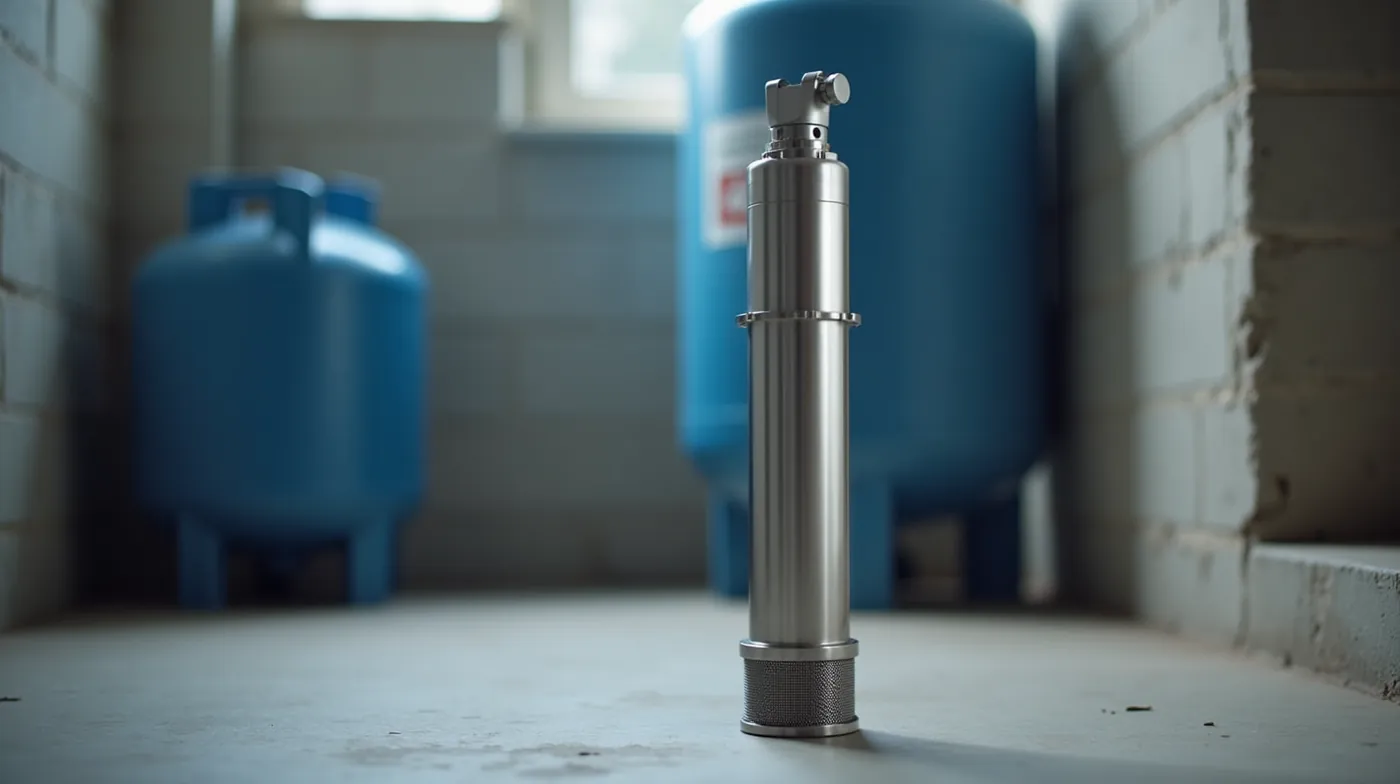
Flow vs. Pressure: Know What You Are Actually Fixing
Before spending a dollar, separate the two numbers on your system. Flow is how much water moves, measured in gallons per minute (GPM). Pressure is how hard the water is pushed, measured in PSI. The pressure switch and the pressure tank control PSI; the aquifer, the well screen, and the pump control GPM. A well can hold textbook pressure and starve for water at the same time — the gauge does not see flow at all.
After pulling and testing hundreds of pumps, here is how the two complaints behave differently in the field:
- Flow problem: water comes out slowly even at a single fixture; the shower takes a long time to recover between uses; two fixtures at once and both go weak; the pump runs long but the tank stays low.
- Pressure problem: water comes out fast but the gauge reads 18 PSI; the pump cycles every few seconds; one fixture is fine and another is barely a trickle.
Typical numbers for a residential well (2026)
Most private wells yield 4 to 15 GPM at the spigot. A 1/2 HP submersible typically moves 3 to 6 GPM depending on well depth; a 1 HP unit moves 5 to 8. Household demand runs 1.5 to 2.5 GPM per fixture, so a home with simultaneous shower, sink, and toilet use can pull 4 to 6 GPM. If your measured flow is well below what your pump's nameplate should deliver at your well depth, the bottleneck is in the system — and in most cases it is fixable without replacing the pump.
If your gauge itself reads low (under 30 PSI at the tank), that is a separate problem: see our well water pressure guide for the switch, tank, and leak side of things. Everything below assumes the pressure is acceptable and the volume is what is suffering.
Step 1: Measure Your Well's Real Flow Rate (The 5-Minute GPM Test)
Everything else in this article depends on one number: your well's actual GPM. You need a 5-gallon pail, a stopwatch (your phone works), and an outdoor spigot or the lowest tap in the house. No tools, no parts, about ten minutes.
- Close everything off. Shut all faucets, the irrigation system, and appliance valves so the test measures the well alone.
- Let the pump cycle to cut-out. Wait until the pump stops and the gauge settles at its high number (usually 40 to 60 PSI). You are starting from a full tank.
- Start the clock the moment water leaves the spigot. Fill the 5-gallon pail as fast as the well will give it to you, and do not stop the pump mid-test.
- Stop the clock when the pail is full. Write down the seconds.
- Do the math: GPM = 300 divided by seconds. A full pail in 50 seconds is 6 GPM; in 100 seconds it is 3 GPM; in 200 seconds it is 1.5 GPM.
- Run the 5-minute check. Leave the spigot open for five minutes and watch what happens. Flow that holds steady at 3 GPM or better means the aquifer is keeping up; flow that fades to a trickle within two minutes means the well depletes faster than it recharges, and no pump on the market will fix that — a larger pressure tank or a VFD (fix 4 or 6 below) is the right response.
- Compare to your pump's rating. The spec sheet or nameplate tells you the flow the pump should deliver at your well depth. Measured flow under about 70% of rated flow means something in the system is restricting water.
Write that number down, then use this chart to pick your starting point:
| Symptom | Most likely cause | Start with |
|---|---|---|
| Weak from the first second, at every fixture | Clogged intake screen or worn pump | Fix 1, then Fix 10 |
| Good flow that fades after 60–90 seconds | Well depletion (slow aquifer recharge) | Fix 4 or Fix 6 |
| Strong at the tap, weak at the farthest fixture | Friction loss in the discharge line | Fix 9 |
| Tank never fills before the pump restarts | Waterlogged tank or hidden leak | Fix 4 |
| Pump cycles fast but usable water is low | Pressure switch band too narrow | Fix 5 |
| Flow gradually dropped over 1–3 years | Pump wear or sediment build-up | Fix 3, then Fix 10 |
| Gritty water plus weak flow | Sand entering the well or screen damage | Fix 3 |
Based on field diagnostics from residential well pump service calls, 2024–2026.
10 Fixes to Increase Well Water Flow
Work down this list in order. Each fix is cheaper and easier than the next, and in our service experience roughly 60% of low-flow complaints end at fix 1, 3, or 4 — no pump replacement required.
Fix 1: Clean the Intake Screen and Diffuser Plate
The submersible pump's intake screen is a fine mesh basket at the bottom of the pump that keeps sand and debris out of the impeller. Over years, silt, algae, and scale coat the mesh until the pump is pulling through a screen that passes half the water it should. The signature is a slow, steady loss of flow over months rather than a sudden failure — if your GPM test came in under 70% of rated flow, this is the first thing to check. A well pump intake screen cleaner kit with a long flexible brush costs $20 to $40 and works when the pump sits accessible on the riser; a professional pull to clean the screen runs $300 to $600. On a badly coated screen we routinely recover 1 to 3 GPM.
Fix 2: Replace a Stuck or Worn Foot Valve
On jet systems — and on submersible systems that use one — the foot valve at the bottom of the riser keeps the line primed by letting water in but not out. A valve that sticks partially open bleeds suction with every cycle, so the pump works harder and delivers less. The giveaway is a pump that takes longer and longer to build pressure, or a system that has lost its prime. Our foot valve for well pump guide covers how to test the valve in place before buying anything; a replacement well pump foot valve costs $25 to $80, and restoring full suction typically brings the system back to its rated flow. Once the valve is swapped, re-prime the line following our how to prime a well pump steps.
Fix 3: Pump Down and Clear Settled Sediment
Even a clean screen sits above a bed of sand and silt that settles around the bottom of the well. When that bed migrates onto the screen or narrows the intake path, flow drops without any part wearing out. The remedy is a controlled pump-down: run the pump to cycle, let the well settle for 24 to 72 hours, and repeat, which flushes settled material out through the line and thins the bed around the screen. It is free or cheap and it is the first step in our how to flush a well guide. If the water comes out gritty, stop the pump-down immediately and address the sand problem before repeating it, or you will push more material onto the screen instead of away from it.
Fix 4: Recharge or Replace a Waterlogged Pressure Tank
A waterlogged tank does not reduce the pump's GPM — it reduces the water you have on hand, which feels exactly like a flow problem: the pump starts almost constantly, and the usable water between cycles is a fraction of what it should be. Check the air pre-charge with a tire gauge on the tank's Schrader valve while the pump is off; on a standard 40-to-44 gallon tank it should read 2 PSI below the switch cut-in, so about 28 PSI on a 30/50 switch. If it reads 5 PSI or less, the bladder is likely failed. Recharging the air takes ten minutes and costs nothing; replacing a failed-bladder 44-gallon well pressure tank runs $150 to $450 installed. Our waterlogged pressure tank guide has the full diagnosis, and if the pump is now running all the time, see well pump running all the time and well pump short cycling for the cycling symptoms. When you do replace the tank, match the size to the system using our pressure tank sizing guide rather than defaulting to 44 gallons.
Fix 5: Re-adjust the Pressure Switch Band Width
The switch's cut-in and cut-out settings determine how much water sits in the tank between cycles. A 30/50 switch stores roughly a third more water than a 40/60 switch on the same tank. If your pump cycles every 45 seconds, you are drinking mostly tank water that the pump barely gets to refill, and the effective flow at the faucet is whatever the tank can hand over between restarts. Widen the band toward 30/50 (or 28/56 on older switches) and the same pump delivers noticeably more usable water per cycle. A well pump pressure switch replacement costs $40 to $150; on a healthy pump the re-adjustment alone typically adds 0.5 to 1.5 GPM of practical flow. Do not widen the band past what the tank's air pre-charge supports — re-check the Schrader after you change the settings.
Fix 6: Add a Variable Frequency Drive (VFD)
A VFD is the single best upgrade for a well that depletes faster than it recharges. Instead of slamming the pump between full speed and off, the drive spins the motor at a speed that matches demand, which does three things at once: it eliminates the short cycles that waste headroom, it lets the well recover between slow cycles instead of being drained to dry, and it delivers full rated flow whenever the aquifer can supply it. On a marginal well we have restored 2 to 4 GPM of usable flow with a VFD alone. A residential well pump variable frequency drive costs $350 to $900 plus a fresh well pump contactor in most installations. Sizing the drive to your pump's FLA and your well's drawdown curve is where most DIY installs go wrong — our VFD for well pump guide walks through the sizing math and the best models for 2026.
Fix 7: Upgrade to a Correctly Sized, Higher-Flow Pump
If the well yields plenty of water (your 5-minute test held steady) and the system is clean, the pump itself may simply be undersized for the house — a 1/3 HP unit in a three-bathroom home is the most common example we see. The fix is a correctly sized replacement, not a bigger one: match horsepower to well depth and peak demand, and a 1/2 HP 230V submersible well pump is the right answer for most shallow residential wells under 200 feet, moving 3 to 6 GPM for $500 to $900 in parts. Run the numbers first with our how to size a well pump guide — it covers horsepower, depth, and GPM — and if your well is under 25 feet, our deep well vs shallow well pump comparison tells you whether a jet system would actually be the better (and cheaper) platform.
Fix 8: Service or Replace the Jet Pump on Jet Systems
On shallow wells, the jet pump is a centrifugal unit that builds suction from a venturi, and it wears in two predictable ways: the impeller erodes from years of sand, and the jet assembly (the venturi and the diffuser) clogs with scale. Both show up as a slow, multi-year flow decline with the gauge still reading normal. An impeller service or a full shallow well jet pump replacement ($200 to $500 for the pump, $150 to $400 for service) typically restores the original 4 to 6 GPM. Check the well's age and depth first: if the water level sits deeper than about 25 feet, a jet system was never going to deliver full flow, and the real fix is a submersible — which is a fix 7 conversation, not a jet pump conversation.
Fix 9: Cut Friction Loss in the Discharge Line
Water meets resistance on its way from the well to the house, and on long runs that resistance is real. Every elbow, every valve that is not fully open, and every foot of pipe smaller than it should be steals GPM — and the farthest fixture loses the most. Three checks: confirm the main line is 1-1/4 inch or larger on runs over 100 feet (1 inch on a 200-foot run can cost more than a GPM); make sure the main shutoff and every inline gate valve is fully open; and count elbows — each 90-degree bend is worth several feet of straight pipe in friction. Straightening one buried run or adding a parallel line for a distant outbuilding is the only fix on this list that costs real money ($300 to $500 for materials), which is why it sits near the bottom of the order.
Fix 10: Replace a Pump Past Its Working Life
Submersible pumps are built to run 10,000 to 20,000 hours, which in practice is a 10-to-15 year service life. Past that, bearings loosen, impellers erode, and windings age, and the flow decline is gradual enough that it looks like a system problem until the day it is not. If fixes 1 through 8 have not restored your flow and the pump is a decade or older, the answer is a new pump — a pull and replacement runs $1,500 to $4,000 professionally installed, and the parts alone cost far less for a competent DIYer with a pump puller. Before you book the pull, run our well pump warning signs check and confirm the amperage and cycling numbers, and use our well pump lifespan guide to sanity-check the age against the hours the pump has actually accumulated.
Quick Comparison: Which Fix Should You Do First?
| Fix | Typical 2026 cost | DIY difficulty | Flow you can get back |
|---|---|---|---|
| 1. Clean intake screen | $20–$600 | Moderate (pump pull) | 1–3 GPM |
| 2. Replace foot valve | $25–$150 | Hard | Restores full suction |
| 3. Sediment pump-down | $0–$30 | Easy | 0.5–2 GPM |
| 4. Tank recharge/replace | $0–$450 | Easy–Moderate | Restores reserve |
| 5. Switch band re-adjust | $0–$150 | Moderate | 0.5–1.5 GPM usable |
| 6. Add a VFD | $350–$900 | Hard | Full rated flow |
| 7. Pump upgrade | $500–$4,000 | Hard (pro recommended) | Up to new rating |
| 8. Jet pump service/replace | $150–$1,200 | Moderate–Hard | Up to new rating |
| 9. Line friction fix | $0–$500 | Moderate | 0.5–2 GPM at far end |
| 10. Old pump replacement | $1,500–$4,000 | Hard (pro recommended) | Up to new rating |
Costs are 2026 national averages for parts and typical installed labor where noted; flow gains reflect typical service-call recoveries on systems that had no pre-existing aquifer problem.
Where to Buy: Parts and Replacement Pumps
Every part mentioned above is available on Amazon with the site's usual tracking, which keeps pricing transparent. Match the part to your fix number; most of these are small orders that arrive in two days, well before the weekend you plan the work for.
| Part | Typical price | Used for |
|---|---|---|
| Intake screen cleaner kit | $20–$40 | Fix 1 |
| Well pump foot valve | $25–$80 | Fix 2 |
| 44-gallon well pressure tank | $150–$450 | Fix 4 |
| Well pump pressure switch | $40–$150 | Fix 5 |
| Well pump VFD | $350–$900 | Fix 6 |
| Well pump contactor | $30–$100 | Fix 6 |
| 1/2 HP 230V submersible pump | $500–$900 | Fix 7 |
| Shallow well jet pump | $200–$500 | Fix 8 |
| Digital multimeter | $25–$60 | Diagnostics (GPM test, amp draw) |
Prices checked November 2026; well pump pricing moves with the copper and steel markets, so treat these as planning ranges.
See Also
- How to Size a Well Pump 2026: The Complete Guide — the horsepower, depth, and GPM math behind fix 7.
- Waterlogged Pressure Tank 2026: Causes & Fixes — the full diagnosis behind fix 4, with pre-charge numbers for every tank size.
- How to Tell If a Well Pump Is Bad 2026: 12 Warning Signs — when the flow problem is the pump itself, run this check before booking a pull.
Frequently Asked Questions
How much flow should a residential well produce?
Most private wells yield 4 to 15 GPM at the spigot, and most residential systems are sized for 3 to 6 GPM. A practical benchmark: if your 5-gallon pail takes more than 100 seconds to fill, your flow is under 3 GPM and worth investigating; more than 200 seconds puts you under 1.5 GPM, which is genuinely low for a single-family home and will show up as weak showers and slow dishwashers.
Why does my shower pressure drop when the toilet is flushed?
Because the shower and the tank are fighting over the same supply, and your system has less flow reserve than the house demands. The shower itself is probably fine — the well or the tank simply cannot deliver 4 GPM at once. Run the 5-minute test: if flow fades while running, the aquifer is the limit and fixes 4 and 6 (bigger tank, VFD) are the answer; if flow is steady but low, work the list from fix 1 down.
Can a VFD really increase my well's flow?
A VFD does not create water a well does not have, but it recovers the flow your system is throwing away. On wells that deplete faster than they recharge, a VFD cuts the drain rate, lets the aquifer recover between slow cycles, and eliminates the off-time where you get zero water. On those systems we have restored 2 to 4 GPM of usable flow with the drive alone. On a well that yields plenty of water, a VFD mostly improves cycling and protects the pump rather than adding flow.
How do I know if the well itself is the limiting factor?
The 5-minute test is the discriminator. Leave the spigot open and watch: if flow stays flat at 3+ GPM for five minutes, the aquifer is keeping up and the restriction is in the plumbing or the pump. If flow fades to a trickle within 60 to 120 seconds, the well depletes faster than it recharges — no pump, tank, or part fixes that, and the right response is a larger pressure tank, a VFD, or (in the worst cases) a second well. A driller can quantify it with a formal 4-hour drawdown test if you need the number for planning.
How much does it cost to increase well water flow?
Most fixes cost less than people expect. A screen cleaning, sediment pump-down, or tank recharge runs $0 to $450 and ends about 60% of low-flow complaints. A VFD adds $350 to $900. Pump replacement is the expensive end at $1,500 to $4,000 installed, and it is only the right answer when the well yields fine water, the system is clean, and the pump is old or undersized. The order of fixes in this article is the order that keeps your total spend low: test first, clean next, upgrade last.
The Bottom Line
The fastest way to increase well water flow is not a bigger pump — it is a five-minute test that tells you where the water is actually disappearing. Measure your real GPM, run the 5-minute depletion check, and work down the ten fixes in order: clean the intake screen, check the foot valve, pump down the sediment, verify the tank pre-charge, widen the switch band, and only then consider a VFD or a new pump. In the majority of the low-flow systems we service, the fix is a part that costs under $150.
Keep two numbers on the fridge after you finish: your baseline GPM and your pump's rated flow. Re-test once a year, because flow decline is slow enough that nobody notices it until it has gone on for two or three years — and a system caught at 70% of rated flow gets its water back far more cheaply than a system caught at 40%. The well is not broken; something is restricting it, and the list above is where you find it.
#WellWaterFlow #WellPump #WellWater #WaterPressure #SubmersiblePump #WellMaintenance #GPMTest #PrivateWell #WellOwner #PumpSizing #VFD #WellDrilling #HomeWell #WellEquipment #LowFlowFixes