
When your water pressure suddenly drops or the pump hums but no water comes out, your well pump has probably lost its prime. Knowing how to prime a well pump is one of the most practical skills a well owner can have, because a pump that runs dry for even a few minutes can overheat, warp its internal seals, and destroy the motor. In this 2026 step-by-step guide, we walk through exactly how to prime a jet pump, how to prime a submersible well pump, how a foot valve keeps a prime in place, and how to diagnose and fix a pump that will not hold a prime. We cover the tools you need, the right foot valve and priming plug for your setup, and the seven most common reasons a well pump fails to prime.
By Thomas Reynolds, Pump Systems Engineer
Thomas has installed and serviced over 1,000 residential well pump systems across the western US, from shallow jet setups in basements to deep submersible installations, and specializes in priming, electrical, and pressure-tank failures.
Disclosure: As an Amazon Associate, we earn from qualifying purchases on this page. Product selections are based on independent research and real well water data.
Published: November 2026
Table of Contents
- What Does It Mean to Prime a Well Pump?
- How to Prime a Jet Pump (Step-by-Step)
- How to Prime a Submersible Well Pump
- How a Foot Valve Holds Your Prime
- Jet Pump vs Submersible: Priming Comparison
- Well Pump Will Not Prime: 7 Causes and Fixes
- How Long a Well Pump Holds Its Prime
- Where to Buy the Parts You Need
- Frequently Asked Questions
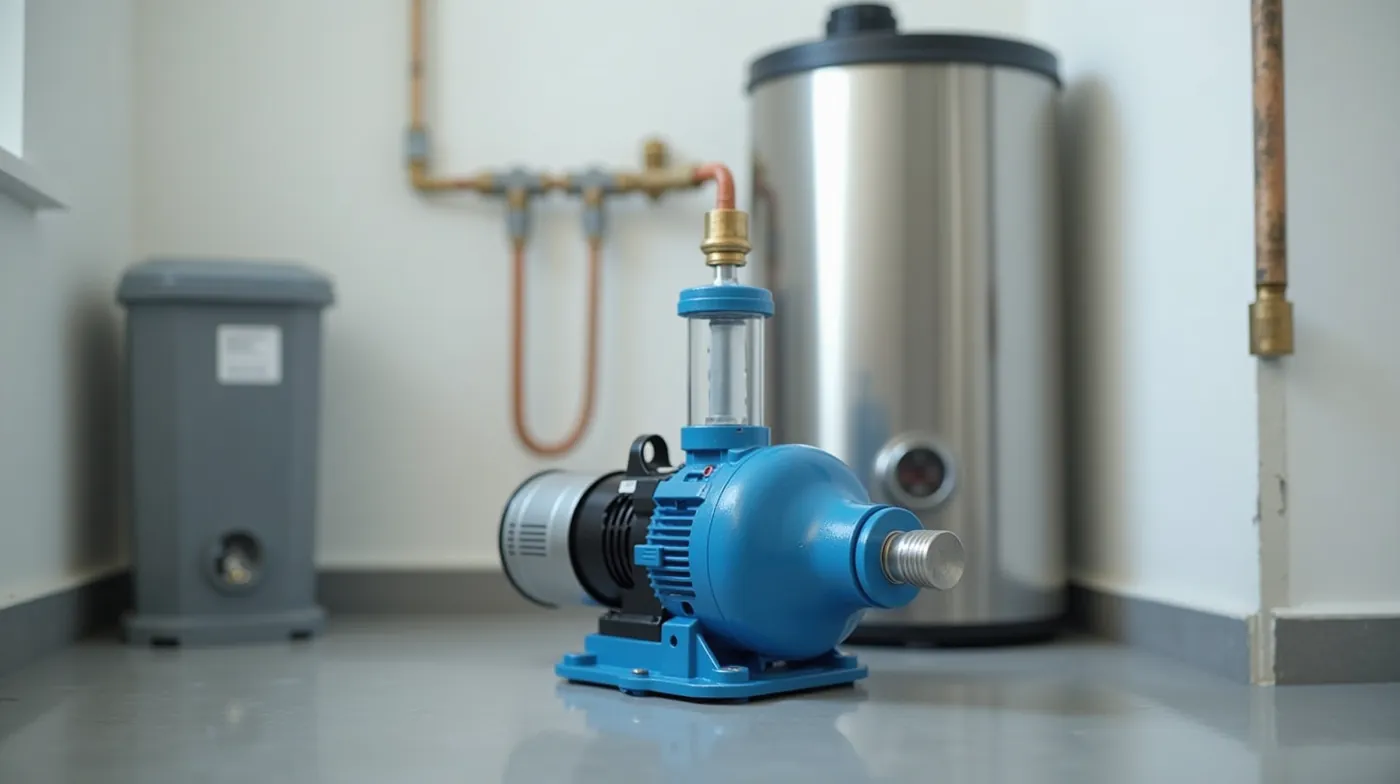
What Does It Mean to Prime a Well Pump?
Priming a well pump means filling the pump’s volute (the casing where the impeller spins) and the suction line with clean water so the pump can create the seal it needs to move water. A centrifugal pump does not “suck” water up by pulling on air; it needs a full column of water in the casing to build the pressure differential that lifts water from the well. Remove that water and the pump spins on air, a condition called cavitation.
Why this matters: when a pump runs on air, the water that would normally cool and lubricate it is gone. The motor draws excess amperage, the internal seals dry out, and within seconds to minutes the pump can overheat and fail. That is why a lost prime is not just an inconvenience — it is the single most common cause of preventable well pump damage we see in the field. The good news is that re-priming is almost always a 10-to-20-minute job you can do yourself, and it costs nothing but a bucket or hose full of water.
Urgent: Turn Off Power When the Pump Runs Dry
If you hear the pump humming but no water is coming out, switch the pump off at the disconnect or breaker immediately. A dry-running submersible can damage its motor in under a minute. Then diagnose the cause before restoring power.
How to Prime a Jet Pump (Step-by-Step)
A jet pump sits above ground — usually in the basement, a utility room, or a pump house — and pulls water up through a suction line that runs down the well. Because it sits above the water table, it must be filled with water every time it loses its prime. Most shallow-well jet pumps need only about 3 to 5 quarts of water in the volute to prime, and the whole process takes under 15 minutes. Follow these steps in order.
- Shut off power. Switch the well pump off at the disconnect switch or the circuit breaker in your panel. This keeps you safe and stops the motor from running dry while you work.
- Inspect the foot valve and suction line. Before you add water, make sure the foot valve at the bottom of the line is present and the suction hose or pipe is seated tight. A missing or failed foot valve means you will have to refill the entire line every time (see the foot valve guide).
- Remove the priming plug. Locate the priming port on top of the pump volute and unscrew the priming plug. Some pumps have a threaded fill cap instead of a plug.
- Fill the volute with water. Using a clean garden hose or a watering can, pour water into the volute until it begins to overflow from the port. You want the volute and the first section of the suction line completely full of water with no air pockets. Use clean water only — debris can clog the impeller.
- Replace and seat the priming plug. Screw the plug back on snugly. A loose plug leaks air and will defeat the prime within a few minutes, so a little thread sealant on the threads helps it hold.
- Restore power and run the pump. Turn the breaker back on. The pump should start, and within a few seconds you should see the pressure gauge on the tank begin to climb.
- Confirm it holds pressure. Watch the gauge build to your cut-out setting (commonly 40/60 PSI). Open a tap to confirm steady flow, then let the pressure tank refill.
- Check for leaks. Run the system for a full cycle and inspect the priming plug, the suction line, and the foot-valve joint for any drip. Fix any leak before you leave the system running.
Pro Tip: Prime With the Pump Sealed
If your jet pump will not hold a prime on the first try, the most likely cause is a leak or a failed foot valve, not the amount of water. Do not keep refilling — isolate the leak first. Refilling a leaky line is wasted water and will never hold.
How to Prime a Submersible Well Pump
A submersible pump is different: it is lowered into the well and sits submerged below the water table, so it is effectively self-priming — it is already surrounded by the water it needs to move. “Priming” a submersible usually means one of two situations.
Situation A — the pump simply ran dry. The well water level dropped below the pump intake (common in drought, or when the pump is set too low). The pump is still in the well; it just has no water to pull. You do not add water to the pump — you restore the water supply:
- Shut off power at the disconnect or breaker.
- Check the well water level using a dip tube or water-level gauge, or simply wait for the well to recover (12 to 24 hours is typical after a dry run).
- Once water is again above the pump intake, restore power. The pump will pick up the water around it and begin moving it immediately.
- Open a tap to flush air from the pressure tank and piping, then let the tank recharge to cut-out pressure.
Situation B — the pump was removed from the well. If the pump was pulled for repair or a foot-valve replacement, “priming” means getting the system sealed and the tank full again:
- Confirm the foot valve at the bottom of the line is seated and the pump is lowered back below the water table.
- Verify the in-line check valve and all couplings are sealed.
- Restore power and let the pump draw water up the line.
- Open a tap and let the pressure tank fill to cut-out pressure, then confirm steady flow.
Dry-Run Damage Is Real
A submersible that runs dry loses the water that cools and lubricates its motor. Repeated dry runs are the leading cause of premature submersible failure. If your well drops low in summer, consider a low-water cutoff switch, and keep your well properly sealed and maintained as the EPA recommends for private wells. See our guide on well pump running dry for the full damage picture and fixes.
How a Foot Valve Holds Your Prime
The foot valve is the one-way check valve at the very bottom of the suction line, sitting just above the well opening. Its job is to hold the water column in the suction line so that when the pump stops and restarts, it only has to re-prime the small pump volute — not refill 100 feet of pipe. A healthy foot valve means a jet pump that has been primed once will hold that prime indefinitely, as long as there is no leak in the line.
If you find yourself refilling the entire suction line every time you restart the pump, your foot valve is almost certainly failing — the internal flap is no longer sealing, so the line drains back into the well after each cycle. Replacing the foot valve is inexpensive and usually restores reliable priming. For a full breakdown of how a foot valve works, how to test it, and how to replace it, see our well pump foot valve guide.
Jet Pump vs Submersible: Priming Comparison
Because the two pump types sit in fundamentally different places, their priming needs are almost opposite. Use this table to match the procedure to your setup.
| Factor | Jet Pump (above ground) | Submersible (in the well) |
|---|---|---|
| Self-priming? | No — must be filled each time | Yes — submerged in water |
| Water to add | 3 to 5 quarts into the volute | Usually none; refill the pressure tank |
| Foot valve | Required — holds the line | Required — at the bottom of the line |
| Typical prime time | 5 to 15 minutes | Instant, or 12 to 24 hours if the well ran dry |
| Practical depth limit | About 25 feet of suction lift | 400 to 450+ feet |
Values reflect typical residential setups; exact specs vary by manufacturer and well depth. See our deep well vs shallow well pump guide for sizing context.
Well Pump Will Not Prime: 7 Common Causes and Fixes
If the pump spins but will not build pressure or flow water, work through these seven causes in order. Most lost primes trace back to one of them.
- The well has no water (ran dry). The most common cause in summer. Symptom: the pump hums, there is no flow, and the gauge does not climb. Fix: shut the pump off and let the well recover for 12 to 24 hours, or lower the pump below the new water level.
- Failed foot valve. Symptom: you refill the entire suction line every time and it still will not hold. Fix: replace the foot valve with a new foot valve with strainer sized to your line.
- Leak in the suction line. A loose coupling, a cracked hose, or a leaking priming plug lets air in. Symptom: the prime holds for a few seconds then collapses. Fix: find and reseal the leak; replace a cracked hose with a reinforced 3/4-inch suction hose.
- Worn or damaged pump impeller. A worn impeller cannot build pressure. Symptom: weak flow even when the pump is full of water. Fix: replace the pump or its impeller assembly.
- Stuck or broken in-line check valve. Symptom: water flows back into the well or the pressure tank loses pressure quickly between cycles. Fix: clean or replace the check valve.
- Missing or loose priming plug. Symptom: air leaks out of the fill port after priming, so the pump never seals. Fix: replace the plug and seat it tight with a little thread sealant.
- Cracked suction hose or loose hose clamp. Symptom: the line refills but the pump still cannot hold. Fix: replace the hose and tighten the clamp; a suction line must be perfectly airtight.
When to Call a Professional
If the pump will not prime after you have confirmed the well has water and the line is sealed, the fault is usually internal to the pump or in the wiring. At that point it is time for a pump pull and inspection, not more DIY attempts. See our guide to hiring a well professional.
How Long Does a Well Pump Hold Its Prime?
With a sound foot valve and a sealed suction line, a jet pump holds its prime indefinitely — you prime it once and it never needs refilling again. A submersible holds its prime as long as water stays above its intake screen. You are only re-priming repeatedly when something is failing: a leaking line, a failed foot valve, a missing plug, or a well that keeps dropping. If you are priming your pump every week, treat it as a warning sign and inspect the foot valve and suction line. Frequent priming also points to pressure problems — see our guides on low well water pressure and well pump short cycling.
Where to Buy the Parts You Need
Most priming jobs need only a few inexpensive parts. Here is what we keep on hand, what to look for in each one, and where to find it.
| Part | Why You Need It | What to Look For |
|---|---|---|
| 3/4-Inch Foot Valve | Holds the prime in the suction line | Brass or galvanized, with a built-in strainer |
| Well Pump Priming Plug | Seals the volute fill port | Match the thread size of your pump |
| Suction Hose | Airtight jet-pump connection to the foot valve | 3/4-inch, reinforced, rated for suction |
| Submersible Well Pump | Replacement if your pump is failing | Match GPM and horsepower to your well |
| Digital Multimeter | Test pump voltage and amperage draw | Auto-ranging, safe for household circuits |
Always match the foot valve and hose to your existing line diameter (3/4-inch and 1-inch are the residential standards). For a deeper look at pump selection, see our submersible well pump sizing guide.
See Also
Keep exploring well pump maintenance:
- Well Pump Foot Valve 2026: How It Works, Test & Replace — the component that holds your prime
- Well Pump Running Dry: Causes, Damage & How to Fix — what happens when the water is gone
- How to Test Your Well Pump GPM 2026 — measure your real water flow
Frequently Asked Questions
How do you prime a well pump when there is no water in the well? You cannot prime against a dry well. First confirm the well water level with a dip tube or gauge, shut the pump off, and let the well recover — typically 12 to 24 hours. Once water is again above the pump intake, restore power and the pump will prime on its own.
How much water do you need to prime a well pump? A shallow-well jet pump needs only about 3 to 5 quarts in the volute. You do not need to fill the whole suction line if your foot valve is working — that is exactly what the foot valve is for.
Why does my well pump keep losing its prime? The usual culprits are a failed foot valve, a leak in the suction line, a loose or missing priming plug, or a well that keeps dropping below the intake. Check the foot valve first, then the line for leaks.
Does a submersible well pump need to be primed? Not in the traditional sense — it is submerged in water and self-priming. You only “re-prime” it by restoring the water supply (waiting for the well to recover) after it has run dry or been removed from the well.
Can I prime a well pump with a garden hose? Yes. A clean garden hose is the fastest way to fill the volute of a jet pump. Use clean water and make sure the priming plug is seated tight before you restore power.
What happens if a well pump runs dry? It loses the water that cools and lubricates the motor, so it overheats, draws excess current, and can damage its seals and motor quickly. Switch it off the moment you hear it running with no water.
#WellPump #WaterWell #WellMaintenance #HomeownerGuide #WellDrilling #PressureTank #JetPump #SubmersiblePump #WellWater #FootValve #PumpRepair #HomeSystems #DIYHome #WellCare #WaterSupply