
A well pump that keeps cycling — turning on for a few seconds, shutting off, then starting again — is one of the most common and most misdiagnosed problems in a residential well system. It wastes electricity, grinds the motor and contactor into early failure, and almost always signals a component that is failing and will cost far more to repair next month than it would today. After opening control boxes and pressure tanks on more than 1,000 homes, we can tell you that a short-cycling pump is rarely the pump at all. In this 2026 guide we cover the nine causes of a well pump that keeps cycling, a seven-step diagnosis you can run in under an hour, the exact pressure tank pre-charge setting that solves most cases, the parts and pricing to keep on hand, and the warning signs that mean you should call a well professional before a small fix becomes a $1,500 replacement.
By Robert Harrison, Certified Well Inspector
Robert has 20+ years of experience inspecting and testing residential water wells across the western US. He has diagnosed cycling, short-cycling, and dead-pump failures on hundreds of systems and leads our well pump and pressure equipment coverage.
Disclosure: As an Amazon Associate, we earn from qualifying purchases on this page. Product selections are based on independent research and real well water data.
Published: October 17, 2026
Table of Contents
- What Is a Short-Cycling Well Pump?
- Why Short-Cycling Damages Your Pump System
- The 9 Causes of a Well Pump That Keeps Cycling
- How to Diagnose a Cycling Well Pump in 7 Steps
- Pressure Tank Pre-Charge: The Fix That Solves Most Cycling
- Where to Buy: Parts for Fixing a Short-Cycling Pump
- When to Call a Well Professional
- How to Prevent Short-Cycling
- Frequently Asked Questions
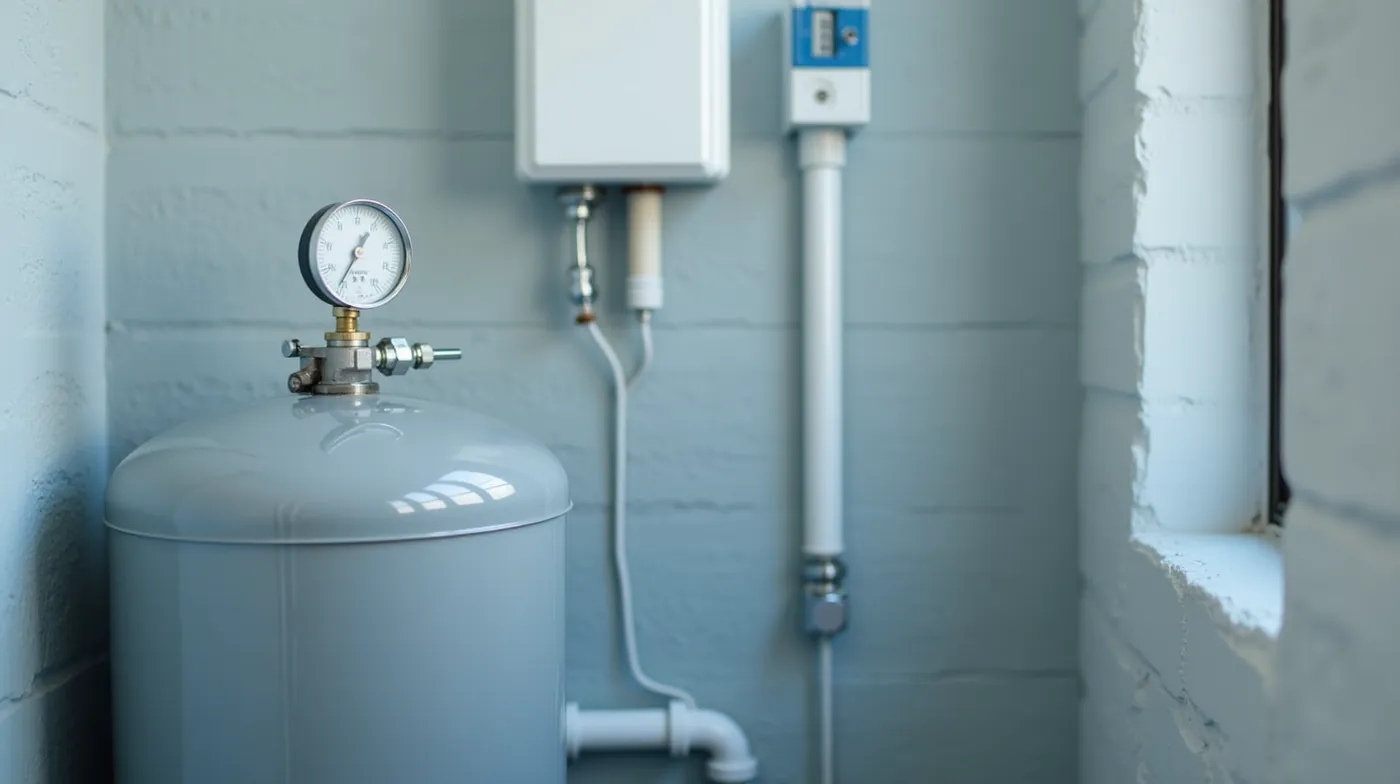
What Is a Short-Cycling Well Pump?
Every well pump runs on a simple on–off cycle controlled by the pressure switch. When you open a faucet, system pressure drops to the cut-in point (commonly 30 psi), the switch closes, and the pump runs until pressure reaches the cut-out point (commonly 50 psi), at which point the switch opens and the pump stops. That 20 psi band is your pump’s normal working range.
Short cycling — sometimes called rapid cycling or short-cycling — happens when that cycle collapses. Instead of running for a minute or two and resting, the pump starts, runs for five to sixty seconds, stops, and starts again. A healthy residential system cycles roughly 10 to 25 times a day; a short-cycling system can start and stop 100 to 300 times a day.
The Normal Cycle at a Glance
A correctly tuned system sits in a 20 psi band — 30 psi cut-in to 50 psi cut-out. The pressure tank’s air cushion is what lets water leave the tank between pump runs, so the pump only starts when the cushion is actually exhausted. When that cushion fails, the band collapses and the pump cycles on every small draw.
The most important thing to understand is that the pump is usually the victim, not the cause. The motor is doing exactly what the control system is telling it to do — and the control system is failing. Fix the control side and the cycling stops; keep replacing the pump and you are paying for a symptom.
Why Short-Cycling Damages Your Pump System
Each pump start is the most stressful moment in a motor’s life. The inrush (locked-rotor) current at startup is 4 to 6 times the normal running current, and every start generates a thermal and mechanical shock that a steady run never does. Multiply a normal 15 daily starts by ten and you have a system that is wearing out on an accelerated schedule.
By the Numbers
A healthy residential well pump cycles 10 to 25 times per day. A short-cycling pump can cycle 100 to 300+ times per day — multiplying motor inrush current, contact arcing, and bearing load by an order of magnitude. That is why a pump that should last 10 to 15 years can fail in 18 to 30 months of relentless short cycling.
The damage shows up in three places. The motor overheats from repeated inrush and its bearings wear from the start–stop torque. The contactor and start relay arc and pit at the contacts with every cycle, which is why a short-cycling system often takes out the control box before the pump. The pressure side sees constant fluctuation that can loosen fittings and, in a low-water well, let the pump chase air and run dry — which is how a cycling problem becomes a dry-run, burnt-pump problem.
The 9 Causes of a Well Pump That Keeps Cycling
Work through these in order — they are listed from the most common cause to the least. In our experience, the first three causes account for the large majority of short-cycling calls.
1. Lost Pressure Tank Air Charge (Most Common)
The single most frequent cause of a cycling well pump is a waterlogged pressure tank — the air cushion behind the bladder has lost its charge, so there is no buffer and the pump starts on every small draw. Bladder (diaphragm) tanks are pre-charged at the factory, but that charge slowly leaks through the Schrader valve over years, or the tank was never set correctly after installation. When the air side fills with water, the tank holds no cushion, pressure drops the instant a fixture opens, and the pump kicks on — then off — then on again.
The tell: with the pump off and a faucet closed, the tank pressure reads near zero instead of a few psi below your cut-in. The fix: re-charge the air through the Schrader valve (details in the pre-charge section below) — a five-minute fix with a tire gauge that solves the problem in most cases. If re-charging does not hold pressure for a day, the bladder itself is the issue (cause 2).
2. Failed Pressure Tank Bladder or Diaphragm
Inside a bladder tank, a rubber diaphragm separates the water side from the air side. That rubber has a service life — typically 5 to 10 years depending on water chemistry and temperature — and when it ruptures, water floods the air chamber and the tank can no longer hold a cushion. This looks identical to cause 1: a tank that reads near zero and will not hold an air charge.
The tell: you can re-charge the tank with air, but the pressure bleeds off within hours or a day because water is escaping past the failed bladder. The fix: replace the bladder (a cheaper repair) or, more commonly, replace the whole tank. A standard 2 to 8 gallon bladder tank runs roughly $80 to $250 installed. If your tank is older than about seven years and will not hold charge, plan on the tank, not the re-charge.
3. Faulty or Misadjusted Pressure Switch
The pressure switch is a diaphragm-actuated switch that opens and closes the circuit at your cut-in and cut-out settings. Two failure modes cause cycling here. First, the cut-in/cut-out differential is set too narrow — a 40-to-45 psi band starts the pump almost as soon as it stops. Second, the internal diaphragm fatigues or gets contaminated, so the switch chatter-opens and chatter-closes around the set point instead of switching cleanly.
The tell: the pump runs a consistent short time each cycle and the gauge hovers in a narrow band rather than sweeping 30 to 50 psi. The fix: confirm the switch is set for a full 20 psi spread (30/50 is standard), clean the diaphragm, and if it still chatters, replace the switch. A standard 30/50 psi switch is a $30 to $60 part.
4. Stuck or Failing Contactor / Start Relay
The contactor is the high-current relay inside the control box that actually carries power to the pump motor. When its contacts pit, weld partially, or fail to hold, the circuit drops out the moment the motor starts drawing current, the pump stalls, and the switch tries again — a start–stop–start pattern that can sound like rapid cycling. A failing start relay produces a very similar symptom on submersible systems.
The tell: you may hear a faint click or buzz in the control box, the gauge barely moves, and the pump hums but never builds pressure. The fix: replace the contactor (and often the start relay at the same time). A correctly rated contactor is $30 to $80. We cover the full contactor test and replacement in our well pump contactor guide.
5. Leaking Check Valve or Foot Valve
The foot valve at the bottom of the well and any check valve in the line exist to keep water from draining back down the pipe when the pump stops. If either leaks, the column of water in the pipe drains back into the well every time the pump shuts off, system pressure falls back to the cut-in, and the pump restarts — often within seconds. This is one of the more insidious causes because the tank and switch can both be perfectly healthy.
The tell: shut the pump off at the breaker, run a faucet until it stops, then close it and watch the gauge. If pressure drops steadily over a few minutes with no fixture running, you have backflow — a leaking check or foot valve (or a plumbing leak, cause 6). The fix: replace the foot valve or the failed check valve. A 1-inch brass foot valve runs about $25 to $60, but the replacement often requires pulling the pump, so budget for labor.
6. Plumbing Leaks in the Pressure Line
A small leak anywhere in the pressurized plumbing — a weeping fitting, a cracked tank connection, a slow-dripping hose bibb, or a failing valve in the house — slowly bleeds pressure off the system. The pump keeps restarting to keep up with the leak, producing a cycle that tracks with how much water the leak is wasting.
The tell: the pressure-drop test above, but the loss is gradual and steady rather than a fast drain. Isolate the tank from the house (close the tank isolation valve), re-pressurize, and see whether pressure holds — if it holds with the house disconnected, the leak is in the house plumbing. The fix: locate and repair the leak. This is a water-bill-and-waste problem as much as a pump problem, and a whole-house leak can waste hundreds of gallons a month.
7. Pump Running Dry or Low Well Water Level
When the well’s static or recovered water level drops below the pump’s intake — from drought, a high draw, or a depleted aquifer — the pump loses prime and pulls air. It cycles, stalls, restarts, and may overheat. This is a cycling problem that is really a water supply problem, and it is the most dangerous cause because running dry without protection can destroy a pump in minutes.
The tell: the gauge fluctuates erratically, the pump may hum or cavitate, and the problem is worse in dry seasons or after heavy use. The fix: measure the well’s static and recovered levels, and install a low-water / dry-run protection sensor that shuts the pump off before it runs dry. See our well pump runs dry guide for the full protection setup.
8. Cut-In / Cut-Out Settings Too Close Together
Even a perfectly healthy system will cycle frequently if the pressure switch is set with a narrow band. A 40-to-45 psi differential gives the pump only 5 psi of cushion before it must restart, so every modest draw triggers a start. The standard residential setting is a full 20 psi spread — 30 psi cut-in and 50 psi cut-out.
The tell: the tank, switch, and valves all test fine, but the pump simply starts very often. The fix: reset the switch to a 30/50 (or 20/40, 40/60) 20 psi band. This is a two-minute adjustment under the switch cover. If you also need more pressure overall, see our guide to increasing well water pressure.
9. Pump Too Big for the Well (Oversized)
The least common but most expensive cause: a pump with more gallons-per-minute than the well can recover. An oversized pump refills the tank so fast it overshoots the cut-out, then the well cannot keep up, pressure sags quickly, and the pump cycles in a fast, high-amperage pattern. You may also see high amperage draw and rapid pressure swings. This is a sizing error, not a part failure.
The tell: the system cycles with high current draw, the well takes a long time to recover after a draw, and the problem has been present since installation. The fix: right-size the pump to the well’s actual recovery rate. We cover the full calculation in our how to size a well pump guide — matching pump GPM to well GPM is what keeps the cycle long and the motor cool.
How to Diagnose a Cycling Well Pump in 7 Steps
You do not need a well contractor to find the cause of most cycling — a tire gauge, a multimeter, and about an hour is all it takes. Work through these steps in order; each one isolates a different part of the system.
1. Count the cycles: Run normal household water use for 15 minutes and count how many times the pump starts. Ten or fewer is healthy; more than 15 in a quarter hour is confirmed short cycling and worth a same-day diagnosis.
2. Watch the gauge: Watch the pressure gauge through a full cycle. A healthy sweep is a smooth climb from cut-in to cut-out (30 to 50 psi). A gauge that hovers in a narrow band points to the switch (cause 3 or 8); a gauge that never builds points to the contactor or a dry pump (cause 4 or 7).
3. Shut the pump off: Turn the pump off at its breaker before touching anything. You need the system dead and depressurized to read the tank’s true air charge safely.
4. Check the tank pre-charge: With the pump off, find the Schrader (air) valve on the tank, relieve the water pressure first, then read the air charge with a tire gauge. It should read about 2 psi below your cut-in — 28 psi for a 30/50 system. Near zero means a waterlogged tank (cause 1 or 2).
5. Test the switch differential: With the system pressurized, note the exact psi at which the pump starts and stops. If the band is narrower than about 15 psi, the switch is set wrong (cause 8) or the diaphragm is failing (cause 3).
6. Listen to the control box: Stand by the control box during a cycle. A buzz, click, or hum-without-pressure means the contactor or start relay is failing (cause 4). A multimeter confirms dead or pitted contacts.
7. Run the pressure-drop test: Close the tank isolation valve, pressurize the system, and watch the gauge with no fixture running. A steady drop means backflow through a leaking check or foot valve (cause 5) or a plumbing leak (cause 6).
Pressure Tank Pre-Charge: The Fix That Solves Most Cycling
The pre-charge is the air pressure inside the tank’s air chamber when the tank contains no water. It is the entire reason a bladder tank works: the charged air expands as water leaves the tank, pushing that water out and keeping system pressure up between pump runs. Get the pre-charge right and a correctly set system will barely cycle; get it wrong and the pump works nonstop.
The rule is simple and universal: set the pre-charge to 2 psi below your cut-in pressure. On a standard 30/50 system, that is a 28 psi pre-charge. If the cut-in is 40, the pre-charge is 38. This 2 psi gap is what lets the bladder flex fully and use the entire water volume in the tank.
The 2-Psi Rule
Pre-charge = cut-in minus 2 psi. 30/50 system → 28 psi. 40/60 system → 38 psi. Too low and the bladder over-expands, losing tank volume and inviting waterlogging; too high and the tank holds less water, so the pump cycles more often. Two psi below cut-in is the factory-correct setting for almost every residential bladder tank.
How to set it (5 minutes): turn the pump off at the breaker, open a downstream faucet to relieve water pressure, then screw a tire gauge into the Schrader valve and read the charge. To add air, use an air pump on the Schrader valve up to your target; to let air out, press the valve pin. Re-pressurize the system, turn the pump back on, and confirm the pump now runs for a full minute or more before stopping.
If you re-charge the tank and the pressure still bleeds off within a day, the bladder has failed and the tank needs replacing (cause 2) — a re-charge will not fix a ruptured diaphragm. A standard replacement bladder tank is the single most common part purchase for a cycling system.
| Setting | 30/50 System | 40/60 System | What It Does |
|---|---|---|---|
| Cut-in pressure | 30 psi | 40 psi | Pump turns on at this pressure |
| Cut-out pressure | 50 psi | 60 psi | Pump turns off at this pressure |
| Pre-charge (air) | 28 psi | 38 psi | Air side pressure with no water in tank |
| Cycling band | 20 psi | 20 psi | Wider band = longer runs = less wear |
Where to Buy: Parts for Fixing a Short-Cycling Pump
Most cycling fixes cost a fraction of a pump replacement. Here are the parts worth having available, with typical 2026 pricing and when each one is the fix. All links open an Amazon search for the part so you can compare current pricing and ratings.
| Part | Typical 2026 Price | Fixes Which Cause |
|---|---|---|
| Pressure tank (bladder) | $80–$250 | 1, 2 (waterlogged or failed bladder) |
| Pressure switch (30/50 psi) | $30–$60 | 3, 8 (faulty or narrow band) |
| Contactor / start relay | $30–$80 | 4 (failing control-box relay) |
| Foot valve (1 in brass) | $25–$60 | 5 (leaking check / foot valve) |
| Digital tire / air gauge | $15–$40 | 1, 2 (reading and setting pre-charge) |
| Low-water / dry-run sensor | $40–$90 | 7 (running dry, low level) |
Budget Reality Check
Re-charging a tank is free. A new pressure switch is under $60. Even a full tank replacement is usually under $250 installed. Compare that to a $1,000 to $1,800 submersible pump that short cycling can destroy — the control-side parts are almost always the cheaper, correct fix. Buy the tire gauge first; it is the tool that tells you which of the nine causes you actually have.
When to Call a Well Professional
Most cycling is a DIY fix, but these situations are worth a licensed well contractor rather than a guess:
• The pump is running dry, cavitating, or the well level is clearly low — a professional can measure static and recovered levels and size a proper dry-run protection system.
• You have confirmed a leaking foot valve, which usually means pulling the pump to replace the valve at the bottom of the well.
• The cycling persists after you have corrected the pre-charge, switch settings, and contactor — the problem is then likely a sizing or well-yield issue (cause 9).
• You are replacing the pump and want it matched to the well’s actual recovery rate to prevent the problem returning.
How to Prevent Short-Cycling
Once the cycling is fixed, a little routine keeps it from coming back:
1. Check the tank pre-charge every 6 to 12 months with a tire gauge and top it back up to 2 psi below cut-in while the bladder still holds.
2. Confirm the pressure switch still sits at a full 20 psi band; clean the diaphragm if you see any debris or pitting.
3. Keep an ear on the control box — new buzzing or clicking is an early contactor warning, months before it fails.
4. Install a dry-run protection sensor if your well is shallow, seasonal, or shared, so a low level shuts the pump off instead of burning it out.
5. Track your monthly water use; a sudden jump can signal the slow plumbing leak that quietly drives cycling.
Frequently Asked Questions
How often should a well pump normally cycle?
A healthy residential system cycles about 10 to 25 times per day, with each run lasting roughly a minute or more. If your pump is starting more than 15 times in 15 minutes, it is short cycling and should be diagnosed the same day.
What is the correct pre-charge pressure for my tank?
Set the air pre-charge to 2 psi below your cut-in pressure. On a standard 30/50 psi system that is 28 psi. Too low waterlogs the tank; too high shrinks the usable water volume and increases cycling.
Can short cycling actually burn out a pump?
Yes. Each start draws 4 to 6 times the running current, so a pump cycling 100 to 300 times a day overheats its windings and wears its bearings on an accelerated schedule. A pump that should last 10 to 15 years can fail in 18 to 30 months of relentless short cycling, and it frequently takes out the contactor first.
Do I need to drain the tank to check the air charge?
No. You only need to relieve the water pressure on the water side — turn the pump off and open a downstream faucet — then read the air side through the Schrader valve with a tire gauge. A full drain is not required to check or set the pre-charge.
How much does it cost to fix a short-cycling pump?
Re-charging a waterlogged tank is free. A new pressure switch runs $30 to $60, a contactor $30 to $80, and a full bladder tank replacement $80 to $250. The expensive outcome — a $1,000 to $1,800 pump destroyed by months of short cycling or dry running — is exactly what fixing the control side prevents.
See Also
Well Pump Pressure Switch 2026: How It Works, Specs & Fixes
Well Pump Runs Dry 2026: Signs, Damage & Protection Guide
How to Size a Well Pump 2026: The Complete Guide
#WellPump #ShortCycling #WellWater #WaterWell #WellMaintenance #PressureTank #PressureSwitch #HomeownerGuide #WellRepair #DIYRepairs #SubmersiblePump #JetPump #PrivateWell #WellEquipment #2026Guide